Diglett
Generation I · #0050 — Mole Pokémon
Diglett, the Mole Pokémon, is a Ground-type species that has captured the imagination of trainers since Generation I. Known for its diminutive size and subterranean lifestyle, Diglett stands at just 0.2 meters tall and weighs a mere 0.8 kilograms, making it one of the lightest Ground-type Pokémon in existence. With a National Pokédex number of #050, Diglett occupies a significant place in the original 151 Pokémon, serving as an accessible Ground-type option for early-game trainers. The species is celebrated not only for its utility in battle but also for its remarkable agricultural benefits, making it a valued companion on farms and rural communities throughout the Pokémon world. Its evolution into the more powerful Dugtrio at level 26 provides trainers with a natural progression path, while its Alolan regional form introduces a Ground/Steel typing that adapts to different environmental conditions.
Editor's Take
Diglett's Arena Trap preventing switches made it genuinely oppressive in low tiers for years, and it is the smallest Pokémon in the game to ever warrant a ban conversation.
Base Stats
Height
0.2m
Weight
0.8kg
Category
Mole Pokémon
Gender
Male 50% / Female 50%
Color
brown
Shape
blob
Habitat
cave
Abilities
Increases evasion to 1.25× during a sandstorm. Protects against sandstorm damage.
Prevents opponents from fleeing or switching out. Eluded by flying-types and Pokémon in the air.
Strengthens rock, ground, and steel moves to 1.3× their power during a sandstorm. Protects against sandstorm damage.

Diglett Biology & Physical Characteristics
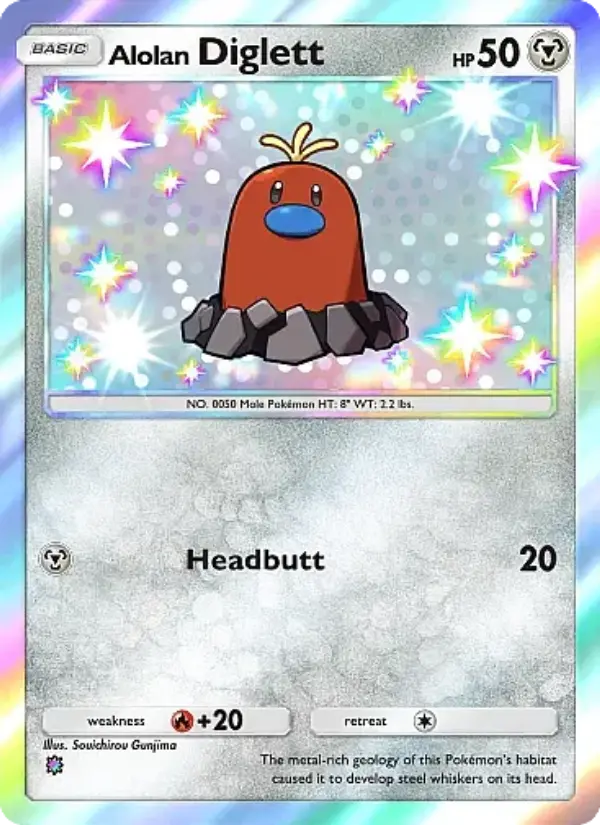
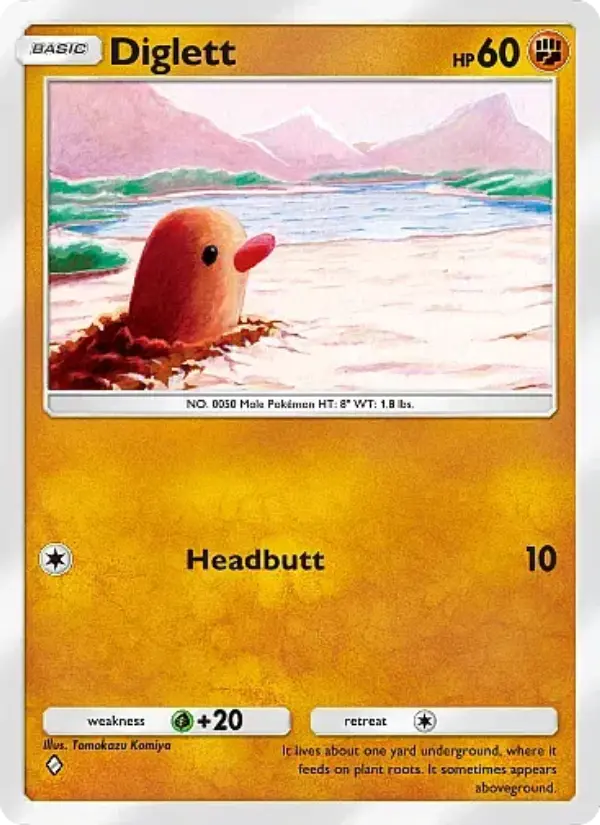
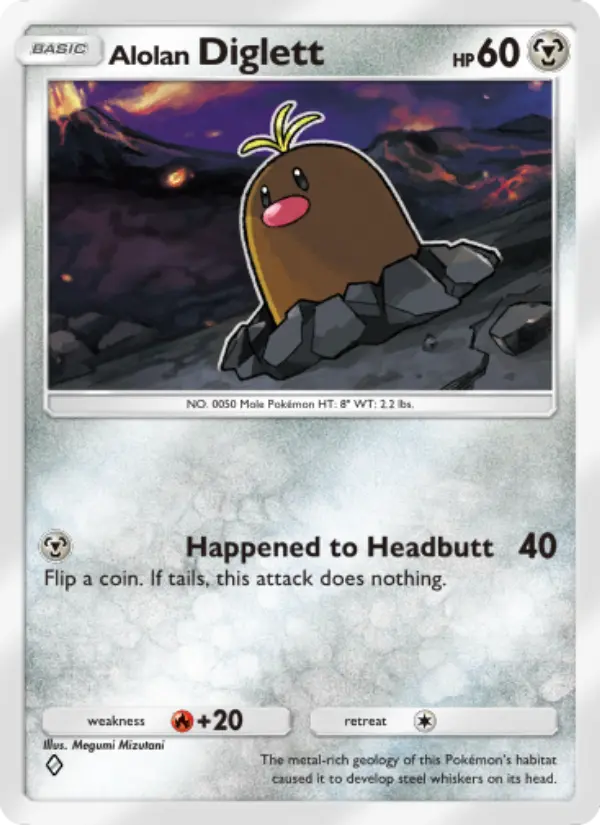
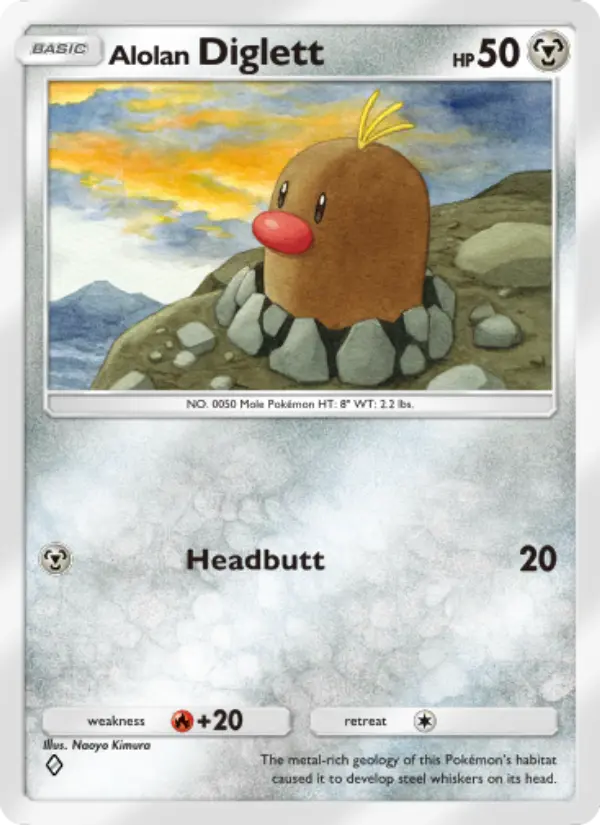
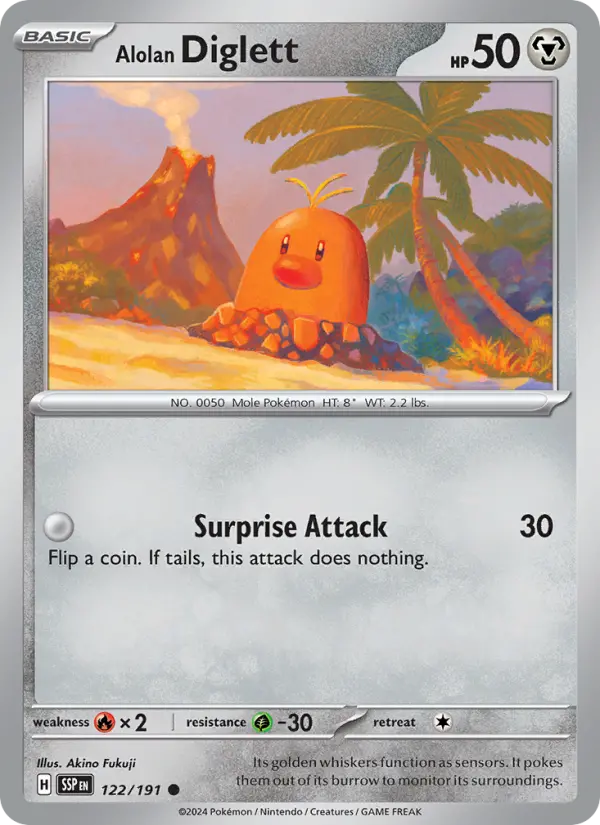
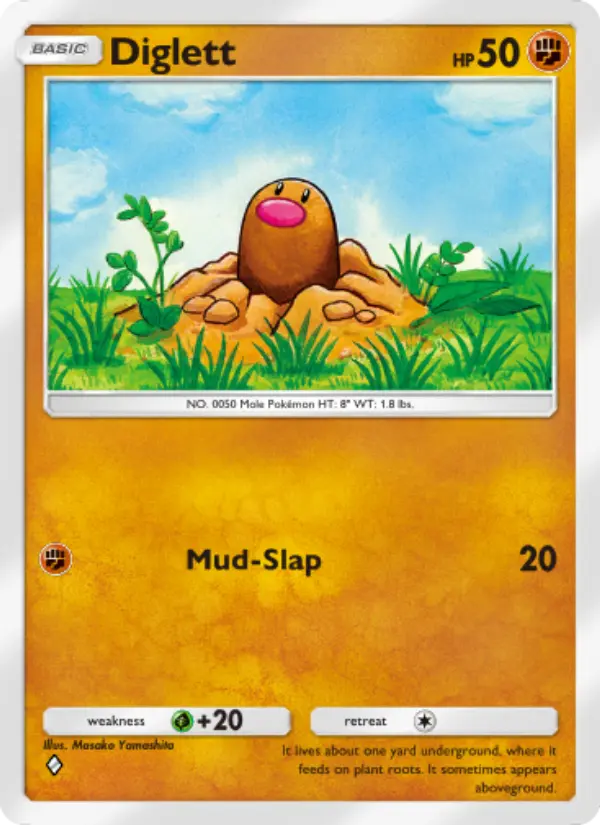
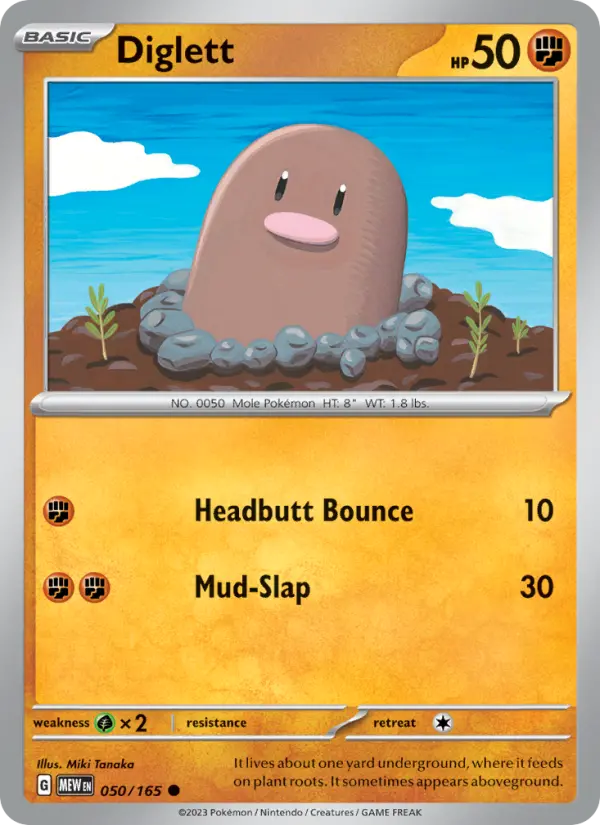
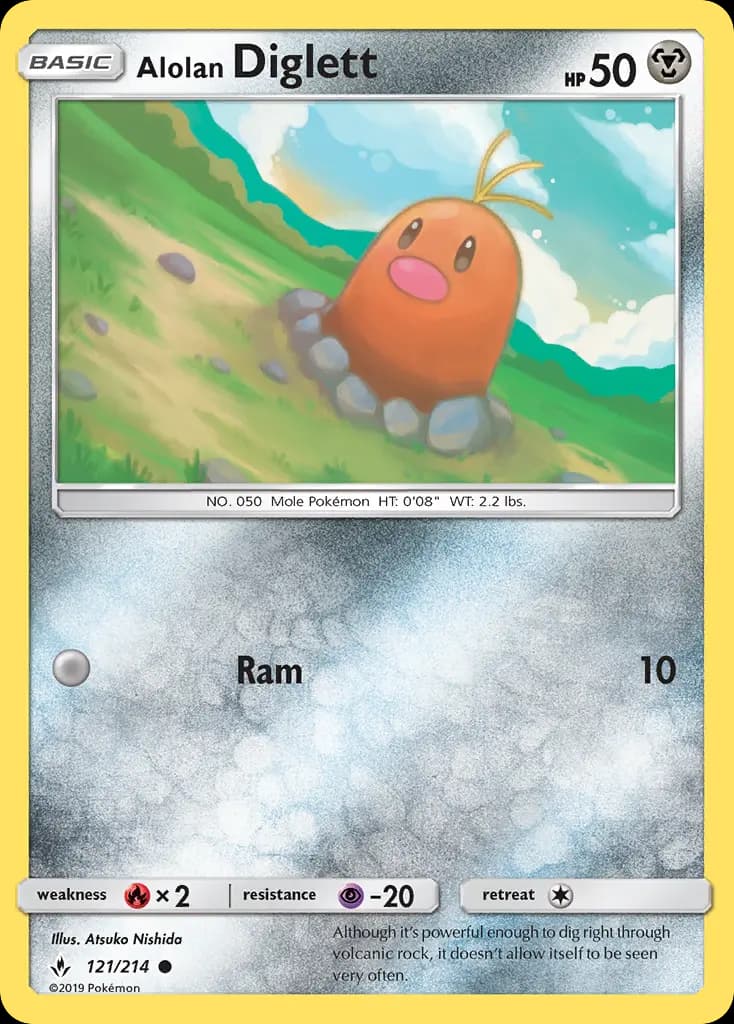
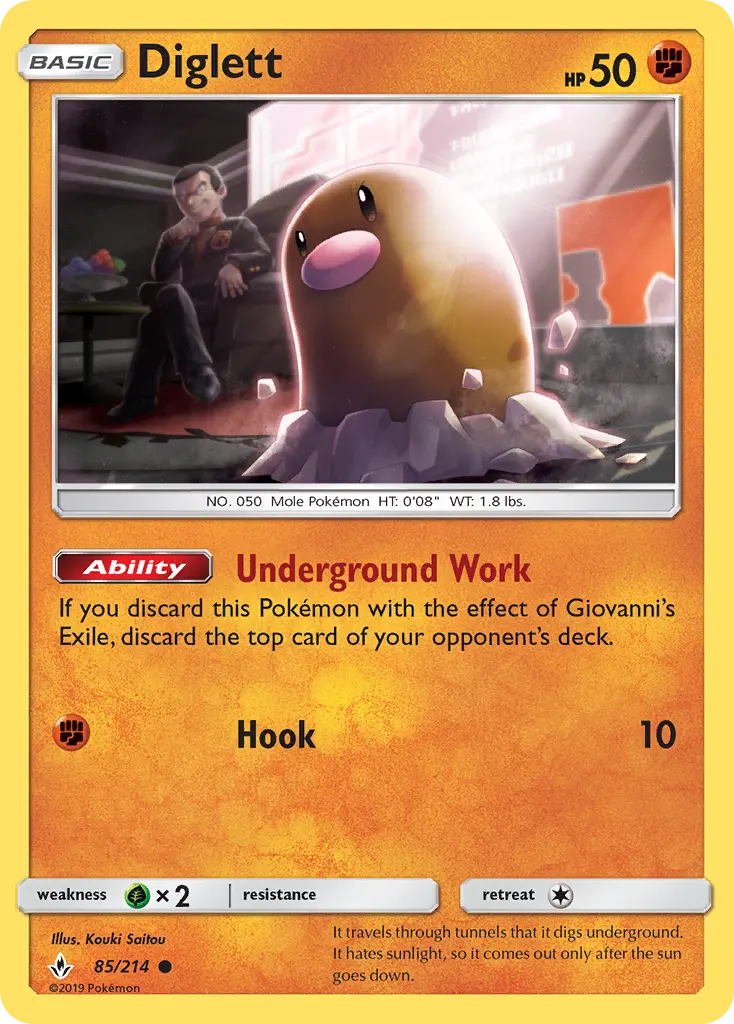
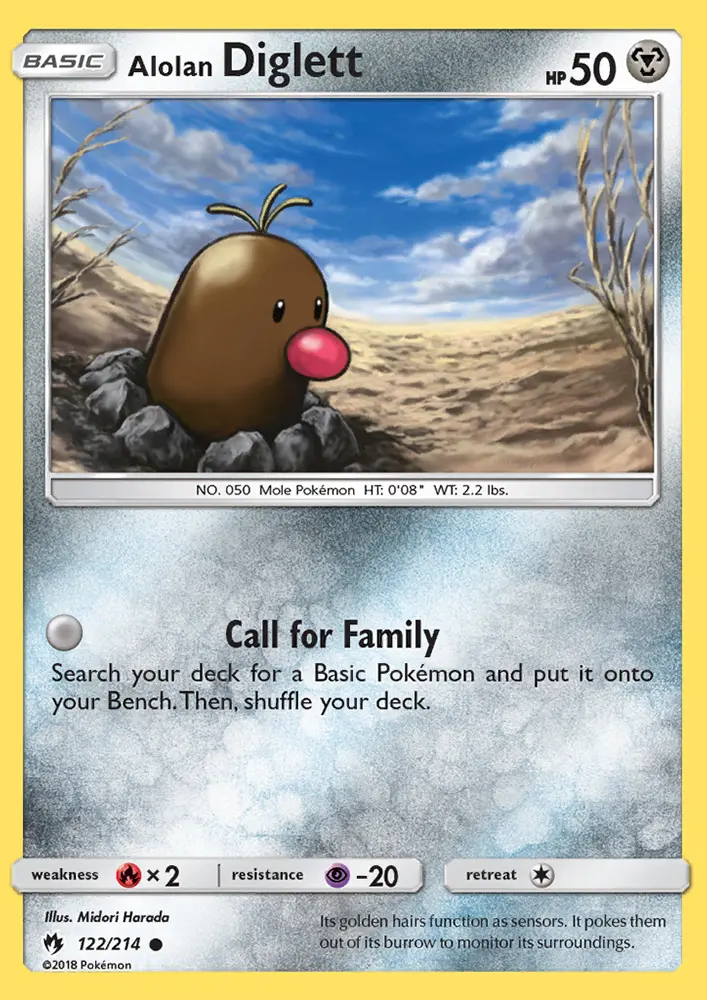
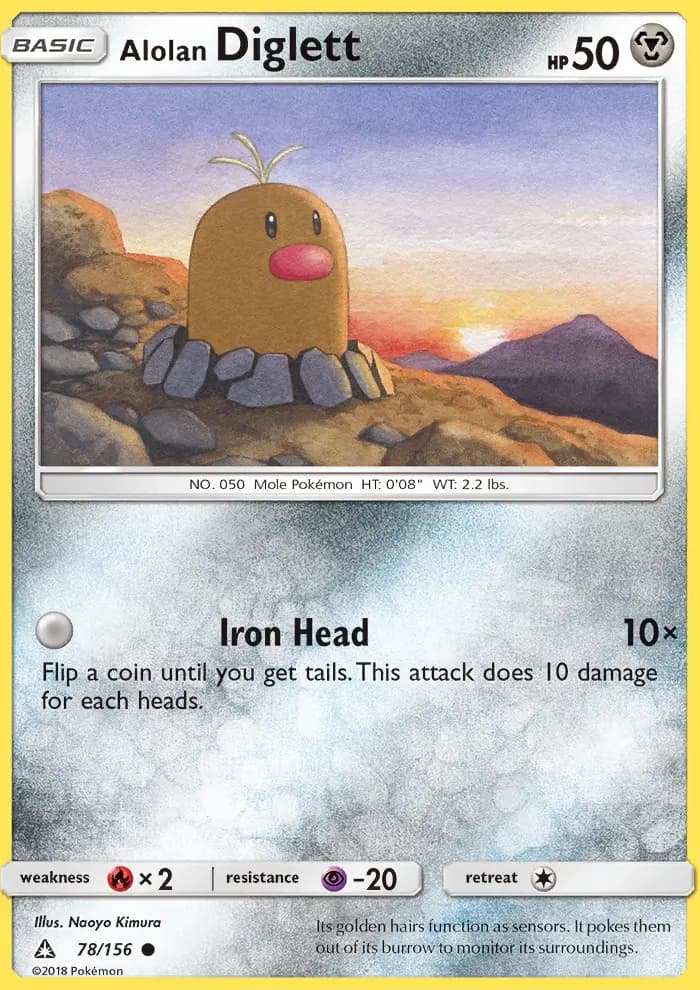
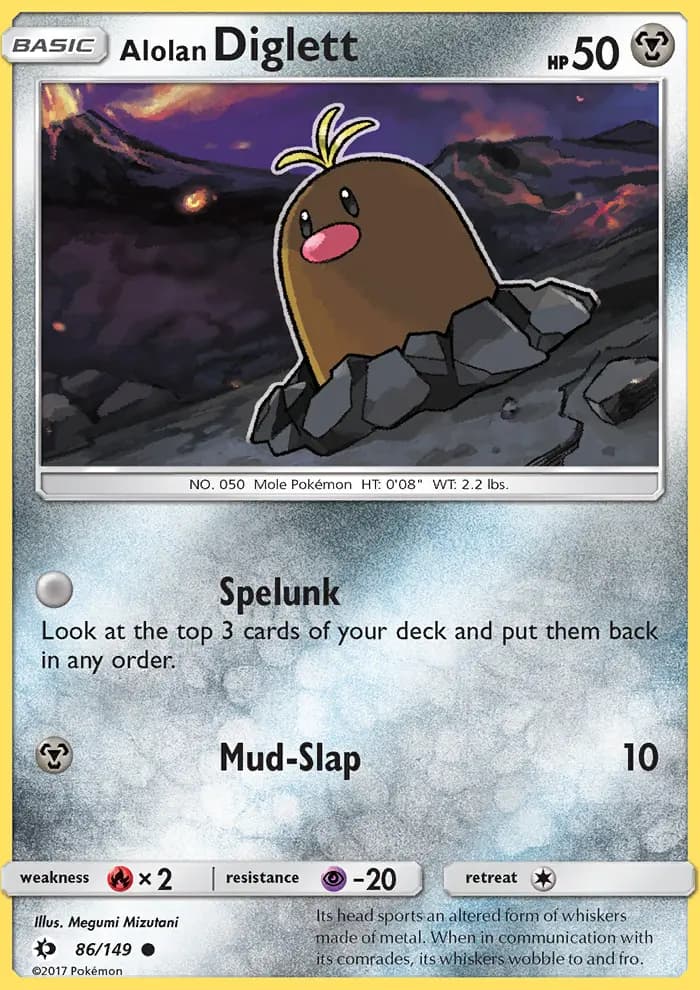
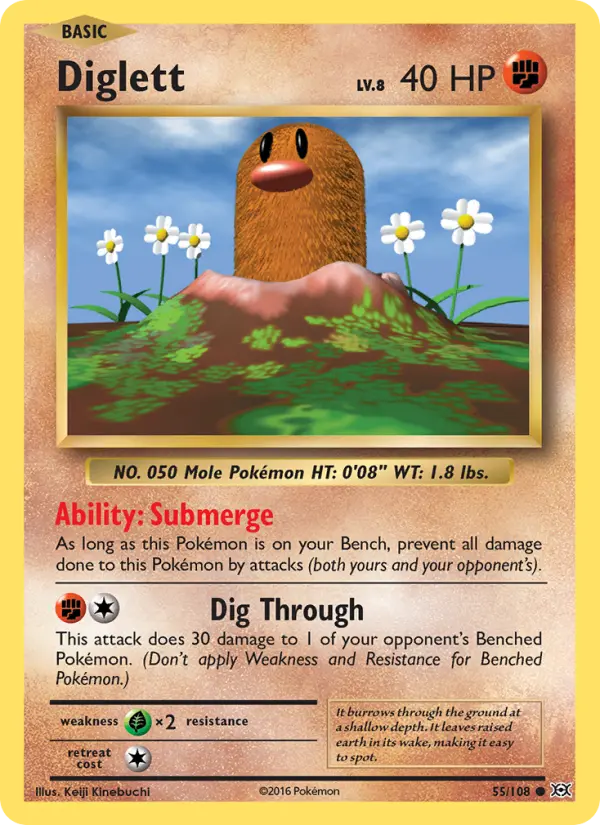
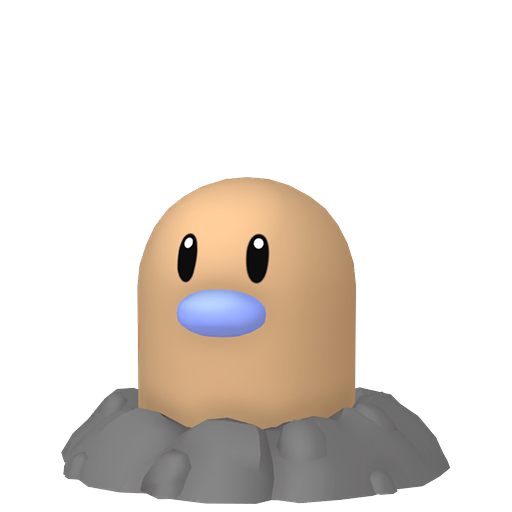
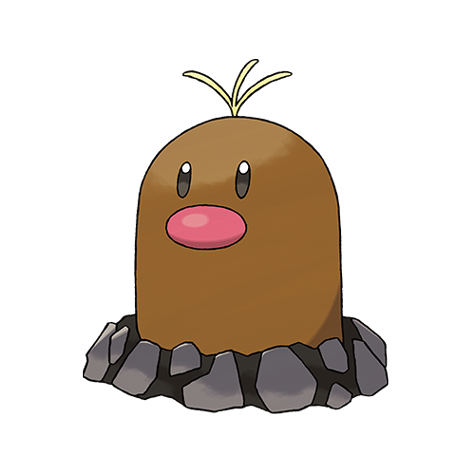
Diglett is a small, burrowing Pokémon characterized by its largely subterranean anatomy, with only its head visible above ground most of the time. Its rounded, compact body features beady black eyes and a distinctive large, round pink nose that dominates its facial features. Despite its visible head, Diglett possesses an entire body hidden underground, including feet, as confirmed by in-universe sources such as Pokémon Mystery Dungeon encounters. The species has extremely thin skin that is highly sensitive to light exposure, causing its blood to heat up and weakening the creature when exposed to bright sunlight—a biological adaptation reflecting its underground-dwelling nature. In the Alola region, Diglett exhibits a regional form that gains a Ground/Steel typing, featuring metallic spikes or hair-like steel protrusions along its head, fundamentally altering its appearance while maintaining its core mole-like structure. This Alolan variant weighs slightly more at 1.0 kilograms, suggesting a denser composition due to its steel-type nature.
Pokedex Numbers
Training
Breeding
Diglett Breeding, Gender Ratio & Egg Groups
There's no gender skew here: Diglett breeds at an even 50% male / 50% female rate. The species belongs to the Field egg group, indicating its classification alongside other terrestrial creatures and determining compatible breeding partners for the purpose of propagating the species. Diglett eggs require 20 cycles to hatch, translating to approximately 4,884 to 5,140 steps in-game depending on game mechanics and generation-specific variations. The species has a base happiness value of 70, which is considered moderate to moderately high, reflecting its generally docile nature and capacity to form bonds with trainers through typical friendship-building activities. Diglett females have no distinguishing visual characteristics from males, maintaining consistent design consistency across both genders. The breeding mechanics are straightforward, allowing trainers to produce Diglett offspring efficiently for the purposes of team-building or competitive training without significant complications or special conditions.
Sprites





Held Items
Soft Sand
type-enhancement
Held: Ground-Type moves from holder do 20% more damage.
Cost: 1000
Soft Sand
type-enhancement
Held: Ground-Type moves from holder do 20% more damage.
Cost: 1000
Soft Sand
type-enhancement
Held: Ground-Type moves from holder do 20% more damage.
Cost: 1000
Soft Sand
type-enhancement
Held: Ground-Type moves from holder do 20% more damage.
Cost: 1000
Soft Sand
type-enhancement
Held: Ground-Type moves from holder do 20% more damage.
Cost: 1000
Soft Sand
type-enhancement
Held: Ground-Type moves from holder do 20% more damage.
Cost: 1000
Soft Sand
type-enhancement
Held: Ground-Type moves from holder do 20% more damage.
Cost: 1000
Soft Sand
type-enhancement
Held: Ground-Type moves from holder do 20% more damage.
Cost: 1000
Soft Sand
type-enhancement
Held: Ground-Type moves from holder do 20% more damage.
Cost: 1000
Soft Sand
type-enhancement
Held: Ground-Type moves from holder do 20% more damage.
Cost: 1000
Soft Sand
type-enhancement
Held: Ground-Type moves from holder do 20% more damage.
Cost: 1000
Soft Sand
type-enhancement
Held: Ground-Type moves from holder do 20% more damage.
Cost: 1000
Soft Sand
type-enhancement
Held: Ground-Type moves from holder do 20% more damage.
Cost: 1000
Soft Sand
type-enhancement
Held: Ground-Type moves from holder do 20% more damage.
Cost: 1000
Soft Sand
type-enhancement
Held: Ground-Type moves from holder do 20% more damage.
Cost: 1000
Soft Sand
type-enhancement
Held: Ground-Type moves from holder do 20% more damage.
Cost: 1000
Soft Sand
type-enhancement
Held: Ground-Type moves from holder do 20% more damage.
Cost: 1000
Soft Sand
type-enhancement
Held: Ground-Type moves from holder do 20% more damage.
Cost: 1000
Soft Sand
type-enhancement
Held: Ground-Type moves from holder do 20% more damage.
Cost: 1000
Soft Sand
type-enhancement
Held: Ground-Type moves from holder do 20% more damage.
Cost: 1000
Soft Sand
type-enhancement
Held: Ground-Type moves from holder do 20% more damage.
Cost: 1000
Soft Sand
type-enhancement
Held: Ground-Type moves from holder do 20% more damage.
Cost: 1000
Soft Sand
type-enhancement
Held: Ground-Type moves from holder do 20% more damage.
Cost: 1000
Soft Sand
type-enhancement
Held: Ground-Type moves from holder do 20% more damage.
Cost: 1000
Soft Sand
type-enhancement
Held: Ground-Type moves from holder do 20% more damage.
Cost: 1000
Soft Sand
type-enhancement
Held: Ground-Type moves from holder do 20% more damage.
Cost: 1000
Soft Sand
type-enhancement
Held: Ground-Type moves from holder do 20% more damage.
Cost: 1000
Soft Sand
type-enhancement
Held: Ground-Type moves from holder do 20% more damage.
Cost: 1000
Soft Sand
type-enhancement
Held: Ground-Type moves from holder do 20% more damage.
Cost: 1000
Soft Sand
type-enhancement
Held: Ground-Type moves from holder do 20% more damage.
Cost: 1000
Soft Sand
type-enhancement
Held: Ground-Type moves from holder do 20% more damage.
Cost: 1000
Soft Sand
type-enhancement
Held: Ground-Type moves from holder do 20% more damage.
Cost: 1000
Soft Sand
type-enhancement
Held: Ground-Type moves from holder do 20% more damage.
Cost: 1000
Soft Sand
type-enhancement
Held: Ground-Type moves from holder do 20% more damage.
Cost: 1000
TMs & HMs
tm01
black white
tm01
black 2 white 2
tm01
lets go pikachu lets go eevee
tm01
ultra sun ultra moon
tm01
omega ruby alpha sapphire
tm01
sun moon
tm01
x y
tm02
crystal
tm02
gold silver
tm03
yellow
tm03
crystal
tm03
gold silver
tm03
red blue
tm03
lets go pikachu lets go eevee
tm03
blue japan
tm03
red green japan
tm05
lets go pikachu lets go eevee
tm06
yellow
tm06
gold silver
tm06
red blue
+586 more TMs/HMs


Diglett Evolution, Mega Evolution & Special Forms
Diglett evolves into Dugtrio at level 26, a straightforward evolution that significantly enhances its combat capabilities and base stats. The evolution represents a tripling of the creature's power, both physically and in terms of overall battle effectiveness, though Diglett itself serves as a valuable early-game Pokémon despite its modest base stats totaling just 265. The pre-evolution form benefits from exceptional Speed (95), which is notably high for a Ground-type and allows it to act quickly in battle despite its frail defenses and extremely low HP of just 10. This speed advantage makes Diglett capable of executing strategies based on priority moves and outpacing opponents despite its physical limitations. In Alola, the regional Diglett similarly evolves into Alolan Dugtrio at level 26, maintaining the Ground/Steel typing throughout its evolutionary line. Both evolutionary paths follow the same level requirement, allowing trainers to choose when to advance their Diglett based on move pool development and strategic considerations rather than arbitrary timing constraints.
Where to Find
Digletts Cave
kanto
+95 more
Sinnoh Route 228
sinnoh
+15 more
Johto Route 48
johto
Vermilion City
kanto
Diglett Behaviour and Natural Habitat
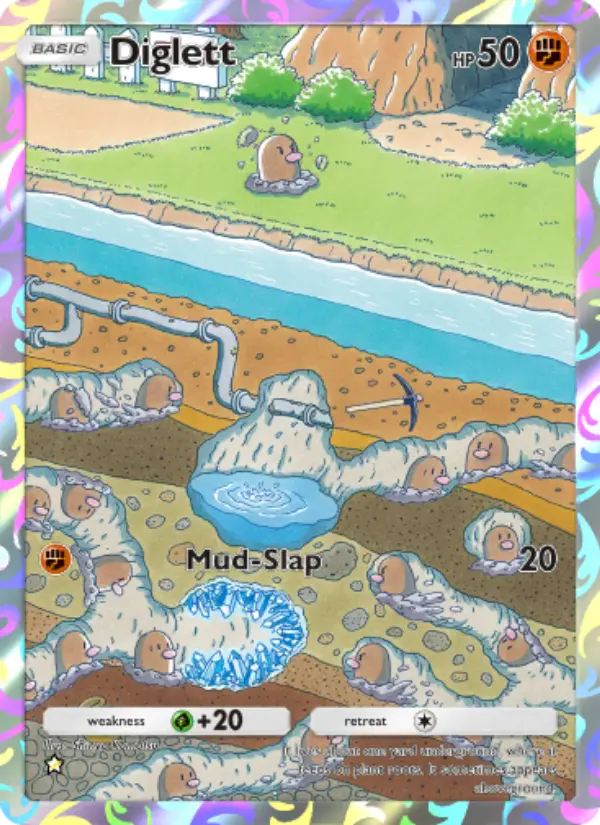
Diglett is a creature of the underground, spending the vast majority of its time burrowing through soil approximately one yard beneath the surface while feeding on plant roots. The species exhibits a strong preference for dark environments and generally avoids bright light, making it primarily nocturnal or crepuscular in its activity patterns. It occasionally emerges above ground, particularly in cave systems where it can avoid excessive sunlight exposure. Agricultural communities have learned to appreciate Diglett's burrowing habits, as the Pokémon leaves soil perfectly tilled and aerated in its wake—a side effect that actually enriches soil composition and makes it ideal for growing crops and vegetables. This symbiotic relationship has led to Diglett being actively raised and encouraged on most farms throughout the Pokémon world. When threatened or sensing danger, Diglett tends to quickly retreat underground rather than engage in prolonged confrontation, reflecting its cautious and defensive nature as a small prey species.
Pokedex Entries
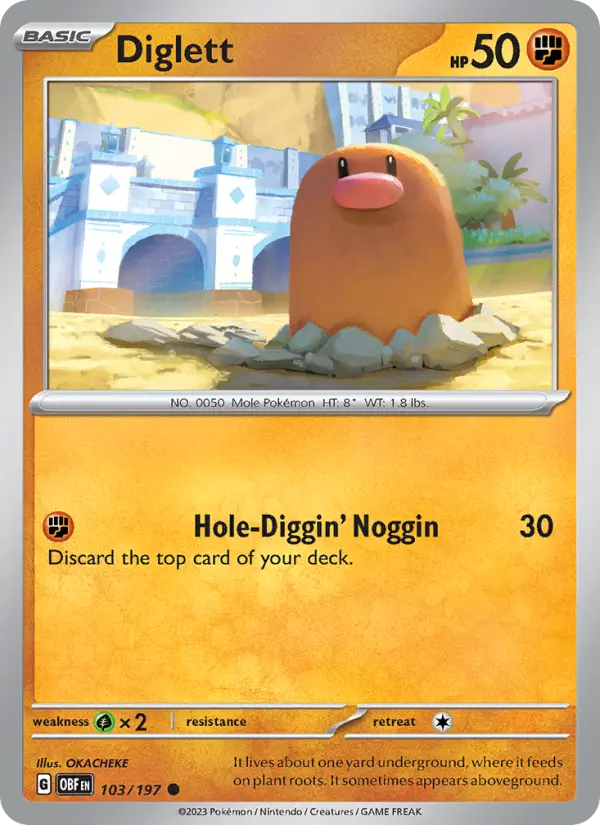
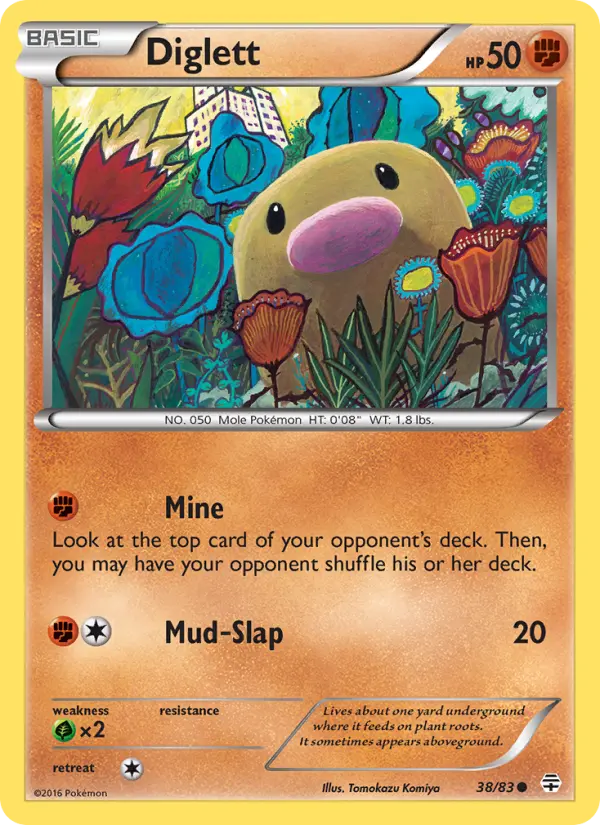
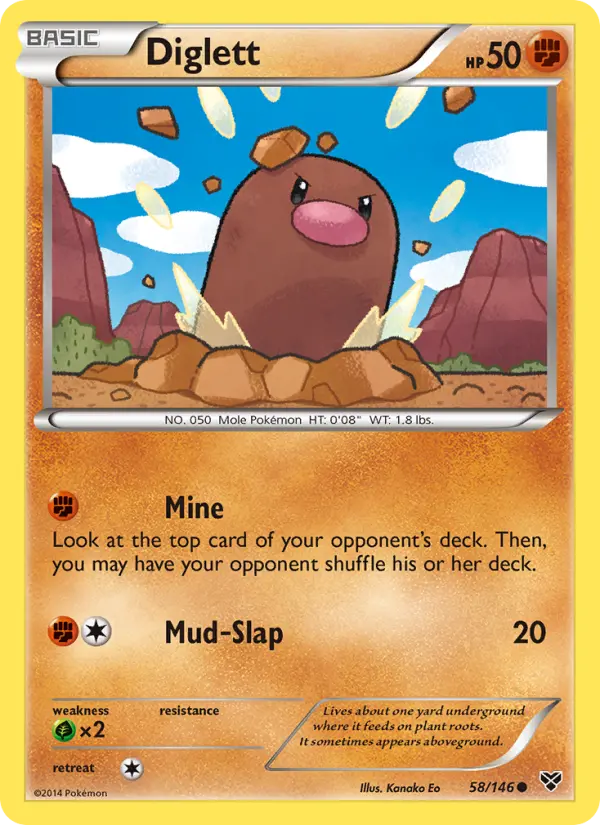
Lives about one yard underground where it feeds on plant roots. It sometimes appears above ground.
It prefers dark places. It spends most of its time underground, though it may pop up in caves.
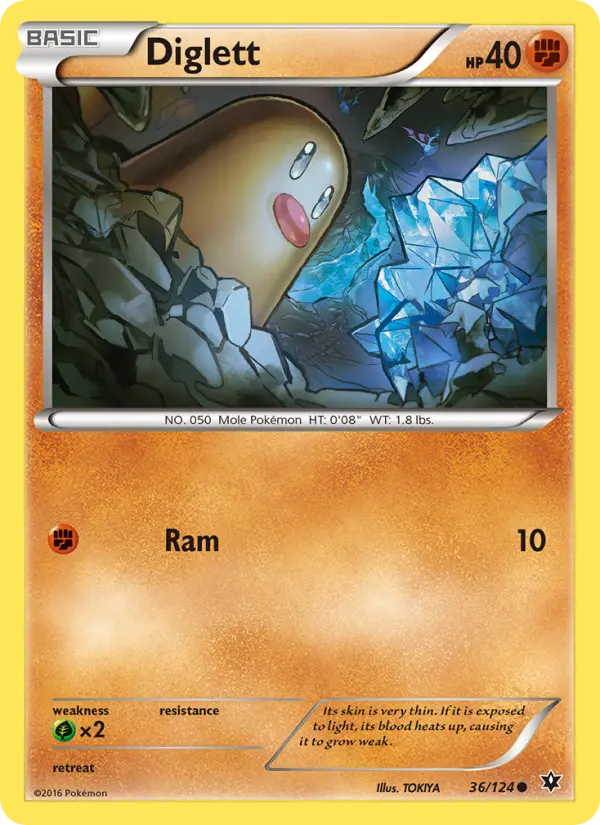
Its skin is very thin. If it is exposed to light, its blood heats up, causing it to grow weak.
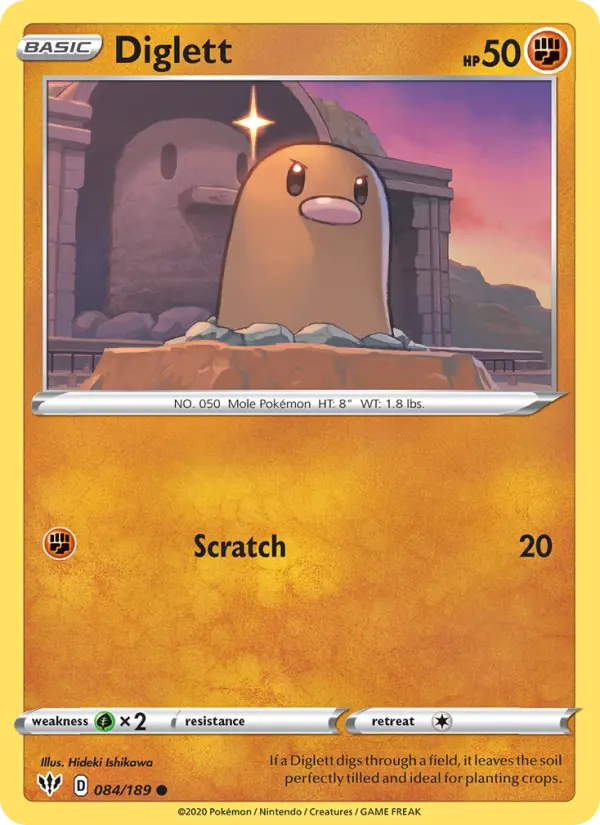
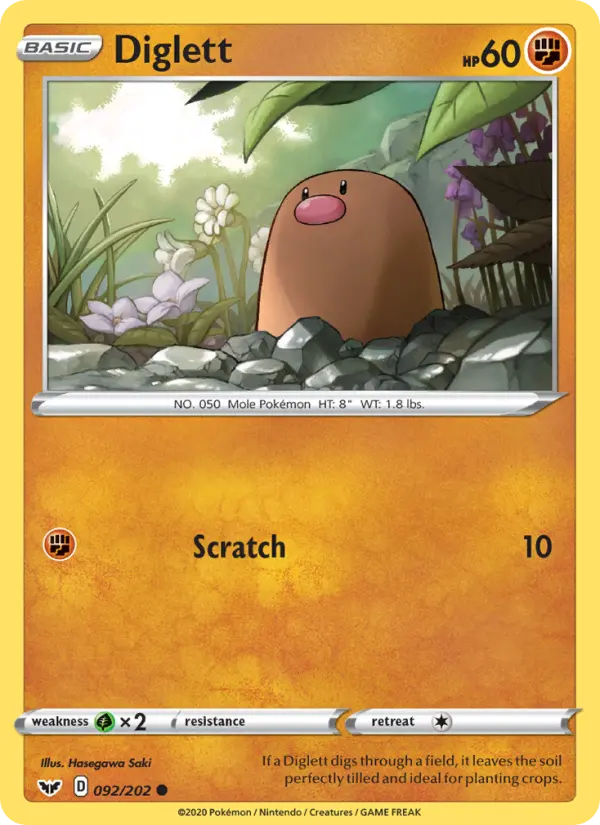
If a DIGLETT DIGS through a field, it leaves the soil perfectly tilled and ideal for planting crops.
It digs under ground and chews on tree roots, sticking its head out only when the sun isn't bright.
DIGLETT are raised in most farms. The reason is simple - wherever this POKéMON burrows, the soil is left perfectly tilled for planting crops. This soil is made ideal for growing delicious vegetables.
DIGLETT are raised in most farms. The reason is simple--wherever they burrow, the soil is left perfectly tilled for growing delicious crops.
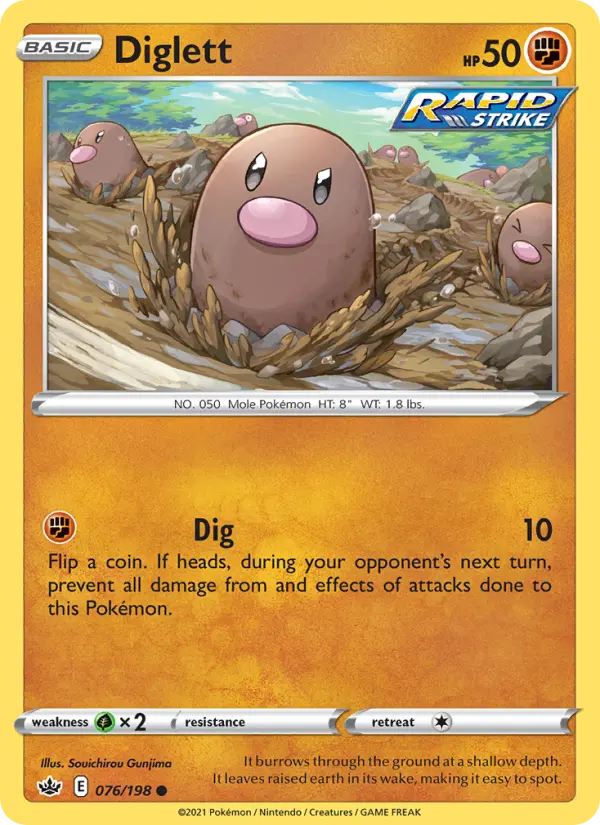
It burrows through the ground at a shallow depth. It leaves raised earth in its wake, making it easy to spot.
Lives about one yard underground where it feeds on plant roots. It sometimes appears aboveground.
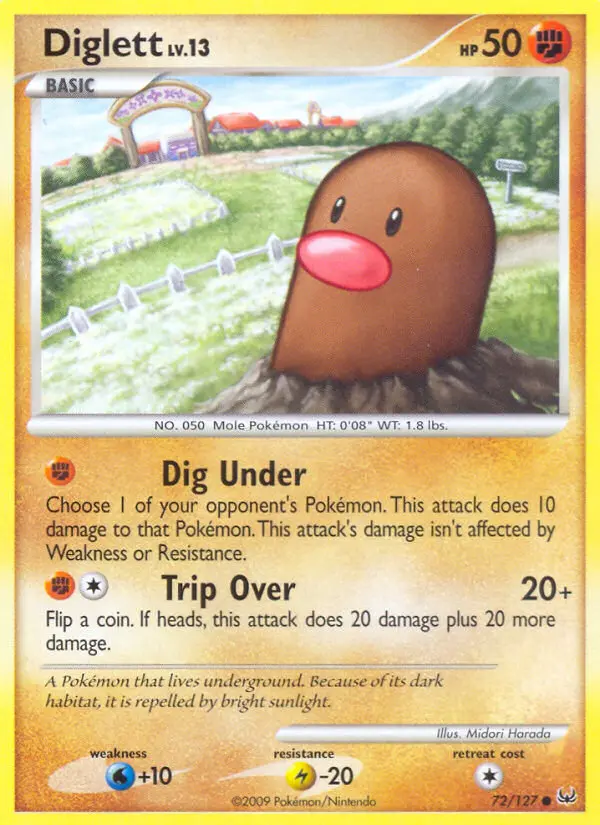
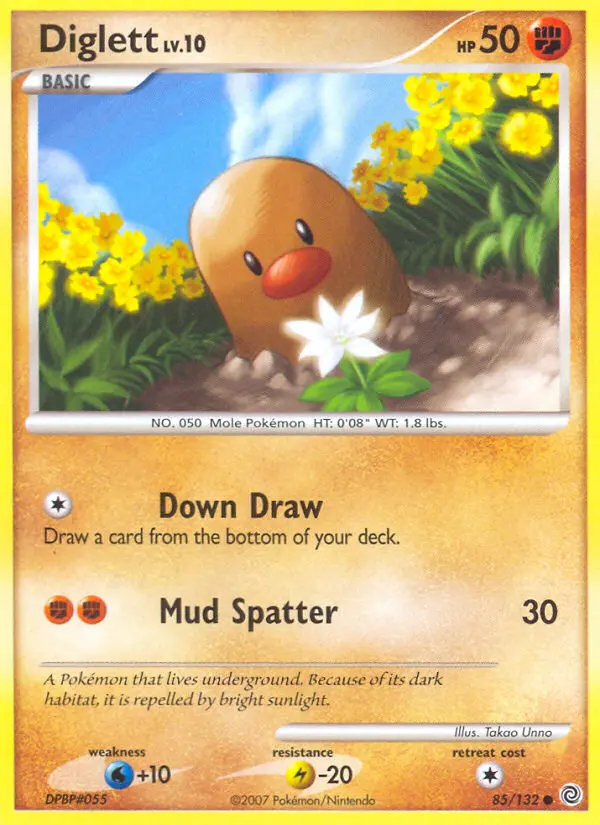
A Pokémon that lives underground. Because of its dark habitat, it is repelled by bright sunlight.
Its skin is very thin. If it is exposed to light, its blood heats up, causing it to grow weak.
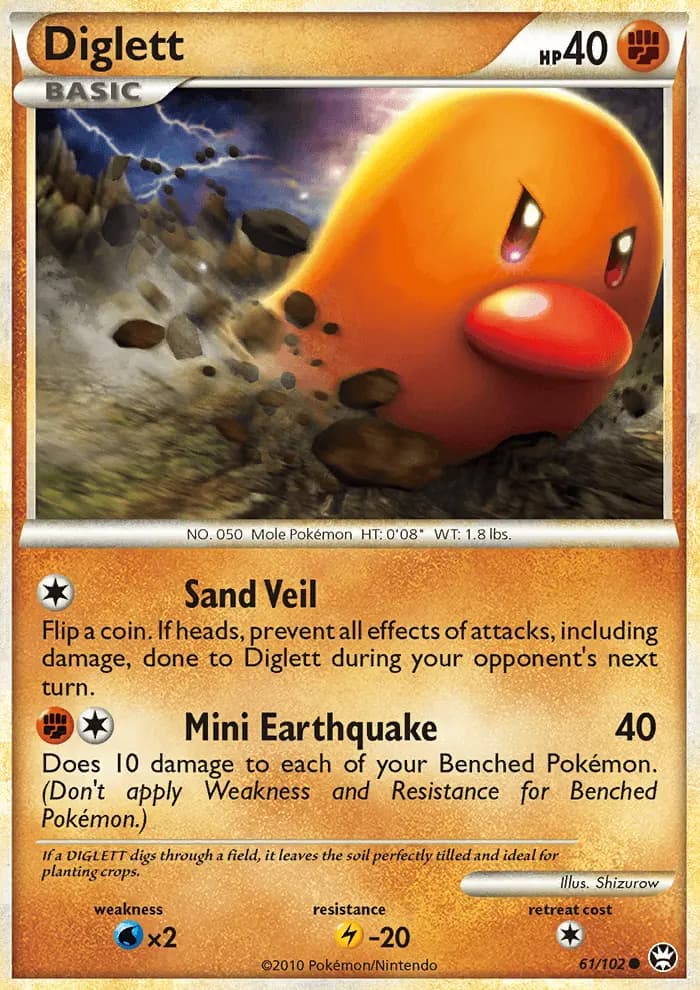
If a DIGLETT digs through a field, it leaves the soil perfectly tilled and ideal for planting crops.
A Pokémon that lives underground. Because of its dark habitat, it is repelled by bright sunlight.
A Pokémon that lives underground. Because of its dark habitat, it is repelled by bright sunlight.
Lives about one yard underground where it feeds on plant roots. It sometimes appears aboveground.
Its skin is very thin. If it is exposed to light, its blood heats up, causing it to grow weak.
Diglett are raised in most farms. The reason is simple— wherever this Pokémon burrows, the soil is left perfectly tilled for planting crops. This soil is made ideal for growing delicious vegetables.
It chews on plant roots underground. Farmers whose vegetables are vulnerable find it can be quite a pest.
It travels through tunnels that it digs underground. It hates sunlight, so it comes out only after the sun goes down.
Many farmers cherish and nurture Diglett because its droppings enrich the soil it lives in.
Around their crops, farmers plant the kind of tree that Diglett like to eat as a way of getting Diglett to plow the fields for them.
It prefers dark places. It spends most of its time underground, though it may pop up in caves.
If a Diglett digs through a field, it leaves the soil perfectly tilled and ideal for planting crops.
It burrows through the ground at a shallow depth. It leaves raised earth in its wake, making it easy to spot.
Diglett Name Origin & Design Inspiration
Diglett's name traces back to the combination of "dig" and "let," the latter being a diminutive suffix denoting its small stature and role as a lesser counterpart to Dugtrio. In Japanese, it is known as Digda (ディグダ), following a similar etymology pattern with "dig" forming the root component. Diglett's design draws clear inspiration from real-world moles and mole-rats, capturing the essential characteristics of burrowing mammals through its prominent nose, subterranean lifestyle, and preference for underground environments. The creature's appearance—particularly its bulbous nose and the contrast between its visible head and hidden body—creates immediate visual recognition and communicates its core identity as an underground dweller. The design intentionally emphasizes vulnerability through its small size and frail appearance, contrasting with its surprisingly high speed stat, which creates an interesting dissonance that reflects the real-world behavior of small burrowing animals that rely on speed and maneuverability to escape predators. The Alolan variant's introduction of metallic spikes and steel-type characteristics represents an evolutionary adaptation to the volcanic and mineral-rich environments of the Alola region, showing how the species has adapted to different geological conditions across the Pokémon world.
Learnable Moves
Diglett can learn 79 moves:
Move | Type | Cat. | Power | Acc. | PP |
|---|---|---|---|---|---|
| aerial ace | flying | Physical | 60 | — | 20 |
| agility | psychic | Status | — | — | 30 |
| ally switch | psychic | Status | — | — | 15 |
| ancient power | rock | Special | 60 | 100 | 5 |
| assurance | dark | Physical | 60 | 100 | 10 |
| astonish | ghost | Physical | 30 | 100 | 15 |
| attract | normal | Status | — | 100 | 15 |
| beat up | dark | Physical | — | 100 | 10 |
| bide | normal | Physical | — | — | 10 |
| body slam | normal | Physical | 85 | 100 | 15 |
| bulldoze | ground | Physical | 60 | 100 | 20 |
| captivate | normal | Status | — | 100 | 20 |
| charm | fairy | Status | — | 100 | 20 |
| confide | normal | Status | — | — | 20 |
| curse | ghost | Status | — | — | 10 |
| cut | normal | Physical | 50 | 95 | 30 |
| dig | ground | Physical | 80 | 100 | 10 |
| double team | normal | Status | — | — | 15 |
| double edge | normal | Physical | 120 | 100 | 15 |
| earth power | ground | Special | 90 | 100 | 10 |
| earthquake | ground | Physical | 100 | 100 | 10 |
| echoed voice | normal | Special | 40 | 100 | 15 |
| endeavor | normal | Physical | — | 100 | 5 |
| endure | normal | Status | — | — | 10 |
| facade | normal | Physical | 70 | 100 | 20 |
| feint attack | dark | Physical | 60 | — | 20 |
| final gambit | fighting | Special | — | 100 | 5 |
| fissure | ground | Physical | — | 30 | 5 |
| foul play | dark | Physical | 95 | 100 | 15 |
| frustration | normal | Physical | — | 100 | 20 |
| fury swipes | normal | Physical | 18 | 80 | 15 |
| growl | normal | Status | — | 100 | 40 |
| headbutt | normal | Physical | 70 | 100 | 15 |
| helping hand | normal | Status | — | — | 20 |
| hidden power | normal | Special | 60 | 100 | 15 |
| hone claws | dark | Status | — | — | 15 |
| magnitude | ground | Physical | — | 100 | 30 |
| memento | dark | Status | — | 100 | 10 |
| mimic | normal | Status | — | — | 10 |
| mud bomb | ground | Special | 65 | 85 | 10 |
| mud shot | ground | Special | 55 | 95 | 15 |
| mud slap | ground | Special | 20 | 100 | 10 |
| natural gift | normal | Physical | — | 100 | 15 |
| protect | normal | Status | — | — | 10 |
| pursuit | dark | Physical | 40 | 100 | 20 |
| rage | normal | Physical | 20 | 100 | 20 |
| rest | psychic | Status | — | — | 5 |
| return | normal | Physical | — | 100 | 20 |
| reversal | fighting | Physical | — | 100 | 15 |
| rock blast | rock | Physical | 25 | 90 | 10 |
| rock slide | rock | Physical | 75 | 90 | 10 |
| rock smash | fighting | Physical | 40 | 100 | 15 |
| rock tomb | rock | Physical | 60 | 95 | 15 |
| round | normal | Special | 60 | 100 | 15 |
| sand attack | ground | Status | — | 100 | 15 |
| sand tomb | ground | Physical | 35 | 85 | 15 |
| sandstorm | rock | Status | — | — | 10 |
| scratch | normal | Physical | 40 | 100 | 35 |
| screech | normal | Status | — | 85 | 40 |
| secret power | normal | Physical | 70 | 100 | 20 |
| shadow claw | ghost | Physical | 70 | 100 | 15 |
| slash | normal | Physical | 70 | 100 | 20 |
| sleep talk | normal | Status | — | — | 10 |
| sludge bomb | poison | Special | 90 | 100 | 10 |
| smack down | rock | Physical | 50 | 100 | 15 |
| snore | normal | Special | 50 | 100 | 15 |
| stealth rock | rock | Status | — | — | 20 |
| stone edge | rock | Physical | 100 | 80 | 5 |
| substitute | normal | Status | — | — | 10 |
| sucker punch | dark | Physical | 70 | 100 | 5 |
| sunny day | fire | Status | — | — | 5 |
| swagger | normal | Status | — | 85 | 15 |
| swords dance | normal | Status | — | — | 20 |
| take down | normal | Physical | 90 | 85 | 20 |
| thief | dark | Physical | 60 | 100 | 25 |
| throat chop | dark | Physical | 80 | 100 | 15 |
| toxic | poison | Status | — | 90 | 10 |
| uproar | normal | Special | 90 | 100 | 10 |
| work up | normal | Status | — | — | 30 |
Diglett Competitive Battle Guide
Judged by competitive standards, Diglett serves as a surprisingly viable utility Pokémon despite its modest base stats total of 265, leveraging its excellent Speed stat of 95 to outpace many opponents and execute hit-and-run strategies. Its signature ability, Arena Trap, prevents opponents from switching out, making it an excellent tool for trapping dangerous threats and forcing advantageous matchups for the rest of the team—particularly when paired with faster teammates that can capitalize on locked-in opponents. Sand Veil provides evasion boosts during sandstorm weather, increasing evasion to 1.25 times normal, while the hidden ability Sand Force boosts Rock, Ground, and Steel-type moves to 1.3 times their power in sandy conditions, rewarding strategic team composition around weather control. Diglett's Attack stat of 55 is modest but sufficient for moves like Earthquake, which becomes devastatingly powerful under Sand Force, and its coverage moves provide utility value. Its fragility with only 10 HP and 25 Defense limits its survivability, necessitating careful play and quick offensive pressure. The Alolan form's Ground/Steel typing provides superior defensive coverage with reduced weakness to Ground-type moves, though it loses 5 Speed points (90 vs 95), forcing trainers to evaluate which form better suits their team composition and strategic objectives.
Commonly Asked Questions About Diglett
What type is Diglett?
Diglett is a ground type Pokemon.
What does Diglett evolve into?
Diglett evolves into dugtrio.
What are Diglett's weaknesses?
Diglett is weak to water, grass and ice type moves.
Does Diglett evolve by trading?
No — Diglett evolves entirely through leveling up, with no trade required at any stage.
Where can I find Diglett?
Diglett can be found in digletts cave (kanto), sinnoh route 228 (sinnoh) and johto route 48 (johto) and 1 other locations.
Diglett Cultural Impact & Franchise History
Diglett has held a special place in Pokémon culture since the franchise's debut in Generation I, becoming synonymous with agricultural symbiosis and the positive relationship between humans and Pokémon in rural communities. Its reputation as a farming aid has been firmly established across multiple Pokédex entries and in-universe lore, creating a compelling narrative around a Pokémon that provides tangible benefits to human society simply through its natural behavior. The species has made numerous appearances in the Pokémon animated series and various manga adaptations, often portrayed as helpful and hardworking companions rather than creatures to be battled. Diglett's iconic visual design—particularly its simple but memorable appearance of a head protruding from the ground—has made it instantly recognizable and beloved by fans across multiple generations. The introduction of Alolan Diglett brought renewed attention to the species, showcasing how it adapts to radically different environments while maintaining its essential character. Fan communities have embraced Diglett for its endearing simplicity and competitive viability, creating extensive discussions about optimal strategies, movesets, and breeding patterns that continue to evolve with each new generation.
Where to Find Diglett in Every Pokémon Game
Diglett has been consistently available across nearly every Pokémon game since Generation I, appearing in multiple regions and remaining a staple Ground-type catch for players. In the original Red, Blue, and Yellow games, Diglett appears as Pokédex entry #050 in Kanto, where it can be found in various caves and underground areas. Throughout subsequent generations, Diglett maintained prominent availability in HeartGold/SoulSilver, FireRed/LeafGreen, X/Y, Sun/Moon, and Let's Go Pikachu/Let's Go Eevee, ensuring that trainers across different eras and platforms could easily incorporate it into their teams. In Alola, players encounter both standard Diglett and its Alolan regional form, with the region-specific variant appearing in specific locations aligned with its Steel-type designation. Sword/Shield and the more recent Scarlet/Violet releases continue to provide access to Diglett, though players should note the introduction of Wiglett, a separate but visually similar species in Scarlet/Violet that is not an alternate form or regional variant despite surface-level design similarities. The remarkably high catch rate of 255 ensures that encountering and catching Diglett presents virtually no difficulty, making it an accessible choice for casual and competitive players alike. Breeding through the Field egg group offers another reliable method of obtaining Diglett across generations, particularly for players seeking specific natures or individual values.