Geodude
Generation I · #0074 — Rock Pokémon
Geodude's rock head ability is the first thing worth knowing about it — everything else, from its rock/ground typing to its build, follows from how that ability gets used. At 0.4 m and 20.0 kg, its build reflects a specialist role rather than a generalist one. With a aggregate stat total of 300 points, Geodude specializes in defense with an impressive base Defense stat of 100, making it a surprisingly sturdy choice despite its modest physical appearance. The species boasts a notably high catch rate of 255, making it one of the easiest Pokémon to capture in the wild. Geodude's approachable nature in gameplay is reflected in its friendly base happiness of 70, suggesting that these rocky creatures form bonds with trainers relatively easily.
Editor's Take
Geodude is the Pokémon most likely to end a first playthrough via a self-destructing trainer battle, and I'd argue that's a more memorable legacy than any of its stats.
Base Stats
Height
0.4m
Weight
20.0kg
Category
Rock Pokémon
Gender
Male 50% / Female 50%
Color
brown
Shape
arms
Habitat
mountain
Abilities
Protects against recoil damage.
Prevents being KOed from full HP, leaving 1 HP instead. Protects against the one-hit KO moves regardless of HP.
Increases evasion to 1.25× during a sandstorm. Protects against sandstorm damage.

Geodude Biology & Physical Characteristics
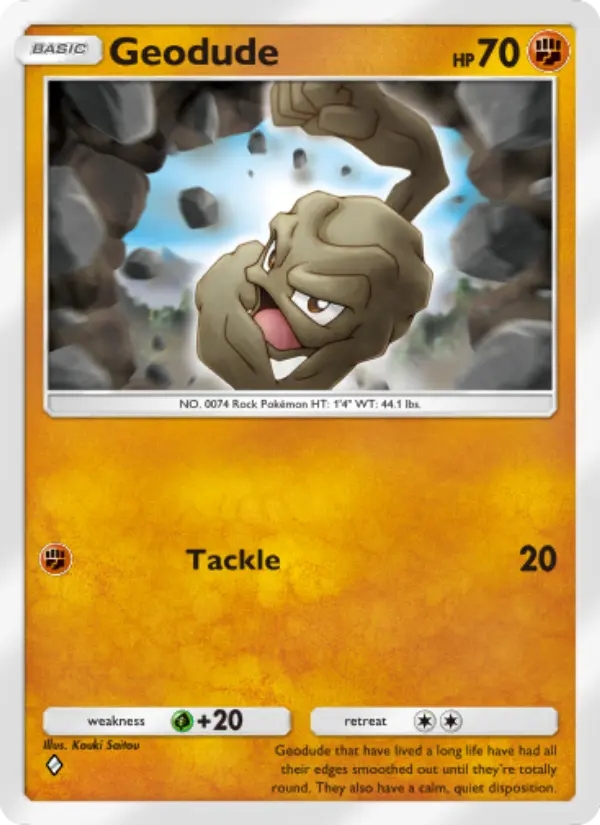
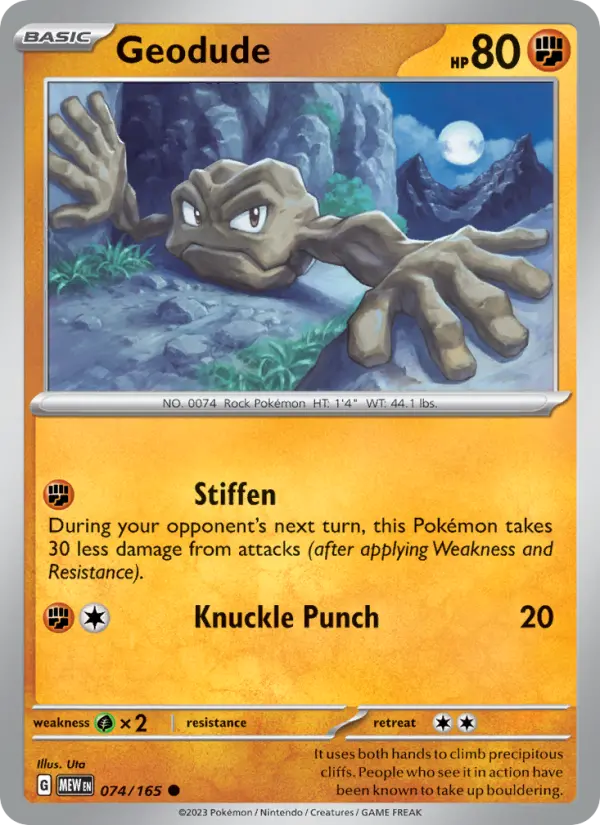
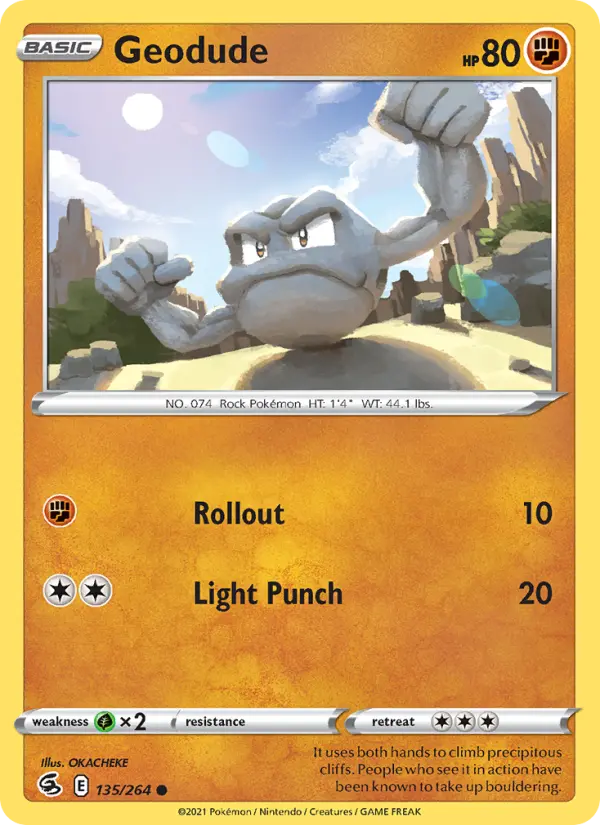
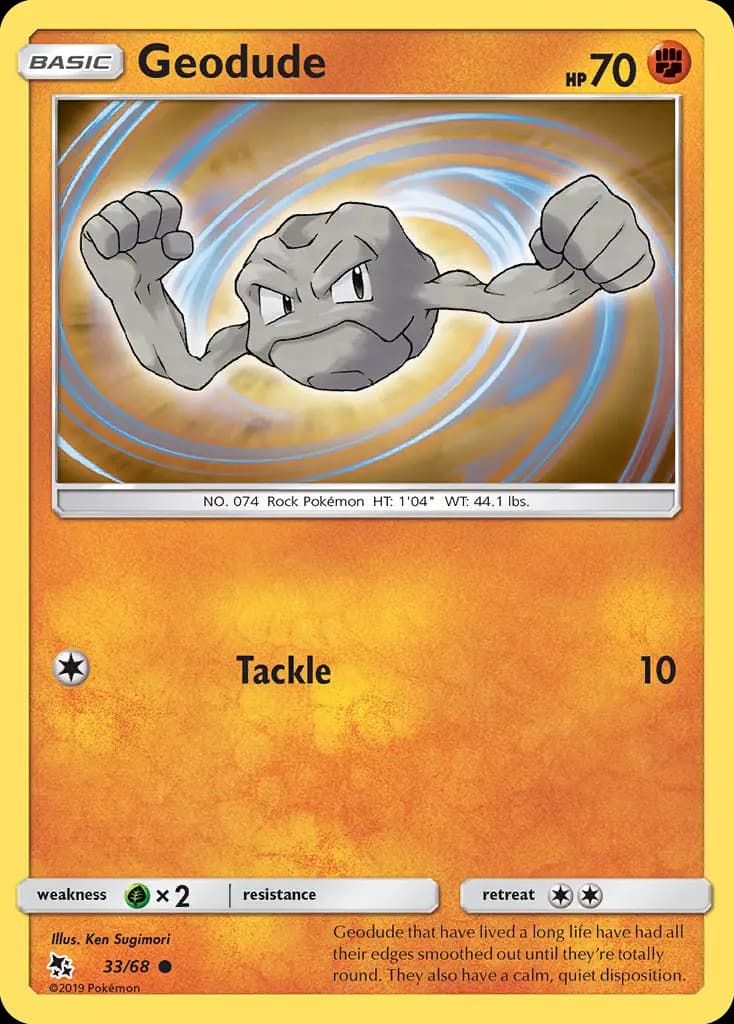
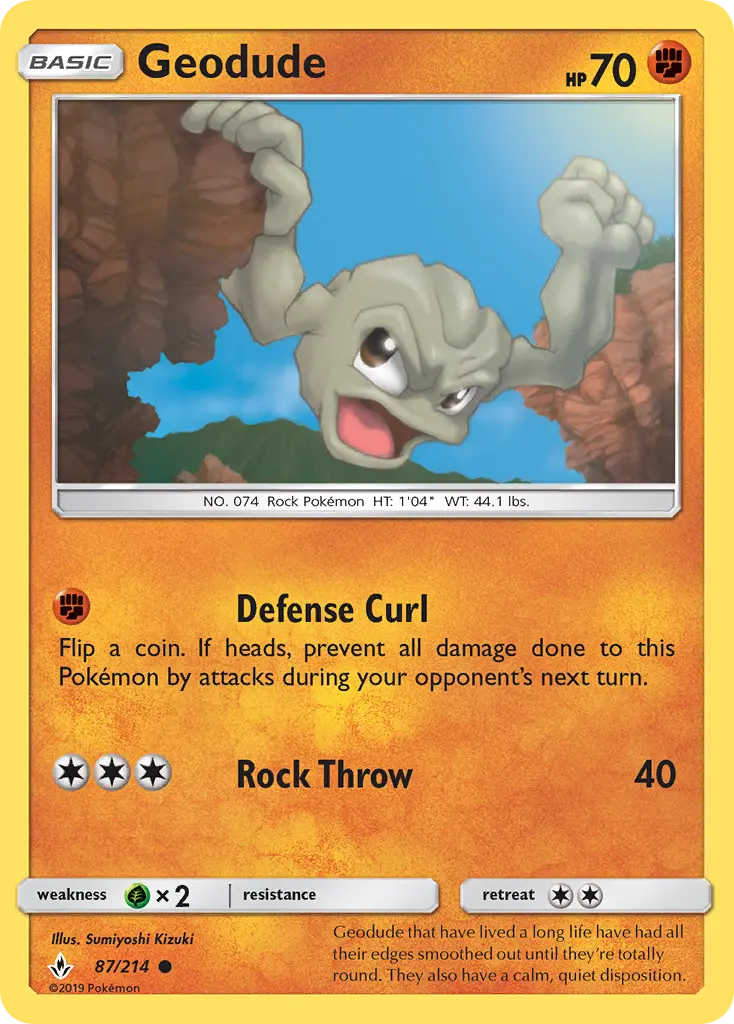
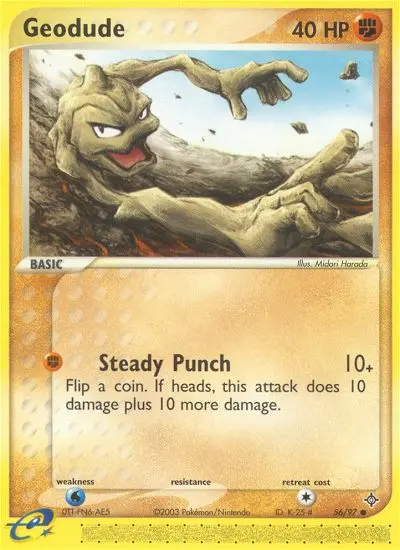
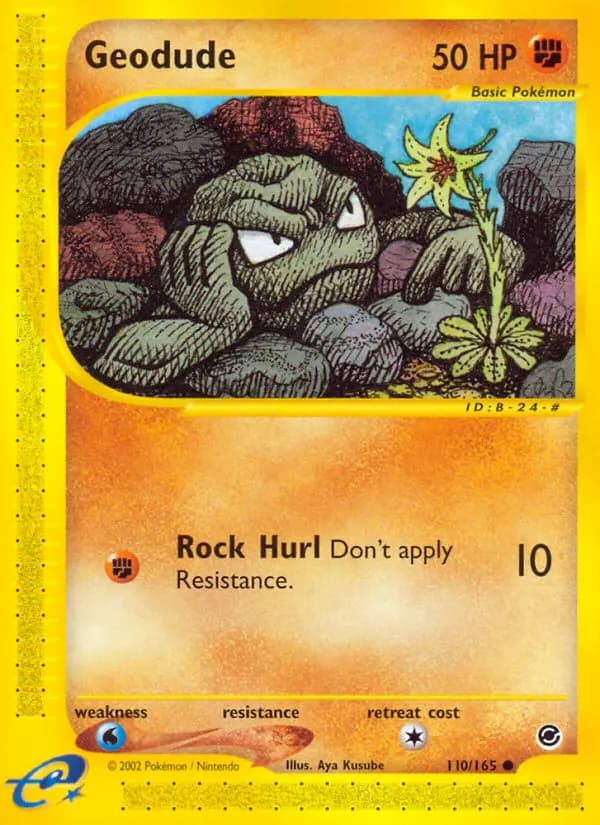
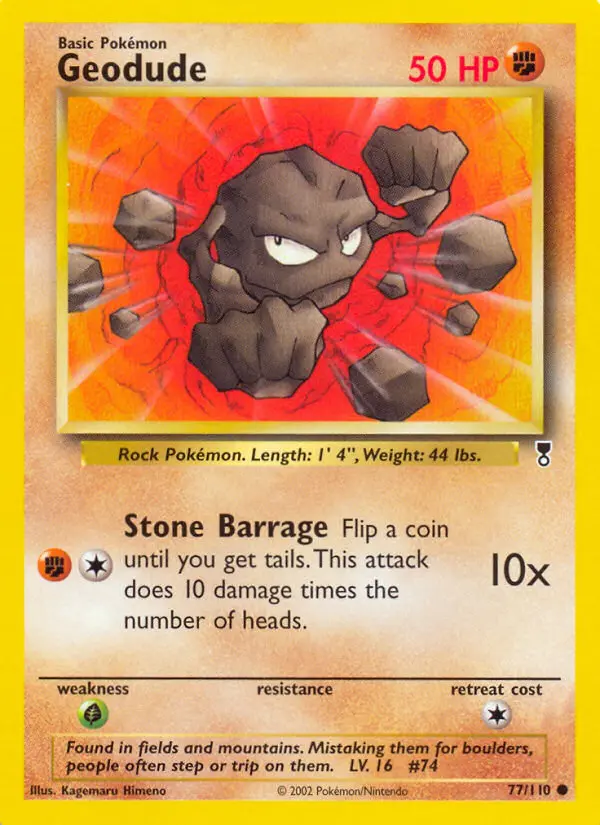
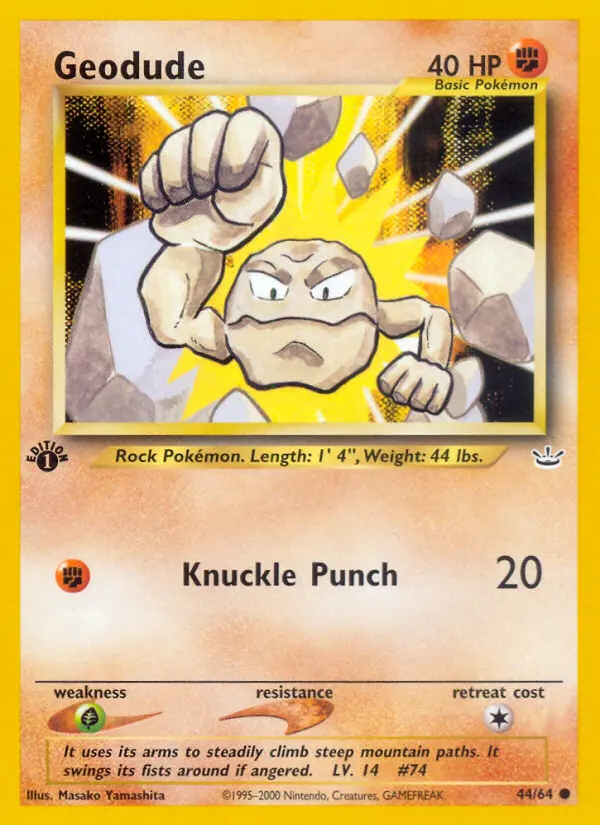
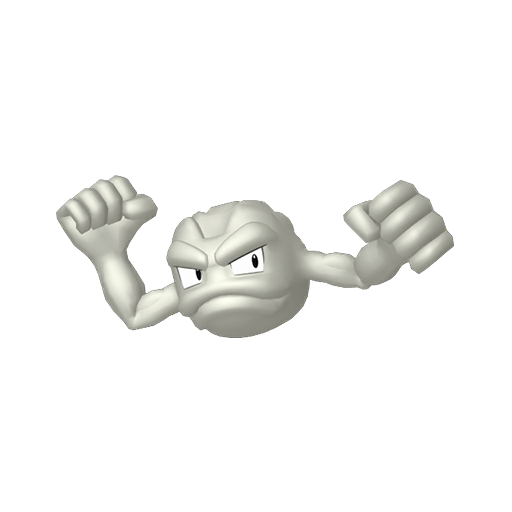
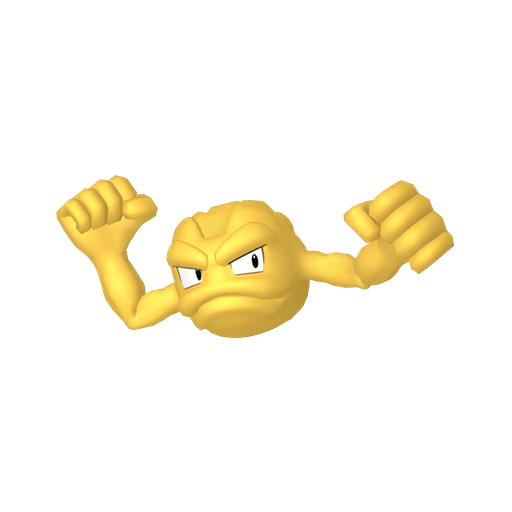
Geodude is a small, boulder-like Pokémon with a compact, roughly spherical body composed of hardened rock. Standing just 0.4 meters tall and weighing 20 kilograms, Geodude possesses a deceptively solid build that belies the creature's surprising defensive capabilities. The Pokémon features two large, muscular arms extending from its rocky body, which serve as its primary means of interaction with the world and are essential for its climbing abilities. Its face consists of two beady eyes and a simple expression that can shift dramatically when the creature becomes agitated. As a member of the Mineral egg group, Geodude shares biological characteristics with other rock-based Pokémon, reproducing through a process distinct from most living creatures. Geodude's body composition allows it to withstand significant physical punishment, with its dense structure providing natural armor against conventional attacks. Over time, as Pokédex entries reveal, a Geodude's sharp edges wear down from constant climbing and movement, gradually becoming more rounded in appearance, though its internal resolve remains as hard and craggy as ever.
Pokedex Numbers
Training
Breeding
Geodude Breeding, Gender Ratio & Egg Groups
There's no gender skew here: Geodude breeds at an even 50% male / 50% female rate. Members of both genders are capable of breeding, with the species belonging to the Mineral egg group, which includes other rock and stone-based Pokémon. When two Geodude breed successfully, their offspring emerges after a hatch counter period of 15 cycles, translating to approximately 3,599 to 3,855 steps in-game before the egg hatches into a new Geodude. The base happiness of newly hatched Geodude stands at 70, indicating that these creatures are predisposed toward forming bonds with their trainers from the moment they hatch. As creatures composed largely of inorganic material, Geodude's reproductive process remains somewhat mysterious within the Pokémon universe, though breeding mechanics treat them identically to biological creatures. The Mineral egg group's inclusion of Geodude and similar species suggests an alternative biological pathway where sentient geological formations can propagate through means analogous to conventional reproduction, allowing trainers to breed Geodude with other Mineral-group members to produce varied offspring.
Sprites




Held Items
Everstone
training
Held: Prevents level-based evolution from occuring.
Cost: 3000
Everstone
training
Held: Prevents level-based evolution from occuring.
Cost: 3000
Everstone
training
Held: Prevents level-based evolution from occuring.
Cost: 3000
Everstone
training
Held: Prevents level-based evolution from occuring.
Cost: 3000
Everstone
training
Held: Prevents level-based evolution from occuring.
Cost: 3000
Everstone
training
Held: Prevents level-based evolution from occuring.
Cost: 3000
Everstone
training
Held: Prevents level-based evolution from occuring.
Cost: 3000
Everstone
training
Held: Prevents level-based evolution from occuring.
Cost: 3000
Everstone
training
Held: Prevents level-based evolution from occuring.
Cost: 3000
Everstone
training
Held: Prevents level-based evolution from occuring.
Cost: 3000
Everstone
training
Held: Prevents level-based evolution from occuring.
Cost: 3000
Everstone
training
Held: Prevents level-based evolution from occuring.
Cost: 3000
Everstone
training
Held: Prevents level-based evolution from occuring.
Cost: 3000
Everstone
training
Held: Prevents level-based evolution from occuring.
Cost: 3000
Everstone
training
Held: Prevents level-based evolution from occuring.
Cost: 3000
Everstone
training
Held: Prevents level-based evolution from occuring.
Cost: 3000
Everstone
training
Held: Prevents level-based evolution from occuring.
Cost: 3000
Everstone
training
Held: Prevents level-based evolution from occuring.
Cost: 3000
Everstone
training
Held: Prevents level-based evolution from occuring.
Cost: 3000
Everstone
training
Held: Prevents level-based evolution from occuring.
Cost: 3000
Everstone
training
Held: Prevents level-based evolution from occuring.
Cost: 3000
Everstone
training
Held: Prevents level-based evolution from occuring.
Cost: 3000
Everstone
training
Held: Prevents level-based evolution from occuring.
Cost: 3000
Everstone
training
Held: Prevents level-based evolution from occuring.
Cost: 3000
Everstone
training
Held: Prevents level-based evolution from occuring.
Cost: 3000
Everstone
training
Held: Prevents level-based evolution from occuring.
Cost: 3000
Everstone
training
Held: Prevents level-based evolution from occuring.
Cost: 3000
Everstone
training
Held: Prevents level-based evolution from occuring.
Cost: 3000
Everstone
training
Held: Prevents level-based evolution from occuring.
Cost: 3000
Everstone
training
Held: Prevents level-based evolution from occuring.
Cost: 3000
Everstone
training
Held: Prevents level-based evolution from occuring.
Cost: 3000
Everstone
training
Held: Prevents level-based evolution from occuring.
Cost: 3000
Everstone
training
Held: Prevents level-based evolution from occuring.
Cost: 3000
Everstone
training
Held: Prevents level-based evolution from occuring.
Cost: 3000
Everstone
training
Held: Prevents level-based evolution from occuring.
Cost: 3000
Everstone
training
Held: Prevents level-based evolution from occuring.
Cost: 3000
Everstone
training
Held: Prevents level-based evolution from occuring.
Cost: 3000
Everstone
training
Held: Prevents level-based evolution from occuring.
Cost: 3000
Everstone
training
Held: Prevents level-based evolution from occuring.
Cost: 3000
Everstone
training
Held: Prevents level-based evolution from occuring.
Cost: 3000
TMs & HMs
tm00
sword shield
tm01
yellow
tm01
gold silver
tm01
crystal
tm01
red blue
tm01
platinum
tm01
emerald
tm01
diamond pearl
tm01
firered leafgreen
tm01
ruby sapphire
tm01
xd
tm01
colosseum
tm01
heartgold soulsilver
tm01
lets go pikachu lets go eevee
tm01
blue japan
tm01
red green japan
tm02
crystal
tm02
gold silver
tm03
crystal
tm03
gold silver
+609 more TMs/HMs
Geodude's Evolution Chain


Geodude Evolution, Mega Evolution & Special Forms
Geodude begins its evolutionary journey as the base form in a three-stage progression, evolving into Graveler at level 25. This evolution grants Geodude an increase in overall size, base stats, and combat capabilities, with particular emphasis on boosting its attacking power and physical resilience. The final evolution in the line, Golem, occurs when a Graveler is traded or exposed to a Linking Cord (in earlier generations) or traded (in modern generations), transforming the creature into a powerful, final-form Rock/Ground-type with significantly enhanced statistics across the board. Throughout its evolution line, Geodude maintains its Rock/Ground typing and its core mechanical identity as a defensive, strong-bodied Pokémon. The evolutionary progression mirrors the geological process of rock weathering and compaction, with each stage becoming progressively more solid and formidable. Unlike many Pokémon species, Geodude does not receive a Mega Evolution form, instead relying on its standard evolutionary chain to reach its full potential in battle.
Where to Find
Mt Moon
kanto
+67 more
Rock Tunnel
kanto
+71 more
Kanto Victory Road 2
kanto
+25 more
Johto Route 46
johto
+29 more
Dark Cave
johto
+41 more
Mt Mortar
johto
+41 more
Union Cave
johto
+24 more
Johto Route 45
johto
+6 more
Team Rocket Hq
johto
+28 more
Johto Route 33
johto
Granite Cave
hoenn
+21 more
Hoenn Route 114
hoenn
+12 more
Hoenn Victory Road
hoenn
Hoenn Safari Zone
hoenn
+12 more
Hoenn Route 111
hoenn
+12 more
Magma Hideout
hoenn
+2 more
Mt Ember
kanto
+89 more
Cerulean Cave
kanto
+25 more
Kindle Road
kanto
+5 more
Sevault Canyon
kanto
+5 more
+20 more locations in other games
Geodude Behaviour and Natural Habitat
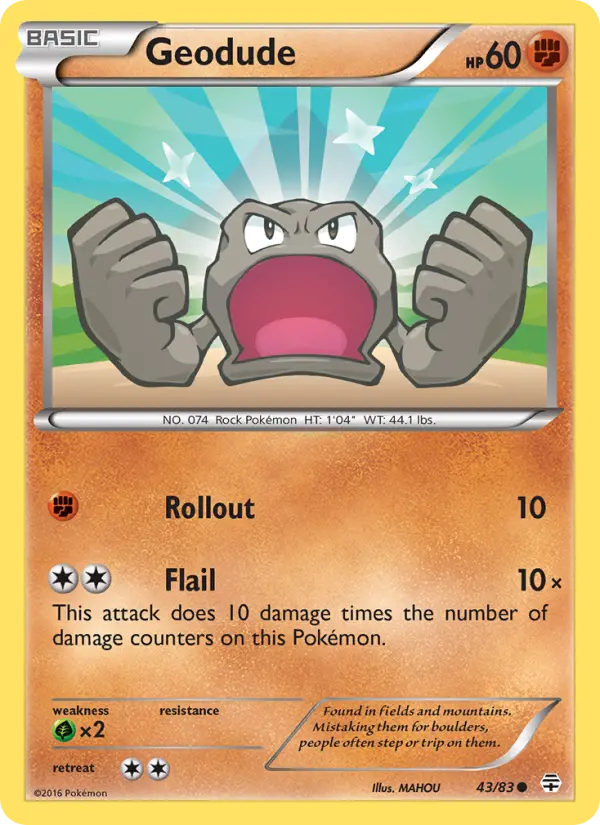
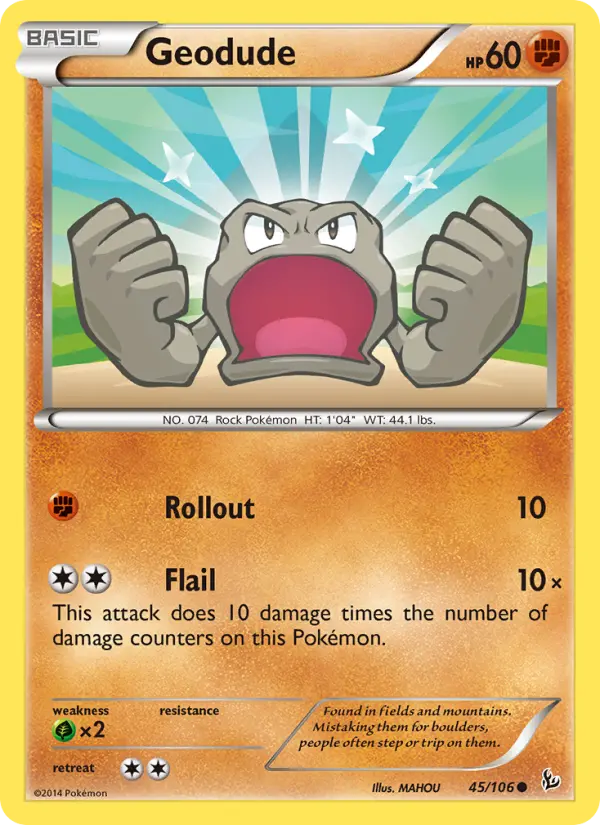
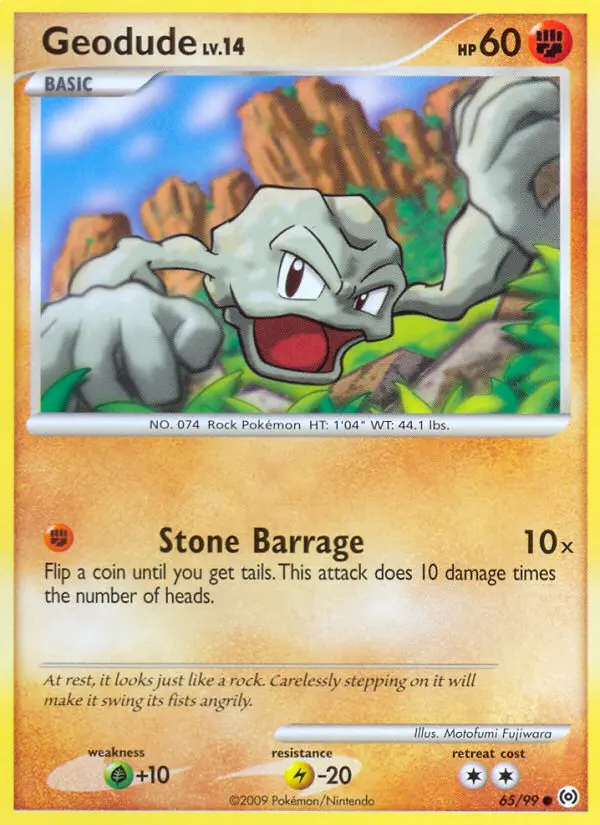
Geodude inhabits mountainous terrain and rocky fields across multiple regions, establishing itself as a common sight for hikers and trainers exploring elevated areas. Despite their stationary appearance, these Pokémon are far more active than they seem—they are known to use their powerful arms to steadily climb steep mountain paths, and they roll downhill in search of food during their waking hours. According to various Pokédex entries, Geodude frequently falls victim to accidental encounters with unsuspecting people who mistake them for ordinary boulders and inadvertently step on or trip over them, a mishap that predictably enrages the normally docile creatures. When disturbed, Geodude will swing its fists around aggressively in self-defense, demonstrating that their seemingly friendly demeanor masks a combative streak. The species exhibits a fascinating sleeping behavior: during deep sleep, Geodude buries itself halfway into the ground, becoming so thoroughly concealed and immobilized that even hikers stepping on them cannot wake them. This adaptation suggests an evolutionary relationship with their environment, where camouflage and immobility during rest periods provide protection from predators. Geodude also engage in contests of strength with one another, bashing their bodies together to determine whose exterior is harder, reflecting their pride in their sturdy physical forms.
Pokedex Entries
Found in fields and mountains. Mistaking them for boulders, people often step or trip on them.
Commonly found near mountain trails, etc. If you step on one by accident, it gets angry.
Most people may not notice, but a closer look should reveal that there are many GEODUDE around.
It uses its arms to steadily climb steep mountain paths. It swings its fists around if angered.
Proud of their sturdy bodies, they bash against each other in a contest to prove whose is harder.
The longer a GEODUDE lives, the more its edges are chipped and worn away, making it more rounded in appearance. However, this POKéMON’s heart will remain hard, craggy, and rough always.
When GEODUDE sleeps deeply, it buries itself halfway into the ground. It will not awaken even if hikers step on it unwittingly. In the morning, this POKéMON rolls downhill in search of food.
It climbs mountain paths using only the power of its arms. Because they look just like boulders lining paths, hikers may step on them without noticing.
Its round form makes it easy to pick up. Some people have used them to hurl at each other in a snowball fight.
Found in fields and mountains. Mistaking them for boulders, people often step or trip on them.
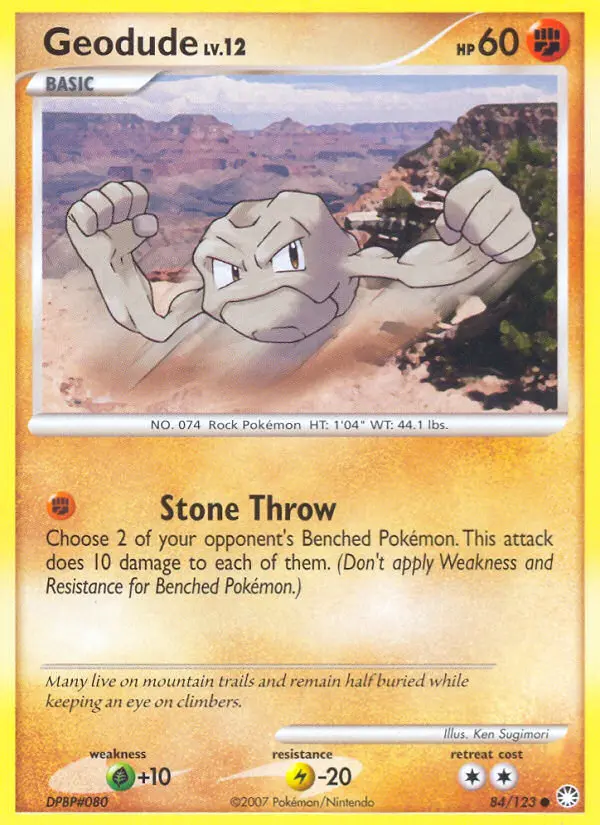
Many live on mountain trails and remain half buried while keeping an eye on climbers.
It is impossible to distinguish from rocks. It slams against others in contests of hardness.
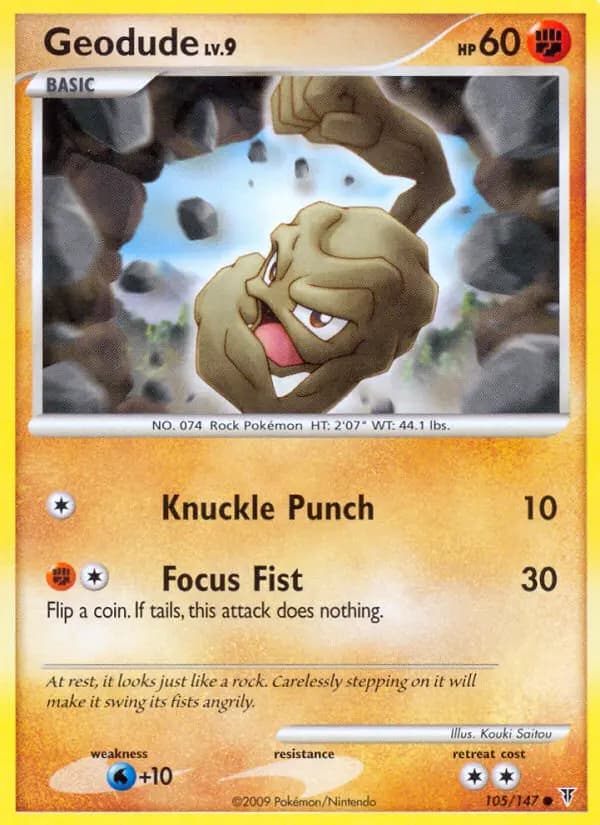
At rest, it looks just like a rock. Carelessly stepping on it will make it swing its fists angrily.
Most people may not notice, but a closer look should reveal that there are many GEODUDE around.
It uses its arms to steadily climb steep mountain paths. It swings its fists around if angered.
At rest, it looks just like a rock. Carelessly stepping on it will make it swing its fists angrily.
At rest, it looks just like a rock. Carelessly stepping on it will make it swing its fists angrily.
Found in fields and mountains. Mistaking them for boulders, people often step or trip on them.
It is impossible to distinguish from rocks. It slams against others in contests of hardness.
The longer a Geodude lives, the more its edges are chipped and worn away, making it more rounded in appearance. However, this Pokémon’s heart will remain hard, craggy, and rough always.
When Geodude sleeps deeply, it buries itself halfway into the ground. It will not awaken even if hikers step on it unwittingly. In the morning, this Pokémon rolls downhill in search of food.
Its round body makes it easy to pick up, but it is hard and heavy. It’s dangerous to play with them as if they were snowballs.
Geodude that have lived a long life have had all their edges smoothed out until they’re totally round. They also have a calm, quiet disposition.
There are plenty of them to be found along any road. A scholar with too much free time once counted a hundred of them along a single route.
It uses both hands to climb precipitous cliffs. People who see it in action have been known to take up bouldering.
Commonly found near mountain trails and the like. If you step on one by accident, it gets angry.
Makes its home in mountainous regions, using its arms to climb along harsh mountain roads. Can be troublesome—carelessly kicking one will cause it to fly into a rage and chase after you.
Geodude Name Origin & Design Inspiration
Geodude's name traces back to a straightforward combination of geological terminology: "geo" referring to earth and rocks, combined with "dude," a casual English colloquialism that gives the Pokémon an approachable, friendly quality despite its rocky appearance. In Japanese, the species is called イシツブテ (Isitsubute), which combines "ishi" meaning stone with "tsubute," a term suggesting a small, round object. The name in both languages effectively communicates the creature's essential nature as a diminutive, sentient boulder. Visually, Geodude's design draws inspiration from anthropomorphized rocks or sentient boulders found in folklore and fiction, featuring a roughly spherical body with minimalist facial features that nonetheless convey personality and emotion. The creature's two large arms are disproportionately sized compared to its body, emphasizing its climbing and combat abilities while contributing to its distinctive silhouette. The design philosophy behind Geodude reflects the early generation's approach to Pokémon creation, favoring simplicity, recognizability, and conceptual clarity—a small rock with arms that comes to life through the magic of the Pokémon world. Its evolution line continues this geological theme, with each subsequent form becoming progressively more imposing and complex while maintaining design coherence.
Learnable Moves
Geodude can learn 78 moves:
Move | Type | Cat. | Power | Acc. | PP |
|---|---|---|---|---|---|
| ancient power | rock | Special | 60 | 100 | 5 |
| attract | normal | Status | — | 100 | 15 |
| autotomize | steel | Status | — | — | 15 |
| bide | normal | Physical | — | — | 10 |
| block | normal | Status | — | — | 5 |
| body slam | normal | Physical | 85 | 100 | 15 |
| brick break | fighting | Physical | 75 | 100 | 15 |
| bulldoze | ground | Physical | 60 | 100 | 20 |
| confide | normal | Status | — | — | 20 |
| counter | fighting | Physical | — | 100 | 20 |
| curse | ghost | Status | — | — | 10 |
| defense curl | normal | Status | — | — | 40 |
| dig | ground | Physical | 80 | 100 | 10 |
| double team | normal | Status | — | — | 15 |
| double edge | normal | Physical | 120 | 100 | 15 |
| dynamic punch | fighting | Physical | 100 | 50 | 5 |
| earthquake | ground | Physical | 100 | 100 | 10 |
| endure | normal | Status | — | — | 10 |
| explosion | normal | Physical | 250 | 100 | 5 |
| facade | normal | Physical | 70 | 100 | 20 |
| fire blast | fire | Special | 110 | 85 | 5 |
| fire punch | fire | Physical | 75 | 100 | 15 |
| fissure | ground | Physical | — | 30 | 5 |
| flail | normal | Physical | — | 100 | 15 |
| flamethrower | fire | Special | 90 | 100 | 15 |
| fling | dark | Physical | — | 100 | 10 |
| focus punch | fighting | Physical | 150 | 100 | 20 |
| frustration | normal | Physical | — | 100 | 20 |
| hammer arm | fighting | Physical | 100 | 90 | 10 |
| harden | normal | Status | — | — | 30 |
| headbutt | normal | Physical | 70 | 100 | 15 |
| hidden power | normal | Special | 60 | 100 | 15 |
| high horsepower | ground | Physical | 95 | 95 | 10 |
| incinerate | fire | Special | 60 | 100 | 15 |
| iron defense | steel | Status | — | — | 15 |
| magnitude | ground | Physical | — | 100 | 30 |
| mega punch | normal | Physical | 80 | 85 | 20 |
| metronome | normal | Status | — | — | 10 |
| mimic | normal | Status | — | — | 10 |
| mud shot | ground | Special | 55 | 95 | 15 |
| mud sport | ground | Status | — | — | 15 |
| mud slap | ground | Special | 20 | 100 | 10 |
| nature power | normal | Status | — | — | 20 |
| power up punch | fighting | Physical | 40 | 100 | 20 |
| protect | normal | Status | — | — | 10 |
| rage | normal | Physical | 20 | 100 | 20 |
| rest | psychic | Status | — | — | 5 |
| return | normal | Physical | — | 100 | 20 |
| rock blast | rock | Physical | 25 | 90 | 10 |
| rock polish | rock | Status | — | — | 20 |
| rock slide | rock | Physical | 75 | 90 | 10 |
| rock smash | fighting | Physical | 40 | 100 | 15 |
| rock throw | rock | Physical | 50 | 90 | 15 |
| rock tomb | rock | Physical | 60 | 95 | 15 |
| rollout | rock | Physical | 30 | 90 | 20 |
| round | normal | Special | 60 | 100 | 15 |
| sand attack | ground | Status | — | 100 | 15 |
| sandstorm | rock | Status | — | — | 10 |
| scary face | normal | Status | — | 100 | 10 |
| secret power | normal | Physical | 70 | 100 | 20 |
| seismic toss | fighting | Physical | — | 100 | 20 |
| self destruct | normal | Physical | 200 | 100 | 5 |
| sleep talk | normal | Status | — | — | 10 |
| smack down | rock | Physical | 50 | 100 | 15 |
| snore | normal | Special | 50 | 100 | 15 |
| stomping tantrum | ground | Physical | 75 | 100 | 10 |
| strength | normal | Physical | 80 | 100 | 15 |
| submission | fighting | Physical | 80 | 80 | 20 |
| substitute | normal | Status | — | — | 10 |
| sucker punch | dark | Physical | 70 | 100 | 5 |
| sunny day | fire | Status | — | — | 5 |
| superpower | fighting | Physical | 120 | 100 | 5 |
| swagger | normal | Status | — | 85 | 15 |
| tackle | normal | Physical | 40 | 100 | 35 |
| take down | normal | Physical | 90 | 85 | 20 |
| tera blast | normal | Special | 80 | 100 | 10 |
| thunder punch | electric | Physical | 75 | 100 | 15 |
| toxic | poison | Status | — | 90 | 10 |
Geodude Competitive Battle Guide
Geodude occupies an interesting niche in competitive Pokémon battling as an early-game, entry-level Rock-type option with surprising durability. Its base Defense stat of 100 stands out remarkably among Pokémon of similar power levels, making it capable of absorbing physical attacks that would devastate less resilient creatures. However, its minimal Speed stat of 20 and equally disappointing special-based statistics (Special Attack and Special Defense both at 30) severely limit its competitive viability at higher levels of play. Geodude's ability choices provide strategic flexibility: Rock Head prevents recoil damage from high-risk moves, Sturdy guarantees survival from full health with a single hit point remaining while also providing immunity to one-hit KO moves, and its hidden ability Sand Veil increases evasion during sandstorm conditions while protecting the user from sandstorm damage. The latter ability has seen increased relevance in metagames featuring sandstorm-heavy strategies, though Geodude's slow speed and weak offenses limit how effectively it can exploit such support. In casual and early-game competitive scenarios, Geodude serves admirably as a bulky physical wall, particularly against Normal, Flying, Fire, and Poison-type attackers, though its poor speed and low special defense statistics make it vulnerable to well-timed special attacks and priority moves. Most competitive players transition away from Geodude once stronger options like Graveler and Golem become available, making it primarily valuable for team building in lower tiers and early-stage competitive formats.
Commonly Asked Questions About Geodude
What type is Geodude?
Geodude is a rock and ground type Pokemon.
What does Geodude evolve into?
Geodude evolves into graveler, then into golem.
What are Geodude's weaknesses?
Geodude is weak to fighting, ground, steel, water, grass and ice type moves.
Does Geodude evolve by trading?
No — Geodude evolves entirely through leveling up, with no trade required at any stage.
Where can I find Geodude?
Geodude can be found in mt moon (kanto), rock tunnel (kanto) and kanto victory road 2 (kanto) and 37 other locations.
Geodude Cultural Impact & Franchise History
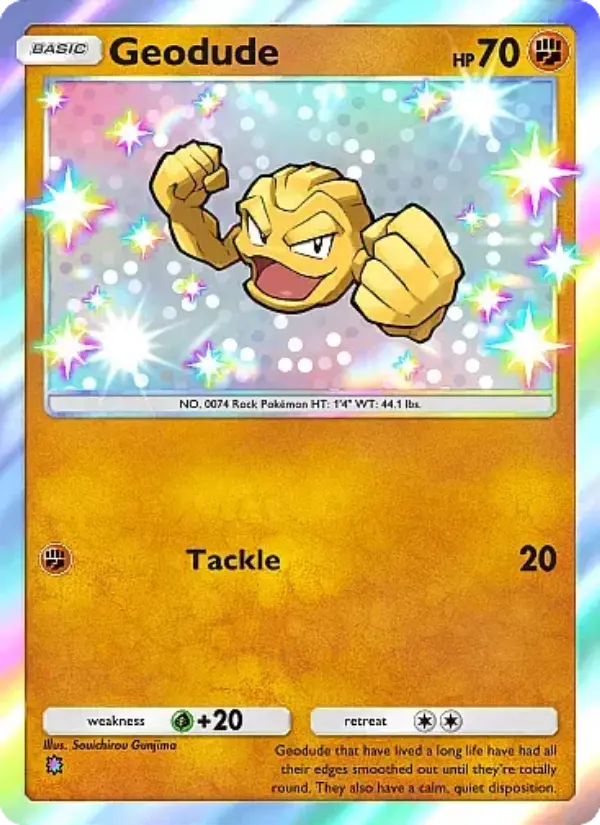
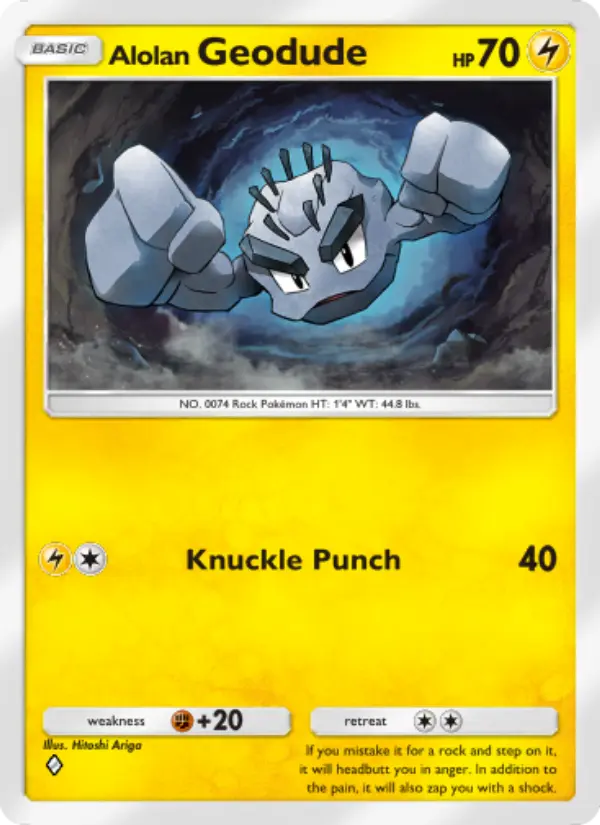
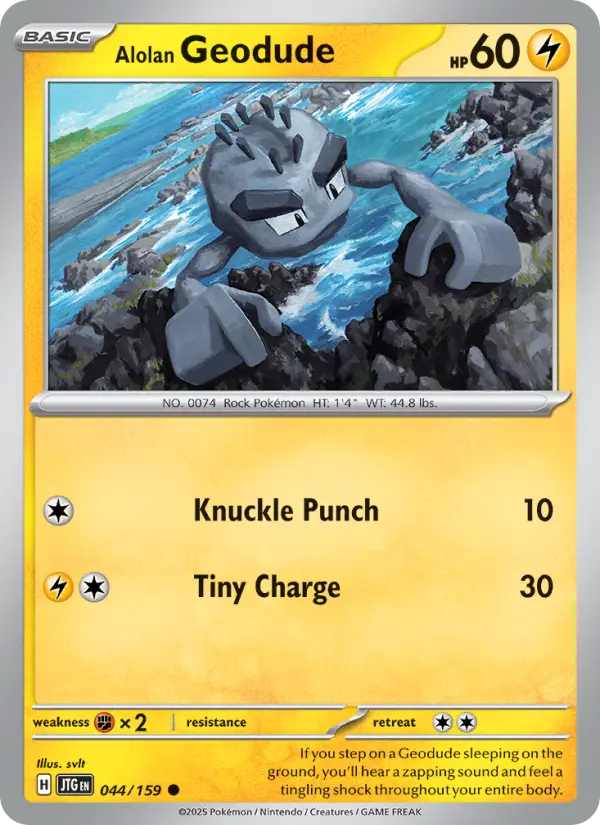
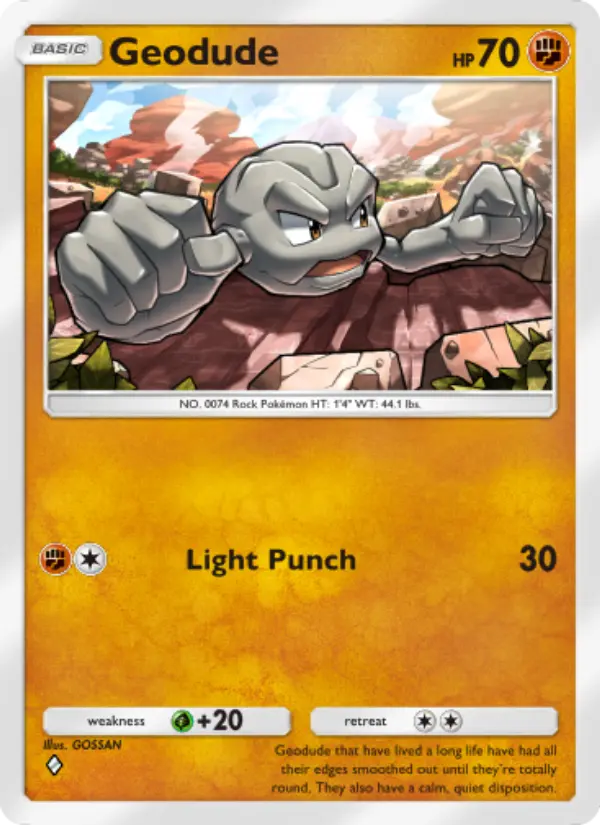
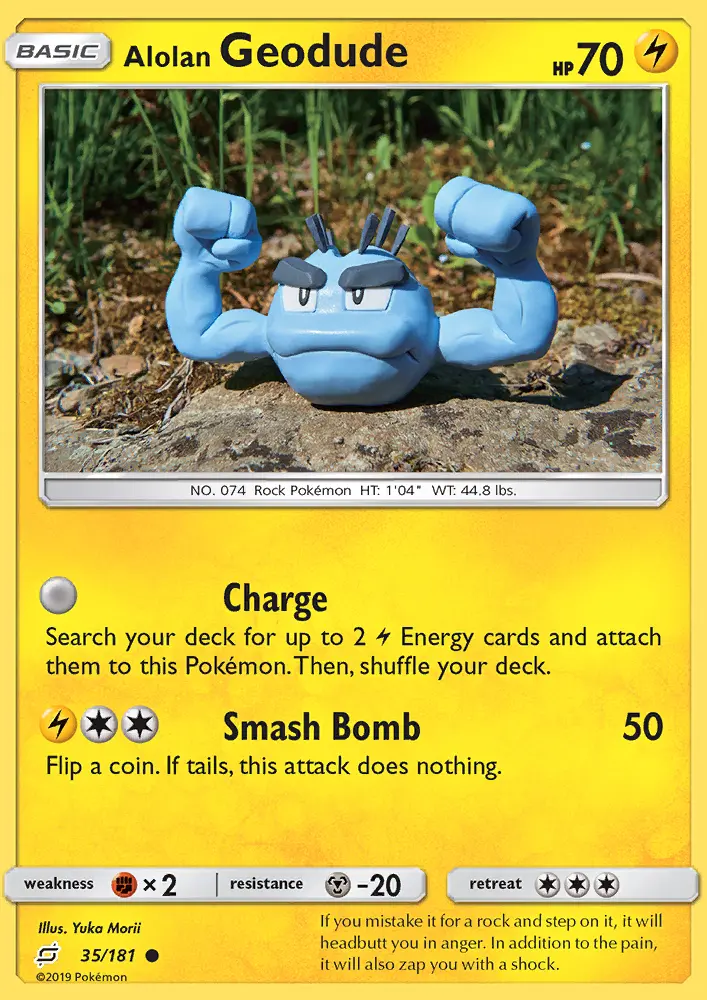
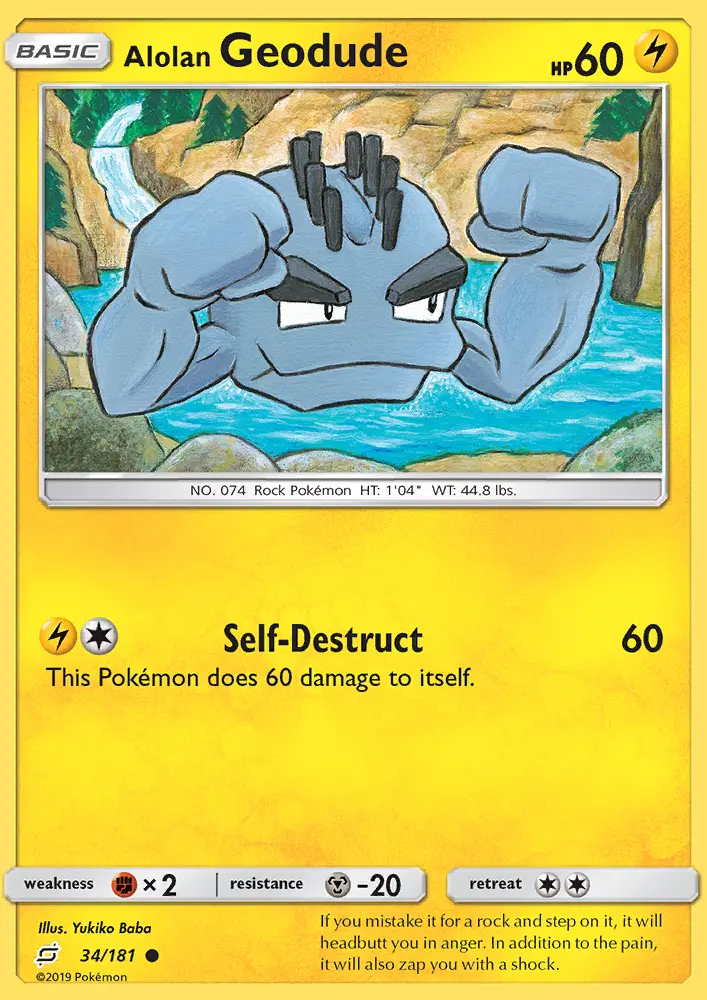
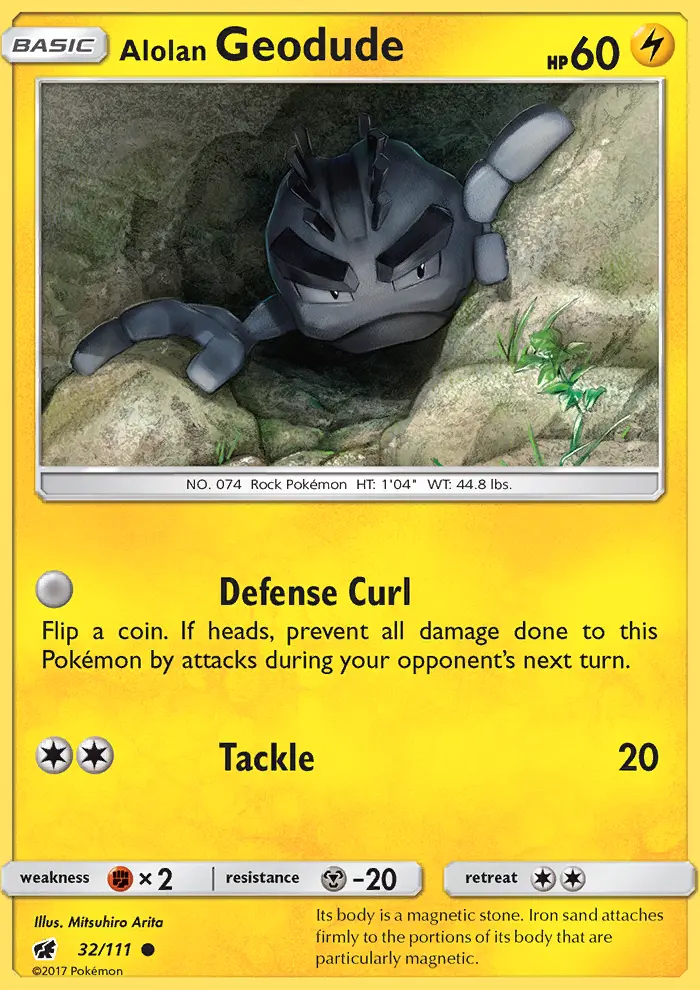
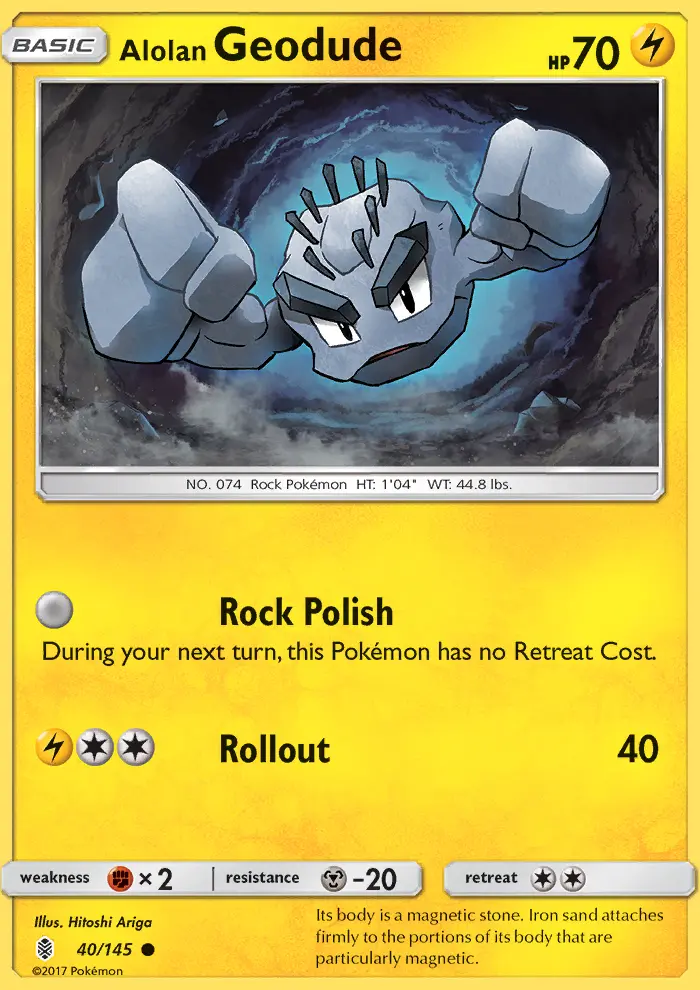
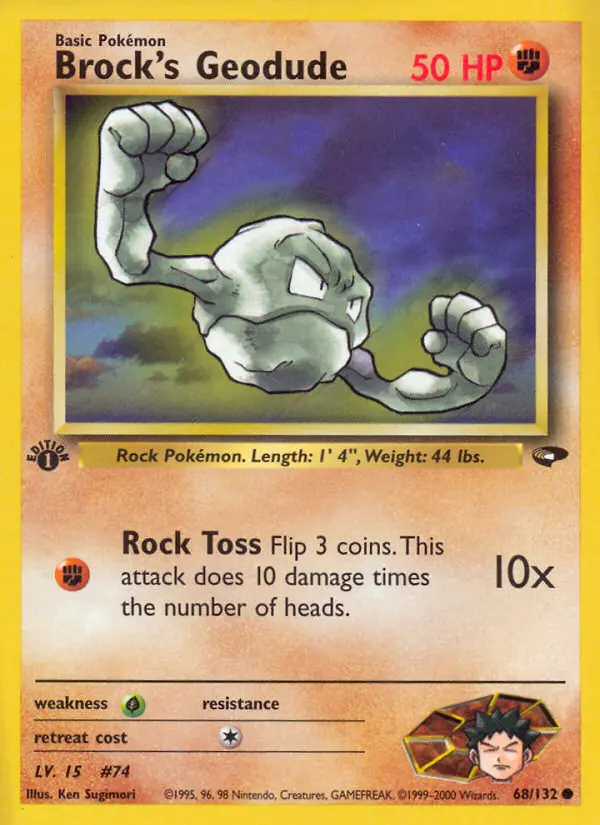
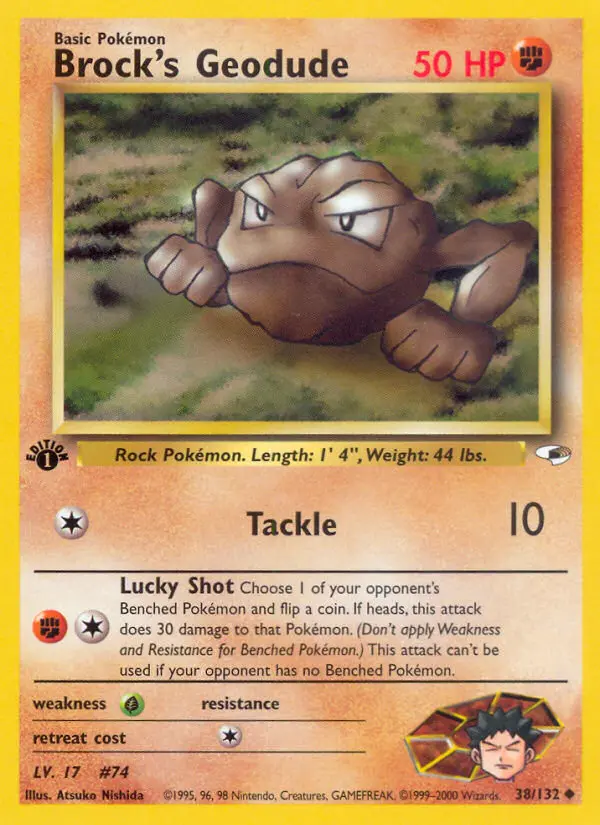
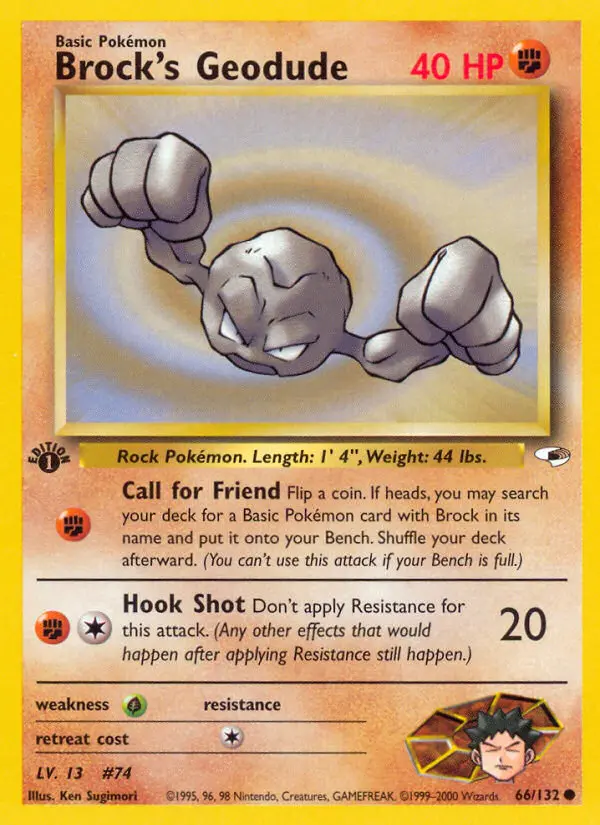
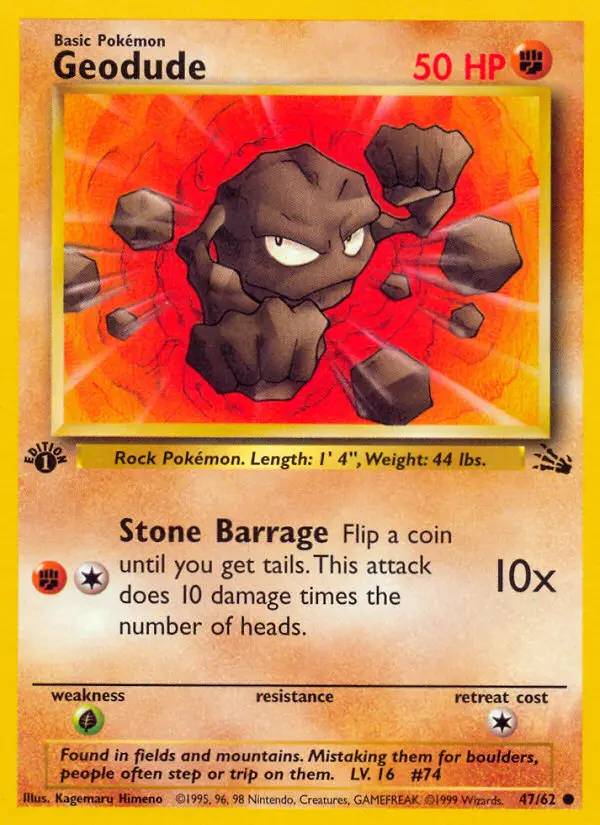
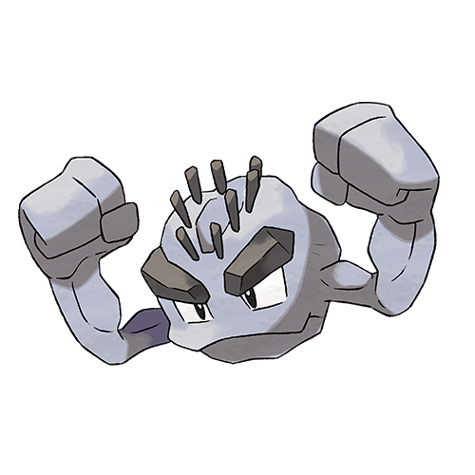
Geodude has maintained a presence in Pokémon popular culture since the franchise's inception, most memorably through Brock's Geodude in the animated series. This particular Geodude became one of Brock's signature Pokémon during his extensive tenure as a main character, participating in numerous memorable battles and helping establish Rock-type Pokémon as legitimate competitive threats within the show's narrative. The recurring gag of people mistakenly stepping on Geodude while hiking became a comedic staple referenced throughout various media adaptations, helping establish the species as an iconic hazard of the Pokémon world's mountainous regions. Geodude's simple yet memorable design has made it a frequent inclusion in merchandise, trading card games, and spin-off games spanning decades. The Alolan variant introduced in Generation VII's Pokémon Sun and Moon significantly expanded Geodude's cultural relevance by transforming it into a Rock/Electric-type Pokémon, introducing an entirely new generation of players to regional form mechanics and demonstrating how established Pokémon could receive fresh interpretations. Geodude's continued inclusion in modern titles, from Pokémon Legends: Arceus to Scarlet and Violet's DLC expansions, confirms its enduring status as a franchise cornerstone. The species has also appeared in various manga adaptations and remains a popular subject for fan art and community engagement within the Pokémon fan community.
Where to Find Geodude in Every Pokémon Game
Geodude's availability throughout the Pokémon games reflects its status as a common, accessible Rock-type option designed for early-game player progression. In the original Red and Blue versions, Geodude appears in the Kanto region's mountainous areas with a high encounter rate, making it one of the first Rock-type Pokémon available to players. Subsequent generations maintained this pattern, placing Geodude in early-game mountain routes across virtually every region, including Johto (where it appeared in routes accessible to trainers progressing through the storyline), Hoenn, Sinnoh, Unova, Kalos, Alola, and beyond. The species' extraordinarily high catch rate of 255 (equivalent to 43.9% with a standard Poké Ball at full health) ensures that trainers encounter minimal difficulty capturing a Geodude for their team. In Pokémon Sun and Moon, trainers also gained access to Alolan Geodude, the regional variant featuring Rock/Electric typing and different abilities including Magnet Pull and the hidden ability Galvanize. Later titles like Pokémon Let's Go Pikachu and Eevee, Pokémon Brilliant Diamond and Shining Pearl, and Pokémon Legends: Arceus continued Geodude's widespread availability, often appearing early in the regional Pokédex. Most recently, Pokémon Scarlet and Violet feature Geodude through their DLC expansions, particularly in The Teal Mask and The Indigo Disk, ensuring contemporary players maintain easy access to this foundational Rock-type Pokémon.