Golem
Generation I · #0076 — Megaton Pokémon
Golem's rock head ability is the first thing worth knowing about it — everything else, from its rock/ground typing to its build, follows from how that ability gets used. With a overall stat sum of 495, Golem's distribution emphasizes physical bulk and offensive power, featuring exceptional Defense (130) and Attack (120) stats that make it a formidable physical wall and striker in battle. Its signature abilities—Rock Head, which prevents recoil damage from moves like Double-Edge, and Sturdy, which allows it to survive fatal attacks with 1 HP remaining—provide strategic flexibility depending on a trainer's battle approach. The hidden ability Sand Veil offers an alternative option for those who capitalize on sandstorm weather conditions, increasing evasion to 1.25 times while simultaneously protecting Golem from sandstorm damage itself.
Editor's Take
Golem's Sturdy surviving one hit at full health turned it from a slow Rock-type into a guaranteed one-turn Explosion, and that is genuinely more useful than most of its stat line.
Base Stats
Height
1.4m
Weight
300.0kg
Category
Megaton Pokémon
Gender
Male 50% / Female 50%
Color
brown
Shape
humanoid
Habitat
mountain
Abilities
Protects against recoil damage.
Prevents being KOed from full HP, leaving 1 HP instead. Protects against the one-hit KO moves regardless of HP.
Increases evasion to 1.25× during a sandstorm. Protects against sandstorm damage.

Golem Biology & Physical Characteristics
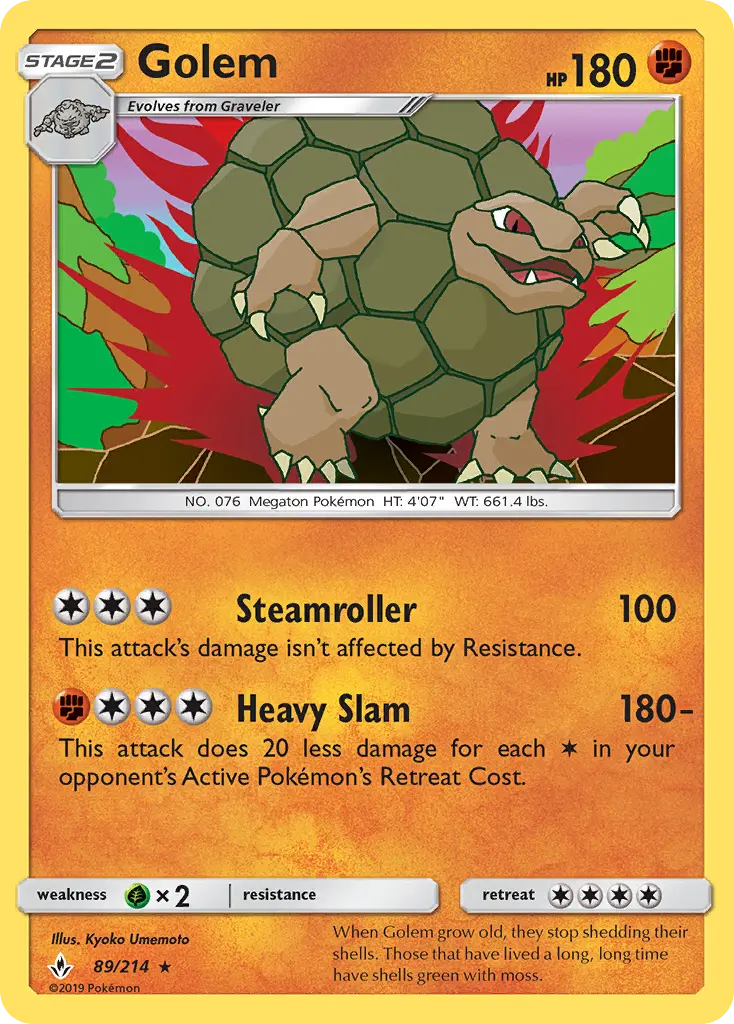
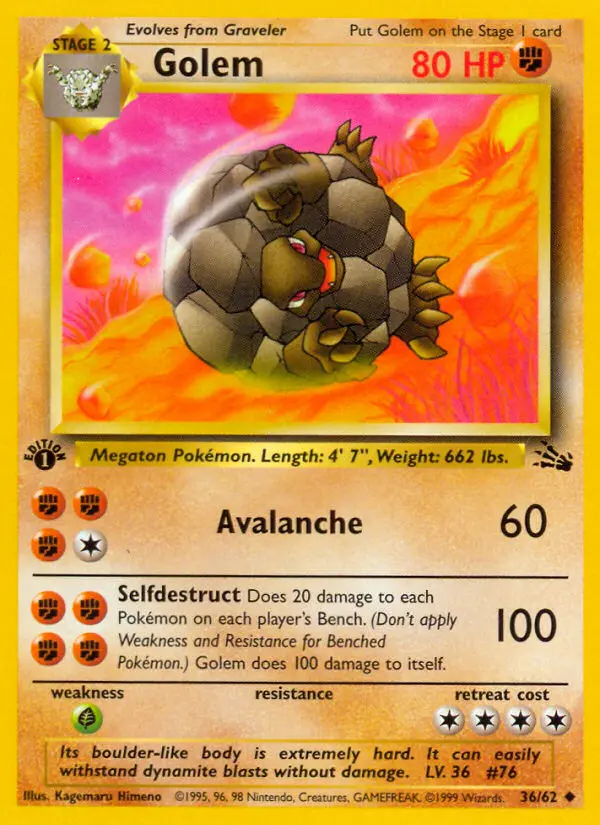
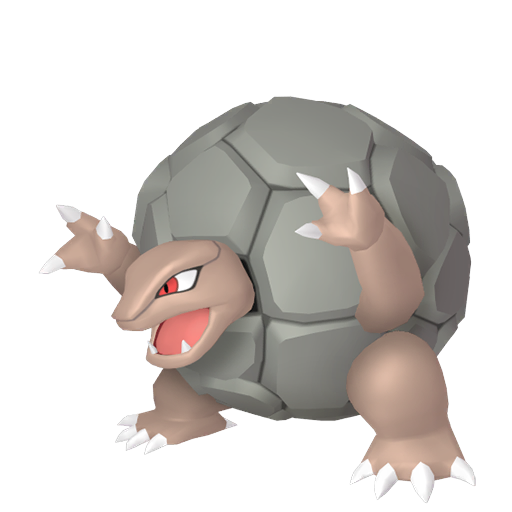
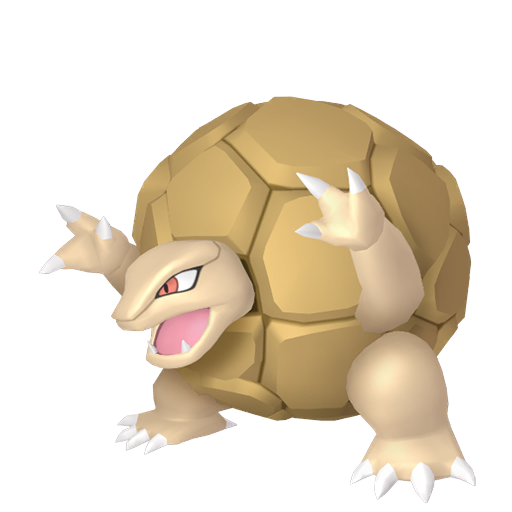
Golem is a bipedal, tortoise-like Pokémon with a body composed almost entirely of a spherical shell made of green, plated rock formations. This distinctive spherical body design distinguishes it dramatically from its pre-evolution, Graveler, and represents the ultimate expression of rocky protection in the Geodude line. The shell's composition is extraordinarily durable—so hard that even high-powered dynamite blasts fail to leave scratches on its rugged hide, according to multiple Pokédex entries. Protruding from the center of this spherical rocky shell is a relatively small head featuring a flat snout with two pointed teeth in the lower jaw and striking red eyes that peer outward with an almost ancient wisdom. Its limbs, colored in light brown and contrasting sharply with the green rock shell, are proportionally stubby and thick, with three-clawed hands and four-clawed feet in front, plus one claw in back, suggesting an adaptation for gripping rocky terrain rather than swift movement. The design reflects a complete transformation from Golem's earlier forms, with the creature having literally encased itself in an impenetrable stone armor as it matured.
Pokedex Numbers
Training
Breeding
Golem Breeding, Gender Ratio & Egg Groups
Half of all Golem are male, half are female — no skew to plan around, allowing for flexible breeding strategies regardless of which gender a trainer possesses. Members of the Mineral egg group, Golem can breed with compatible partners to produce Geodude eggs that hatch after fifteen egg cycles (approximately 3,599 to 3,855 steps of travel). This lengthy incubation period reflects Golem's mineral nature and the time required for proper geological formation, thematically consistent with the species' rocky composition. The breeding mechanics for Golem follow standard Pokémon reproduction rules, with offspring inheriting moves from both parents and potentially passing down egg moves that their pre-evolution Geodude would not normally learn through leveling. Trainers seeking to breed Golem for competitive purposes often pair them with compatible Mineral group members to diversify movepools and create offspring with superior individual values. The relatively low base happiness of 70 (according to some game data sources, though other sources cite 50) means that newly obtained Golem may require time and care to develop strong bonds with their trainers, though this can be remedied through consistent training, battling, and item usage such as friendship-boosting berries.
Sprites




Held Items
Everstone
training
Held: Prevents level-based evolution from occuring.
Cost: 3000
Everstone
training
Held: Prevents level-based evolution from occuring.
Cost: 3000
Everstone
training
Held: Prevents level-based evolution from occuring.
Cost: 3000
Everstone
training
Held: Prevents level-based evolution from occuring.
Cost: 3000
Everstone
training
Held: Prevents level-based evolution from occuring.
Cost: 3000
Everstone
training
Held: Prevents level-based evolution from occuring.
Cost: 3000
Everstone
training
Held: Prevents level-based evolution from occuring.
Cost: 3000
Everstone
training
Held: Prevents level-based evolution from occuring.
Cost: 3000
Everstone
training
Held: Prevents level-based evolution from occuring.
Cost: 3000
Everstone
training
Held: Prevents level-based evolution from occuring.
Cost: 3000
Everstone
training
Held: Prevents level-based evolution from occuring.
Cost: 3000
Everstone
training
Held: Prevents level-based evolution from occuring.
Cost: 3000
Everstone
training
Held: Prevents level-based evolution from occuring.
Cost: 3000
Everstone
training
Held: Prevents level-based evolution from occuring.
Cost: 3000
Everstone
training
Held: Prevents level-based evolution from occuring.
Cost: 3000
Everstone
training
Held: Prevents level-based evolution from occuring.
Cost: 3000
Everstone
training
Held: Prevents level-based evolution from occuring.
Cost: 3000
Everstone
training
Held: Prevents level-based evolution from occuring.
Cost: 3000
Everstone
training
Held: Prevents level-based evolution from occuring.
Cost: 3000
Everstone
training
Held: Prevents level-based evolution from occuring.
Cost: 3000
Hard Stone
type-enhancement
Held: Rock-Type moves from holder do 20% more damage.
Cost: 1000
Hard Stone
type-enhancement
Held: Rock-Type moves from holder do 20% more damage.
Cost: 1000
Everstone
training
Held: Prevents level-based evolution from occuring.
Cost: 3000
Everstone
training
Held: Prevents level-based evolution from occuring.
Cost: 3000
Everstone
training
Held: Prevents level-based evolution from occuring.
Cost: 3000
Everstone
training
Held: Prevents level-based evolution from occuring.
Cost: 3000
Everstone
training
Held: Prevents level-based evolution from occuring.
Cost: 3000
Everstone
training
Held: Prevents level-based evolution from occuring.
Cost: 3000
Everstone
training
Held: Prevents level-based evolution from occuring.
Cost: 3000
Everstone
training
Held: Prevents level-based evolution from occuring.
Cost: 3000
Everstone
training
Held: Prevents level-based evolution from occuring.
Cost: 3000
Everstone
training
Held: Prevents level-based evolution from occuring.
Cost: 3000
Everstone
training
Held: Prevents level-based evolution from occuring.
Cost: 3000
Everstone
training
Held: Prevents level-based evolution from occuring.
Cost: 3000
Everstone
training
Held: Prevents level-based evolution from occuring.
Cost: 3000
Everstone
training
Held: Prevents level-based evolution from occuring.
Cost: 3000
Everstone
training
Held: Prevents level-based evolution from occuring.
Cost: 3000
Everstone
training
Held: Prevents level-based evolution from occuring.
Cost: 3000
Everstone
training
Held: Prevents level-based evolution from occuring.
Cost: 3000
Everstone
training
Held: Prevents level-based evolution from occuring.
Cost: 3000
Everstone
training
Held: Prevents level-based evolution from occuring.
Cost: 3000
Everstone
training
Held: Prevents level-based evolution from occuring.
Cost: 3000
Hard Stone
type-enhancement
Held: Rock-Type moves from holder do 20% more damage.
Cost: 1000
Hard Stone
type-enhancement
Held: Rock-Type moves from holder do 20% more damage.
Cost: 1000
TMs & HMs
tm00
sword shield
tm01
yellow
tm01
gold silver
tm01
crystal
tm01
red blue
tm01
platinum
tm01
emerald
tm01
diamond pearl
tm01
firered leafgreen
tm01
ruby sapphire
tm01
xd
tm01
colosseum
tm01
heartgold soulsilver
tm01
lets go pikachu lets go eevee
tm01
blue japan
tm01
red green japan
tm01
sword shield
tm02
crystal
tm02
gold silver
tm03
crystal
+693 more TMs/HMs
Golem's Evolution Chain


Golem Evolution, Mega Evolution & Special Forms
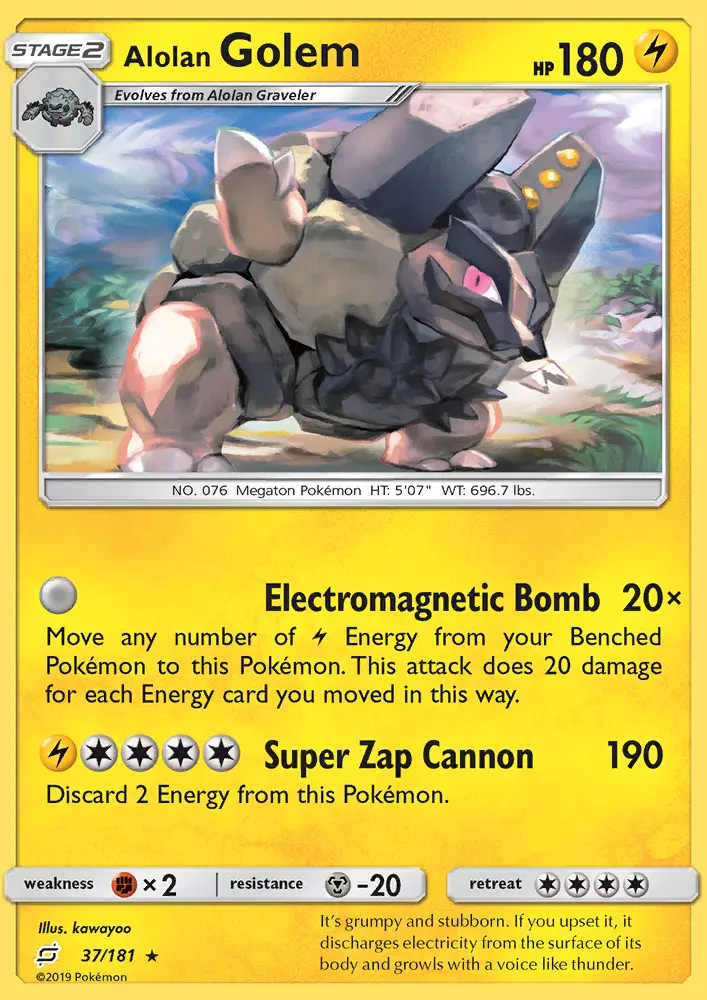
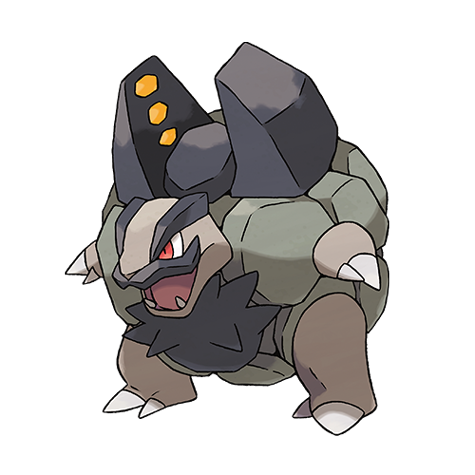
Golem evolves from Graveler through trade, marking the completion of the three-stage evolutionary line that begins with Geodude. This trade-based evolution mechanic, common in Generation I, emphasizes the social and cooperative aspect of Pokémon training, requiring trainers to exchange their Graveler with another trainer to trigger the transformation. The evolution represents a dramatic biological shift, with Graveler's more humanoid form giving way to Golem's spherical, armored structure. The base stats undergo significant redistribution during this evolution, with Golem gaining substantial boosts to Defense (from Graveler's 100 to Golem's 130) and Attack (from 65 to 120), while sacrificing some Speed (from Graveler's 40 to Golem's 45). This stat reallocation transforms Golem into a true physical juggernaut, prioritizing defensive capability and raw offensive power over any semblance of mobility. An Alolan regional variant of Golem exists, introduced in Generation VII, which shifts the type combination to Rock/Electric and dramatically alters both its appearance and competitive viability, featuring abilities like Magnet Pull and the hidden ability Galvanize, making it a fundamentally different Pokémon suited to Alola's unique environment.
Where to Find
Johto Safari Zone
johto
+5 more
Golem Behaviour and Natural Habitat
Golem inhabits mountainous regions, preferring high elevations where it can take advantage of its unique locomotion method. Perhaps most remarkably, Golem is capable of explosive self-detonation—using this detonative force to propel itself from mountain to mountain in a series of spectacular jumps that would be catastrophic for most other creatures but merely serve as a convenient form of transportation for this resilient Pokémon. During large earthquakes, these creatures famously come rolling down mountains en masse toward the foothills below, creating natural hazards that have shaped human settlement patterns in Pokémon regions. In response to this phenomenon, humans in affected areas have dug grooves into mountainsides specifically to serve as guideways, diverting Golem's natural rolling descent away from populated areas downhill. This interaction between Golem and human civilization demonstrates how the presence of powerful Pokémon has fundamentally influenced landscape architecture and urban planning. Despite their intimidating appearance and explosive capabilities, Golem maintain a base happiness rating of 70, suggesting they can form meaningful bonds with trainers who understand and respect their nature.
Pokedex Entries
Its boulder-like body is extremely hard. It can easily withstand dynamite blasts without damage.
Once it sheds its skin, its body turns tender and whitish. Its hide hardens when it's exposed to air.
It sheds its skin once a year. The discarded shell immediately hard ens and crumbles away.
It is capable of blowing itself up. It uses this explosive force to jump from mountain to mountain.
Its rock-like body is so durable, even high-powered dynamite blasts fail to scratch its rugged hide.
GOLEM live up on mountains. If there is a large earthquake, these POKéMON will come rolling down off the mountains en masse to the foothills below.
GOLEM is known for rolling down from mountains. To prevent them from rolling into the homes of people downhill, grooves have been dug into the sides of mountains to serve as guideways for diverting this POKéMON’s course.
It is said to live in volcanic craters on mountain peaks. Once a year, it sheds its hide and grows larger. The shed hide crumbles and returns to the soil.
It is enclosed in a hard shell that is as rugged as slabs of rock. It sheds skin once a year to grow larger.
Its boulder-like body is extremely hard. It can easily withstand dynamite blasts without taking damage.
It sheds its hide once a year. Its boulderlike body is so tough, even dynamite can’t harm it.
It tumbles down mountains, leaving grooves from peak to base. Stay clear of these grooves.
Even dynamite can’t harm its hard, boulderlike body. It sheds its hide just once a year.
It sheds its skin once a year. The discarded shell immediately hardens and crumbles away.
It is capable of blowing itself up. It uses this explosive force to jump from mountain to mountain.
Even dynamite can’t harm its hard, boulderlike body. It sheds its hide just once a year.
Even dynamite can’t harm its hard, boulder-like body. It sheds its hide just once a year.
It tumbles down mountains, leaving grooves from peak to base. Stay clear of these grooves.
Even dynamite can’t harm its hard, boulder-like body. It sheds its hide just once a year.
Golem live up on mountains. If there is a large earthquake, these Pokémon will come rolling down off the mountains en masse to the foothills below.
Golem is known for rolling down from mountains. To prevent them from rolling into the homes of people downhill, grooves have been dug into the sides of mountains to serve as guideways for diverting this Pokémon’s course.
Its body can survive dynamite blasts without a single scratch, but it hates rain and humidity.
When Golem grow old, they stop shedding their shells. Those that have lived a long, long time have shells green with moss.
Once a year, this Pokémon molts, and its shed shell returns to the soil. This process creates enriched soil, so farmers collect the shells.
It detonates its own body. The power from that explosion can propel it up steep mountain paths with amazing speed.
Once it sheds its skin, its body turns tender and whitish. Its hide hardens when it’s exposed to air.
The rocklike shell is shed each year. The cast-off shell then crumbles, reverting to a mass of soil, which can be spread across fields to promote crop growth.
Golem Name Origin & Design Inspiration
Golem's name traces to the Jewish folklore creature of the same name—a being of clay or stone brought to life through magical means. This literary and mythological reference perfectly encapsulates Golem's nature as a rock creature animated with purpose and strength, echoing themes of protection and endurance found in the original legend. The Japanese name, Golonya (ゴローニャ), maintains phonetic similarity while fitting Japanese naming conventions for the Pokémon series. The creature's design evolution from Geodude through Graveler to Golem represents a progressive transformation from a small, rocky humanoid to an increasingly abstract and geometric form, culminating in the nearly spherical final form that resembles a living boulder more than anything humanoid. This design progression mirrors the creature's increasing focus on defense and armoring itself in stone, each evolutionary stage adding more rocky plating and reducing mobility in exchange for protective capability. The genus designation as the Megaton Pokémon references both its impressive weight and the explosive force it can generate, referencing the megatons of TNT needed to describe its power in explosive terms. The visual contrast between its light brown head and limbs against the deep green of its rocky shell creates a striking color scheme that suggests the recent hardening of exposed flesh against stone, connecting to the Yellow version Pokédex entry describing how Golem's body turns tender and whitish after shedding skin, only hardening when exposed to air.
Learnable Moves
Golem can learn 84 moves:
Move | Type | Cat. | Power | Acc. | PP |
|---|---|---|---|---|---|
| ancient power | rock | Special | 60 | 100 | 5 |
| attract | normal | Status | — | 100 | 15 |
| bide | normal | Physical | — | — | 10 |
| block | normal | Status | — | — | 5 |
| body slam | normal | Physical | 85 | 100 | 15 |
| brick break | fighting | Physical | 75 | 100 | 15 |
| bulldoze | ground | Physical | 60 | 100 | 20 |
| captivate | normal | Status | — | 100 | 20 |
| counter | fighting | Physical | — | 100 | 20 |
| curse | ghost | Status | — | — | 10 |
| defense curl | normal | Status | — | — | 40 |
| dig | ground | Physical | 80 | 100 | 10 |
| double team | normal | Status | — | — | 15 |
| double edge | normal | Physical | 120 | 100 | 15 |
| dynamic punch | fighting | Physical | 100 | 50 | 5 |
| earth power | ground | Special | 90 | 100 | 10 |
| earthquake | ground | Physical | 100 | 100 | 10 |
| endure | normal | Status | — | — | 10 |
| explosion | normal | Physical | 250 | 100 | 5 |
| facade | normal | Physical | 70 | 100 | 20 |
| fire blast | fire | Special | 110 | 85 | 5 |
| fire punch | fire | Physical | 75 | 100 | 15 |
| fissure | ground | Physical | — | 30 | 5 |
| flail | normal | Physical | — | 100 | 15 |
| flamethrower | fire | Special | 90 | 100 | 15 |
| fling | dark | Physical | — | 100 | 10 |
| focus blast | fighting | Special | 120 | 70 | 5 |
| focus punch | fighting | Physical | 150 | 100 | 20 |
| frustration | normal | Physical | — | 100 | 20 |
| fury cutter | bug | Physical | 40 | 95 | 20 |
| giga impact | normal | Physical | 150 | 90 | 5 |
| gyro ball | steel | Physical | — | 100 | 5 |
| hammer arm | fighting | Physical | 100 | 90 | 10 |
| harden | normal | Status | — | — | 30 |
| headbutt | normal | Physical | 70 | 100 | 15 |
| heavy slam | steel | Physical | — | 100 | 10 |
| hidden power | normal | Special | 60 | 100 | 15 |
| hyper beam | normal | Special | 150 | 90 | 5 |
| incinerate | fire | Special | 60 | 100 | 15 |
| iron defense | steel | Status | — | — | 15 |
| iron head | steel | Physical | 80 | 100 | 15 |
| magnitude | ground | Physical | — | 100 | 30 |
| mega kick | normal | Physical | 120 | 75 | 5 |
| mega punch | normal | Physical | 80 | 85 | 20 |
| metronome | normal | Status | — | — | 10 |
| mimic | normal | Status | — | — | 10 |
| mud shot | ground | Special | 55 | 95 | 15 |
| mud sport | ground | Status | — | — | 15 |
| mud slap | ground | Special | 20 | 100 | 10 |
| natural gift | normal | Physical | — | 100 | 15 |
| nature power | normal | Status | — | — | 20 |
| protect | normal | Status | — | — | 10 |
| rage | normal | Physical | 20 | 100 | 20 |
| rest | psychic | Status | — | — | 5 |
| return | normal | Physical | — | 100 | 20 |
| roar | normal | Status | — | — | 20 |
| rock blast | rock | Physical | 25 | 90 | 10 |
| rock climb | normal | Physical | 90 | 85 | 20 |
| rock slide | rock | Physical | 75 | 90 | 10 |
| rock smash | fighting | Physical | 40 | 100 | 15 |
| rock throw | rock | Physical | 50 | 90 | 15 |
| rock tomb | rock | Physical | 60 | 95 | 15 |
| rollout | rock | Physical | 30 | 90 | 20 |
| round | normal | Special | 60 | 100 | 15 |
| sand attack | ground | Status | — | 100 | 15 |
| sandstorm | rock | Status | — | — | 10 |
| scary face | normal | Status | — | 100 | 10 |
| secret power | normal | Physical | 70 | 100 | 20 |
| seismic toss | fighting | Physical | — | 100 | 20 |
| self destruct | normal | Physical | 200 | 100 | 5 |
| sleep talk | normal | Status | — | — | 10 |
| snore | normal | Special | 50 | 100 | 15 |
| steamroller | bug | Physical | 65 | 100 | 20 |
| stone edge | rock | Physical | 100 | 80 | 5 |
| strength | normal | Physical | 80 | 100 | 15 |
| submission | fighting | Physical | 80 | 80 | 20 |
| substitute | normal | Status | — | — | 10 |
| sunny day | fire | Status | — | — | 5 |
| superpower | fighting | Physical | 120 | 100 | 5 |
| swagger | normal | Status | — | 85 | 15 |
| tackle | normal | Physical | 40 | 100 | 35 |
| take down | normal | Physical | 90 | 85 | 20 |
| thunder punch | electric | Physical | 75 | 100 | 15 |
| toxic | poison | Status | — | 90 | 10 |
Golem Competitive Battle Guide
From a competitive standpoint, Golem occupies a unique niche as a physical wall and wallbreaker, leveraging its exceptional 130 Defense and 120 Attack stats to control matches through overwhelming defensive presence combined with threatening offensive output. Its movepool provides excellent coverage for a Rock/Ground-type, accessing moves like Stone Edge, Earthquake, and Close Combat through breeding or technical machines, allowing it to pressure a wide variety of opposing threats. The choice between abilities significantly impacts Golem's competitive application: Rock Head eliminates recoil damage from high-power moves like Double-Edge, Brave Bird, and Head Charge, effectively increasing its durability and damage output; Sturdy provides insurance against critical sweeps and one-hit KO moves like Horn Drill, allowing it to survive fatal attacks; while Sand Veil offers evasion boosts in sandstorm-based team structures, though this ability is considered somewhat gimmicky in modern formats. Golem's critical weakness to Water and Grass-type moves, combined with its abysmal Speed stat of 45, necessitates careful team building and positioning, as it cannot outspeed most competitive threats and requires either priority moves or defensive switching to survive Water-type coverage moves from popular threats. Its presence on teams typically indicates a more defensive, bulky playstyle rather than an aggressive offensive one, making it particularly valuable against physical attackers and in weathered sand environments where its abilities and resistances combine synergistically.
Commonly Asked Questions About Golem
What type is Golem?
Golem is a rock and ground type Pokemon.
What does Golem evolve from?
Golem evolved from graveler that evolved from geodude.
What are Golem's weaknesses?
Golem is weak to fighting, ground, steel, water, grass and ice type moves.
Where can I find Golem?
Golem can be found in johto safari zone (johto).
Golem Cultural Impact & Franchise History
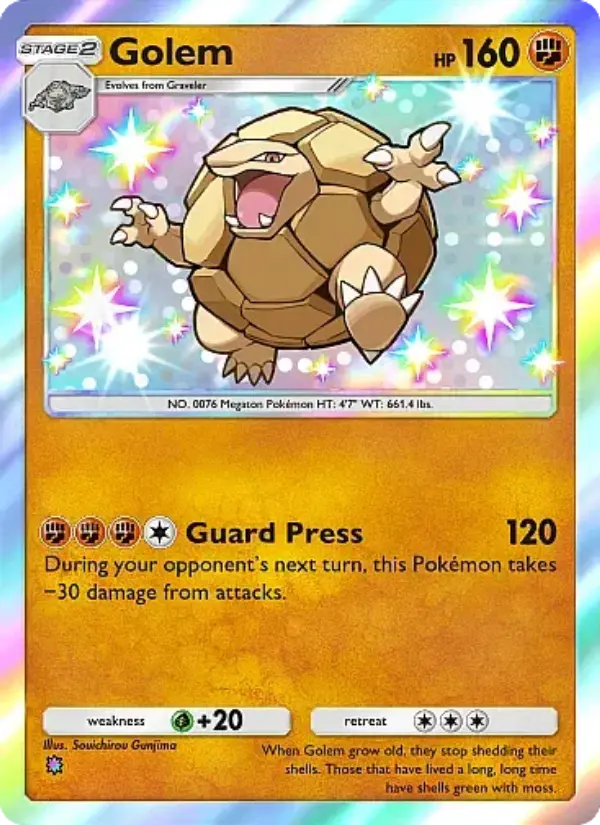
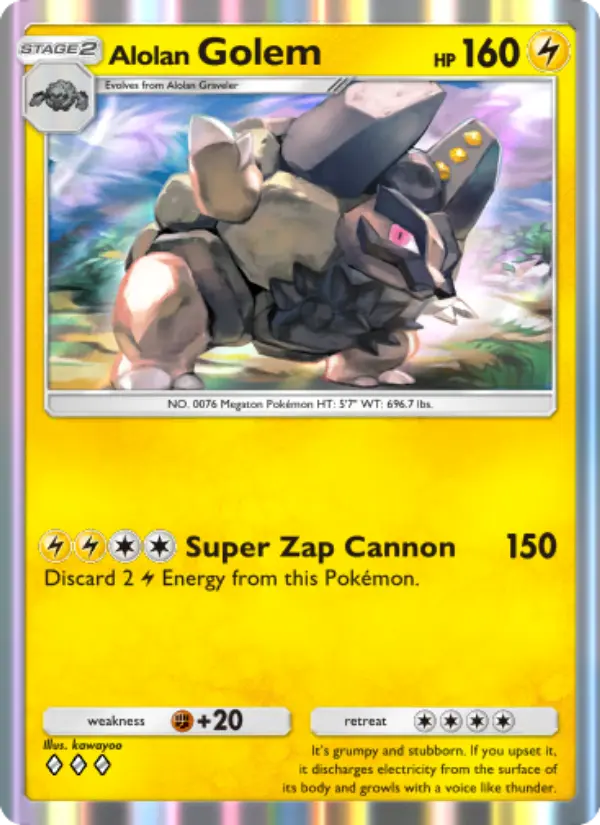
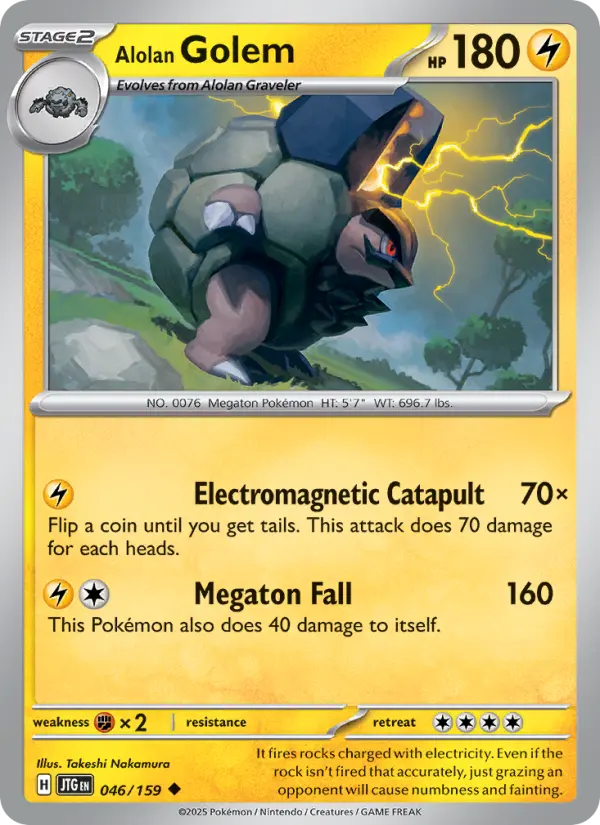
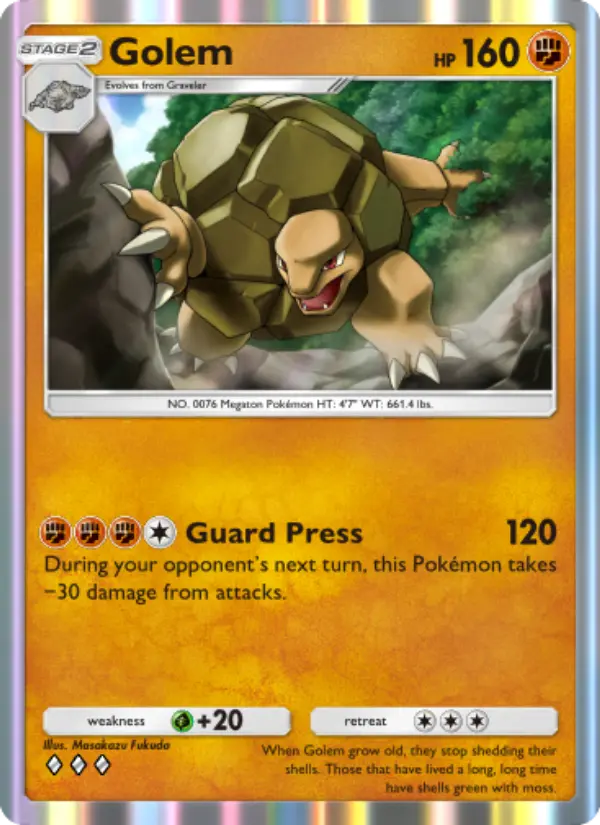
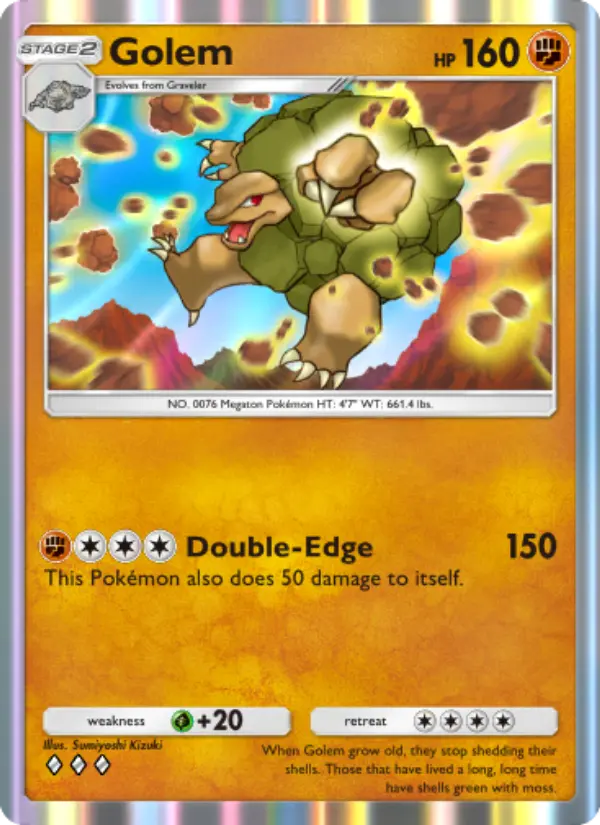
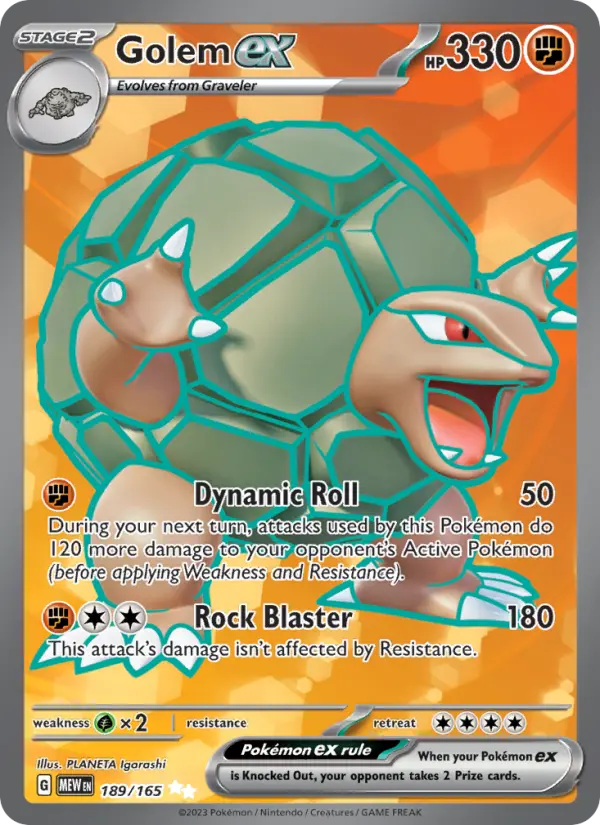
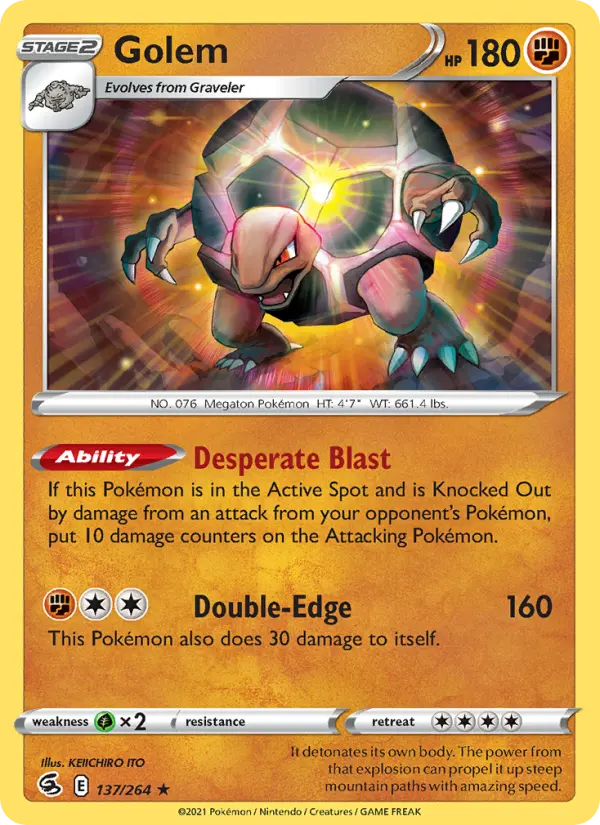
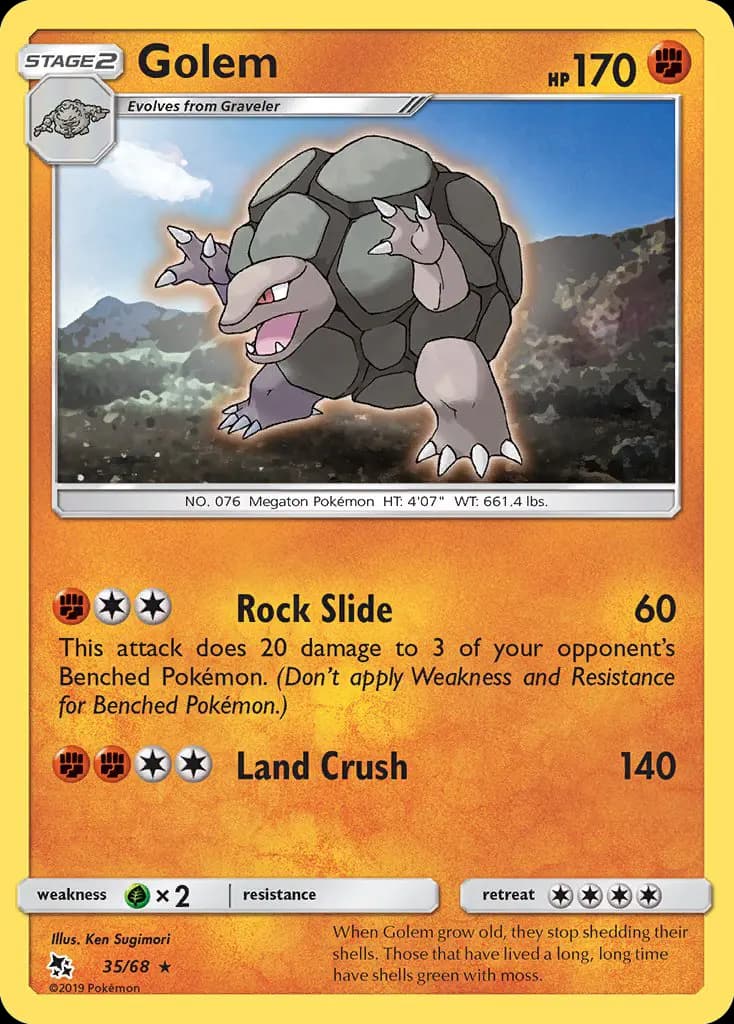
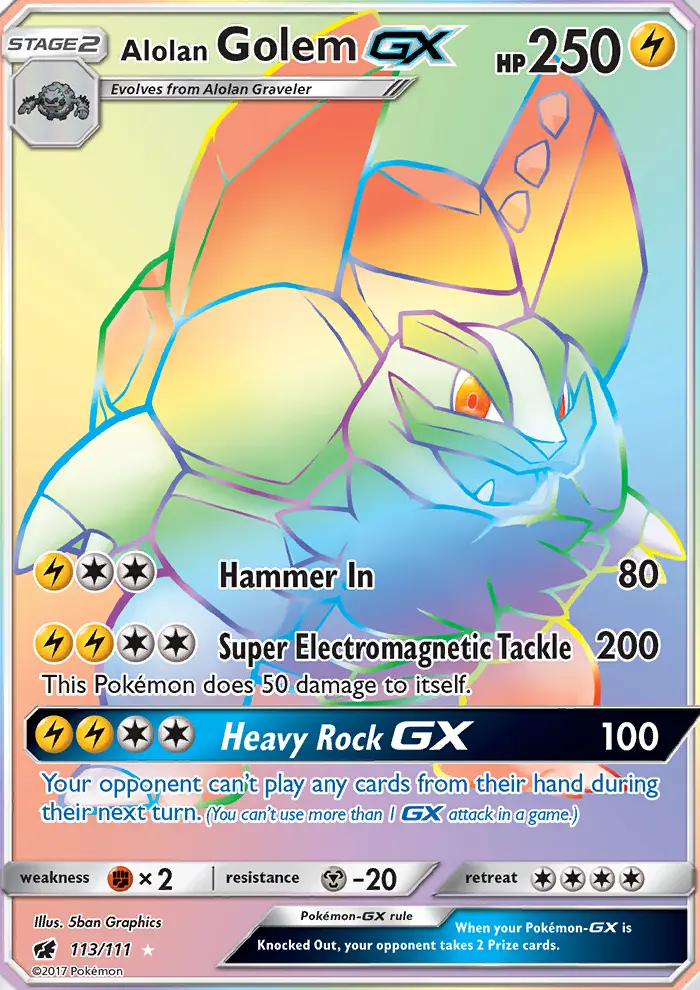
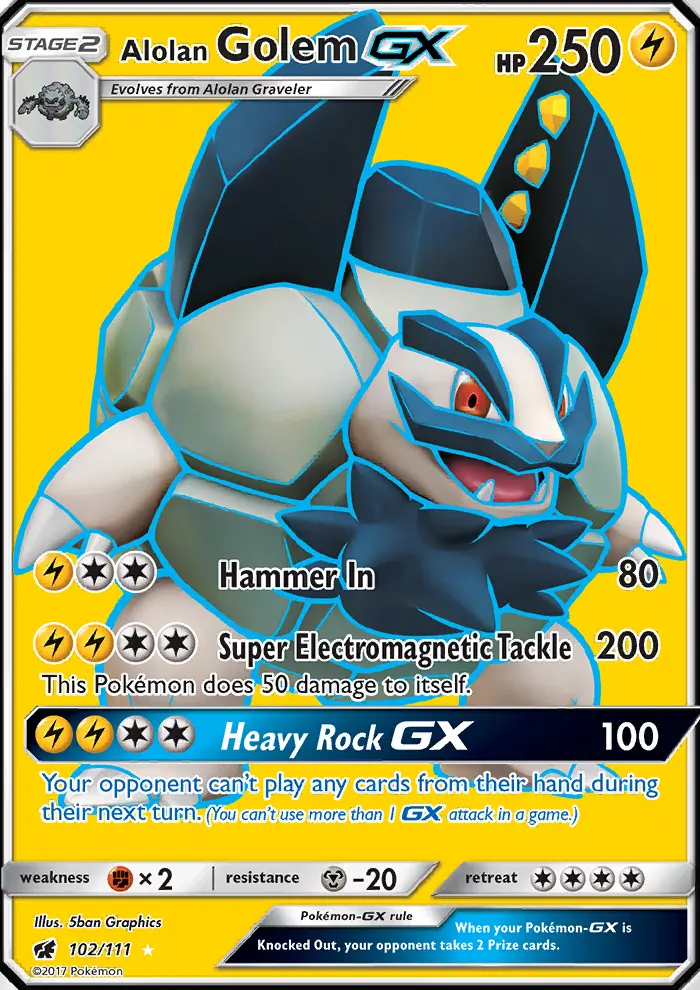
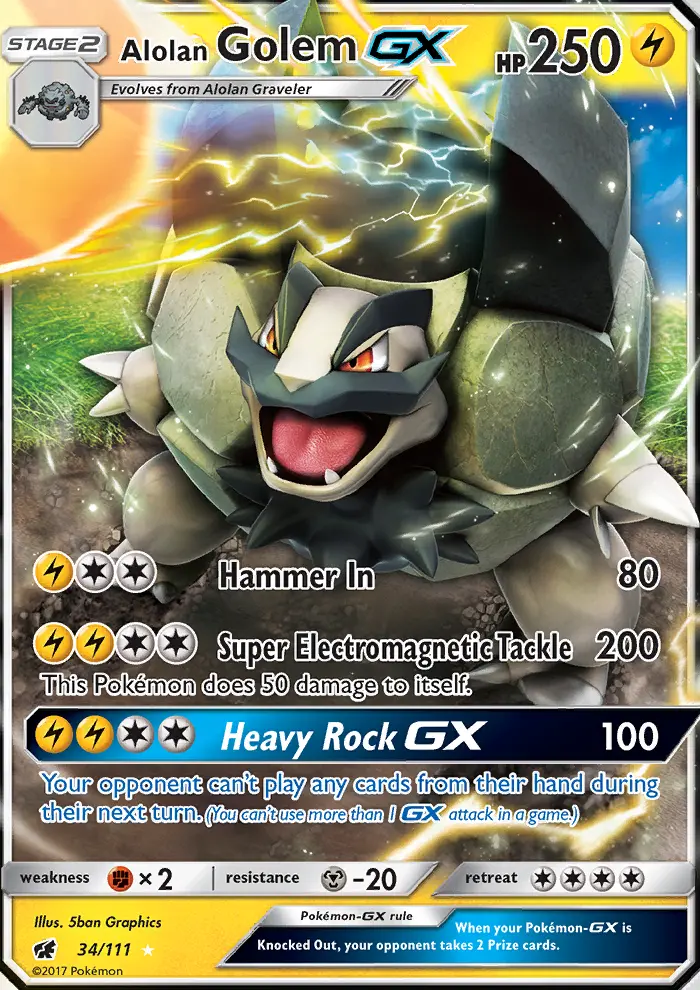
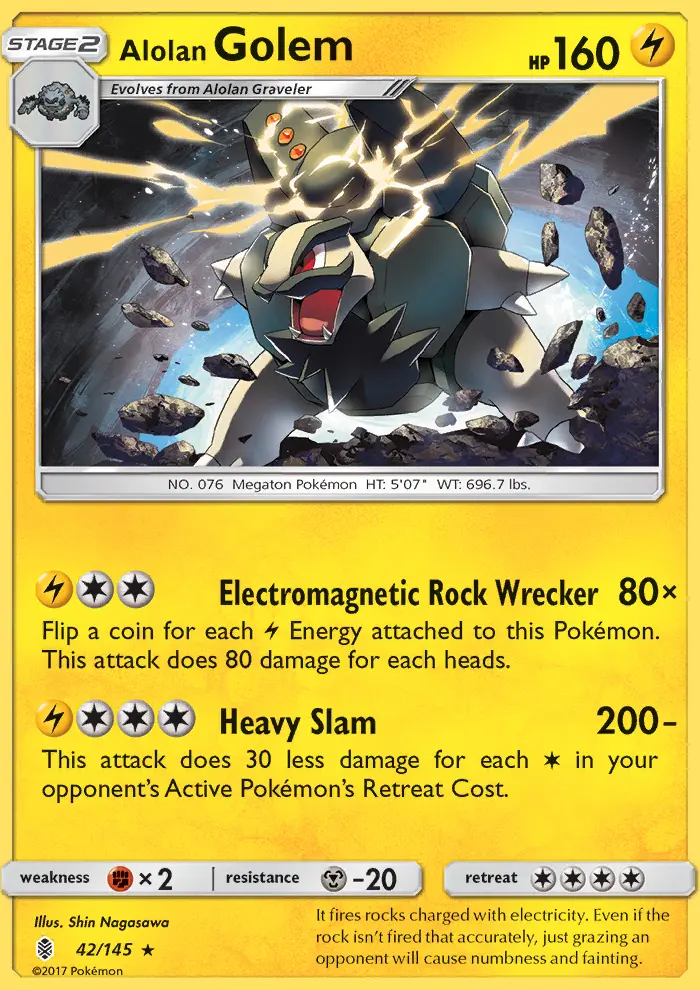
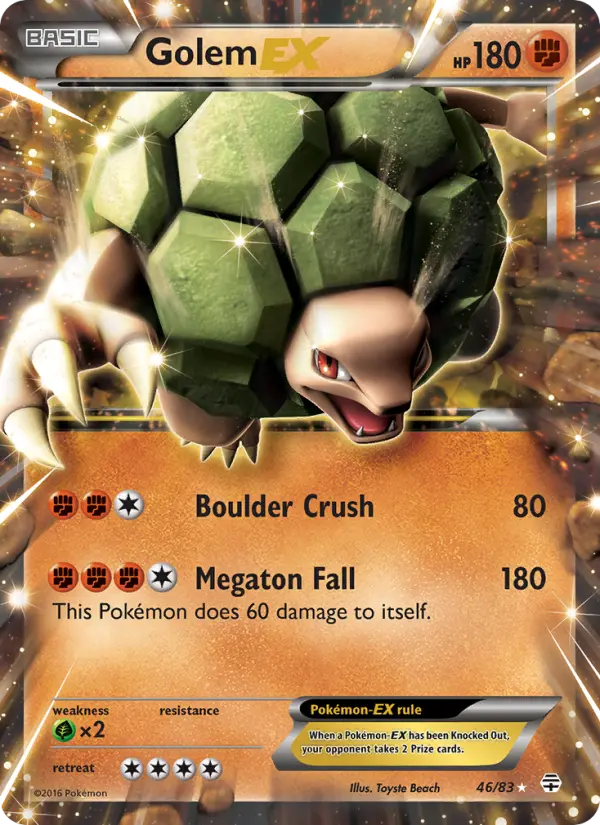
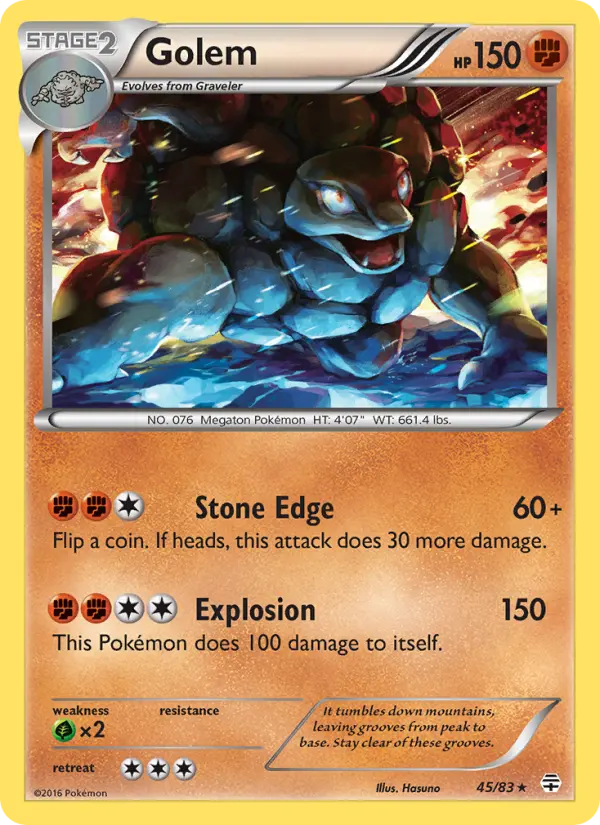
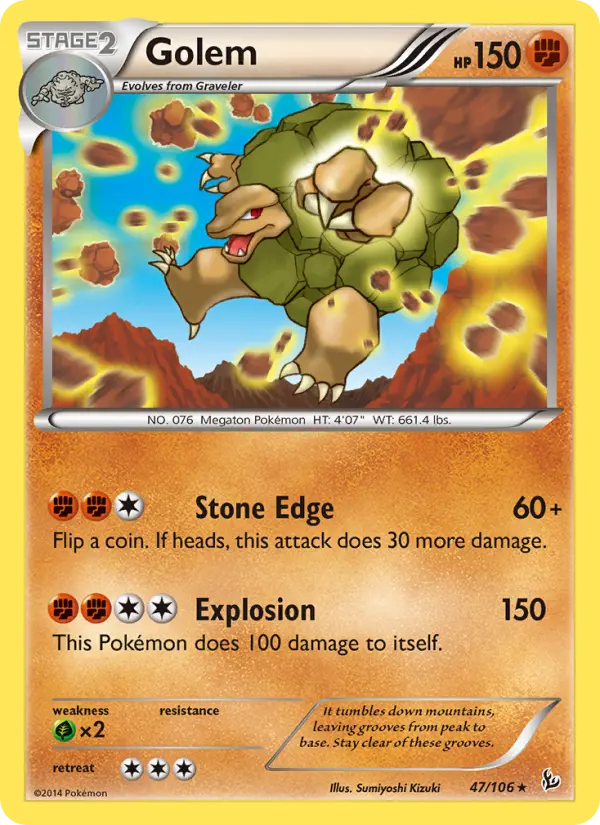
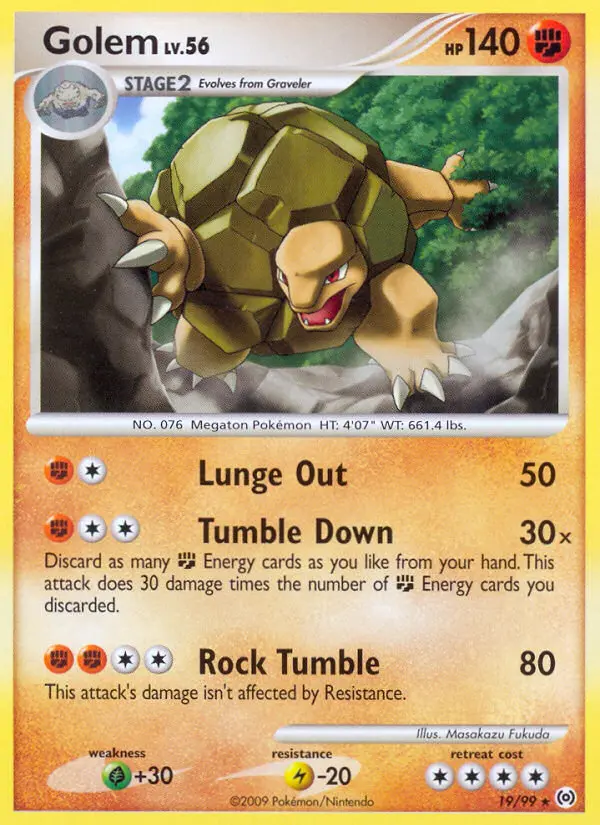
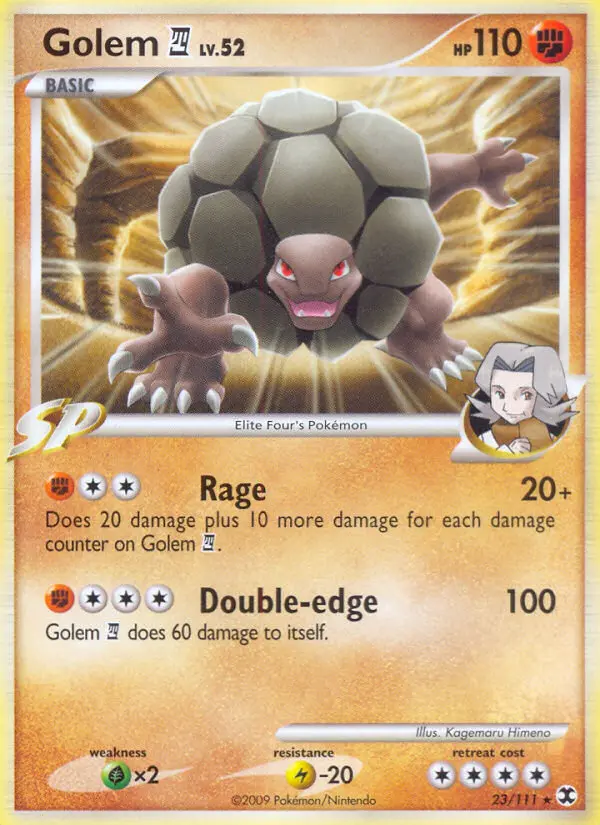
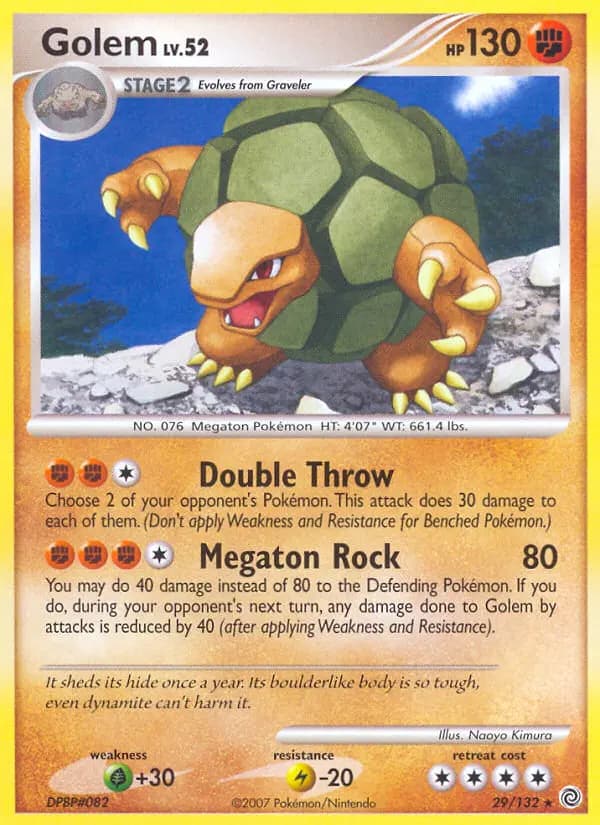
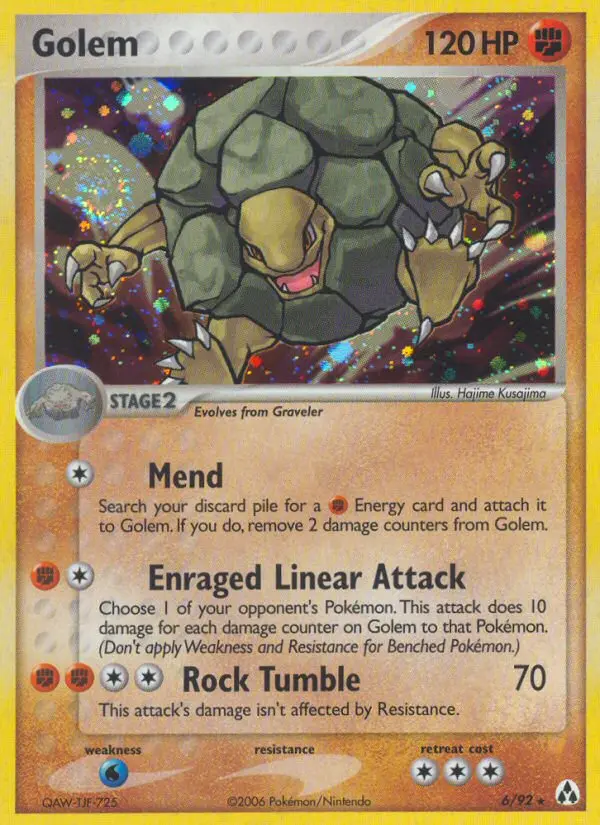
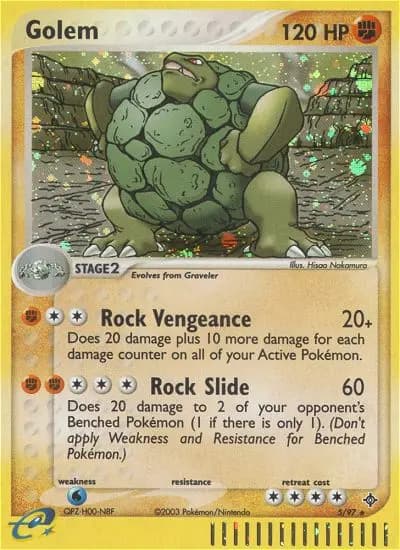
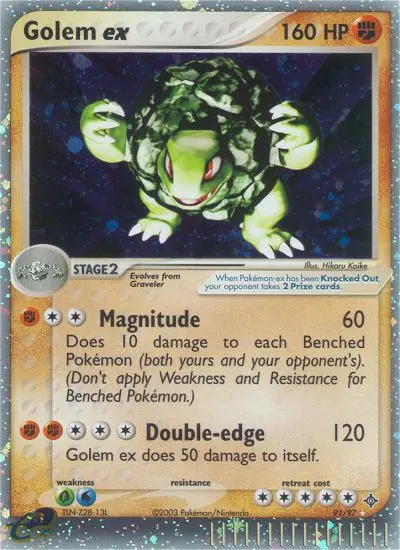
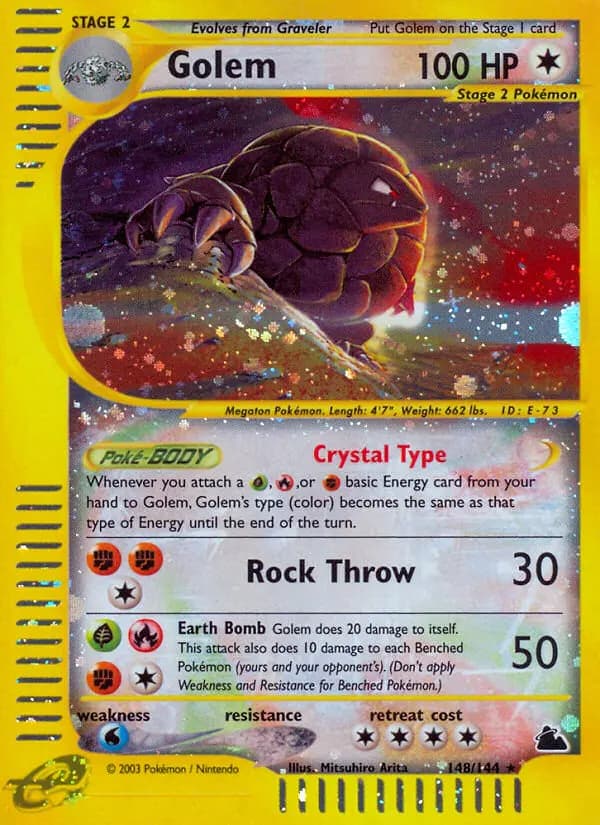
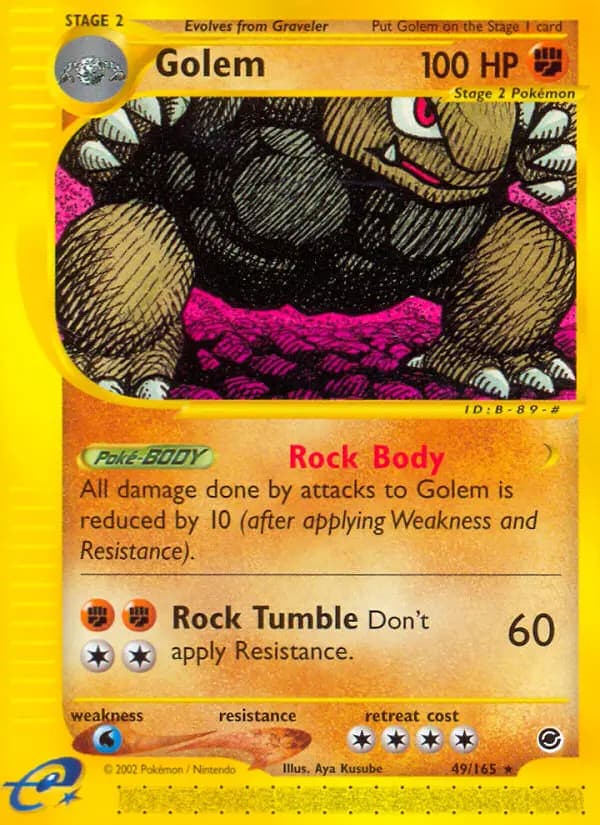
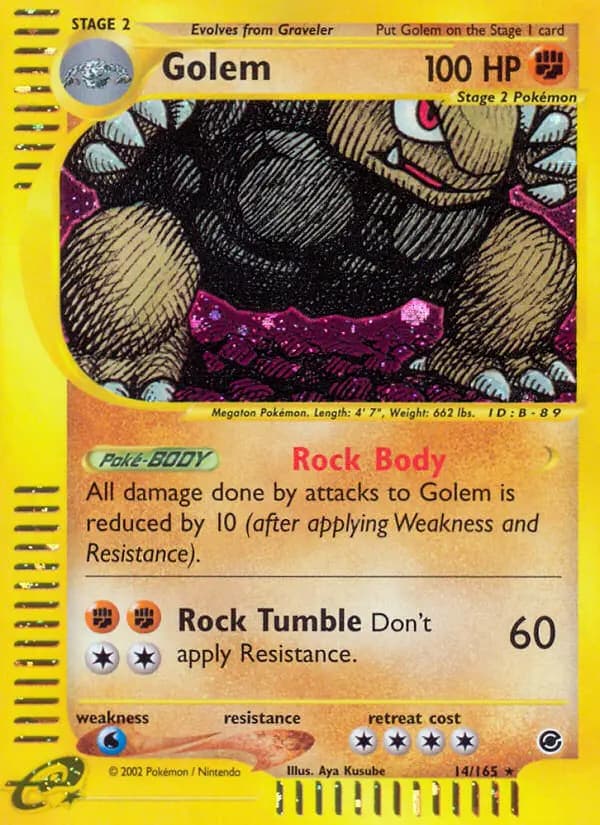
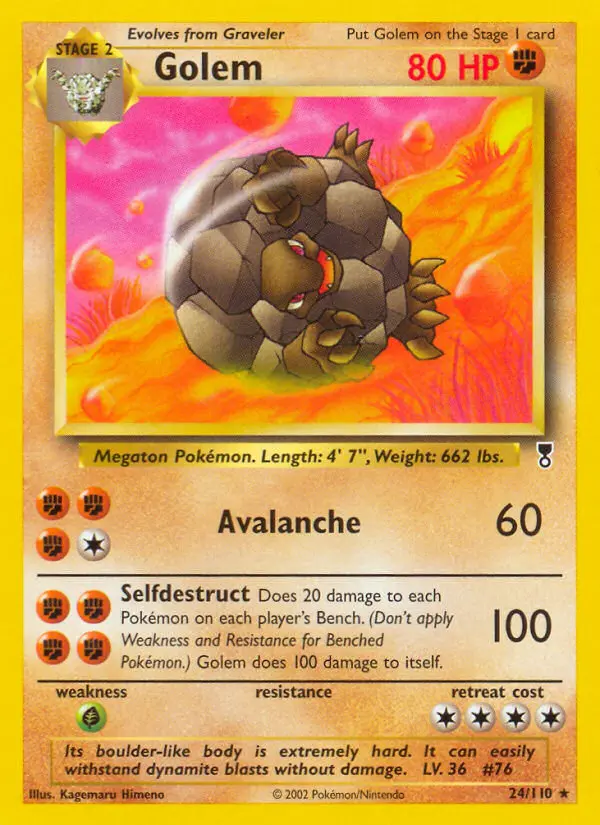
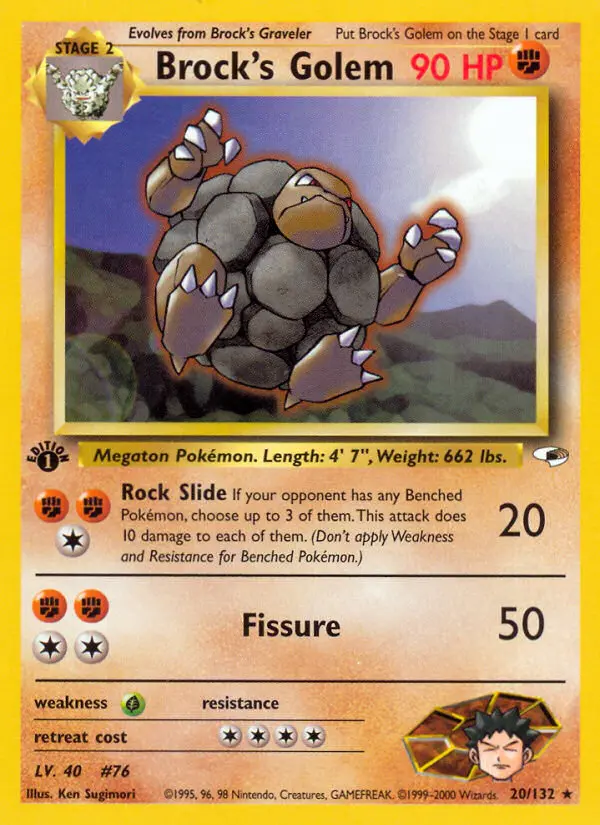
Golem represents one of the iconic Pokémon of the original Generation I, maintaining consistent recognition across multiple decades of Pokémon media and remaining a staple choice for trainers seeking a powerful, defensively-oriented companion. Its appearance in the Pokémon anime series, including memorable encounters with protagonist Ash Ketchum, solidified its position in popular culture alongside other Generation I classics like Charizard and Blastoise. The Pokémon's association with mountains, earthquakes, and literal explosions has made it a memorable element of Pokémon lore, with the creature serving as an environmental hazard and natural phenomenon in its own right rather than merely a battling entity. Trading card game representations of Golem have varied significantly across TCG eras, with artwork emphasizing its boulder-like appearance and defensive capabilities. The creature's design influenced subsequent Rock-type Pokémon and demonstrated how Game Freak could transform a humanoid form (Graveler) into a completely different geometric shape (Golem) while maintaining evolutionary coherence. In modern Pokémon games, the inclusion of an Alolan regional variant gave Golem fresh relevance and competitive viability, introducing new trainers to the line while allowing long-time fans to experience the evolutionary family through a completely reimagined lens that fundamentally altered type matchups and strategic applications.
Where to Find Golem in Every Pokémon Game
Golem's availability has shifted significantly across different Pokémon game generations, reflecting changing design philosophies regarding Pokédex distribution and regional availability. In the original Generation I games (Red, Blue, and Yellow), Golem appears in the Kanto region's Pokédex as entry #076, typically encountered on Mt. Moon or obtained through trading a Graveler. Subsequent generations maintained Golem's presence with varying regional Pokédex numbers reflecting its inclusion in postgame content or mountain-based encounters: it appears in Johto's Pokédex as #036, in Hoenn's as #059, and continues this pattern through subsequent generations including Sinnoh, Unova, Kalos, Alola, and beyond. In Pokémon Let's Go Pikachu and Eevee, Golem maintains its original #076 National Pokédex number and can be obtained through trading Graveler, preserving the classic trade evolution mechanic from the original games. The Alolan Golem form appeared exclusively in Pokémon Sun and Moon (as Alola Pokédex #231, later renumbered to #300 in Ultra Sun and Ultra Moon) and subsequent games featuring Alola content, though it has also appeared in Pokémon Sword and Shield's DLC and in Pokémon Scarlet and Violet's Indigo Disk DLC through the Blueberry Academy's Terarium facility. The Pokédex entries from various game versions consistently emphasize its extraordinary durability and explosive capabilities, making Golem one of the few Pokémon whose survival characteristics and potential hazards to humans are explicitly acknowledged in official game text.