Gloom
Generation I · #0044 — Weed Pokémon
Few grass/poison-type Pokémon pair chlorophyll with a stat lean toward special attack quite like Gloom does. At 0.8 m and 8.6 kg, its build reflects a specialist role rather than a generalist one. With a aggregate stat total of 395, Gloom possesses a well-rounded defensive profile complemented by respectable Special Attack capabilities, making it a versatile option for trainers seeking a balanced Grass-type companion. Standing at just 0.8 meters tall and weighing a modest 8.6 kilograms, Gloom embodies the delicate yet formidable nature of plant-based Pokémon. Its abilities—Chlorophyll as the standard and Stench as a hidden ability—provide distinct strategic advantages depending on the battle conditions and team composition a trainer employs.
Editor's Take
Gloom is the branch point rather than a Pokémon in its own right, and the Sun Stone route to Bellossom arriving a full generation after the Leaf Stone route is a strange piece of design history.
Base Stats
Height
0.8m
Weight
8.6kg
Category
Weed Pokémon
Gender
Male 50% / Female 50%
Color
blue
Shape
humanoid
Habitat
grassland
Abilities
Doubles Speed during strong sunlight.
Has a 10% chance of making target Pokémon flinch with each hit.

Gloom Biology & Physical Characteristics
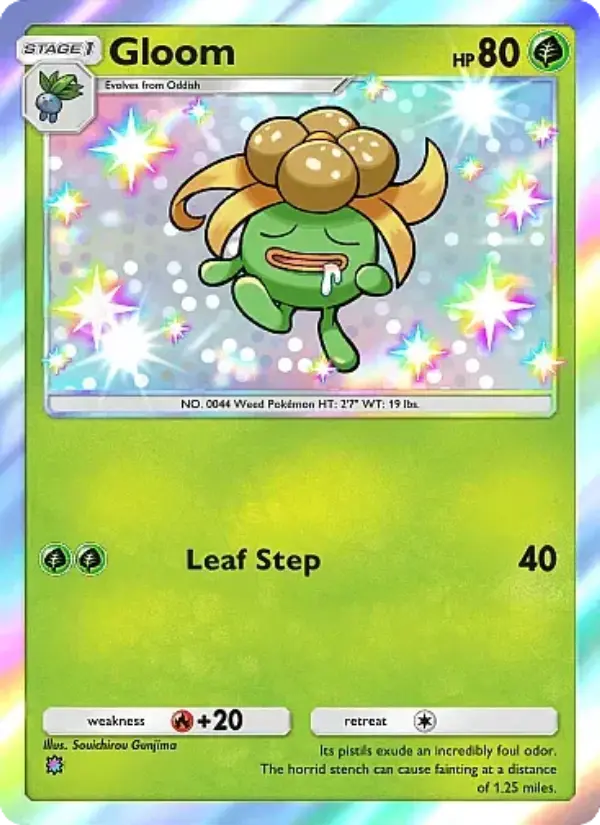
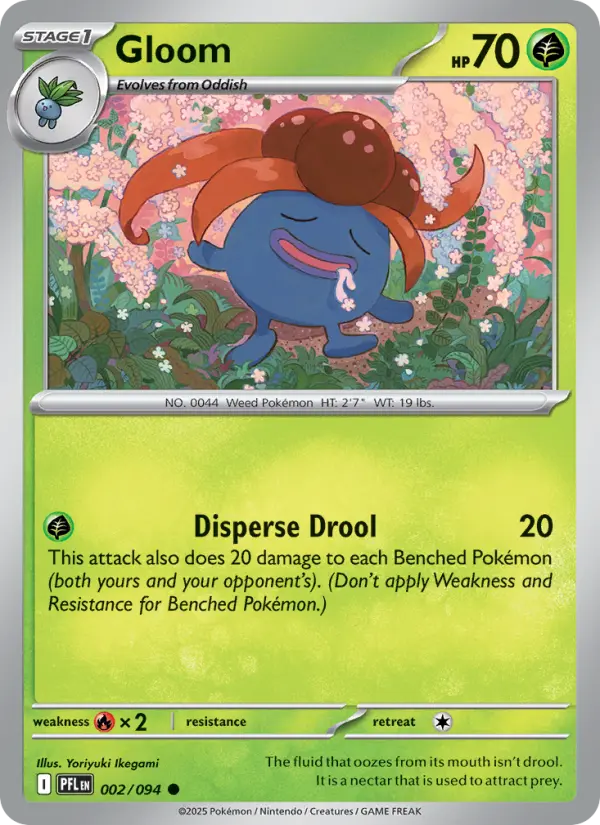
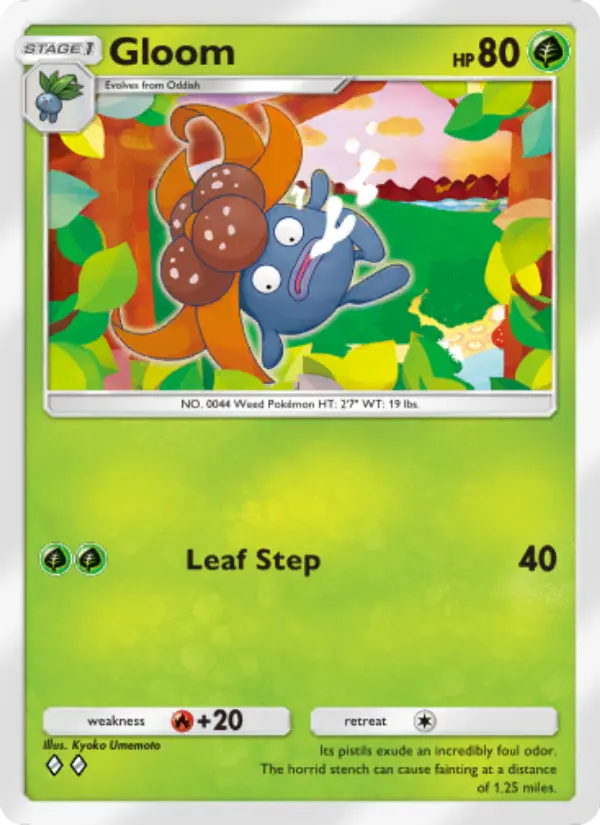
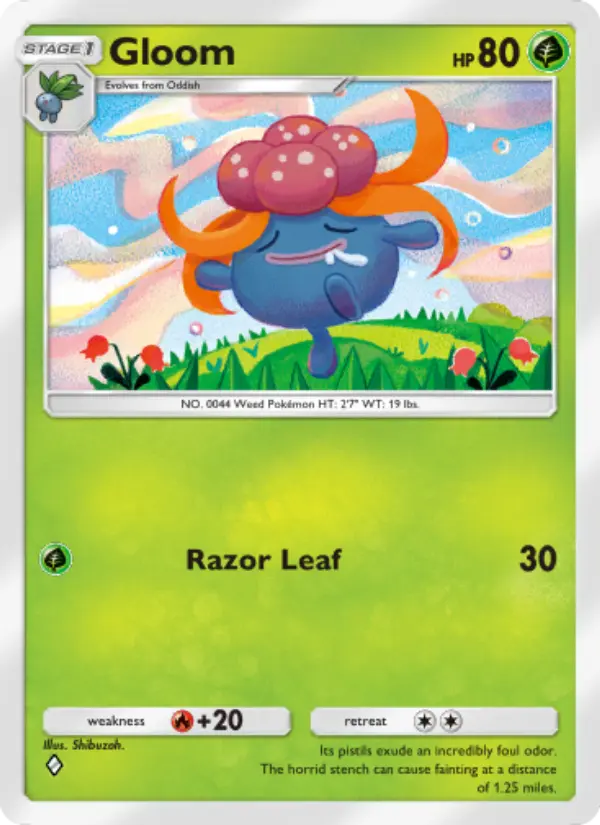
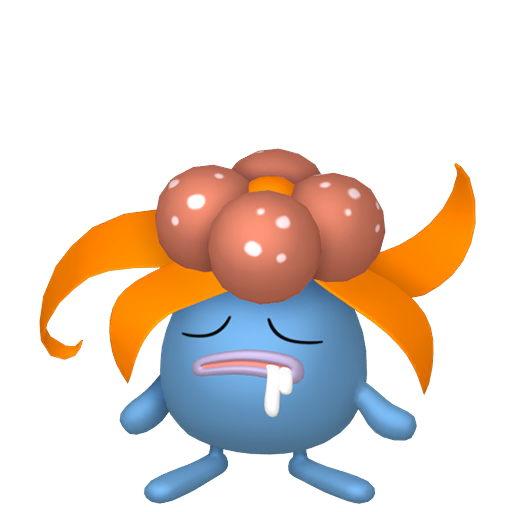
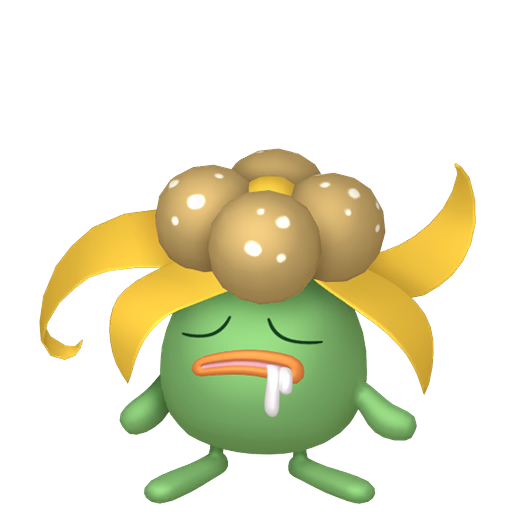
Gloom is a bipedal, blue Pokémon with a distinctive flower sprouting from its head, bearing a striking resemblance to the carnivorous Rafflesia plant. Its most notable feature is the prominent flower with spherical, dark reddish-brown petals adorned with white spots, surrounded by four protective leaves. A fascinating sexual dimorphism exists in Gloom's appearance; females display a single large spot on each petal, while males exhibit numerous smaller spots across their petals, allowing trainers to determine a Gloom's gender at a glance. The Pokémon possesses wide, often closed-appearing eyes and thin purple lips from which a sticky, honey-like nectar continuously oozes—a fluid that serves multiple functions in nature and industry. This nectar, despite its drool-like appearance, is actually a sweet substance with remarkable adhesive properties, capable of clinging stubbornly to anything it contacts. The combination of this honey and the pollen on Gloom's petals produces an extraordinarily foul odor, potent enough to cause fainting in humans from over a mile away, yet paradoxically, it functions as a crucial attractant for prey and even serves as a key ingredient in perfume production for a select group of enthusiasts.
Pokedex Numbers
Training
Breeding
Gloom Breeding, Gender Ratio & Egg Groups
Gloom exhibits a perfectly balanced gender ratio, with exactly 50% of individuals being male and 50% being female, reflecting the Pokémon's reproductive consistency within the plant egg group. As a member of the Grass egg group, Gloom can breed with other Pokémon sharing this classification, allowing trainers to cultivate specific movesets and IV distributions through careful breeding practices. The hatch counter of 20 cycles translates to approximately 4,884 to 5,140 steps required to hatch a Gloom egg, a moderate timeframe that falls within the reasonable range for most trainers' breeding operations. Visual sexual dimorphism in petal spotting patterns—single large spots on females versus multiple smaller spots on males—provides immediate identification of a Gloom's gender without requiring technical menus, a feature that enhances immersion and encourages careful observation of individual specimens. The base friendship value of 70 indicates that Gloom begins with moderate affection toward its trainer, establishing a positive foundation for relationship building through standard interaction and care. Breeders and competitive players often utilize Gloom's accessibility and balanced nature to develop specialized teams, taking advantage of its naturally friendly disposition and varied move pool inheritance possibilities through strategic breeding chains.
Sprites




Held Items
Absorb Bulb
held-items
Held: Raises the holder’s Special Attack by one stage when it takes Water-type damage.
Cost: 4000
Absorb Bulb
held-items
Held: Raises the holder’s Special Attack by one stage when it takes Water-type damage.
Cost: 4000
Absorb Bulb
held-items
Held: Raises the holder’s Special Attack by one stage when it takes Water-type damage.
Cost: 4000
Absorb Bulb
held-items
Held: Raises the holder’s Special Attack by one stage when it takes Water-type damage.
Cost: 4000
Absorb Bulb
held-items
Held: Raises the holder’s Special Attack by one stage when it takes Water-type damage.
Cost: 4000
Absorb Bulb
held-items
Held: Raises the holder’s Special Attack by one stage when it takes Water-type damage.
Cost: 4000
Absorb Bulb
held-items
Held: Raises the holder’s Special Attack by one stage when it takes Water-type damage.
Cost: 4000
Absorb Bulb
held-items
Held: Raises the holder’s Special Attack by one stage when it takes Water-type damage.
Cost: 4000
Absorb Bulb
held-items
Held: Raises the holder’s Special Attack by one stage when it takes Water-type damage.
Cost: 4000
Absorb Bulb
held-items
Held: Raises the holder’s Special Attack by one stage when it takes Water-type damage.
Cost: 4000
Absorb Bulb
held-items
Held: Raises the holder’s Special Attack by one stage when it takes Water-type damage.
Cost: 4000
Absorb Bulb
held-items
Held: Raises the holder’s Special Attack by one stage when it takes Water-type damage.
Cost: 4000
TMs & HMs
tm01
lets go pikachu lets go eevee
tm02
crystal
tm02
gold silver
tm03
yellow
tm03
crystal
tm03
gold silver
tm03
red blue
tm03
lets go pikachu lets go eevee
tm03
blue japan
tm03
red green japan
tm05
lets go pikachu lets go eevee
tm06
yellow
tm06
gold silver
tm06
red blue
tm06
crystal
tm06
emerald
tm06
firered leafgreen
tm06
diamond pearl
tm06
platinum
tm06
ruby sapphire
+515 more TMs/HMs
Gender Differences
This Pokémon has visible differences between male and female forms.
Gloom's Evolution Chain


Gloom Evolution, Mega Evolution & Special Forms
Gloom occupies a critical branching point in the Oddish evolutionary line, serving as the bridge between its unevolved form and two dramatically different final evolutions. At level 21, Oddish naturally evolves into Gloom, marking the Pokémon's transformation from a small, grass-like creature into a more complex, flower-bearing organism. From Gloom, trainers face a crucial decision: exposure to a Leaf Stone triggers evolution into Vileplume, a larger, more robust Grass/Poison type emphasizing physical prowess and Special Attack capabilities, while exposure to a Sun Stone results in evolution into Bellossom, a pure Grass-type that trades the Poison typing for enhanced Special Defense and speed. This branching evolutionary pathway offers trainers strategic flexibility in team building, as each final form excels in different competitive niches. Notably, prior to Generation II, Gloom and its evolutionary relatives were the sole Pokémon capable of learning the powerful move Petal Dance, cementing their unique evolutionary significance within the broader Pokémon ecosystem. The existence of multiple evolutionary pathways from a single intermediate form was relatively novel at Generation I's inception, making Gloom a pioneering example of complex evolutionary mechanics that would become commonplace in later generations.
Where to Find
Kanto Route 12
kanto
+5 more
Kanto Route 13
kanto
+5 more
Kanto Route 14
kanto
+2 more
Kanto Route 15
kanto
+3 more
Cerulean Cave
kanto
Kanto Route 5
kanto
+3 more
Kanto Route 24
kanto
Hoenn Route 123
hoenn
Hoenn Safari Zone
hoenn
+15 more
Hoenn Route 121
hoenn
Water Path
kanto
Cape Brink
kanto
Berry Forest
kanto
Bond Bridge
kanto
Sinnoh Route 224
sinnoh
Sinnoh Sea Route 230
sinnoh
Sinnoh Route 229
sinnoh
+1 more
Johto Route 48
johto
+1 more
Johto Route 47
johto
Johto Safari Zone
johto
+1 more
+1 more locations in other games
Gloom Behaviour and Natural Habitat
Gloom inhabits grassy plains and meadows, environments where it can feed on nutrients from soil and sunlight while releasing its distinctive aroma to attract potential prey. The Pokémon's behavioral patterns are deeply intertwined with its emotional state and sense of security; when Gloom feels threatened or faces danger, its notorious stench intensifies dramatically, serving as both a defensive mechanism and a warning to potential threats. Conversely, when calm and secure in its surroundings, Gloom suppresses its usual foul odor, suggesting a level of control over its scent-producing capabilities. The honey it secretes serves practical purposes beyond attraction, functioning as a fertilizer for plants and demonstrating Gloom's symbiotic relationship with its environment. Interestingly, approximately one in one thousand humans finds Gloom's horrid stench actually pleasant or even appealing, suggesting that Gloom's aroma operates on a subjective spectrum of perception rather than being universally repellent. This unique aspect of Gloom's biology has fascinated researchers and contributed to its enduring popularity among trainers seeking unconventional Pokémon partners.
Pokedex Entries
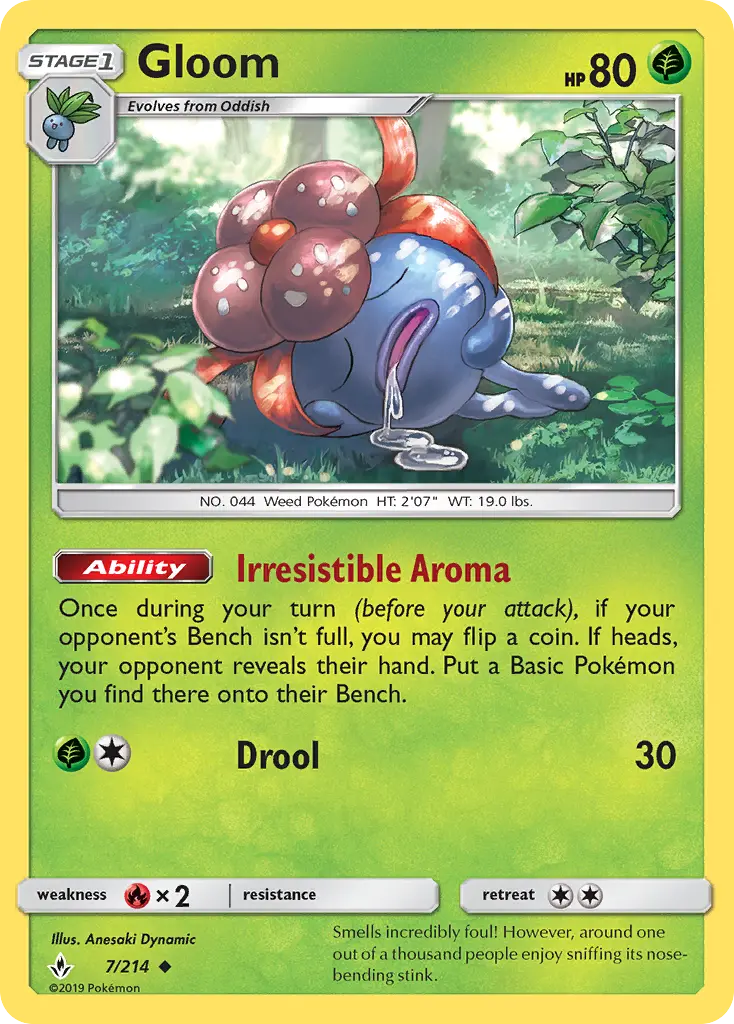
The fluid that oozes from its mouth isn't drool. It is a nectar that is used to attract prey.
Smells incredibly foul! However, around 1 out of 1,000 people enjoy sniffing its nose- bending stink.
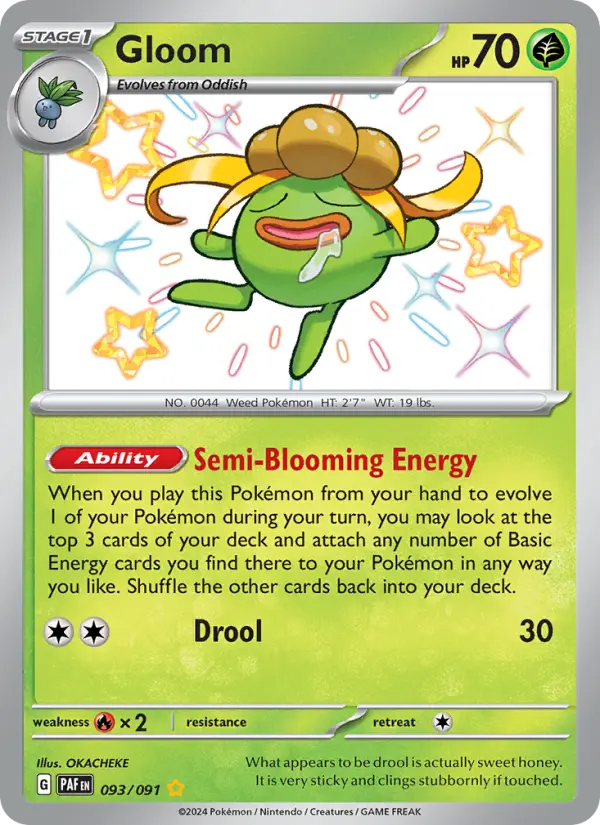
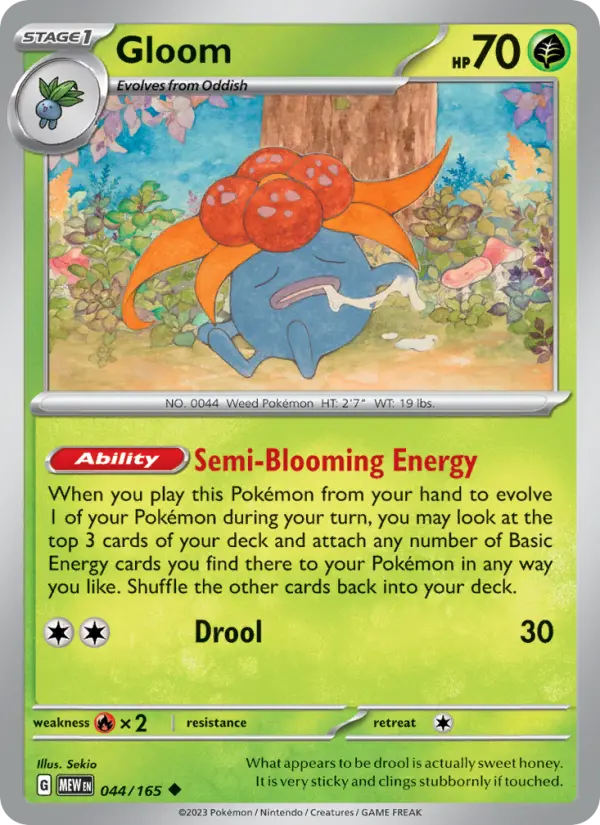
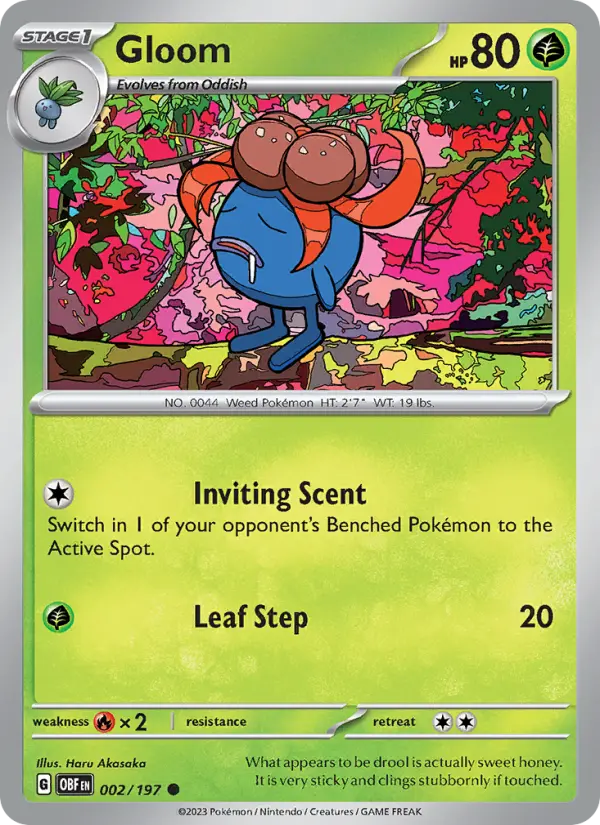
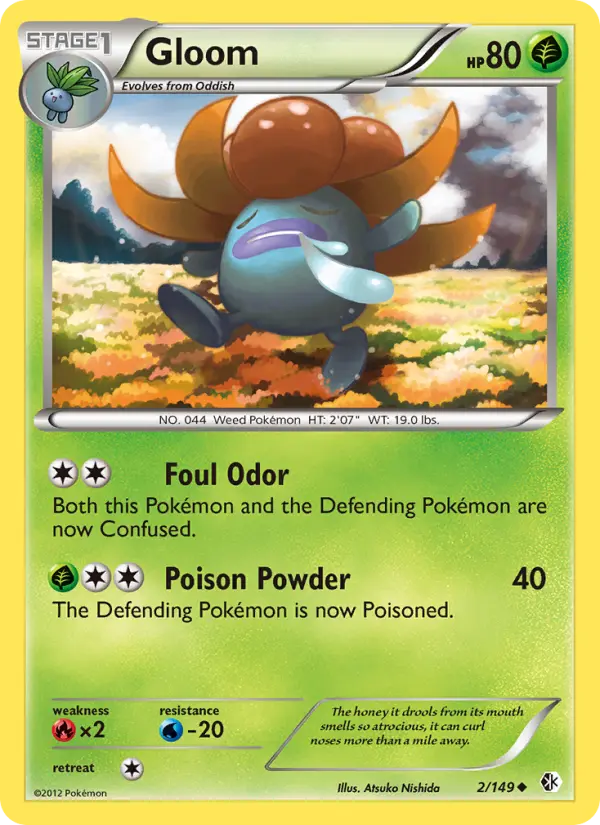
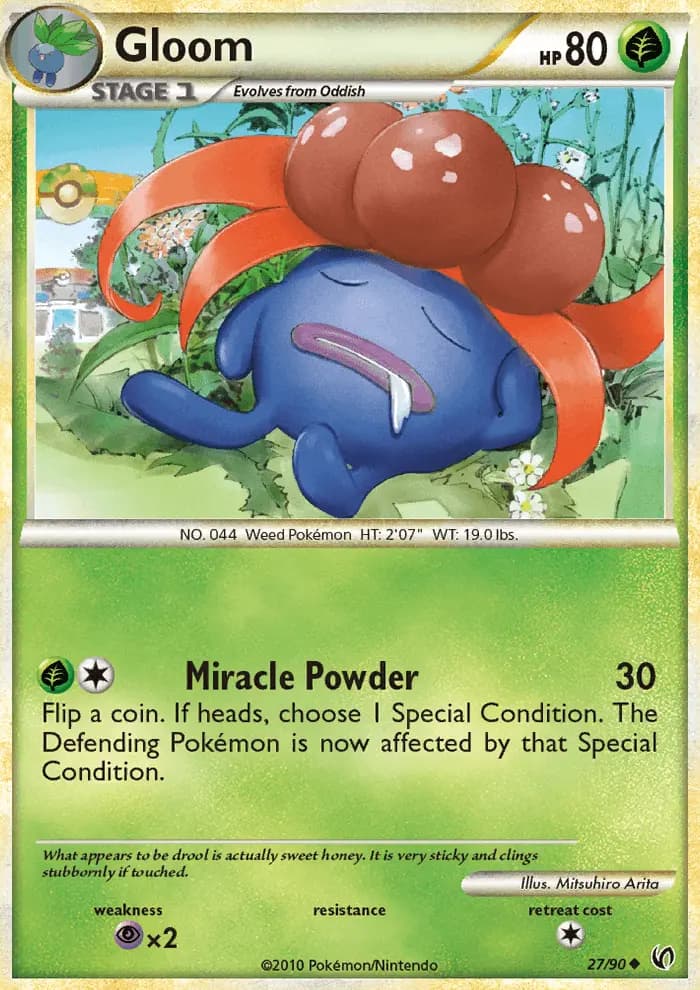
What appears to be drool is actually sweet honey. It is very sticky and clings stubbornly if touched.
It secretes a sticky, drool-like honey. Although sweet, it smells too repulsive to get very close.
The smell from its drool-like syrup and the pollen on its petals is so bad, it may make opponents faint.
GLOOM releases a foul fragrance from the pistil of its flower. When faced with danger, the stench worsens. If this POKéMON is feeling calm and secure, it does not release its usual stinky aroma.
From its mouth GLOOM drips honey that smells absolutely horrible. Apparently, it loves the horrid stench. It sniffs the noxious fumes and then drools even more of its honey.
A horribly noxious honey drools from its mouth. One whiff of the honey can result in memory loss. Some fans are said to enjoy this overwhelming stink, however.
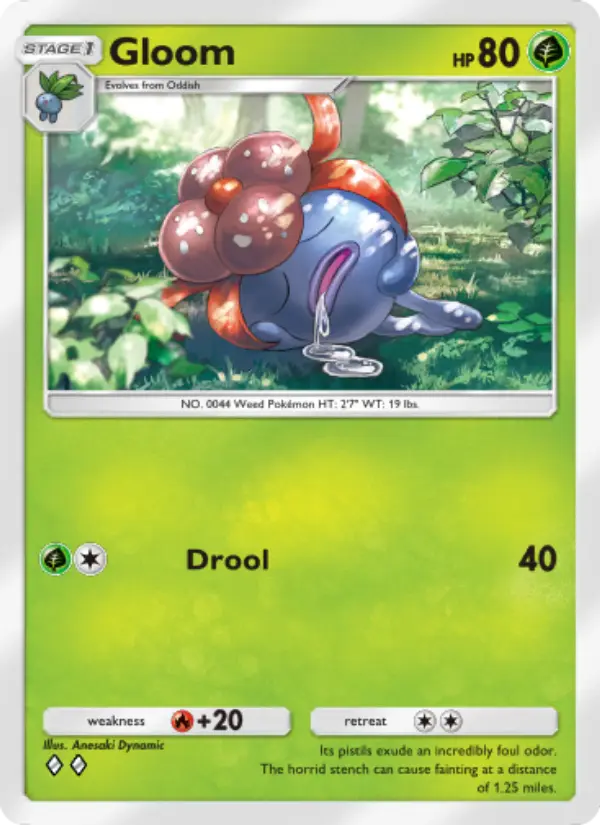
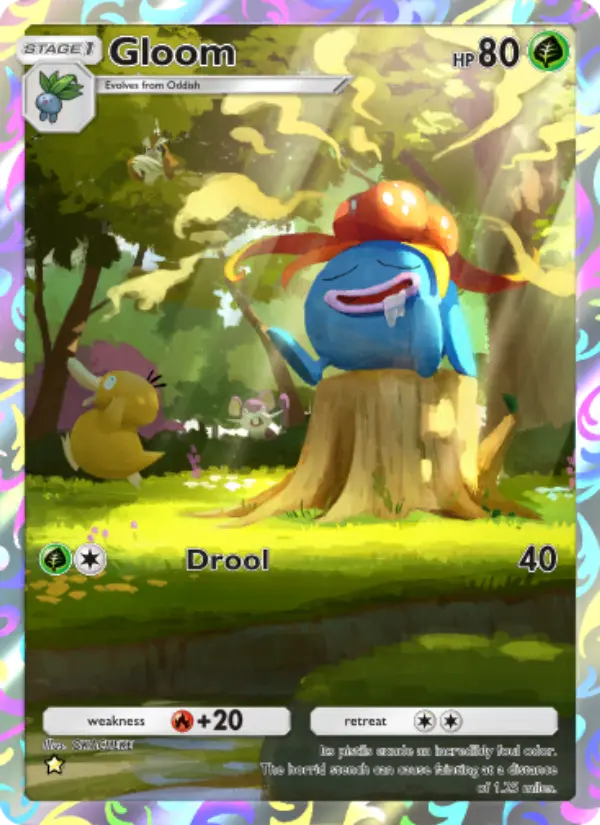
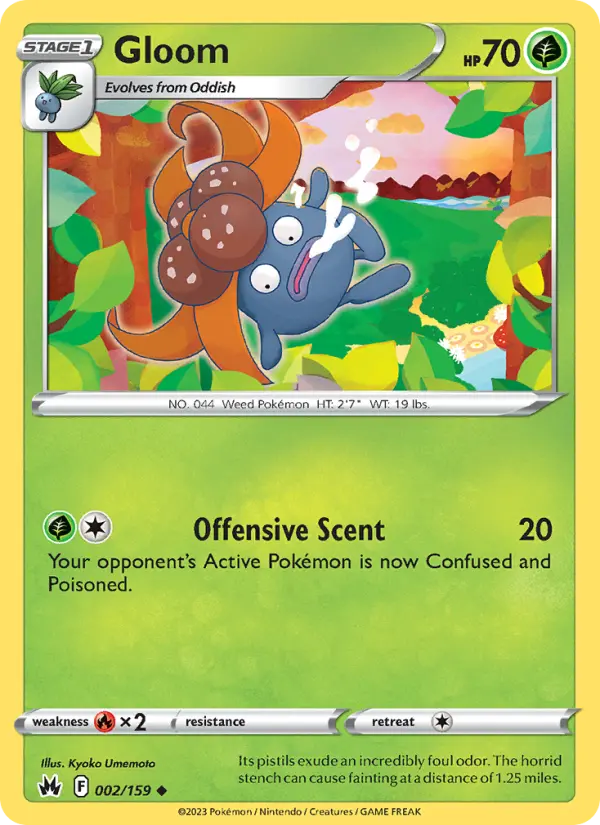
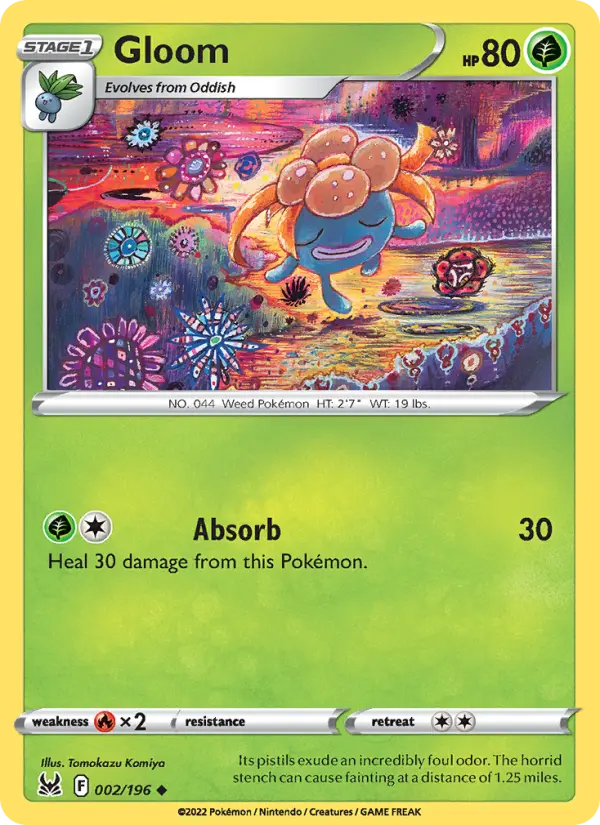
Its pistils exude an incredibly foul odor. The horrid stench can cause fainting at a distance of 1.25 miles.
The fluid that oozes from its mouth isn’t drool. It is a nectar that is used to attract prey.
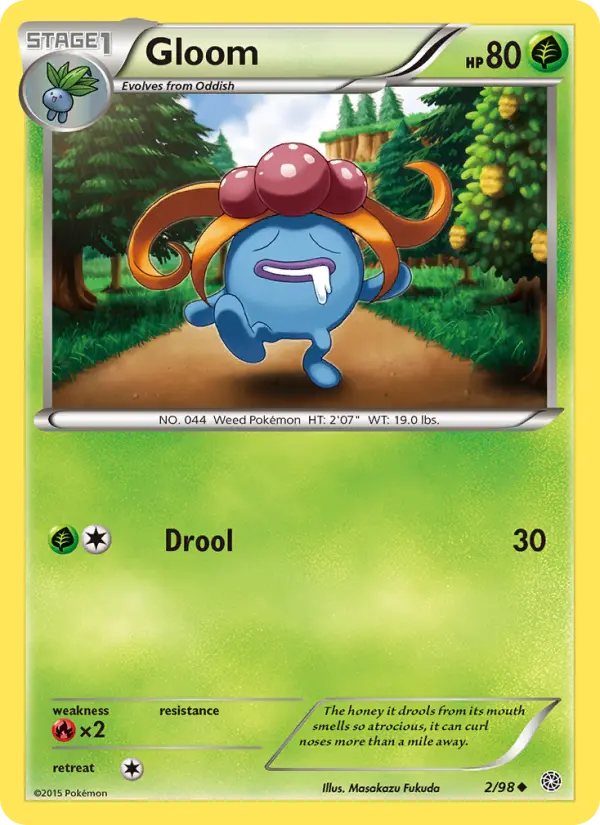
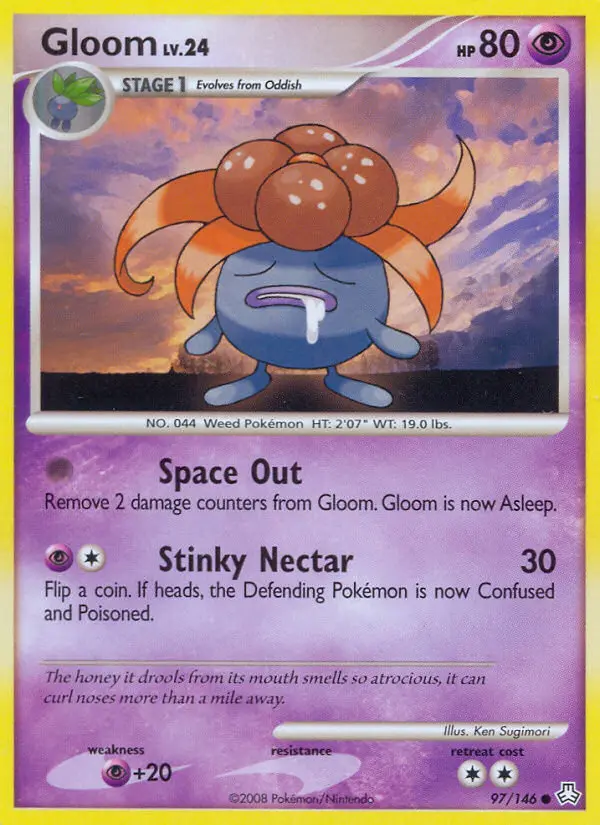
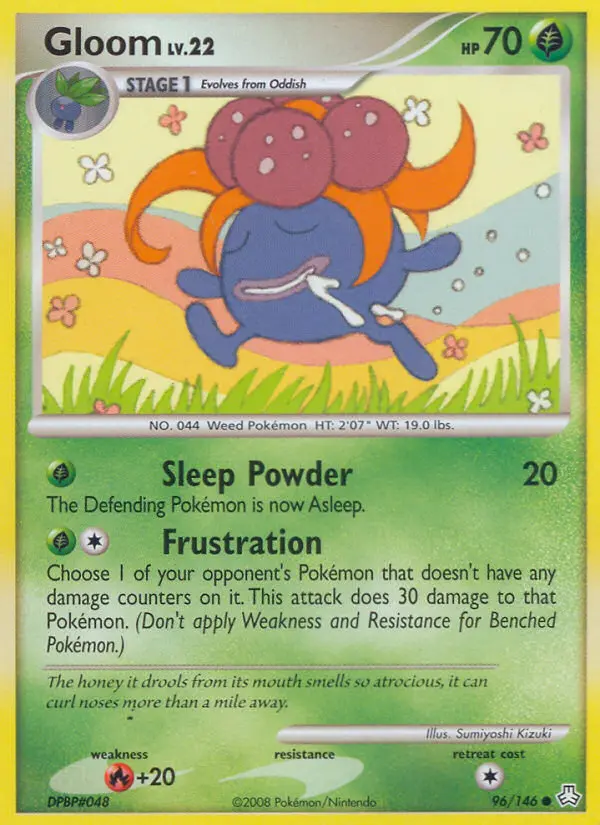
The honey it drools from its mouth smells so atrocious, it can curl noses more than a mile away.
What appears to be drool is actually sweet honey. It is very sticky and clings stubbornly if touched.
It secretes a sticky, drool-like honey. Although sweet, it smells too repulsive to get very close.
The honey it drools from its mouth smells so atrocious, it can curl noses more than a mile away.
The honey it drools from its mouth smells so atrocious, it can curl noses more than a mile away.
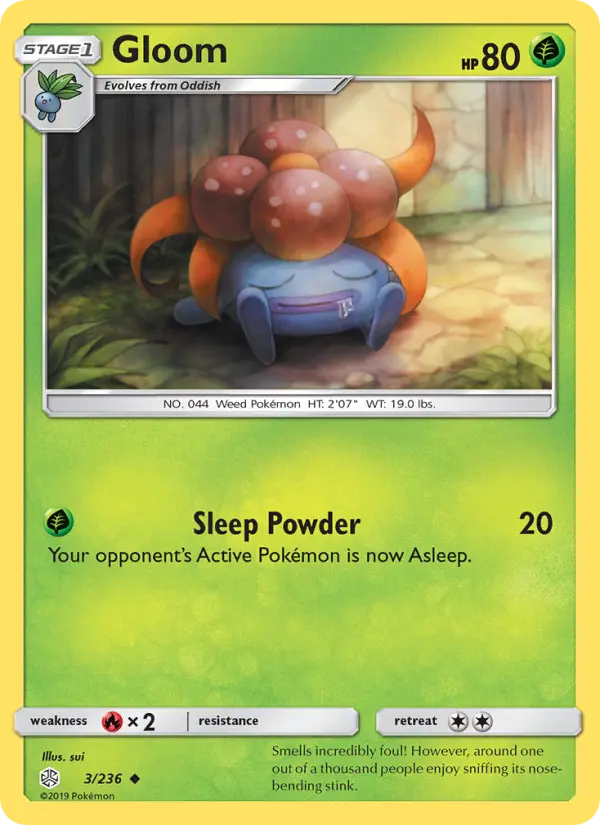
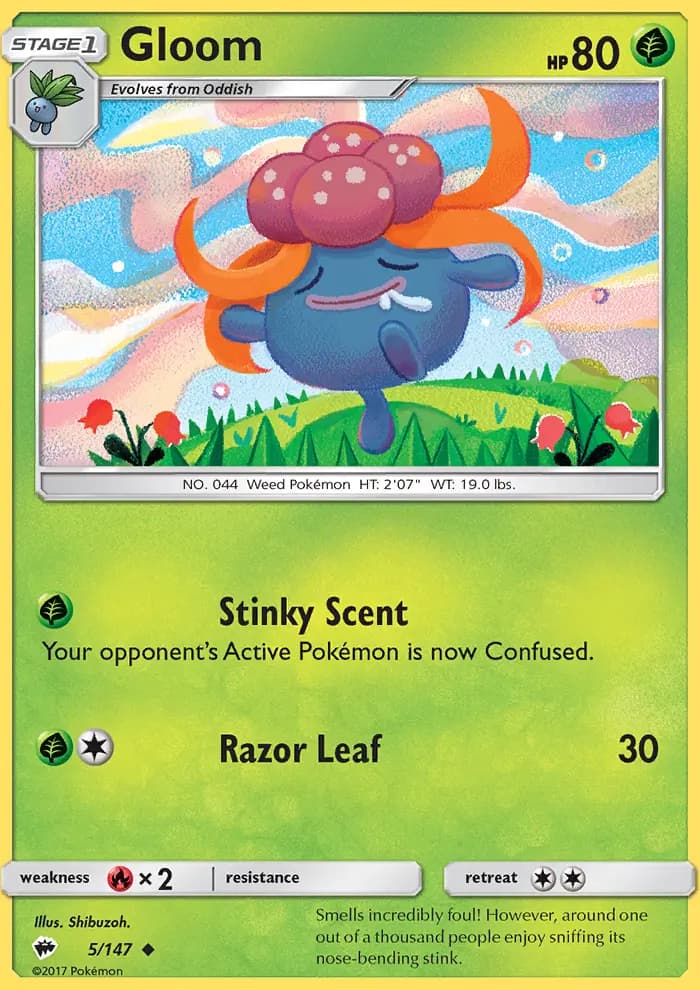
Smells incredibly foul! However, around one out of a thousand people enjoy sniffing its nose-bending stink.
The honey it drools from its mouth smells so atrocious, it can curl noses more than a mile away.
Gloom releases a foul fragrance from the pistil of its flower. When faced with danger, the stench worsens. If this Pokémon is feeling calm and secure, it does not release its usual stinky aroma.
From its mouth Gloom drips honey that smells absolutely horrible. Apparently, it loves the horrid stench. It sniffs the noxious fumes and then drools even more of its honey.
Smells incredibly foul! However, around one out of a thousand people enjoy sniffing its nose-bending stink.
Its pistils exude an incredibly foul odor. The horrid stench can cause fainting at a distance of 1.25 miles.
What appears to be drool is actually sweet honey. It is very sticky and clings stubbornly if touched.
Gloom Name Origin & Design Inspiration
Gloom's design draws inspiration from the Rafflesia plant, a real-world carnivorous flower known for its distinctive appearance and notoriously foul odor—a connection immediately evident in the Pokémon's visual presentation and core character traits. The Pokémon's Japanese name, Kusaihana, combines "kusai" (stinking or foul-smelling) with "hana" (flower), directly referencing its most defining characteristic. The blue coloration distinguishes Gloom from other plant-based Pokémon while maintaining aesthetic cohesion with its evolutionary family, and the flower motif reflects the Pokédex classification as a "Weed Pokémon." The design cleverly incorporates the nectar-drooling mouth as a visual element that immediately communicates the Pokémon's dual nature as both beautiful flower and predatory organism. Sexual dimorphism in the petal spotting pattern represents an intentional design choice that rewards observant trainers with lore-appropriate identification methods, enriching the player experience through subtle biological detail. The overall silhouette—bipedal yet plant-like, with rudimentary hands and feet—successfully bridges the gap between botanical and fauna representation, creating a visually compelling design that has endured across multiple gaming generations and artistic interpretations.
Learnable Moves
Gloom can learn 78 moves:
Move | Type | Cat. | Power | Acc. | PP |
|---|---|---|---|---|---|
| absorb | grass | Special | 20 | 100 | 25 |
| acid | poison | Special | 40 | 100 | 30 |
| acid spray | poison | Special | 40 | 100 | 20 |
| after you | normal | Status | — | — | 15 |
| attract | normal | Status | — | 100 | 15 |
| bide | normal | Physical | — | — | 10 |
| bullet seed | grass | Physical | 25 | 100 | 30 |
| captivate | normal | Status | — | 100 | 20 |
| charm | fairy | Status | — | 100 | 20 |
| confide | normal | Status | — | — | 20 |
| curse | ghost | Status | — | — | 10 |
| cut | normal | Physical | 50 | 95 | 30 |
| dazzling gleam | fairy | Special | 80 | 100 | 10 |
| double team | normal | Status | — | — | 15 |
| double edge | normal | Physical | 120 | 100 | 15 |
| drain punch | fighting | Physical | 75 | 100 | 10 |
| endure | normal | Status | — | — | 10 |
| energy ball | grass | Special | 90 | 100 | 10 |
| facade | normal | Physical | 70 | 100 | 20 |
| flail | normal | Physical | — | 100 | 15 |
| flash | normal | Status | — | 100 | 20 |
| fling | dark | Physical | — | 100 | 10 |
| frustration | normal | Physical | — | 100 | 20 |
| gastro acid | poison | Status | — | 100 | 10 |
| giga drain | grass | Special | 75 | 100 | 10 |
| grass knot | grass | Special | — | 100 | 20 |
| grassy glide | grass | Physical | 55 | 100 | 20 |
| grassy terrain | grass | Status | — | — | 10 |
| growth | normal | Status | — | — | 20 |
| headbutt | normal | Physical | 70 | 100 | 15 |
| helping hand | normal | Status | — | — | 20 |
| hidden power | normal | Special | 60 | 100 | 15 |
| infestation | bug | Special | 20 | 100 | 20 |
| ingrain | grass | Status | — | — | 20 |
| leaf storm | grass | Special | 130 | 90 | 5 |
| leech seed | grass | Status | — | 90 | 10 |
| lucky chant | normal | Status | — | — | 30 |
| magical leaf | grass | Special | 60 | — | 20 |
| mega drain | grass | Special | 40 | 100 | 15 |
| mimic | normal | Status | — | — | 10 |
| moonblast | fairy | Special | 95 | 100 | 15 |
| moonlight | fairy | Status | — | — | 5 |
| natural gift | normal | Physical | — | 100 | 15 |
| nature power | normal | Status | — | — | 20 |
| petal blizzard | grass | Physical | 90 | 100 | 15 |
| petal dance | grass | Special | 120 | 100 | 10 |
| poison powder | poison | Status | — | 75 | 35 |
| pollen puff | bug | Special | 90 | 100 | 15 |
| protect | normal | Status | — | — | 10 |
| rage | normal | Physical | 20 | 100 | 20 |
| razor leaf | grass | Physical | 55 | 95 | 25 |
| reflect | psychic | Status | — | — | 20 |
| rest | psychic | Status | — | — | 5 |
| return | normal | Physical | — | 100 | 20 |
| round | normal | Special | 60 | 100 | 15 |
| secret power | normal | Physical | 70 | 100 | 20 |
| seed bomb | grass | Physical | 80 | 100 | 15 |
| sleep powder | grass | Status | — | 75 | 15 |
| sleep talk | normal | Status | — | — | 10 |
| sludge bomb | poison | Special | 90 | 100 | 10 |
| snore | normal | Special | 50 | 100 | 15 |
| solar beam | grass | Special | 120 | 100 | 10 |
| strength sap | grass | Status | — | 100 | 10 |
| stun spore | grass | Status | — | 75 | 30 |
| substitute | normal | Status | — | — | 10 |
| sunny day | fire | Status | — | — | 5 |
| swagger | normal | Status | — | 85 | 15 |
| sweet scent | normal | Status | — | 100 | 20 |
| swords dance | normal | Status | — | — | 20 |
| synthesis | grass | Status | — | — | 5 |
| take down | normal | Physical | 90 | 85 | 20 |
| teeter dance | normal | Status | — | 100 | 20 |
| tera blast | normal | Special | 80 | 100 | 10 |
| tickle | normal | Status | — | 100 | 20 |
| toxic | poison | Status | — | 90 | 10 |
| trailblaze | grass | Physical | 50 | 100 | 20 |
| venoshock | poison | Special | 65 | 100 | 10 |
| worry seed | grass | Status | — | 100 | 10 |
Gloom Competitive Battle Guide
Gloom's competitive viability centers on its Special Attack base stat of 85, the highest among its offensive capabilities, complemented by respectable Special Defense (75) and Defense (70) to provide physical sustainability. The Chlorophyll ability doubles Gloom's Speed during harsh sunlight, transforming its notoriously low base Speed of 40 into a more respectable threat under sun-based team strategies, creating viable team synergy with weather-setters like Groudon or Ninetales-Alola. Conversely, the hidden ability Stench provides a 10% chance of making target Pokémon flinch with each attack, offering utility disruption in casual formats where defensive stability proves valuable. With a total base stat allocation of 395, Gloom operates best as a mid-stage developmental Pokémon or in formats that specifically permit unevolved Pokémon, where its balanced stat distribution occasionally demonstrates unexpected effectiveness against unprepared opponents. The Pokémon's dual Grass/Poison typing affords useful resistances to Water, Electric, Grass, and Fairy-type moves, while granting neutrality to many common offensive types, though its weaknesses to Fire, Flying, Ice, and Psychic-type coverage moves warrant careful team construction. Most competitive applications recommend immediate evolution into either Vileplume or Bellossom upon reaching Gloom, as these final forms provide superior stat totals and access to enhanced movepool options that Gloom's intermediate stage cannot match.
Commonly Asked Questions About Gloom
What type is Gloom?
Gloom is a grass and poison type Pokemon.
What does Gloom evolve into?
Gloom evolves into vileplume, then into bellossom.
What are Gloom's weaknesses?
Gloom is weak to flying, fire, psychic and ice type moves.
Does Gloom evolve by trading?
No — Gloom evolves entirely through leveling up, with no trade required at any stage.
Where can I find Gloom?
Gloom can be found in kanto route 12 (kanto), kanto route 13 (kanto) and kanto route 14 (kanto) and 18 other locations.
Gloom Cultural Impact & Franchise History
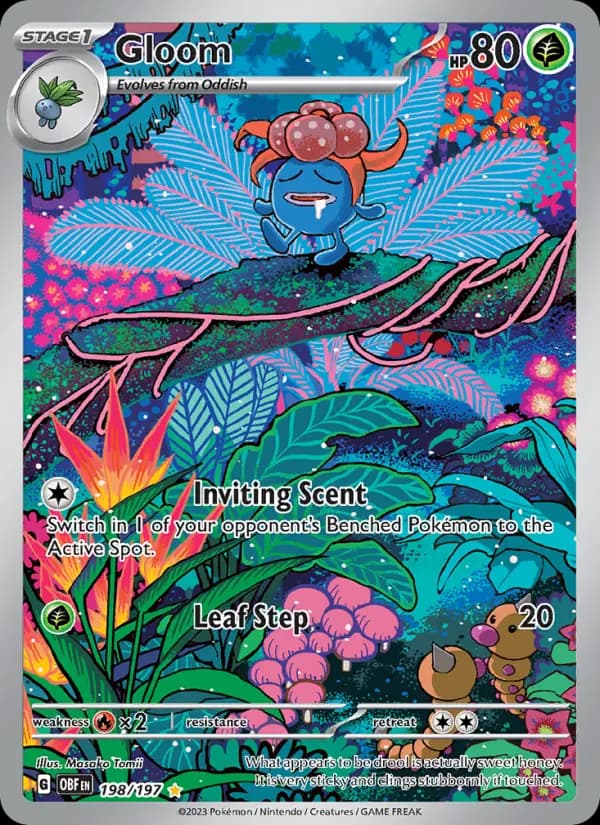
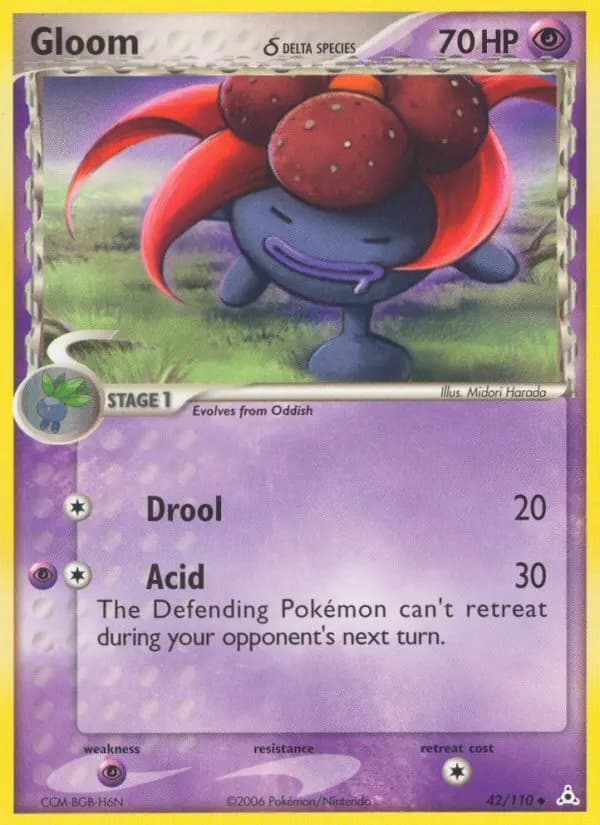
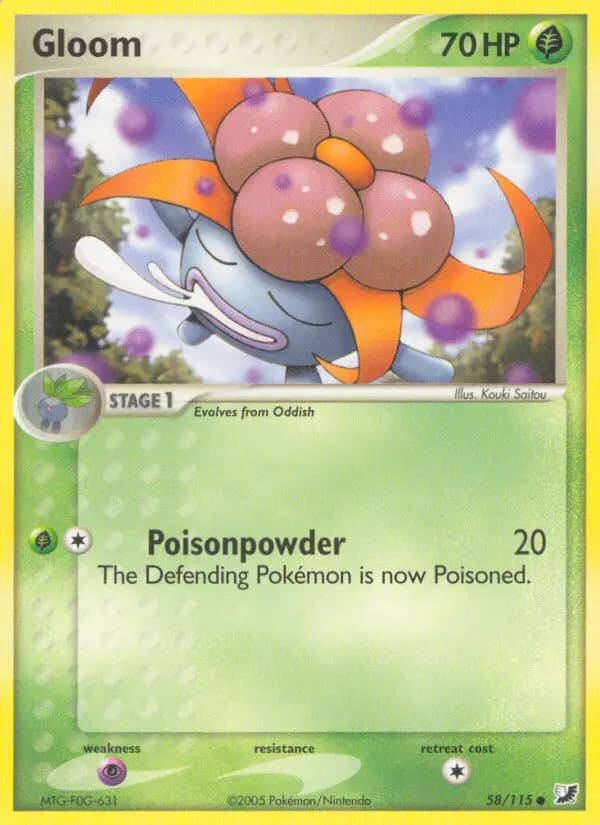
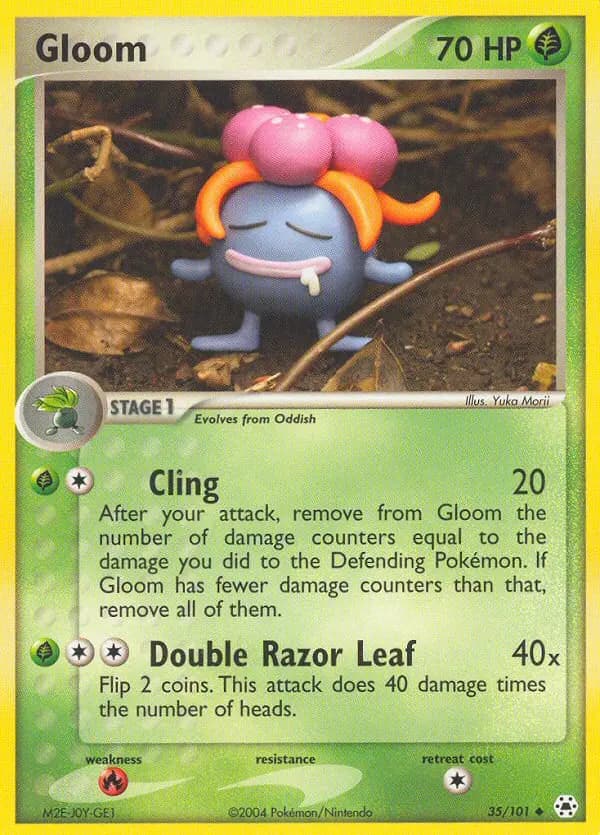
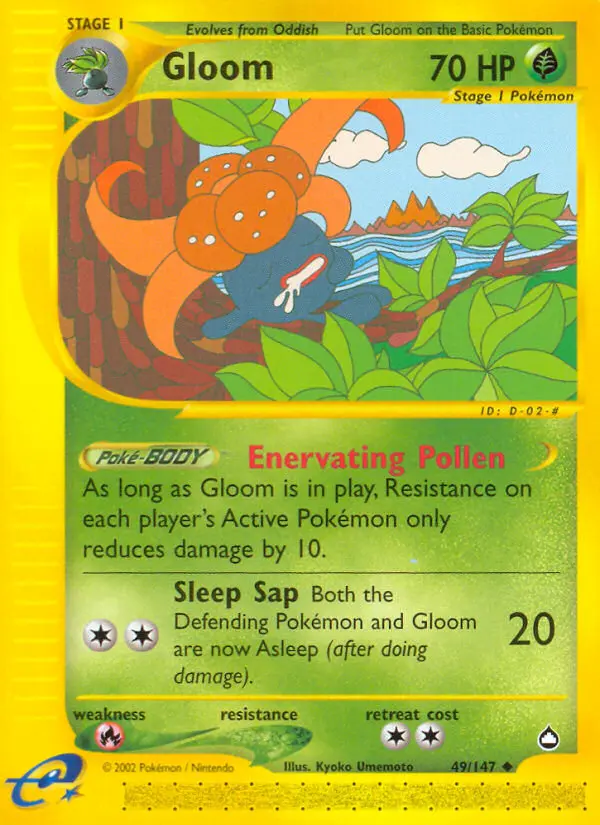
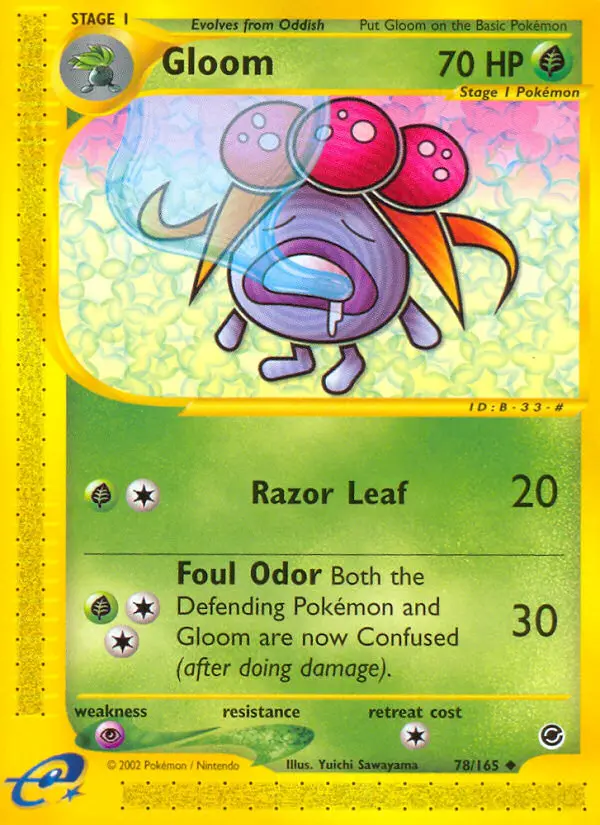
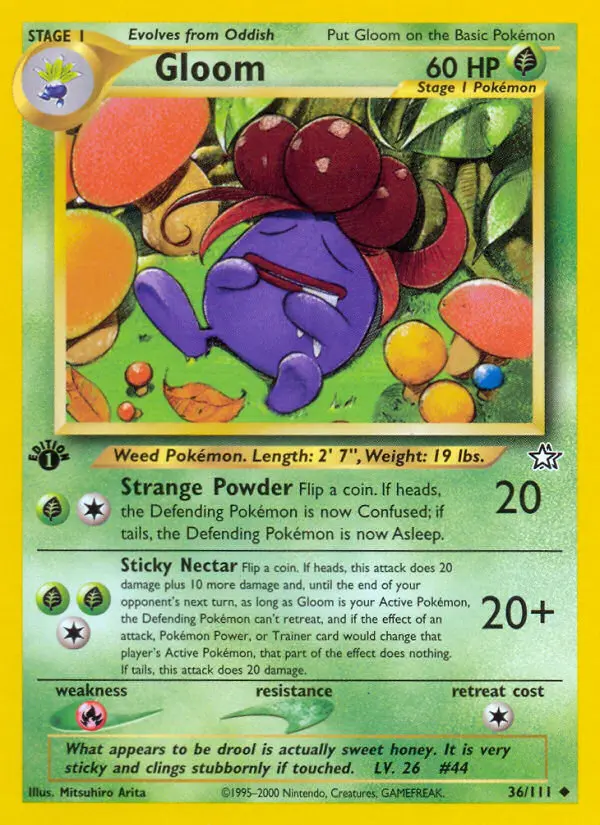
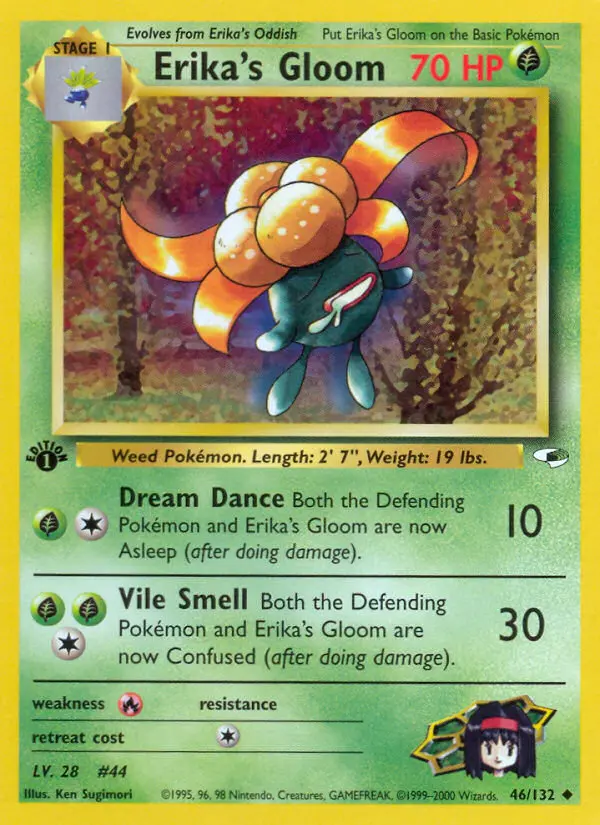
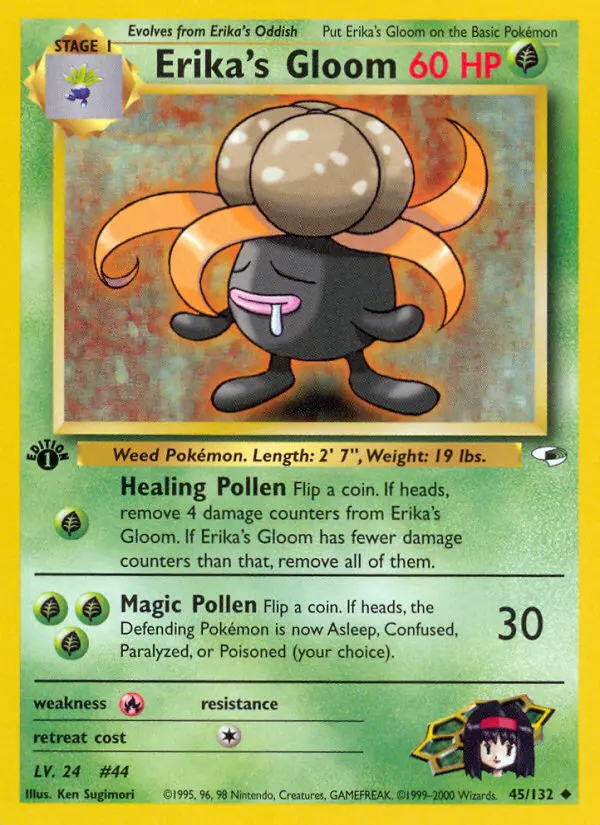
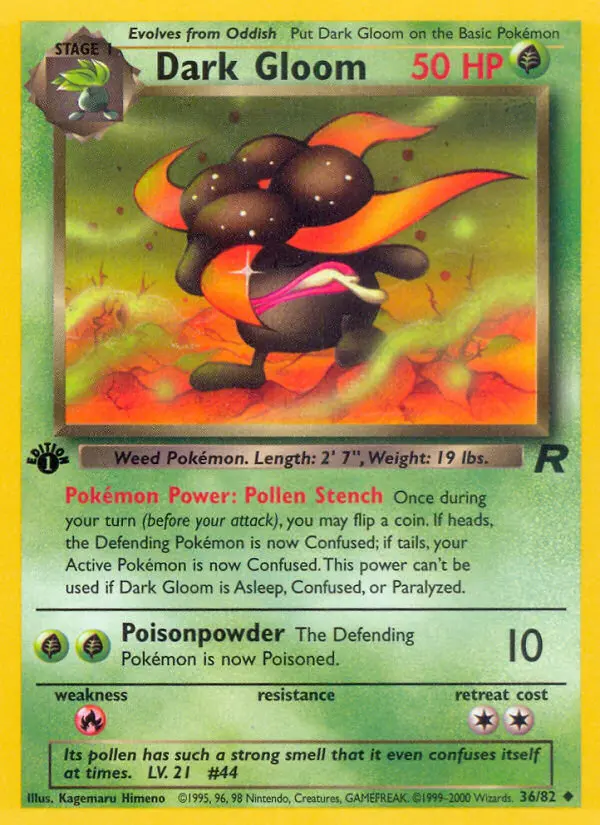
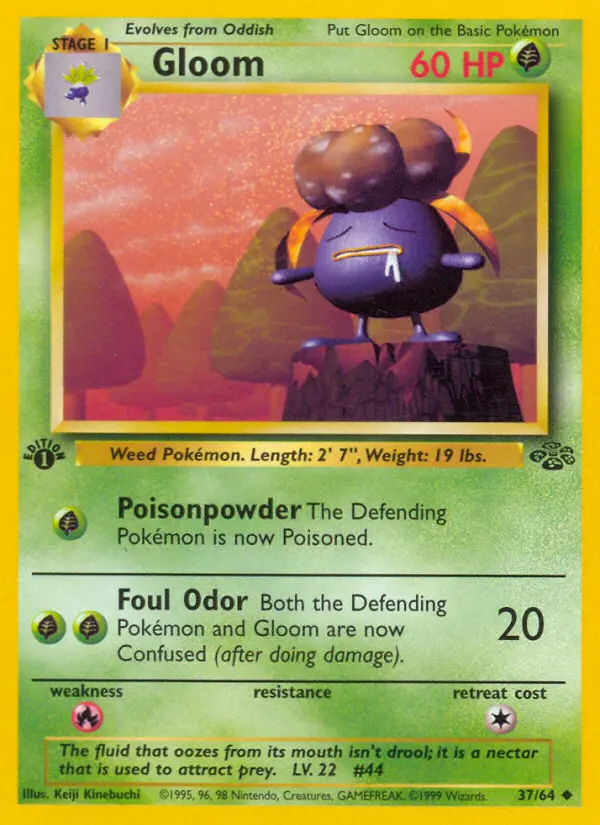
Gloom has maintained steady presence in Pokémon media since Generation I's inception, appearing across multiple television series episodes, trading card game sets, and spinoff games with consistent characterization as an awkward yet endearing Grass-type. The Pokémon's distinctive foul odor has become a recurring comedic element in the anime series, with numerous episodes leveraging Gloom's smell as both comedic relief and occasional plot device. Trading card representations of Gloom frequently emphasize its dual nature as both beautiful flower and pestilent creature, creating visually striking artwork that has attracted collectors across multiple card generations. The evolutionary choice between Vileplume and Bellossom—facilitated by different evolutionary stones—introduced players to the concept of branching evolutions early in Pokémon's history, influencing franchise design philosophy for decades. Gloom's presence in competitive Pokémon communities remains modest but persistent, particularly in formats emphasizing lower-tier Pokémon where its interesting type combination and ability options attract dedicated enthusiasts. The species continues to appear in modern games and media, maintaining cultural relevance despite competition from hundreds of subsequent Pokémon designs, testament to the enduring appeal of its distinctive aesthetic and memorable characteristics.
Where to Find Gloom in Every Pokémon Game
Gloom's availability varies significantly across the mainline Pokémon games, though it consistently appears as a catchable Pokémon in most regions where Grass-types feature prominently. In Generation I games (Red, Blue, Yellow), Gloom can be found in grassy areas and caves throughout Kanto after evolving Oddish, with Oddish locations including Route 5, Route 6, Route 7, and Route 8. Subsequent generations typically require trainers to either catch Oddish and level it to 21 or locate Gloom directly in appropriate habitats; Johto, Hoenn, Sinnoh, and other regions feature similar accessibility patterns with region-specific location variations. In more recent generations including Sword and Shield, Gloom appears in the Pokédex with determined availability through wild encounters or evolutionary chains within designated areas, though specific locations shift with each game's environmental design. Pokémon Let's Go Pikachu and Eevee maintained classic availability patterns aligned with Generation I's original design, allowing players to encounter the species through traditional methods. The Pokémon's catch rate of 120 ensures relatively straightforward capture in standard encounters, requiring minimal effort or specialized Poké Balls for successful recruitment. Event distributions and game-specific variations occasionally feature Gloom with optimized IVs or competitive-viable movesets, providing alternative acquisition methods for serious competitive players, though basic availability through natural gameplay progression remains consistent across nearly all mainline titles.