Litwick
Generation V · #0607 — Candle Pokémon
Weighing 3.1 kg and standing 0.3 m, Litwick carries its ghost/fire typing into battle with a stat spread that leans hardest into Special Attack. Standing at merely 0.3 meters tall and weighing only 3.1 kilograms, Litwick belies its truly unsettling nature within a diminutive, almost adorable frame. The Pokédex entries paint a haunting portrait: Litwick shines a light that absorbs the life energy of people and Pokémon, which becomes the fuel that it burns, and while shining a light and pretending to be a guide, it leeches off the life force of any who follow it. This dual nature—appearing benevolent while being fundamentally parasitic—makes Litwick a fascinating study in deceptive design and supernatural horror.
Editor's Take
Litwick's line ends in Chandelure, whose Shadow Tag was so strong it was moved off the Pokémon entirely — a rare case of an ability being taken back.
Base Stats
Height
0.3m
Weight
3.1kg
Category
Candle Pokémon
Gender
Male 50% / Female 50%
Color
white
Shape
blob
Abilities
Protects against fire moves. Once one has been blocked, the Pokémon's own Fire moves inflict 1.5× damage until it leaves battle.
Has a 30% chance of burning attacking Pokémon on contact.
Bypasses light screen, reflect, and safeguard.

Litwick Biology & Physical Characteristics
Litwick is composed primarily of white wax, its body shaped like a small, melting candle with two stubby arms that extend from its rounded form. The most distinctive feature is the purple flame that crowns its head, powered entirely by the life energy it absorbs from its surroundings. Its physical structure reveals an asymmetrical face, with melted wax folded over its right eye, leaving only a bright yellow left eye visible beneath a protruding upper lip and small smile. This asymmetry creates an unsettling appearance that contrasts sharply with its otherwise child-like proportions. According to Pokédex entries from Black 2 and White 2, its flame is usually out, but it starts shining when it absorbs life force from people or Pokémon, suggesting that the flame's intensity directly correlates with its parasitic feeding behavior. The wax composition of its body allows it to maintain structural integrity while burning internally, a remarkable biological adaptation that defies conventional physics. More sinister still, as documented in the anime episode Scare at the Litwick Mansion!, the flame grows as it continually absorbs life energy and interferes with electronic devices such as Pokédexes, indicating that its supernatural properties extend beyond mere light production.
Pokedex Numbers
Training
Breeding
Litwick Breeding, Gender Ratio & Egg Groups
Litwick exhibits a perfectly balanced gender ratio, with 50% of the species being male and 50% female, indicating no sexual dimorphism in appearance or behavior. This equal distribution allows for straightforward breeding mechanics without requiring players to hunt for specific genders. Litwick belongs to the Amorphous Egg Group, a classification shared with other ghostly and gelatinous Pokémon, which influences its compatibility with other species for breeding purposes. The base happiness value of 70 (in Generations 5-7; later reduced to 50) suggests that Litwick is moderately receptive to trainer affection, though this somewhat contrasts with its malevolent nature in the wild. With an egg hatch counter of 20 cycles (equivalent to 4,884–5,140 steps), Litwick has a relatively moderate hatch time compared to many other Pokémon, making it reasonably accessible for breeders interested in obtaining multiple specimens. The species follows a medium-slow growth rate, meaning it requires more experience points than average to level up, which tempers its early-game usefulness despite its reasonable availability through breeding. The capture rate of 190 (35.2% with a standard Poké Ball at full health) indicates that wild Litwick are quite easy to catch, making it an accessible option for trainers encountering it in the early stages of their journey. This combination of breeding mechanics makes Litwick an accessible Pokémon for competitive players seeking to establish multiple specimens with optimal natures and individual values.
Sprites






TMs & HMs
tm02
lets go pikachu lets go eevee
tm03
crystal
tm03
gold silver
tm04
emerald
tm04
firered leafgreen
tm04
ruby sapphire
tm04
diamond pearl
tm04
xd
tm04
heartgold soulsilver
tm04
black white
tm04
colosseum
tm04
platinum
tm04
sun moon
tm04
ultra sun ultra moon
tm04
x y
tm04
omega ruby alpha sapphire
tm04
black 2 white 2
tm05
lets go pikachu lets go eevee
tm06
yellow
tm06
gold silver
+611 more TMs/HMs
Litwick's Evolution Chain


Litwick Evolution, Mega Evolution & Special Forms
Litwick occupies the first position in a three-stage evolutionary line that scales significantly in both power and mystique. It evolves into Lampent starting at level 41, at which point it gains the ability to fly and develops more pronounced ghostly characteristics while maintaining its Fire typing. The final evolution, Chandelure, occurs when Lampent is exposed to a Dusk Stone, resulting in a truly spectacular transformation into a elegant, multi-flamed chandelier-like Pokémon. This evolutionary progression mirrors the growth and intensification of Litwick's parasitic abilities—what begins as a small, deceptive candle becomes progressively more ethereal and powerful. The level 41 evolution point occurs relatively early in a typical playthrough, allowing trainers to field a more competent Ghost/Fire attacker during mid-game challenges. The Dusk Stone requirement for the final evolution adds an additional layer of intentionality to team building, as players must specifically seek out this evolutionary stone. Each stage of evolution represents a thematic escalation from simple deception to increasingly supernatural and powerful manifestations of ghostly fire. The complete evolutionary line demonstrates how Litwick's core characteristics—life-force absorption and spectral flame—develop into the magnificent and dangerous Chandelure.
Where to Find
Celestial Tower
unova
+127 more
Strange House
unova
+3 more
Lost Hotel
kalos
+1 more
Hauoli Cemetery
alola
+1 more
Litwick Behaviour and Natural Habitat
Litwick exhibits predatory behavior that is disturbingly calculated and deceptive. It actively seeks out people and Pokémon, then pretends to guide them through dark or unfamiliar places, offering the comfort of illumination while simultaneously draining their vital life force. This behavior suggests a level of cunning that belies its small stature and innocent appearance. The Sword Pokédex entry reveals that Litwick takes lost children by the hand to guide them to the spirit world, while the Shield entry notes that the younger the life this Pokémon absorbs, the brighter and eerier the flame on its head burns—a chilling detail that indicates preference for preying upon the vulnerable. Litwick appears to inhabit dark areas where its false guidance would be most welcome, making it a serious threat in caves, abandoned buildings, and other shadowy locations. Its presence in Serene Village's school during summer vacation, as depicted in Pokémon Super Mystery Dungeon, demonstrates its willingness to venture into populated areas despite the risk of discovery. The Pokémon seems drawn to locations where confusion, darkness, or disorientation would make potential victims susceptible to its deceptive guidance.
Pokedex Entries
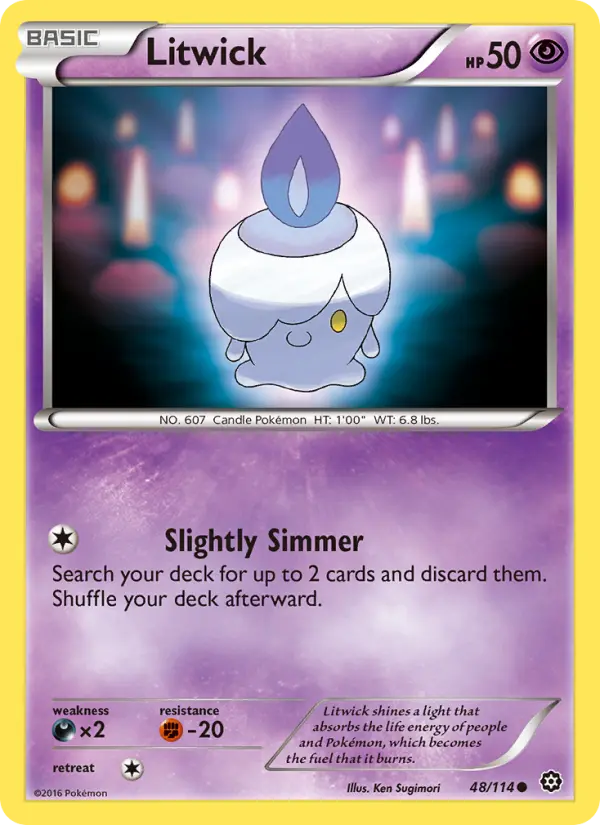
Litwick shines a light that absorbs the life energy of people and Pokémon, which becomes the fuel that it burns.
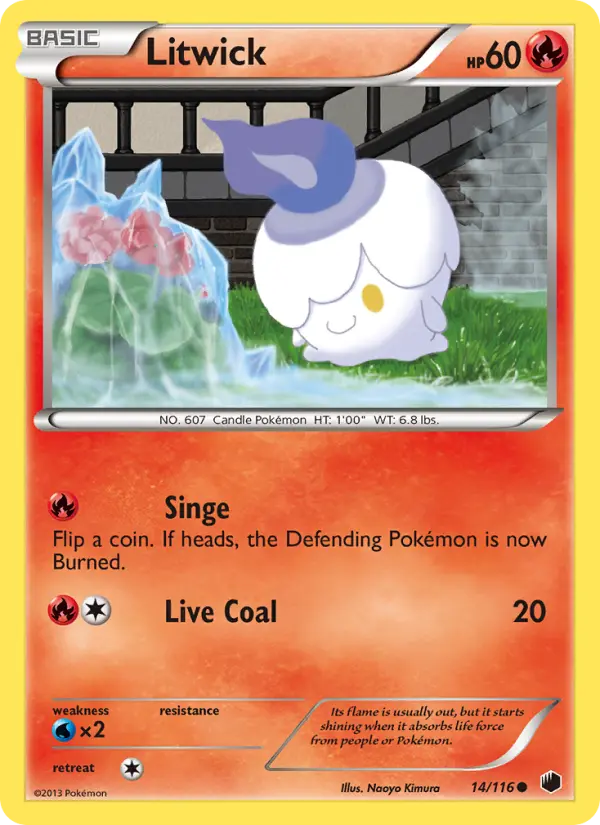
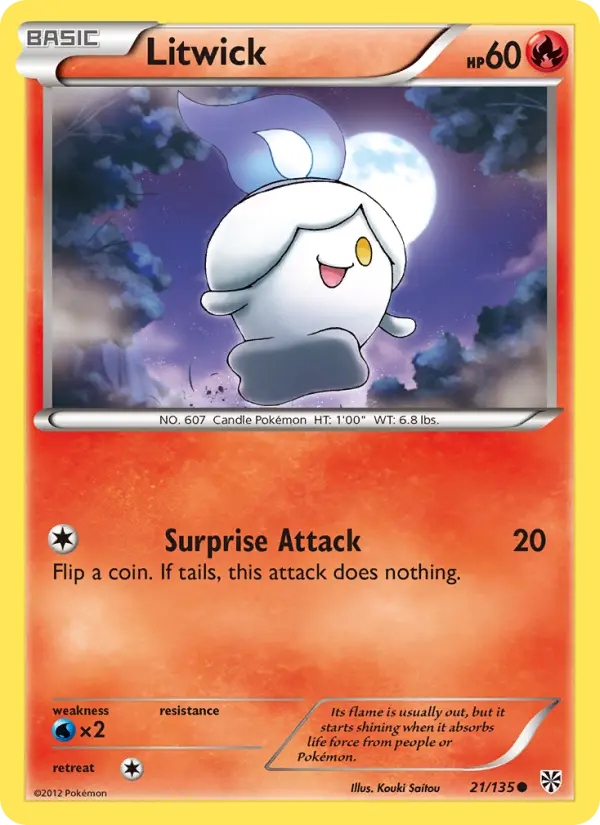
Its flame is usually out, but it starts shining when it absorbs life force from people or Pokémon.
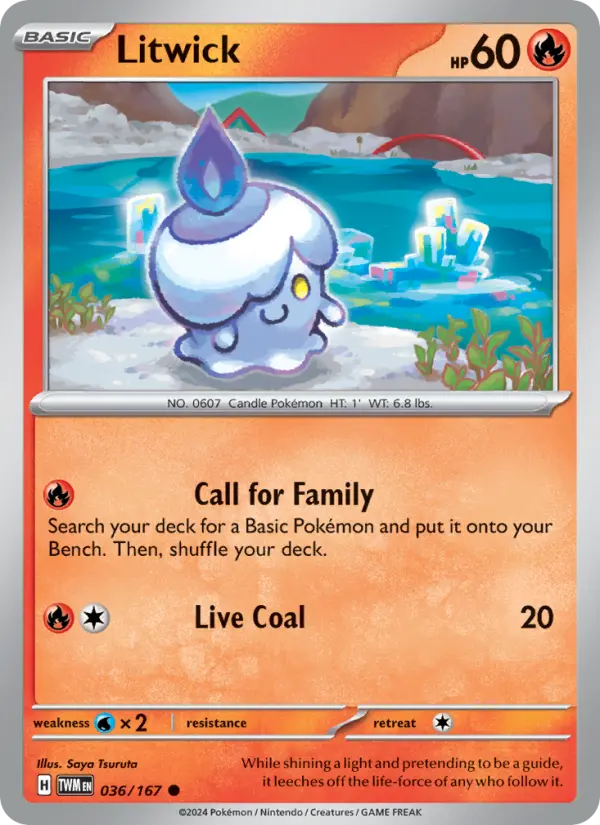
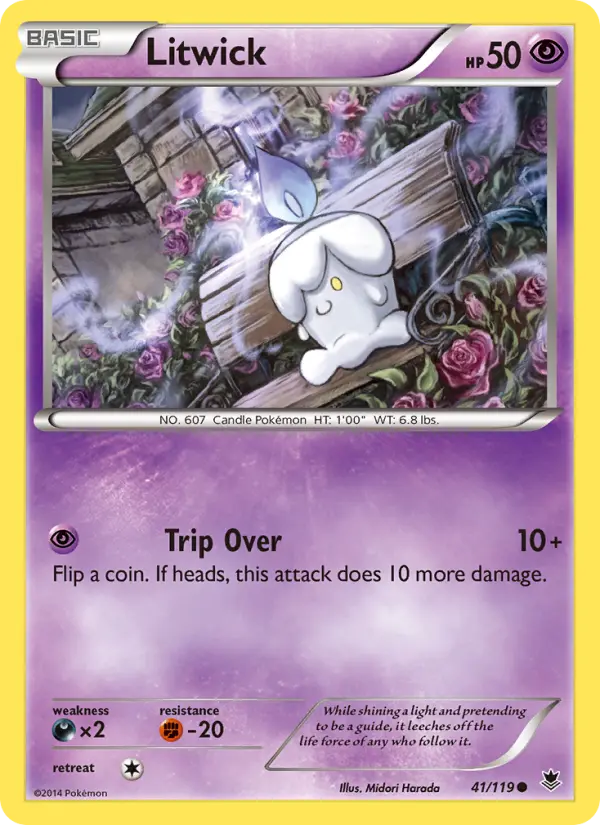
While shining a light and pretending to be a guide, it leeches off the life force of any who follow it.
While shining a light and pretending to be a guide, it leeches off the life force of any who follow it.
Litwick shines a light that absorbs the life energy of people and Pokémon, which becomes the fuel that it burns.
While shining a light and pretending to be a guide, it leeches off the life force of any who follow it.
Litwick shines a light that absorbs the life energy of people and Pokémon, which becomes the fuel that it burns.
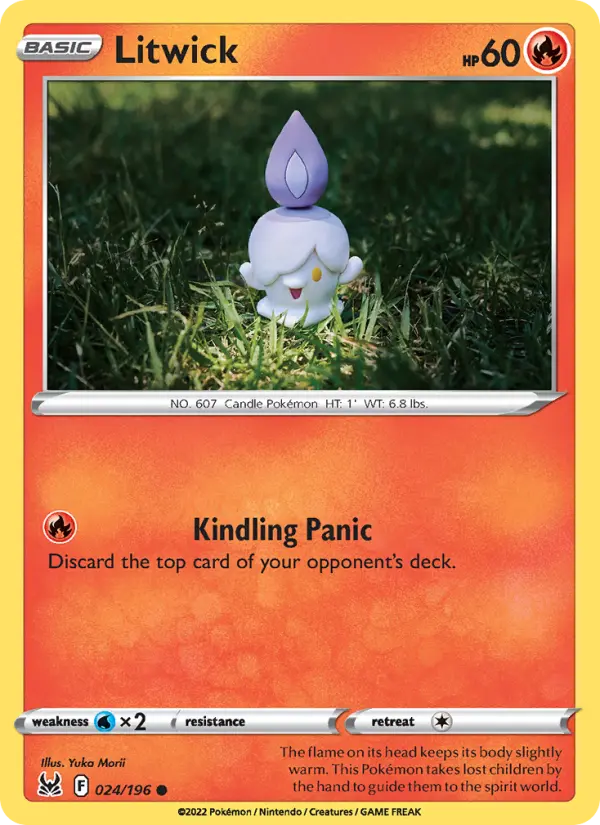
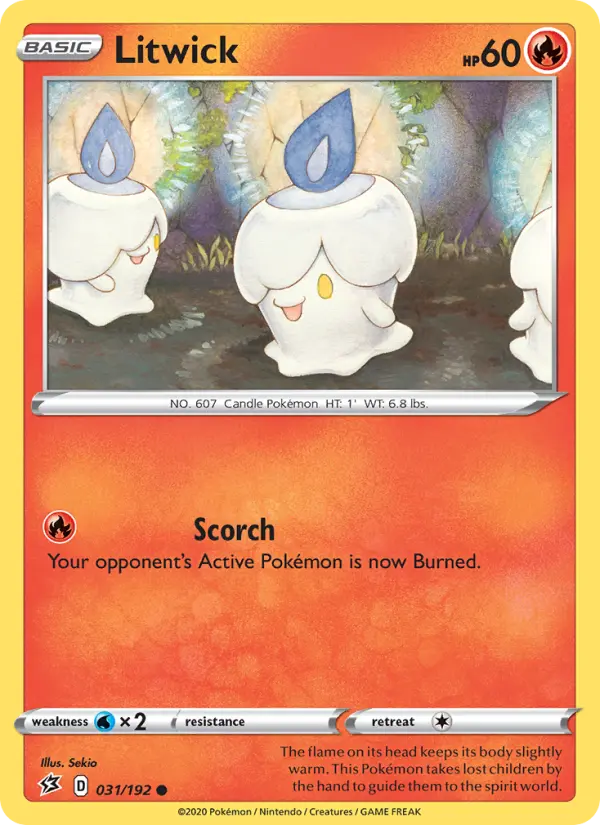
The flame on its head keeps its body slightly warm. This Pokémon takes lost children by the hand to guide them to the spirit world.
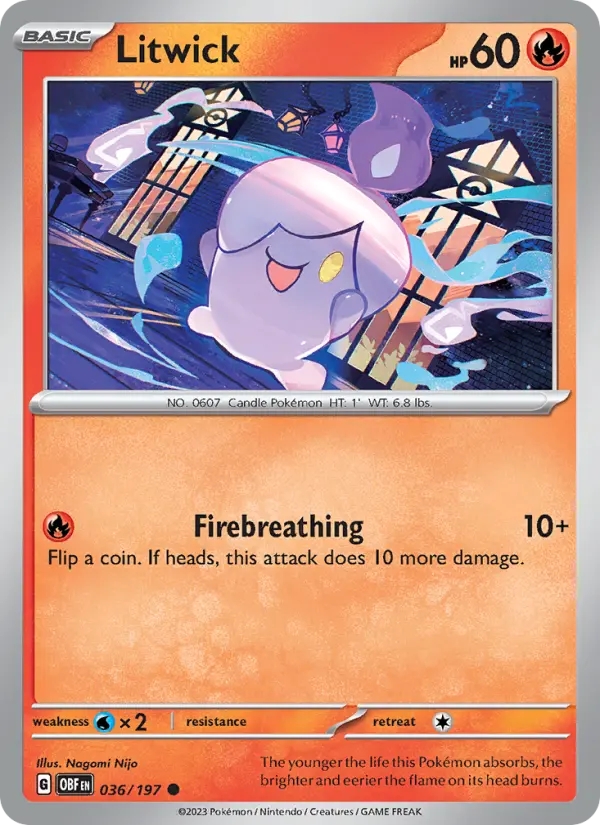
The younger the life this Pokémon absorbs, the brighter and eerier the flame on its head burns.
Litwick Name Origin & Design Inspiration
Litwick's name comes from a combination of 'lit' (illuminated) and 'candlewick,' the string at the center of a candle that produces the flame. The Japanese name Hitomoshi combines 'hitomi' (eye) and 'moshi' (fire or light), reflecting the prominent yellow eye and the deceptive illumination that serves as Litwick's primary tool of predation. The design brilliantly captures the aesthetic of a traditional wax candle, complete with melted wax dripping down one side and a flame perpetually burning atop its head. This straightforward visual metaphor is complicated by the asymmetrical face and unsettling smile, which transform the familiar image of a household candle into something genuinely eerie and supernatural. The color palette—predominantly white wax with purple flame and a single yellow eye—creates strong visual contrast that makes Litwick instantly recognizable while emphasizing its otherworldly nature. The stubby arms and overall rounded proportions give Litwick a deceptively cute appearance that perfectly complements its deceptive behavior; trainers and Pokémon alike might be inclined to trust such an innocent-looking creature, making its parasitic nature all the more shocking. The Genus classification as the 'Candle Pokémon' directly references its most obvious design inspiration, while also suggesting that this Pokémon exists as a corrupted or supernatural version of an ordinary household object.
Learnable Moves
Litwick can learn 72 moves:
Move | Type | Cat. | Power | Acc. | PP |
|---|---|---|---|---|---|
| acid | poison | Special | 40 | 100 | 30 |
| acid armor | poison | Status | — | — | 20 |
| ally switch | psychic | Status | — | — | 15 |
| astonish | ghost | Physical | 30 | 100 | 15 |
| attract | normal | Status | — | 100 | 15 |
| burning jealousy | fire | Special | 70 | 100 | 5 |
| calm mind | psychic | Status | — | — | 20 |
| captivate | normal | Status | — | 100 | 20 |
| clear smog | poison | Special | 50 | — | 15 |
| confide | normal | Status | — | — | 20 |
| confuse ray | ghost | Status | — | 100 | 10 |
| curse | ghost | Status | — | — | 10 |
| dark pulse | dark | Special | 80 | 100 | 15 |
| double team | normal | Status | — | — | 15 |
| dream eater | psychic | Special | 100 | 100 | 15 |
| embargo | dark | Status | — | 100 | 15 |
| ember | fire | Special | 40 | 100 | 25 |
| endure | normal | Status | — | — | 10 |
| energy ball | grass | Special | 90 | 100 | 10 |
| facade | normal | Physical | 70 | 100 | 20 |
| fire blast | fire | Special | 110 | 85 | 5 |
| fire spin | fire | Special | 35 | 85 | 15 |
| flame burst | fire | Special | 70 | 100 | 15 |
| flame charge | fire | Physical | 50 | 100 | 20 |
| flamethrower | fire | Special | 90 | 100 | 15 |
| flare blitz | fire | Physical | 120 | 100 | 15 |
| flash | normal | Status | — | 100 | 20 |
| frustration | normal | Physical | — | 100 | 20 |
| haze | ice | Status | — | — | 30 |
| heat wave | fire | Special | 95 | 90 | 10 |
| hex | ghost | Special | 65 | 100 | 10 |
| hidden power | normal | Special | 60 | 100 | 15 |
| imprison | psychic | Status | — | — | 10 |
| incinerate | fire | Special | 60 | 100 | 15 |
| inferno | fire | Special | 100 | 50 | 5 |
| memento | dark | Status | — | 100 | 10 |
| minimize | normal | Status | — | — | 10 |
| mystical fire | fire | Special | 75 | 100 | 10 |
| night shade | ghost | Special | — | 100 | 15 |
| overheat | fire | Special | 130 | 90 | 5 |
| pain split | normal | Status | — | — | 20 |
| payback | dark | Physical | 50 | 100 | 10 |
| poltergeist | ghost | Physical | 110 | 90 | 5 |
| power split | psychic | Status | — | — | 10 |
| protect | normal | Status | — | — | 10 |
| psych up | normal | Status | — | — | 10 |
| psychic | psychic | Special | 90 | 100 | 10 |
| rest | psychic | Status | — | — | 5 |
| return | normal | Physical | — | 100 | 20 |
| round | normal | Special | 60 | 100 | 15 |
| safeguard | normal | Status | — | — | 25 |
| secret power | normal | Physical | 70 | 100 | 20 |
| shadow ball | ghost | Special | 80 | 100 | 15 |
| shock wave | electric | Special | 60 | — | 20 |
| skitter smack | bug | Physical | 70 | 90 | 10 |
| sleep talk | normal | Status | — | — | 10 |
| smog | poison | Special | 30 | 70 | 20 |
| snore | normal | Special | 50 | 100 | 15 |
| solar beam | grass | Special | 120 | 100 | 10 |
| spite | ghost | Status | — | 100 | 10 |
| substitute | normal | Status | — | — | 10 |
| sunny day | fire | Status | — | — | 5 |
| swagger | normal | Status | — | 85 | 15 |
| taunt | dark | Status | — | 100 | 20 |
| telekinesis | psychic | Status | — | — | 15 |
| temper flare | fire | Physical | 75 | 100 | 10 |
| tera blast | normal | Special | 80 | 100 | 10 |
| thief | dark | Physical | 60 | 100 | 25 |
| toxic | poison | Status | — | 90 | 10 |
| trick | psychic | Status | — | 100 | 10 |
| trick room | psychic | Status | — | — | 5 |
| will o wisp | fire | Status | — | 85 | 15 |
Litwick Competitive Battle Guide
Litwick's competitive viability is severely limited by its base stats, which total only 275 and are distributed poorly across most categories. Its most notable stat is Special Attack at 65, which at least provides a foundation for offensive capability, while its Speed of just 20 represents one of the lowest base speeds in the entire Pokédex, ensuring that Litwick will almost always move last in battle. The Defense and Special Defense stats both sit at 55, providing minimal bulk, while its Attack of 30 and HP of 50 make it particularly vulnerable to physical attacks and sweeping moves. Despite these limitations, Litwick does have access to useful abilities that can provide strategic value in specific contexts. Flash Fire protects against Fire-type moves while boosting the Pokémon's own Fire-type attacks by 1.5× damage once activated, making it a solid defensive ability that can turn an opponent's strength into a weakness. Flame Body offers a 30% chance of burning attacking Pokémon on contact, providing passive chip damage and the potential to cripple physical sweepers. The hidden ability Infiltrator (changed from Shadow Tag in later generations) bypasses Light Screen, Reflect, and Safeguard, providing utility against defensive teams. However, even with these useful abilities, Litwick's stats are simply too low for competitive relevance at higher tiers. Trainers seeking a Ghost/Fire-type attacker should immediately invest in evolution to Lampent or Chandelure, which receive dramatically improved stats and movepool options that make them genuinely competitive threats.
Commonly Asked Questions About Litwick
What type is Litwick?
Litwick is a ghost and fire type Pokemon.
What does Litwick evolve into?
Litwick evolves into lampent, then into chandelure.
What are Litwick's weaknesses?
Litwick is weak to ground, rock, ghost, water and dark type moves.
Does Litwick evolve by trading?
No — Litwick evolves entirely through leveling up, with no trade required at any stage.
Where can I find Litwick?
Litwick can be found in celestial tower (unova), strange house (unova) and lost hotel (kalos) and 1 other locations.
Litwick Cultural Impact & Franchise History
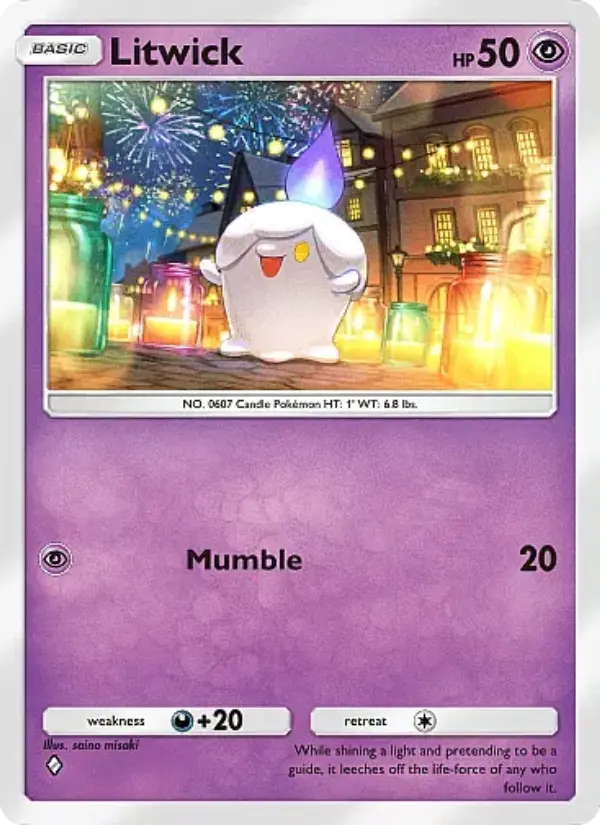
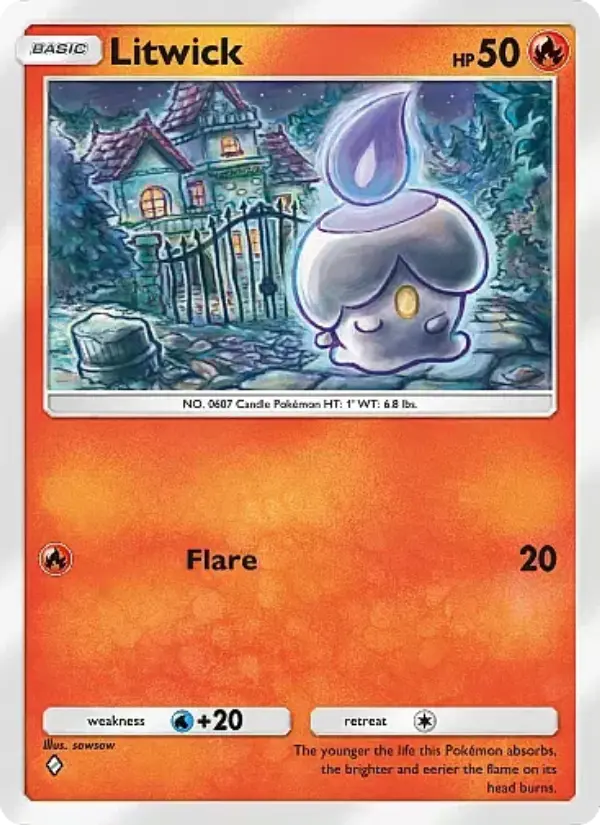
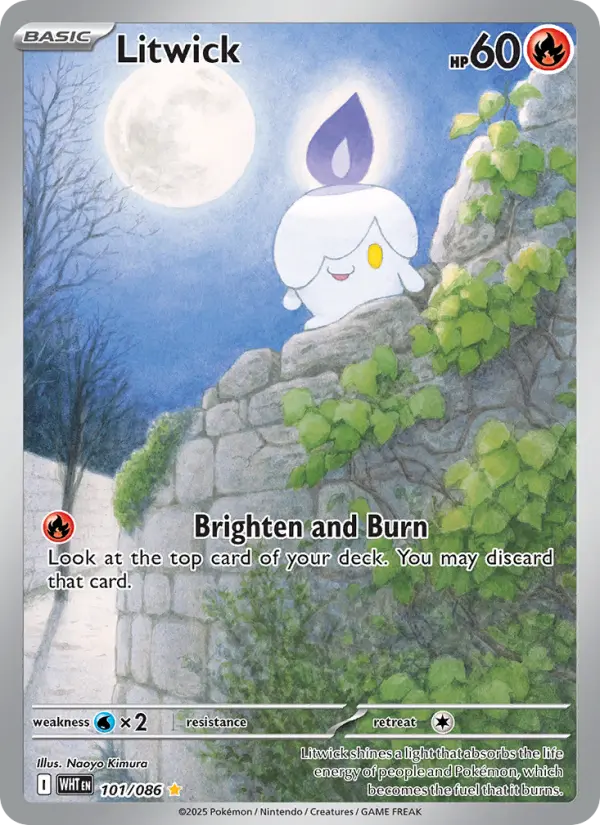
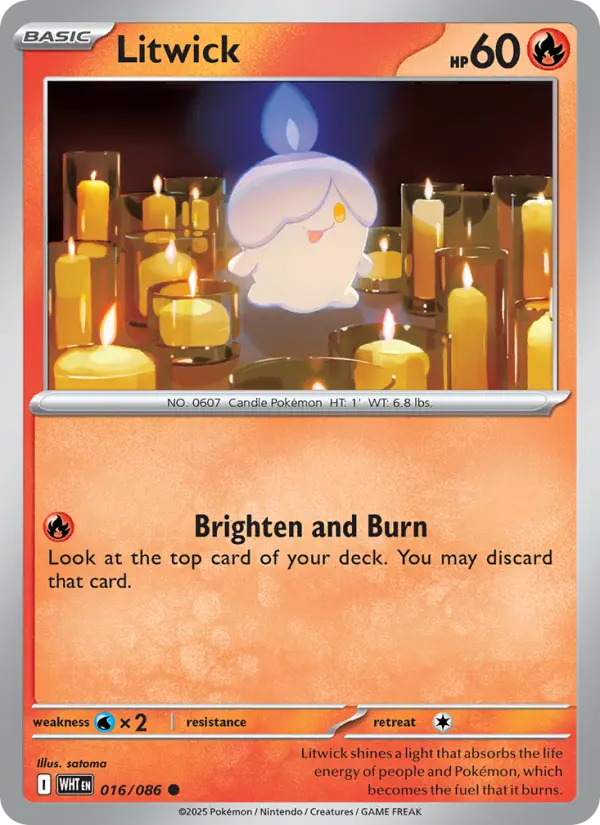
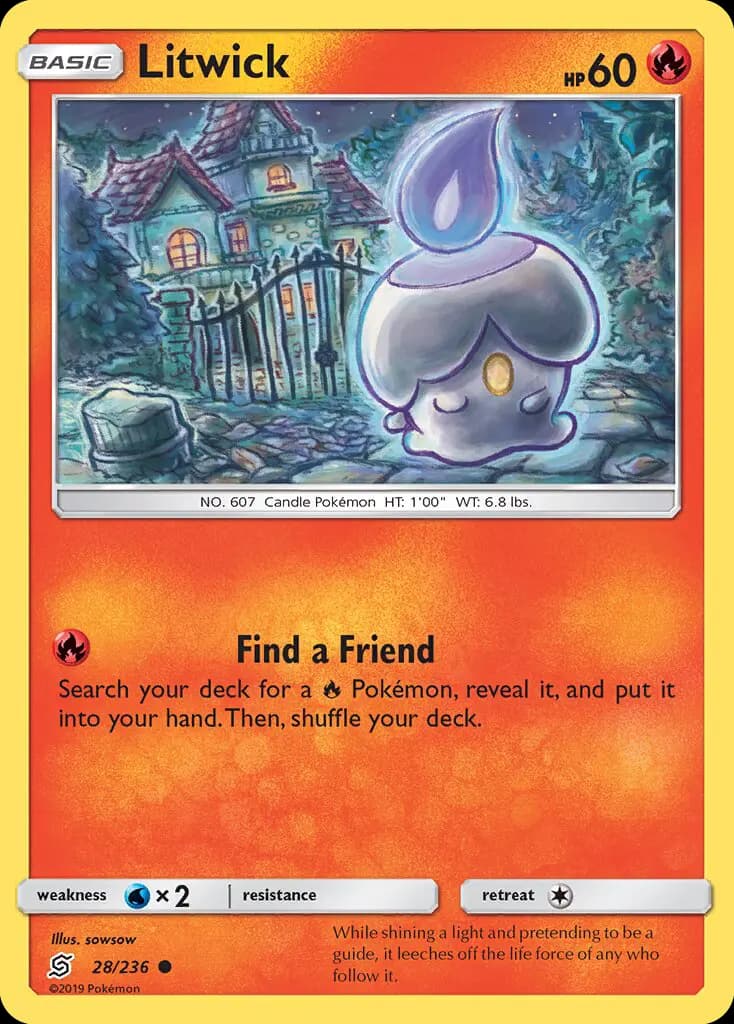
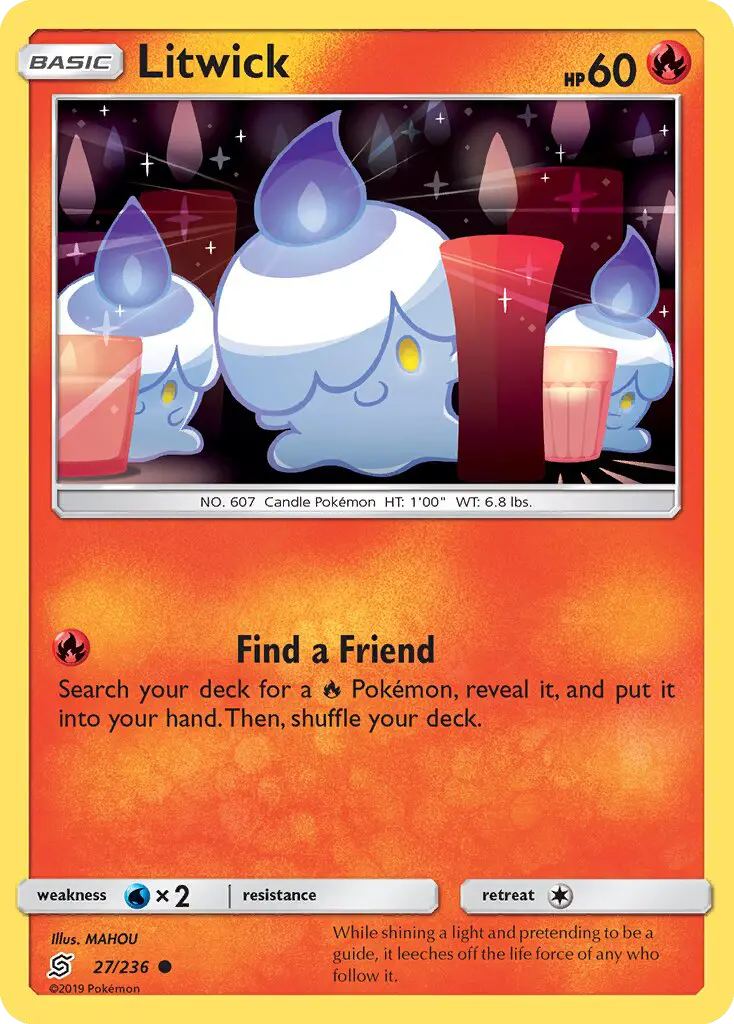
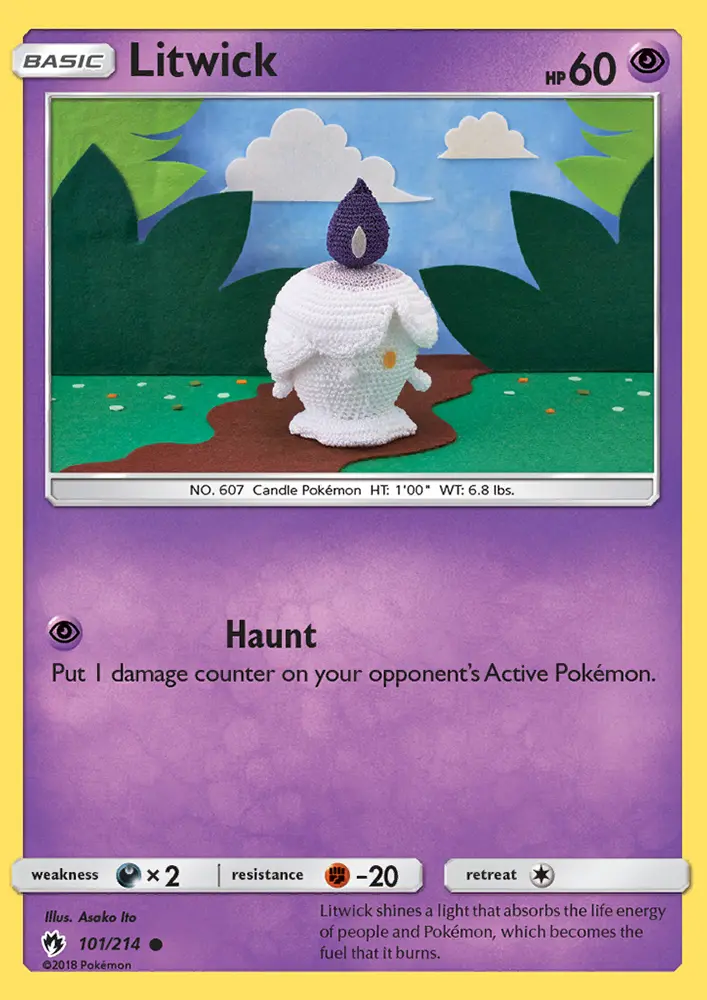
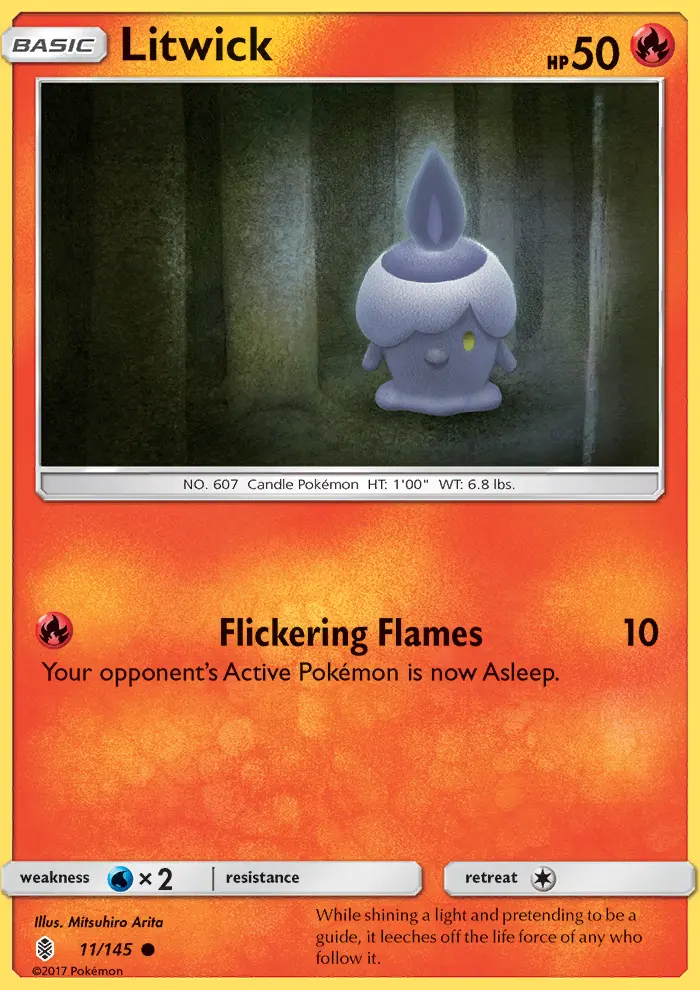
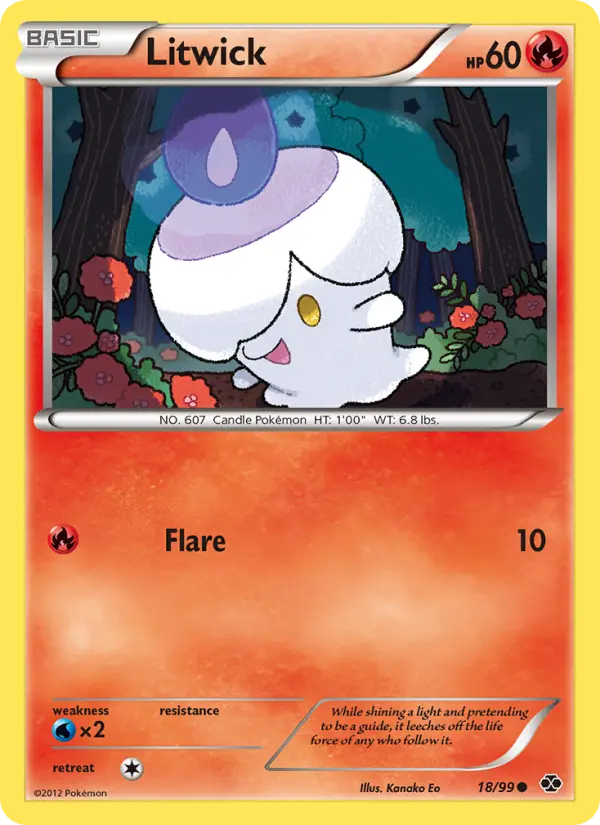
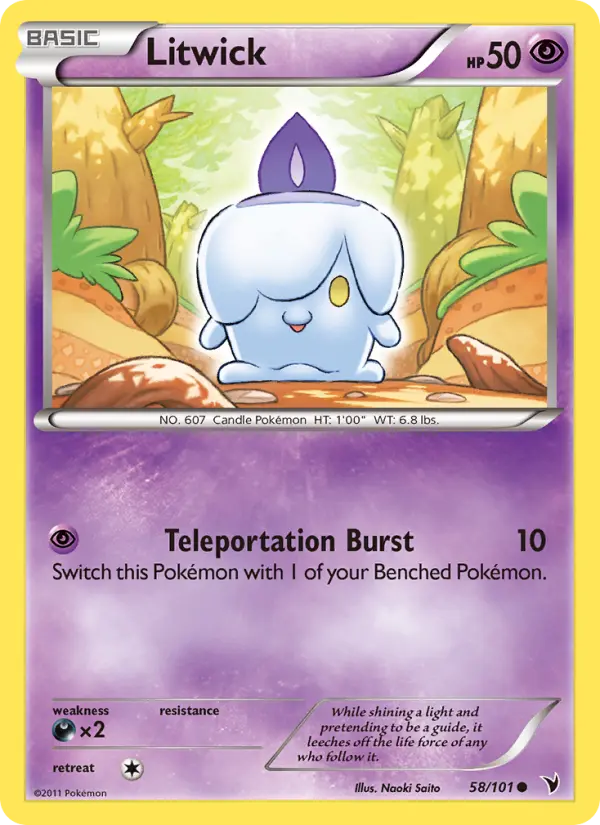
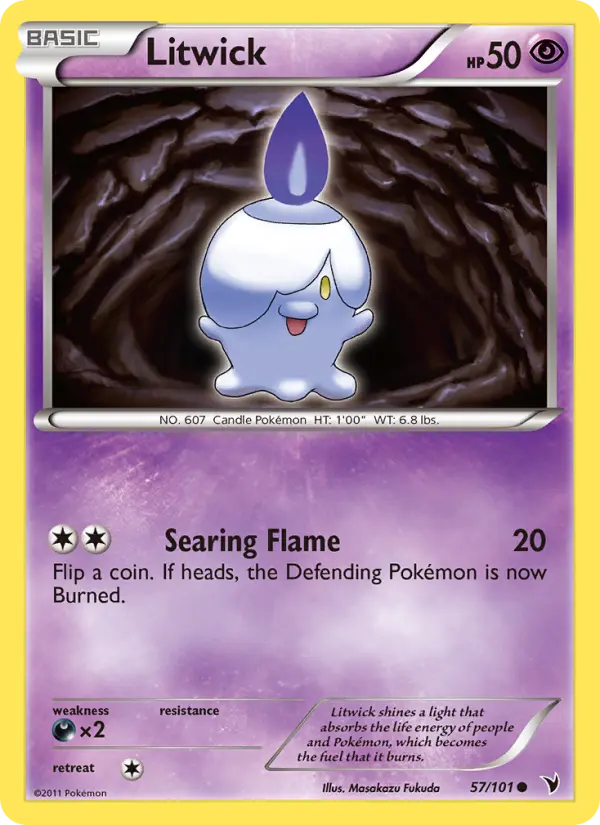
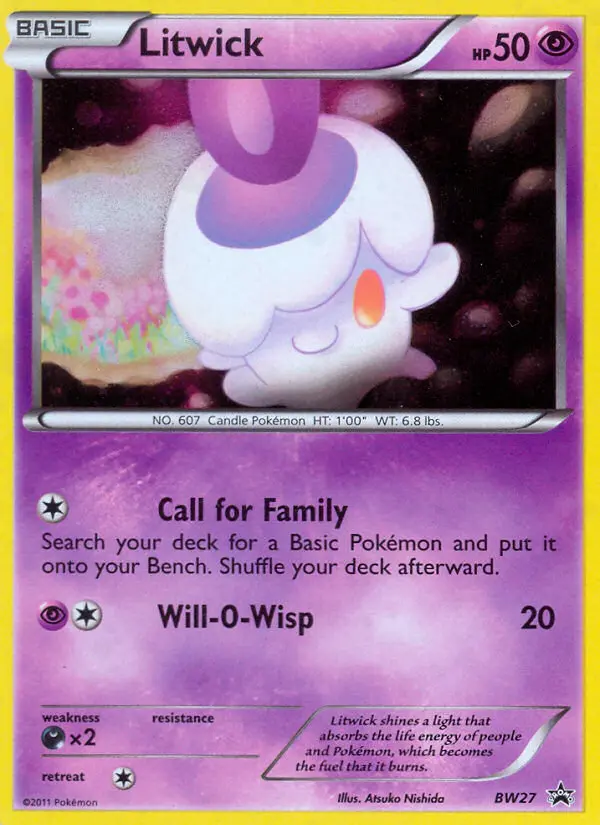
Litwick represents a significant contribution to Pokémon's legacy of incorporating folk horror and supernatural dread into its monster designs, standing alongside iconic spooky Pokémon like Gengar and Misdreavus. Its concept of a malevolent guide spirit draws from genuine folklore traditions found across multiple cultures, where mysterious lights or figures lure travelers to their doom—a trope known as 'will-o'-the-wisps' in European tradition and manifesting in similar forms across Japanese, Celtic, and other cultural mythologies. The Pokémon's popularity has secured its place in numerous media appearances throughout the anime, manga, and trading card game, with particularly memorable depictions in episodes like Scare at the Litwick Mansion!, which fully emphasizes the creepy aspects of the species. In the trading card game, Litwick has received multiple printings across different sets, with its artwork frequently emphasizing the eerie contradiction between its cute appearance and sinister nature. The species represents an important design philosophy in Pokémon: the idea that appearances can be deceiving and that even cute, small creatures can harbor genuinely dangerous or malicious intentions. This thematic depth has made Litwick a favorite among players who appreciate darker, more mature interpretations of the Pokémon universe. The evolutionary line culminating in Chandelure has elevated Litwick from a mere early-game encounter into a symbol of sophisticated ghost-type design, inspiring fan art, fan fiction, and competitive team building centered around the elegant, powerful final evolution. Litwick's influence extends beyond games into broader popular culture discussions about horror elements in children's media.
Where to Find Litwick in Every Pokémon Game
Litwick was first introduced in Generation V and has remained consistently available across most mainline Pokémon games since its debut. In Pokémon Black and White, it appeared as a relatively common encounter in dark areas, assigned the regional Pokédex number 0113, making it an accessible option for players early in their adventure. In Black 2 and White 2, Litwick's regional number changed to 0190, indicating its continued prominence in the Unova region. The species appeared in Pokémon X and Y assigned to the Mountain Kalos area with regional number 0065, and subsequently in Sword and Shield with regional number 0287. More recently, Litwick received expanded availability in Pokémon Legends: Arceus (number 0189) and the Crown Tundra DLC for Sword and Shield (number 0048), demonstrating Game Freak's commitment to maintaining the species across contemporary releases. The Scarlet and Violet expansions, particularly The Teal Mask, have included Litwick with regional number 0146, ensuring it remains accessible to modern players. A capture rate of 190 makes Litwick exceptionally easy to catch in the wild, requiring only standard Poké Balls rather than specialized equipment. Breeding represents an alternative acquisition method for players seeking optimal natures and individual values, with the moderate hatch time making Litwick reasonable to breed compared to more time-intensive species. The consistent re-inclusion of Litwick across multiple generations, coupled with its high catch rate and moderate availability in various habitats, makes it one of the more accessible Ghost/Fire-type options for players seeking to complete their Pokédex or build competitive teams.