Paras
Generation I · #0046 — Mushroom Pokémon
Few bug/grass-type Pokémon pair effect spore with a stat lean toward attack quite like Paras does. The parasitic relationship between this insectoid creature and the tochukaso mushrooms growing upon its back creates a symbiotic yet complex dynamic that has intrigued trainers and researchers for generations. With a overall stat sum of 285, Paras distributes its modest capabilities with emphasis on Attack (70) rather than its other stats, making it a peculiar choice for the early game despite its later evolution into the formidable Parasect.
Editor's Take
Paras has the worst stat spread of any Gen 1 Pokémon that isn't a joke design, and it learns Spore — the best sleep move in the game on the least deserving Pokémon.
Base Stats
Height
0.3m
Weight
5.4kg
Category
Mushroom Pokémon
Gender
Male 50% / Female 50%
Color
red
Shape
armor
Habitat
forest
Abilities
Has a 30% chance of inflcting either paralysis, poison, or sleep on attacking Pokémon on contact.
Causes 1/8 max HP in damage each turn during strong sunlight, but heals for 1/8 max HP during rain. Increases damage from fire moves to 1.25×, but absorbs water moves, healing for 1/4 max HP.
Prevents self destruct, explosion, and aftermath from working while the Pokémon is in battle.

Paras Biology & Physical Characteristics
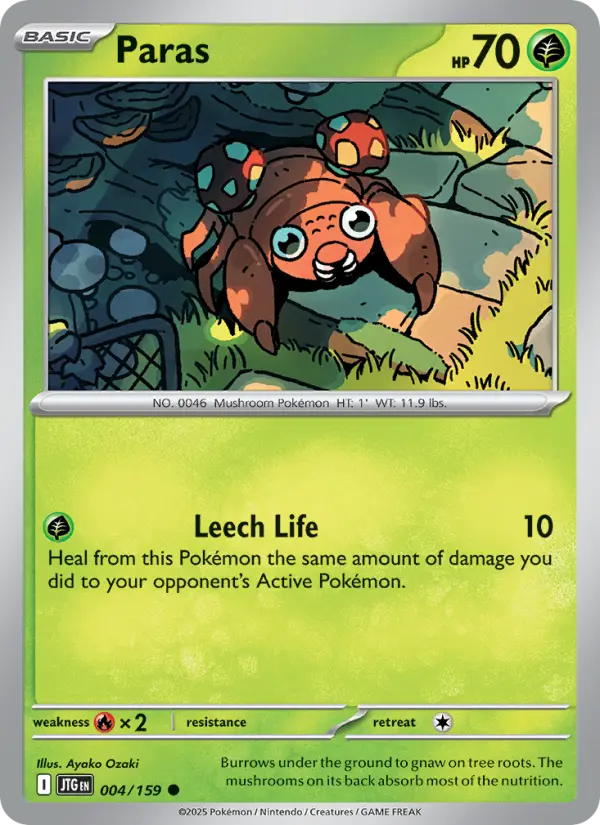
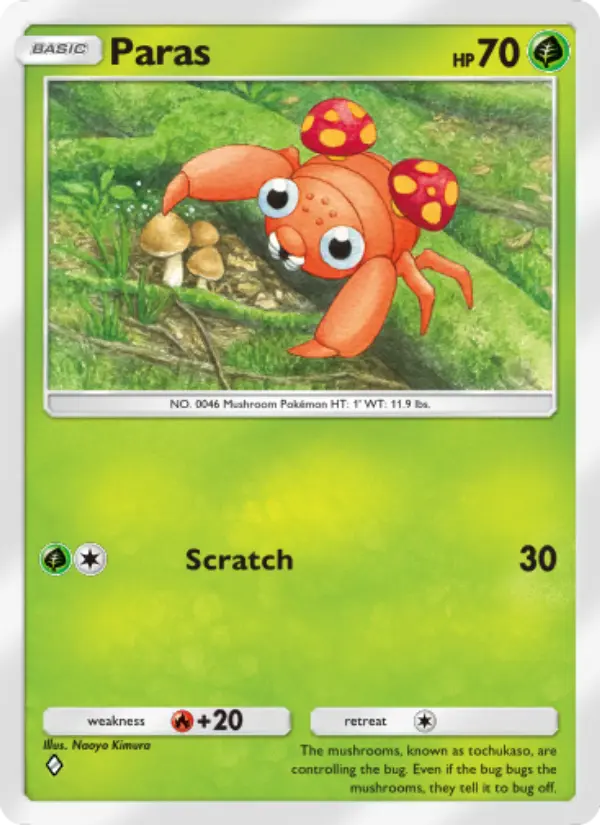
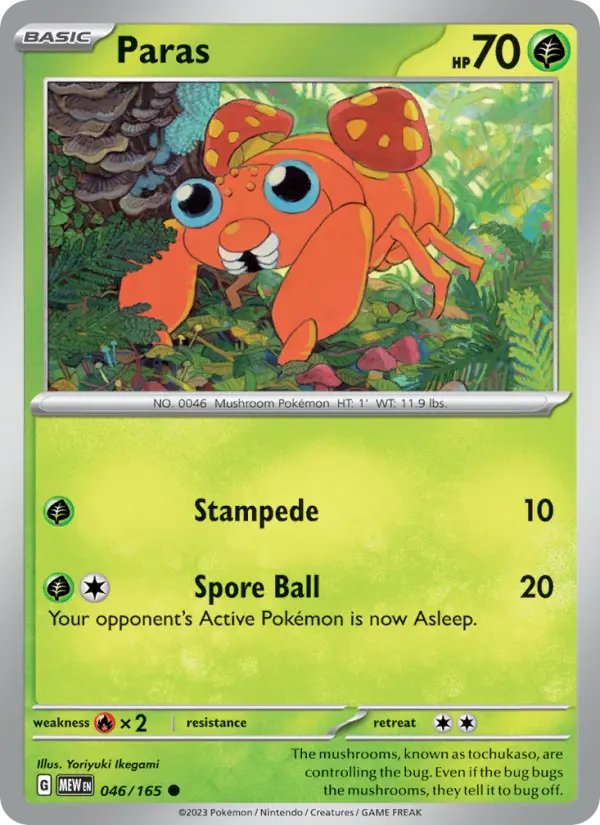
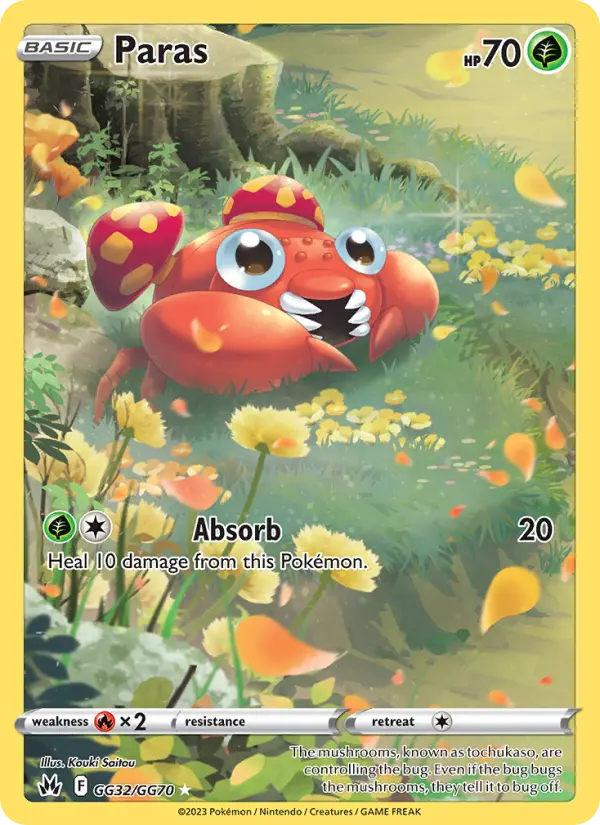
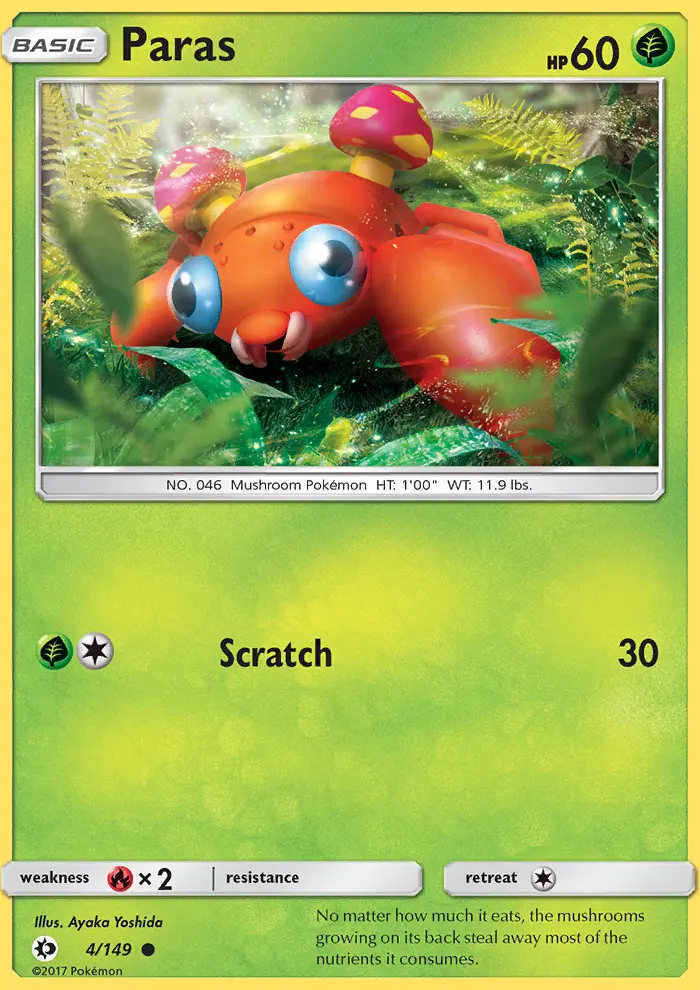
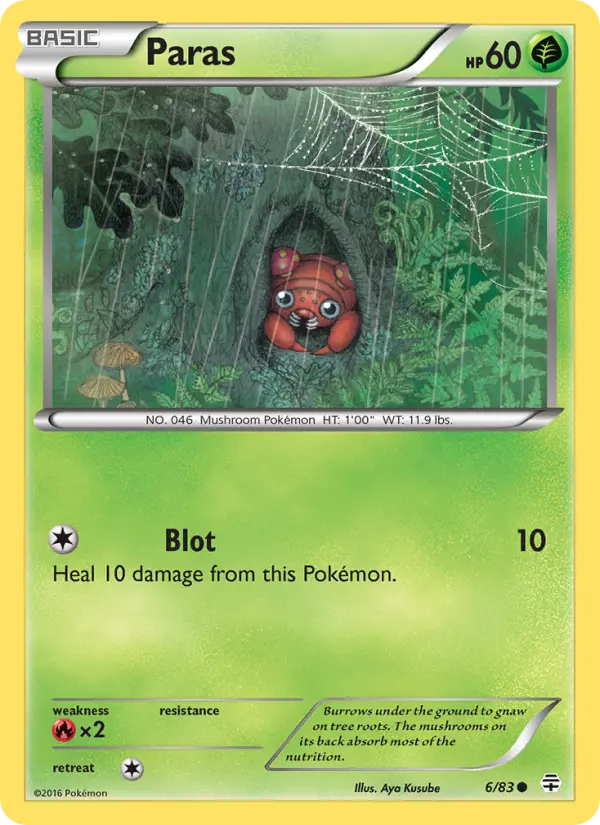
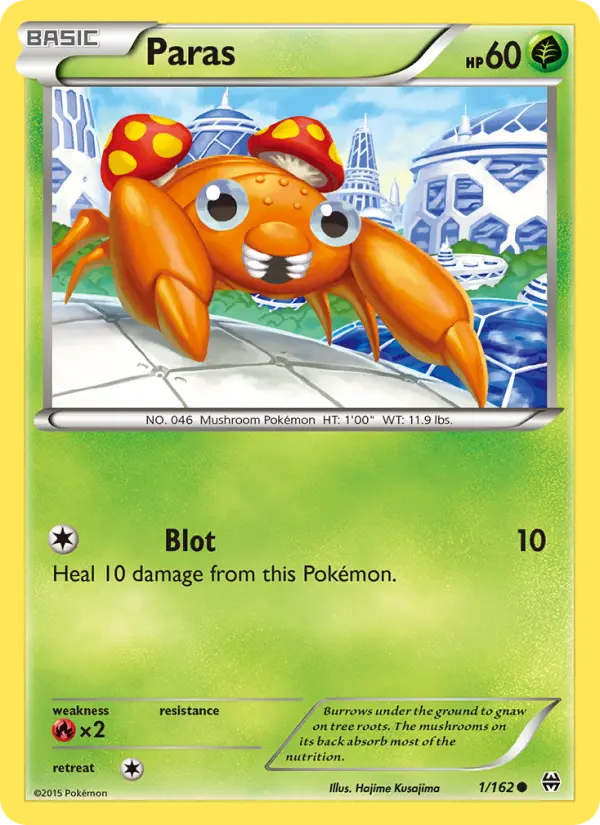
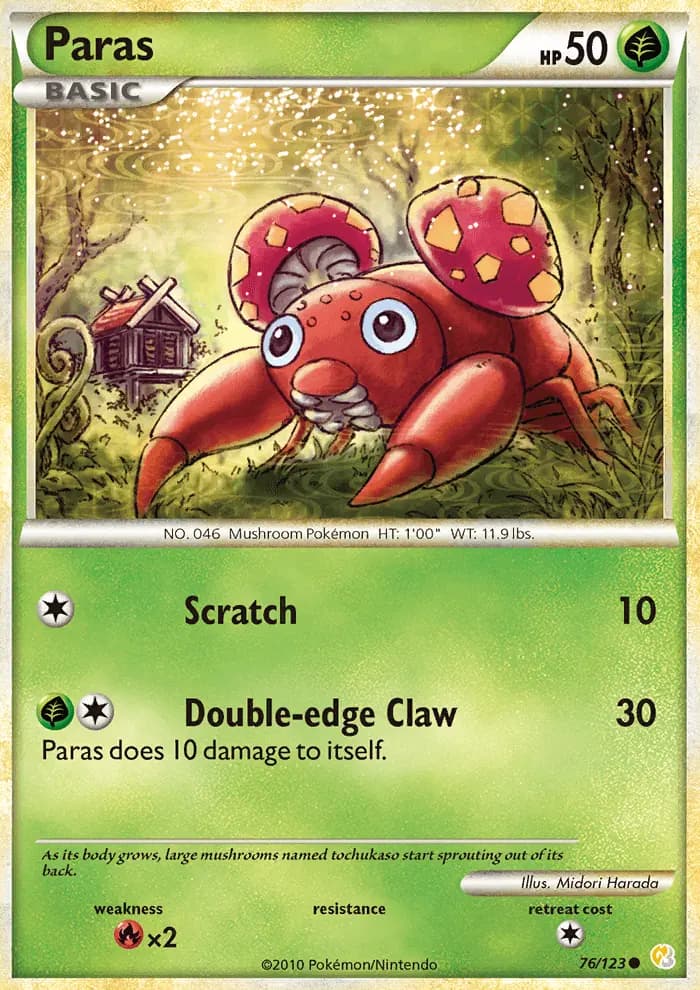
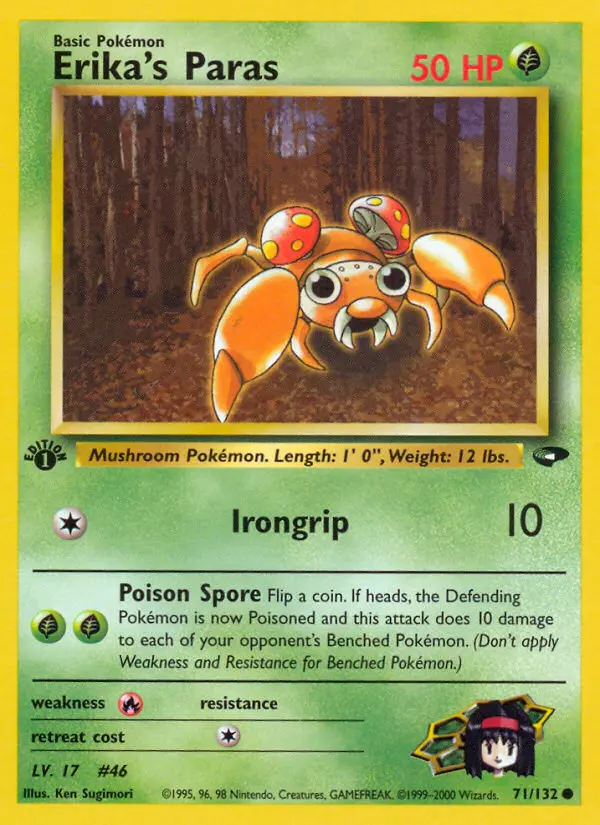
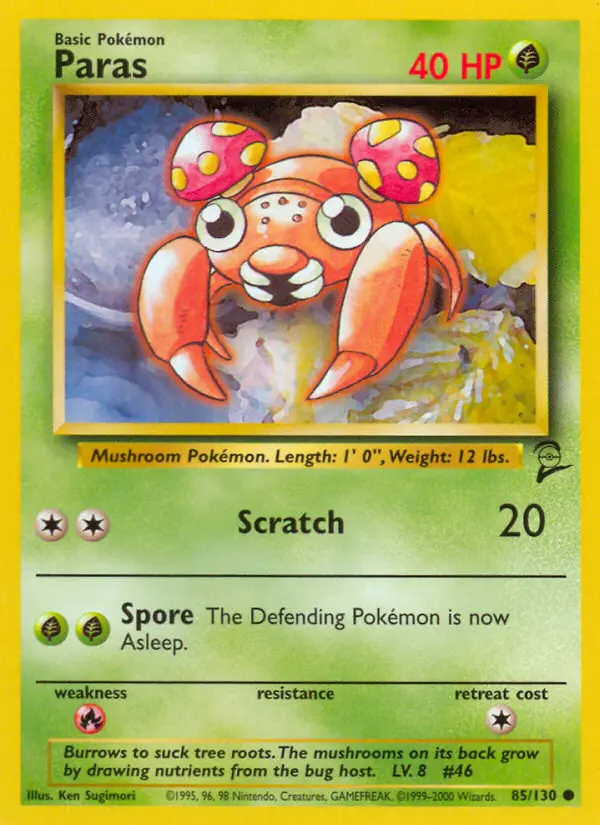
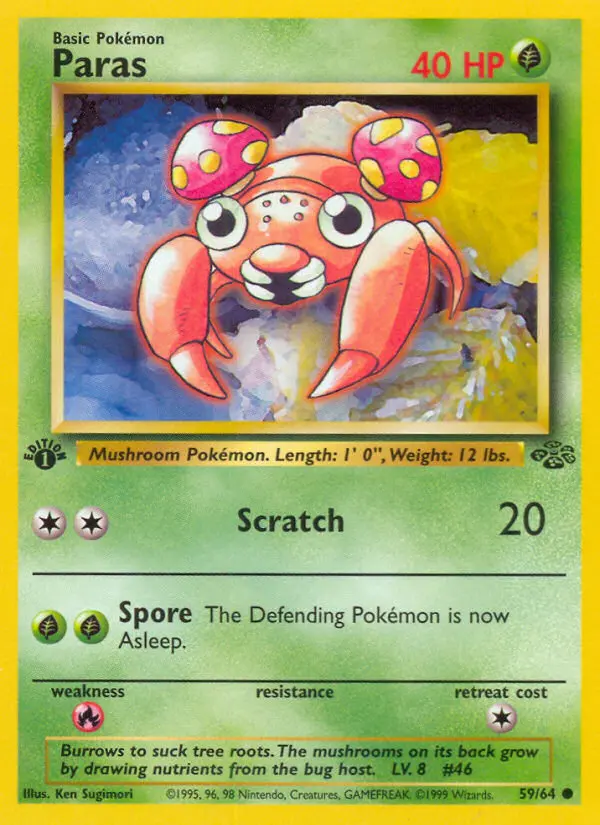
Paras exhibits the characteristics of a nymph-stage cicada rendered in an orange coloration, possessing a segmented ovoid body supported by three pairs of legs, with the foremost pair noticeably enlarged and armed with sharp claws suitable for burrowing. Its countenance features five distinctive specks across its forehead and three teeth visible on each side of its mouth, framed by circular eyes with pronounced pseudopupils that grant it keen observational capabilities. The most remarkable biological feature of Paras is the pair of red-and-yellow parasitic mushrooms known as tochukaso that emerge from its dorsal surface, growing from microscopic spores deposited upon the Paras at birth by its mother's own fungal burden. These mushrooms function as more than mere passengers—they actively draw nutrients from their host's body to sustain their own growth while simultaneously exerting behavioral influence over the Paras itself, directing it to seek tree roots and extract nutritious juices that simultaneously nourish both creature and fungus. The relationship is neither purely parasitic nor symbiotic in the traditional sense, but rather a fascinating example of fungal dominance where the mushroom's commands take precedence over the Paras's own inclinations.
Pokedex Numbers
Training
Breeding
Paras Breeding, Gender Ratio & Egg Groups
Paras exhibits a perfectly balanced gender distribution with exactly 50% male and 50% female individuals in wild populations, ensuring consistent breeding opportunities regardless of trainer preference or team composition. The species belongs to both the Bug and Plant egg groups, granting it remarkable breeding compatibility with numerous other Pokémon species and allowing trainers to produce offspring through diverse breeding combinations. When breeding Paras, offspring emerge with base happiness of 70, indicating a naturally docile temperament inherited by successive generations, which facilitates easier training for less experienced trainers. The species requires 20 egg cycles to hatch, translating to approximately 4,884 to 5,140 steps, a moderate incubation period that strikes a balance between other early-generation Pokémon, making Paras accessible to players without excessive grinding.
Sprites






Held Items
Tiny Mushroom
loot
Fire Red and Leaf Green: Trade two for prior Level-up moves. Sell for 250 Pokédollars, or to Hungry Maid for 500 Pokédollars.
Cost: 500
Tiny Mushroom
loot
Fire Red and Leaf Green: Trade two for prior Level-up moves. Sell for 250 Pokédollars, or to Hungry Maid for 500 Pokédollars.
Cost: 500
Tiny Mushroom
loot
Fire Red and Leaf Green: Trade two for prior Level-up moves. Sell for 250 Pokédollars, or to Hungry Maid for 500 Pokédollars.
Cost: 500
Tiny Mushroom
loot
Fire Red and Leaf Green: Trade two for prior Level-up moves. Sell for 250 Pokédollars, or to Hungry Maid for 500 Pokédollars.
Cost: 500
Tiny Mushroom
loot
Fire Red and Leaf Green: Trade two for prior Level-up moves. Sell for 250 Pokédollars, or to Hungry Maid for 500 Pokédollars.
Cost: 500
Tiny Mushroom
loot
Fire Red and Leaf Green: Trade two for prior Level-up moves. Sell for 250 Pokédollars, or to Hungry Maid for 500 Pokédollars.
Cost: 500
Tiny Mushroom
loot
Fire Red and Leaf Green: Trade two for prior Level-up moves. Sell for 250 Pokédollars, or to Hungry Maid for 500 Pokédollars.
Cost: 500
Tiny Mushroom
loot
Fire Red and Leaf Green: Trade two for prior Level-up moves. Sell for 250 Pokédollars, or to Hungry Maid for 500 Pokédollars.
Cost: 500
Tiny Mushroom
loot
Fire Red and Leaf Green: Trade two for prior Level-up moves. Sell for 250 Pokédollars, or to Hungry Maid for 500 Pokédollars.
Cost: 500
Tiny Mushroom
loot
Fire Red and Leaf Green: Trade two for prior Level-up moves. Sell for 250 Pokédollars, or to Hungry Maid for 500 Pokédollars.
Cost: 500
Tiny Mushroom
loot
Fire Red and Leaf Green: Trade two for prior Level-up moves. Sell for 250 Pokédollars, or to Hungry Maid for 500 Pokédollars.
Cost: 500
Tiny Mushroom
loot
Fire Red and Leaf Green: Trade two for prior Level-up moves. Sell for 250 Pokédollars, or to Hungry Maid for 500 Pokédollars.
Cost: 500
Tiny Mushroom
loot
Fire Red and Leaf Green: Trade two for prior Level-up moves. Sell for 250 Pokédollars, or to Hungry Maid for 500 Pokédollars.
Cost: 500
Tiny Mushroom
loot
Fire Red and Leaf Green: Trade two for prior Level-up moves. Sell for 250 Pokédollars, or to Hungry Maid for 500 Pokédollars.
Cost: 500
Tiny Mushroom
loot
Fire Red and Leaf Green: Trade two for prior Level-up moves. Sell for 250 Pokédollars, or to Hungry Maid for 500 Pokédollars.
Cost: 500
Tiny Mushroom
loot
Fire Red and Leaf Green: Trade two for prior Level-up moves. Sell for 250 Pokédollars, or to Hungry Maid for 500 Pokédollars.
Cost: 500
Tiny Mushroom
loot
Fire Red and Leaf Green: Trade two for prior Level-up moves. Sell for 250 Pokédollars, or to Hungry Maid for 500 Pokédollars.
Cost: 500
Tiny Mushroom
loot
Fire Red and Leaf Green: Trade two for prior Level-up moves. Sell for 250 Pokédollars, or to Hungry Maid for 500 Pokédollars.
Cost: 500
Tiny Mushroom
loot
Fire Red and Leaf Green: Trade two for prior Level-up moves. Sell for 250 Pokédollars, or to Hungry Maid for 500 Pokédollars.
Cost: 500
Tiny Mushroom
loot
Fire Red and Leaf Green: Trade two for prior Level-up moves. Sell for 250 Pokédollars, or to Hungry Maid for 500 Pokédollars.
Cost: 500
Tiny Mushroom
loot
Fire Red and Leaf Green: Trade two for prior Level-up moves. Sell for 250 Pokédollars, or to Hungry Maid for 500 Pokédollars.
Cost: 500
Tiny Mushroom
loot
Fire Red and Leaf Green: Trade two for prior Level-up moves. Sell for 250 Pokédollars, or to Hungry Maid for 500 Pokédollars.
Cost: 500
Big Mushroom
loot
Fire Red and Leaf Green: Trade for prior Level-up moves. Sell for 2500 Pokédollars, or to Hungry Maid for 5000 Pokédollars.
Cost: 5000
Big Mushroom
loot
Fire Red and Leaf Green: Trade for prior Level-up moves. Sell for 2500 Pokédollars, or to Hungry Maid for 5000 Pokédollars.
Cost: 5000
Big Mushroom
loot
Fire Red and Leaf Green: Trade for prior Level-up moves. Sell for 2500 Pokédollars, or to Hungry Maid for 5000 Pokédollars.
Cost: 5000
Big Mushroom
loot
Fire Red and Leaf Green: Trade for prior Level-up moves. Sell for 2500 Pokédollars, or to Hungry Maid for 5000 Pokédollars.
Cost: 5000
Big Mushroom
loot
Fire Red and Leaf Green: Trade for prior Level-up moves. Sell for 2500 Pokédollars, or to Hungry Maid for 5000 Pokédollars.
Cost: 5000
Big Mushroom
loot
Fire Red and Leaf Green: Trade for prior Level-up moves. Sell for 2500 Pokédollars, or to Hungry Maid for 5000 Pokédollars.
Cost: 5000
Big Mushroom
loot
Fire Red and Leaf Green: Trade for prior Level-up moves. Sell for 2500 Pokédollars, or to Hungry Maid for 5000 Pokédollars.
Cost: 5000
Big Mushroom
loot
Fire Red and Leaf Green: Trade for prior Level-up moves. Sell for 2500 Pokédollars, or to Hungry Maid for 5000 Pokédollars.
Cost: 5000
Big Mushroom
loot
Fire Red and Leaf Green: Trade for prior Level-up moves. Sell for 2500 Pokédollars, or to Hungry Maid for 5000 Pokédollars.
Cost: 5000
Big Mushroom
loot
Fire Red and Leaf Green: Trade for prior Level-up moves. Sell for 2500 Pokédollars, or to Hungry Maid for 5000 Pokédollars.
Cost: 5000
Big Mushroom
loot
Fire Red and Leaf Green: Trade for prior Level-up moves. Sell for 2500 Pokédollars, or to Hungry Maid for 5000 Pokédollars.
Cost: 5000
Big Mushroom
loot
Fire Red and Leaf Green: Trade for prior Level-up moves. Sell for 2500 Pokédollars, or to Hungry Maid for 5000 Pokédollars.
Cost: 5000
Big Mushroom
loot
Fire Red and Leaf Green: Trade for prior Level-up moves. Sell for 2500 Pokédollars, or to Hungry Maid for 5000 Pokédollars.
Cost: 5000
Big Mushroom
loot
Fire Red and Leaf Green: Trade for prior Level-up moves. Sell for 2500 Pokédollars, or to Hungry Maid for 5000 Pokédollars.
Cost: 5000
Big Mushroom
loot
Fire Red and Leaf Green: Trade for prior Level-up moves. Sell for 2500 Pokédollars, or to Hungry Maid for 5000 Pokédollars.
Cost: 5000
Big Mushroom
loot
Fire Red and Leaf Green: Trade for prior Level-up moves. Sell for 2500 Pokédollars, or to Hungry Maid for 5000 Pokédollars.
Cost: 5000
Big Mushroom
loot
Fire Red and Leaf Green: Trade for prior Level-up moves. Sell for 2500 Pokédollars, or to Hungry Maid for 5000 Pokédollars.
Cost: 5000
Big Mushroom
loot
Fire Red and Leaf Green: Trade for prior Level-up moves. Sell for 2500 Pokédollars, or to Hungry Maid for 5000 Pokédollars.
Cost: 5000
Big Mushroom
loot
Fire Red and Leaf Green: Trade for prior Level-up moves. Sell for 2500 Pokédollars, or to Hungry Maid for 5000 Pokédollars.
Cost: 5000
Big Mushroom
loot
Fire Red and Leaf Green: Trade for prior Level-up moves. Sell for 2500 Pokédollars, or to Hungry Maid for 5000 Pokédollars.
Cost: 5000
Big Mushroom
loot
Fire Red and Leaf Green: Trade for prior Level-up moves. Sell for 2500 Pokédollars, or to Hungry Maid for 5000 Pokédollars.
Cost: 5000
Big Mushroom
loot
Fire Red and Leaf Green: Trade for prior Level-up moves. Sell for 2500 Pokédollars, or to Hungry Maid for 5000 Pokédollars.
Cost: 5000
Balm Mushroom
loot
Sell to Hungry Maid for 25000 Pokédollars.
Cost: 15000
Balm Mushroom
loot
Sell to Hungry Maid for 25000 Pokédollars.
Cost: 15000
Balm Mushroom
loot
Sell to Hungry Maid for 25000 Pokédollars.
Cost: 15000
Balm Mushroom
loot
Sell to Hungry Maid for 25000 Pokédollars.
Cost: 15000
Tiny Mushroom
loot
Fire Red and Leaf Green: Trade two for prior Level-up moves. Sell for 250 Pokédollars, or to Hungry Maid for 500 Pokédollars.
Cost: 500
Tiny Mushroom
loot
Fire Red and Leaf Green: Trade two for prior Level-up moves. Sell for 250 Pokédollars, or to Hungry Maid for 500 Pokédollars.
Cost: 500
Tiny Mushroom
loot
Fire Red and Leaf Green: Trade two for prior Level-up moves. Sell for 250 Pokédollars, or to Hungry Maid for 500 Pokédollars.
Cost: 500
Tiny Mushroom
loot
Fire Red and Leaf Green: Trade two for prior Level-up moves. Sell for 250 Pokédollars, or to Hungry Maid for 500 Pokédollars.
Cost: 500
Tiny Mushroom
loot
Fire Red and Leaf Green: Trade two for prior Level-up moves. Sell for 250 Pokédollars, or to Hungry Maid for 500 Pokédollars.
Cost: 500
Tiny Mushroom
loot
Fire Red and Leaf Green: Trade two for prior Level-up moves. Sell for 250 Pokédollars, or to Hungry Maid for 500 Pokédollars.
Cost: 500
Tiny Mushroom
loot
Fire Red and Leaf Green: Trade two for prior Level-up moves. Sell for 250 Pokédollars, or to Hungry Maid for 500 Pokédollars.
Cost: 500
Tiny Mushroom
loot
Fire Red and Leaf Green: Trade two for prior Level-up moves. Sell for 250 Pokédollars, or to Hungry Maid for 500 Pokédollars.
Cost: 500
Tiny Mushroom
loot
Fire Red and Leaf Green: Trade two for prior Level-up moves. Sell for 250 Pokédollars, or to Hungry Maid for 500 Pokédollars.
Cost: 500
Tiny Mushroom
loot
Fire Red and Leaf Green: Trade two for prior Level-up moves. Sell for 250 Pokédollars, or to Hungry Maid for 500 Pokédollars.
Cost: 500
Tiny Mushroom
loot
Fire Red and Leaf Green: Trade two for prior Level-up moves. Sell for 250 Pokédollars, or to Hungry Maid for 500 Pokédollars.
Cost: 500
Tiny Mushroom
loot
Fire Red and Leaf Green: Trade two for prior Level-up moves. Sell for 250 Pokédollars, or to Hungry Maid for 500 Pokédollars.
Cost: 500
Tiny Mushroom
loot
Fire Red and Leaf Green: Trade two for prior Level-up moves. Sell for 250 Pokédollars, or to Hungry Maid for 500 Pokédollars.
Cost: 500
Tiny Mushroom
loot
Fire Red and Leaf Green: Trade two for prior Level-up moves. Sell for 250 Pokédollars, or to Hungry Maid for 500 Pokédollars.
Cost: 500
Tiny Mushroom
loot
Fire Red and Leaf Green: Trade two for prior Level-up moves. Sell for 250 Pokédollars, or to Hungry Maid for 500 Pokédollars.
Cost: 500
Tiny Mushroom
loot
Fire Red and Leaf Green: Trade two for prior Level-up moves. Sell for 250 Pokédollars, or to Hungry Maid for 500 Pokédollars.
Cost: 500
Tiny Mushroom
loot
Fire Red and Leaf Green: Trade two for prior Level-up moves. Sell for 250 Pokédollars, or to Hungry Maid for 500 Pokédollars.
Cost: 500
Tiny Mushroom
loot
Fire Red and Leaf Green: Trade two for prior Level-up moves. Sell for 250 Pokédollars, or to Hungry Maid for 500 Pokédollars.
Cost: 500
Tiny Mushroom
loot
Fire Red and Leaf Green: Trade two for prior Level-up moves. Sell for 250 Pokédollars, or to Hungry Maid for 500 Pokédollars.
Cost: 500
Tiny Mushroom
loot
Fire Red and Leaf Green: Trade two for prior Level-up moves. Sell for 250 Pokédollars, or to Hungry Maid for 500 Pokédollars.
Cost: 500
Tiny Mushroom
loot
Fire Red and Leaf Green: Trade two for prior Level-up moves. Sell for 250 Pokédollars, or to Hungry Maid for 500 Pokédollars.
Cost: 500
Tiny Mushroom
loot
Fire Red and Leaf Green: Trade two for prior Level-up moves. Sell for 250 Pokédollars, or to Hungry Maid for 500 Pokédollars.
Cost: 500
Big Mushroom
loot
Fire Red and Leaf Green: Trade for prior Level-up moves. Sell for 2500 Pokédollars, or to Hungry Maid for 5000 Pokédollars.
Cost: 5000
Big Mushroom
loot
Fire Red and Leaf Green: Trade for prior Level-up moves. Sell for 2500 Pokédollars, or to Hungry Maid for 5000 Pokédollars.
Cost: 5000
Big Mushroom
loot
Fire Red and Leaf Green: Trade for prior Level-up moves. Sell for 2500 Pokédollars, or to Hungry Maid for 5000 Pokédollars.
Cost: 5000
Big Mushroom
loot
Fire Red and Leaf Green: Trade for prior Level-up moves. Sell for 2500 Pokédollars, or to Hungry Maid for 5000 Pokédollars.
Cost: 5000
Big Mushroom
loot
Fire Red and Leaf Green: Trade for prior Level-up moves. Sell for 2500 Pokédollars, or to Hungry Maid for 5000 Pokédollars.
Cost: 5000
Big Mushroom
loot
Fire Red and Leaf Green: Trade for prior Level-up moves. Sell for 2500 Pokédollars, or to Hungry Maid for 5000 Pokédollars.
Cost: 5000
Big Mushroom
loot
Fire Red and Leaf Green: Trade for prior Level-up moves. Sell for 2500 Pokédollars, or to Hungry Maid for 5000 Pokédollars.
Cost: 5000
Big Mushroom
loot
Fire Red and Leaf Green: Trade for prior Level-up moves. Sell for 2500 Pokédollars, or to Hungry Maid for 5000 Pokédollars.
Cost: 5000
Big Mushroom
loot
Fire Red and Leaf Green: Trade for prior Level-up moves. Sell for 2500 Pokédollars, or to Hungry Maid for 5000 Pokédollars.
Cost: 5000
Big Mushroom
loot
Fire Red and Leaf Green: Trade for prior Level-up moves. Sell for 2500 Pokédollars, or to Hungry Maid for 5000 Pokédollars.
Cost: 5000
Big Mushroom
loot
Fire Red and Leaf Green: Trade for prior Level-up moves. Sell for 2500 Pokédollars, or to Hungry Maid for 5000 Pokédollars.
Cost: 5000
Big Mushroom
loot
Fire Red and Leaf Green: Trade for prior Level-up moves. Sell for 2500 Pokédollars, or to Hungry Maid for 5000 Pokédollars.
Cost: 5000
Big Mushroom
loot
Fire Red and Leaf Green: Trade for prior Level-up moves. Sell for 2500 Pokédollars, or to Hungry Maid for 5000 Pokédollars.
Cost: 5000
Big Mushroom
loot
Fire Red and Leaf Green: Trade for prior Level-up moves. Sell for 2500 Pokédollars, or to Hungry Maid for 5000 Pokédollars.
Cost: 5000
Big Mushroom
loot
Fire Red and Leaf Green: Trade for prior Level-up moves. Sell for 2500 Pokédollars, or to Hungry Maid for 5000 Pokédollars.
Cost: 5000
Big Mushroom
loot
Fire Red and Leaf Green: Trade for prior Level-up moves. Sell for 2500 Pokédollars, or to Hungry Maid for 5000 Pokédollars.
Cost: 5000
Big Mushroom
loot
Fire Red and Leaf Green: Trade for prior Level-up moves. Sell for 2500 Pokédollars, or to Hungry Maid for 5000 Pokédollars.
Cost: 5000
Big Mushroom
loot
Fire Red and Leaf Green: Trade for prior Level-up moves. Sell for 2500 Pokédollars, or to Hungry Maid for 5000 Pokédollars.
Cost: 5000
Big Mushroom
loot
Fire Red and Leaf Green: Trade for prior Level-up moves. Sell for 2500 Pokédollars, or to Hungry Maid for 5000 Pokédollars.
Cost: 5000
Big Mushroom
loot
Fire Red and Leaf Green: Trade for prior Level-up moves. Sell for 2500 Pokédollars, or to Hungry Maid for 5000 Pokédollars.
Cost: 5000
Big Mushroom
loot
Fire Red and Leaf Green: Trade for prior Level-up moves. Sell for 2500 Pokédollars, or to Hungry Maid for 5000 Pokédollars.
Cost: 5000
Big Mushroom
loot
Fire Red and Leaf Green: Trade for prior Level-up moves. Sell for 2500 Pokédollars, or to Hungry Maid for 5000 Pokédollars.
Cost: 5000
Balm Mushroom
loot
Sell to Hungry Maid for 25000 Pokédollars.
Cost: 15000
Balm Mushroom
loot
Sell to Hungry Maid for 25000 Pokédollars.
Cost: 15000
Balm Mushroom
loot
Sell to Hungry Maid for 25000 Pokédollars.
Cost: 15000
Balm Mushroom
loot
Sell to Hungry Maid for 25000 Pokédollars.
Cost: 15000
TMs & HMs
tm01
black white
tm01
black 2 white 2
tm01
lets go pikachu lets go eevee
tm01
omega ruby alpha sapphire
tm01
x y
tm02
crystal
tm02
gold silver
tm03
yellow
tm03
crystal
tm03
gold silver
tm03
red blue
tm03
blue japan
tm03
red green japan
tm05
lets go pikachu lets go eevee
tm06
yellow
tm06
gold silver
tm06
red blue
tm06
crystal
tm06
emerald
tm06
firered leafgreen
+629 more TMs/HMs
Paras's Evolution Chain


Paras Evolution, Mega Evolution & Special Forms
Paras undergoes a dramatic transformation upon reaching level 24, evolving into Parasect, a significantly more formidable Bug/Grass-type Pokémon that represents a marked advancement in physical prowess and capabilities. This evolution fundamentally alters Paras's stat distribution, particularly boosting its Attack, Defense, and Special Defense values while maintaining the dual-type classification. The evolutionary process appears to involve the maturation of both the host creature and its fungal inhabitants, resulting in larger, more pronounced mushrooms and a more robust insectoid frame capable of weathering combat far more effectively than its unevolved predecessor. Parasect inherits all potential abilities from its base form—Effect Spore, Dry Skin, and the hidden ability Damp—while gaining access to a substantially expanded movepool that unlocks its potential as a competitive threat.
Where to Find
Mt Moon
kanto
+65 more
Kanto Safari Zone
kanto
+18 more
Ilex Forest
johto
+31 more
Johto Safari Zone
johto
+9 more
Brooklet Hill
alola
+3 more
Lush Jungle
alola
+9 more
Alola Route 11
alola
Paras Behaviour and Natural Habitat
Paras demonstrates a distinctive behavioral pattern inextricably linked to its fungal passengers, spending much of its time burrowing underground to access nutrient-rich tree roots, a compulsion that originates from the mushroom's influence rather than the Pokémon's own drives. According to Pokédex documentation, the tochukaso growing on Paras's back actively 'orders' the creature to extract juice from tree trunks, establishing a clear hierarchy within this dual organism. This subterranean lifestyle suits the damp forest environments where Paras thrives, though it can also be encountered in caves where moisture levels remain sufficiently elevated to support its fungal symbiotes. Geographically, Paras exhibits surprising adaptability to various regions, though its performance in Alola presents a notable exception—the region's environmental conditions prove insufficient for optimal tochukaso growth, resulting in stunted mushroom development, possibly due to inadequate moisture or nutrient availability in the tropical climate.
Pokedex Entries
Burrows to suck tree roots. The mushrooms on its back grow by draw ing nutrients from the bug host.
Burrows under the ground to gnaw on tree roots. The mushrooms on its back absorb most of the nutrition.
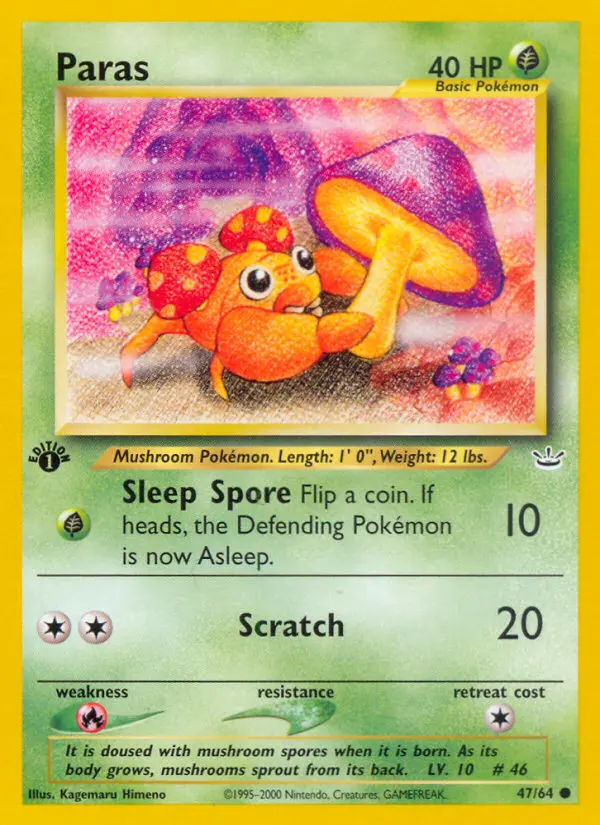
It is doused with mushroom spores when it is born. As its body grows, mushrooms sprout from its back.
As its body grows large, oriental mushrooms named tochukaso start sprouting out of its back.
The tochukaso growing on this POKéMON's back orders it to extract juice from tree trunks.
PARAS has parasitic mushrooms growing on its back called tochukaso. They grow large by drawing nutrients from the BUG POKéMON host. They are highly valued as a medicine for extending life.
PARAS has parasitic mushrooms growing on its back called tochukaso. They grow large by drawing nutrients from this BUG POKéMON host. They are highly valued as a medicine for extending life.
A PARAS has parasitic tochukaso mushrooms growing on its back. They grow by drawing nutrients from the host. They are valued as a medicine for long life.
Growing out of the bug’s back are mushrooms called tochukaso. The mushrooms grow with the bug host.
Burrows to suck tree roots. The mushrooms on its back grow by drawing nutrients from the bug host.
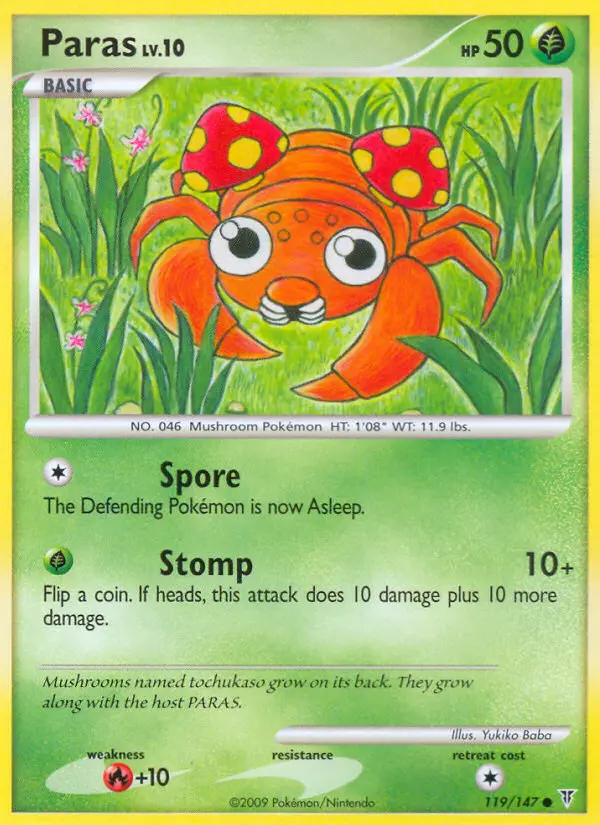
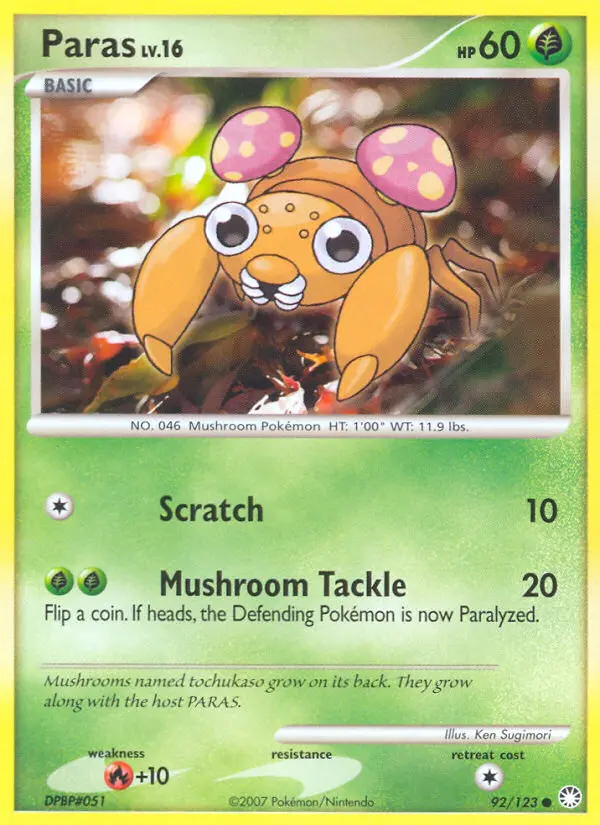
Mushrooms named tochukaso grow on its back. They grow along with the host PARAS.
It is doused with mushroom spores when it is born. As its body grows, mushrooms sprout from its back.
As its body grows, large mushrooms named tochukaso start sprouting out of its back.
Mushrooms named tochukaso grow on its back. They grow along with the host Paras.
Mushrooms named tochukaso grow on its back. They grow along with the host Paras.
Growing out of the bug’s back are mushrooms called tochukaso. The mushrooms grow with the bug host.
Burrows under the ground to gnaw on tree roots. The mushrooms on its back absorb most of the nutrition.
Paras has parasitic mushrooms growing on its back called tochukaso. They grow large by drawing nutrients from this Bug Pokémon host. They are highly valued as a medicine for extending life.
No matter how much it eats, the mushrooms growing on its back steal away most of the nutrients it consumes.
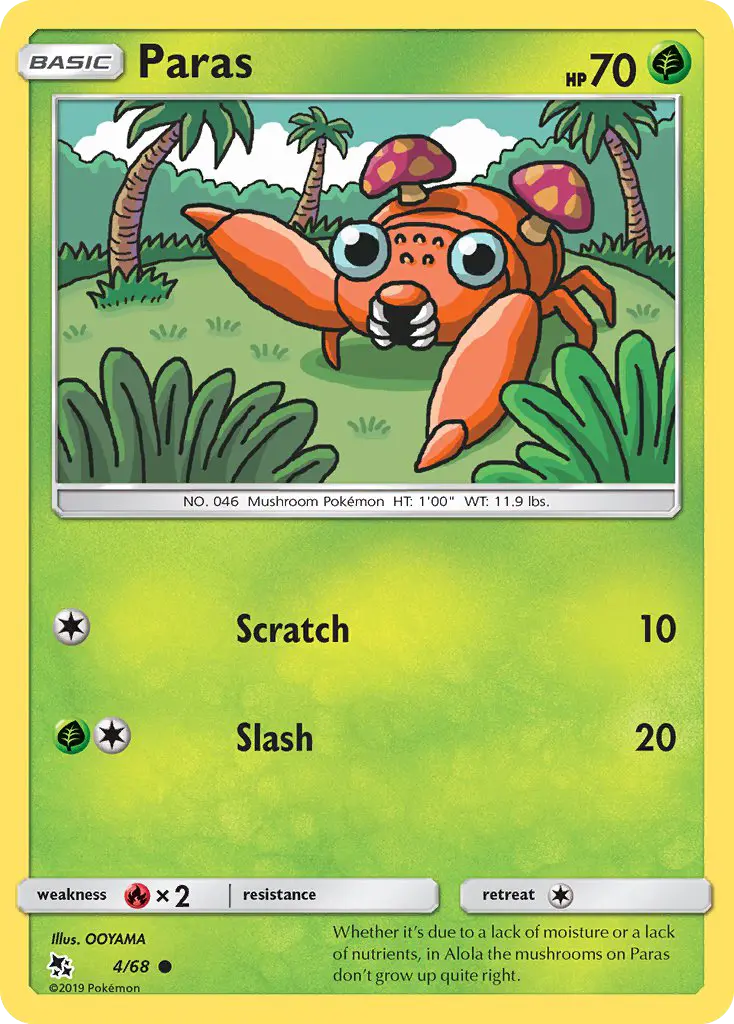
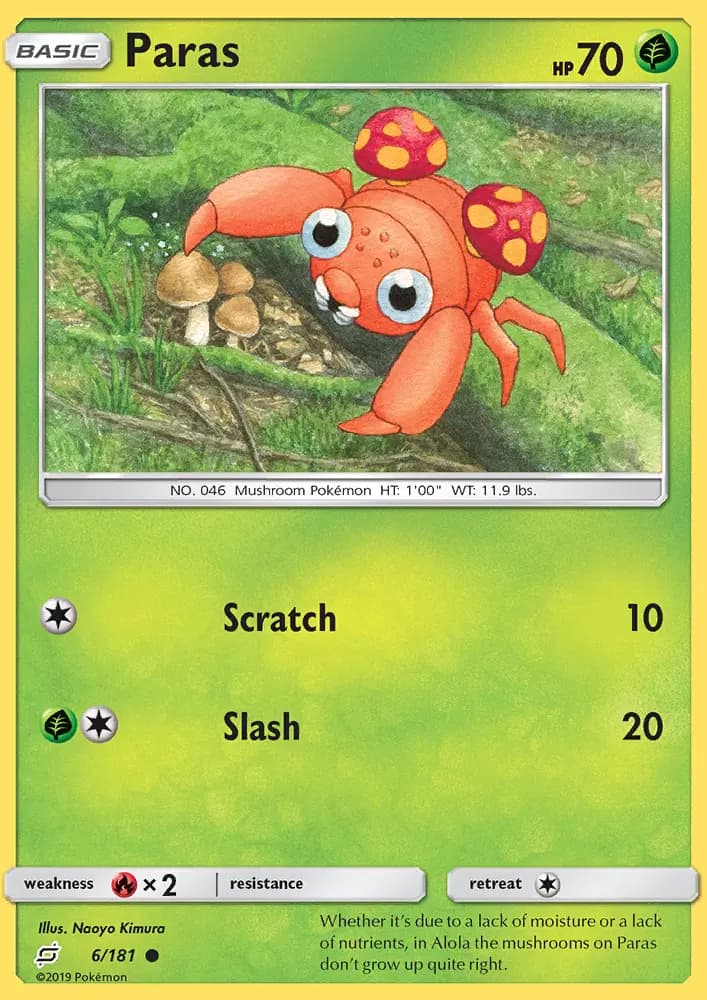
Whether it’s due to a lack of moisture or a lack of nutrients, in Alola the mushrooms on Paras don’t grow up quite right.
Mushrooms called tochukaso sprout from its back. They can be dried and powdered to make a medicine used to extend life.
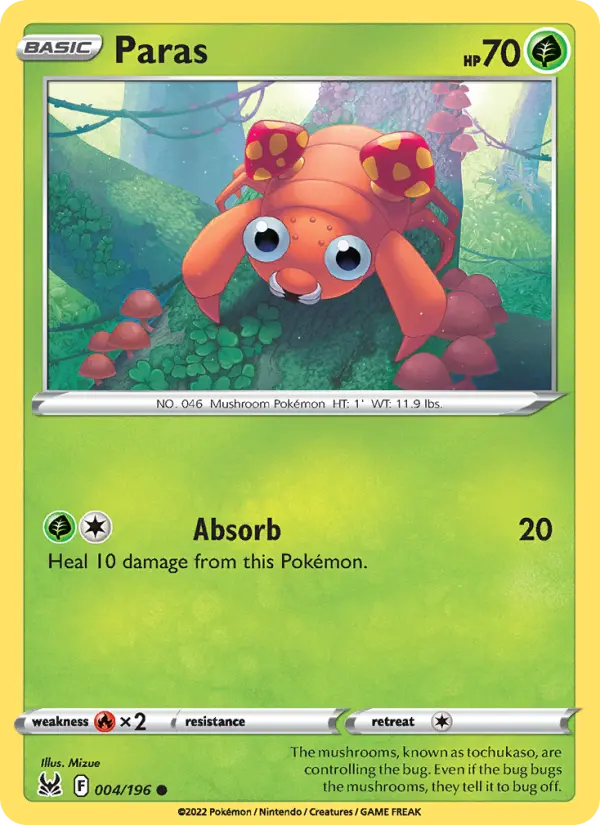
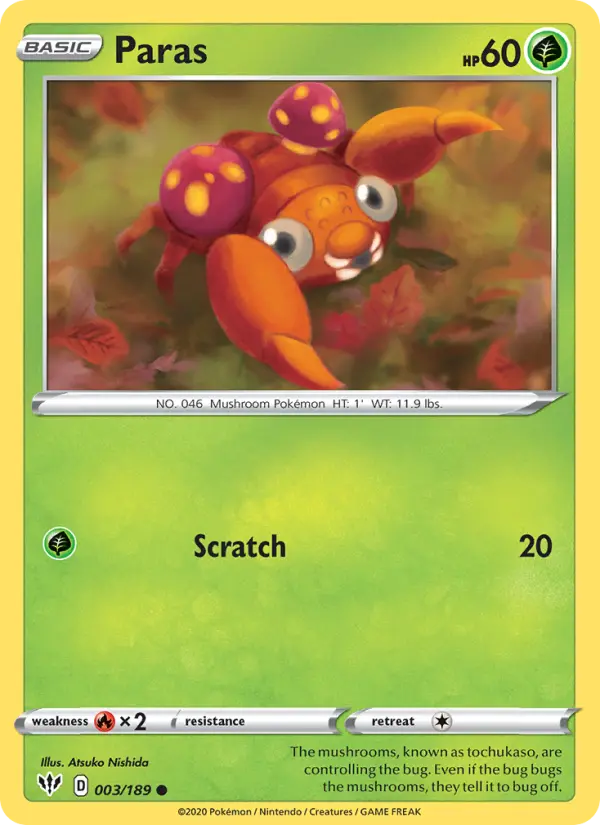
The mushrooms, known as tochukaso, are controlling the bug. Even if the bug bugs the mushrooms, they tell it to bug off.
Burrows under the ground to gnaw on tree roots. The mushrooms on its back absorb most of the nutrition.
Sometimes seen at the foot of trees in humid forests. The mushrooms on its back—called tochukaso—are not present on infant specimens and instead emerge as Paras matures.
Paras Name Origin & Design Inspiration
The designation 'Paras' derives directly from the prefix 'para-,' indicating a parasitic relationship, combined with 'site,' though the name also echoes 'parasol,' an apt reference given the umbrella-like mushrooms adorning its back. The Japanese name パラス (Parasu) maintains this linguistic connection while establishing the creature's identity as a parasitic organism. Visually, Paras's design draws inspiration from parasitoid wasps and cicada nymphs, with the tochukaso mushrooms serving as the species's most distinctive characteristic, making it instantly recognizable across all generations. The color scheme of orange-brown body with contrasting red-and-yellow fungi creates a striking visual composition that immediately communicates the parasitic nature of their relationship, while the segmented body structure reinforces its insectoid phylogeny.
Learnable Moves
Paras can learn 86 moves:
Move | Type | Cat. | Power | Acc. | PP |
|---|---|---|---|---|---|
| absorb | grass | Special | 20 | 100 | 25 |
| aerial ace | flying | Physical | 60 | — | 20 |
| after you | normal | Status | — | — | 15 |
| agility | psychic | Status | — | — | 30 |
| aromatherapy | grass | Status | — | — | 5 |
| attract | normal | Status | — | 100 | 15 |
| bide | normal | Physical | — | — | 10 |
| body slam | normal | Physical | 85 | 100 | 15 |
| brick break | fighting | Physical | 75 | 100 | 15 |
| bug bite | bug | Physical | 60 | 100 | 20 |
| bullet seed | grass | Physical | 25 | 100 | 30 |
| captivate | normal | Status | — | 100 | 20 |
| confide | normal | Status | — | — | 20 |
| counter | fighting | Physical | — | 100 | 20 |
| cross poison | poison | Physical | 70 | 100 | 20 |
| curse | ghost | Status | — | — | 10 |
| cut | normal | Physical | 50 | 95 | 30 |
| dig | ground | Physical | 80 | 100 | 10 |
| double team | normal | Status | — | — | 15 |
| double edge | normal | Physical | 120 | 100 | 15 |
| endure | normal | Status | — | — | 10 |
| energy ball | grass | Special | 90 | 100 | 10 |
| facade | normal | Physical | 70 | 100 | 20 |
| false swipe | normal | Physical | 40 | 100 | 40 |
| fell stinger | bug | Physical | 50 | 100 | 25 |
| flail | normal | Physical | — | 100 | 15 |
| flash | normal | Status | — | 100 | 20 |
| frustration | normal | Physical | — | 100 | 20 |
| fury cutter | bug | Physical | 40 | 95 | 20 |
| fury swipes | normal | Physical | 18 | 80 | 15 |
| giga drain | grass | Special | 75 | 100 | 10 |
| grass knot | grass | Special | — | 100 | 20 |
| grassy terrain | grass | Status | — | — | 10 |
| growth | normal | Status | — | — | 20 |
| headbutt | normal | Physical | 70 | 100 | 15 |
| hidden power | normal | Special | 60 | 100 | 15 |
| hone claws | dark | Status | — | — | 15 |
| knock off | dark | Physical | 65 | 100 | 20 |
| leech life | bug | Physical | 80 | 100 | 10 |
| leech seed | grass | Status | — | 90 | 10 |
| light screen | psychic | Status | — | — | 30 |
| mega drain | grass | Special | 40 | 100 | 15 |
| metal claw | steel | Physical | 50 | 95 | 35 |
| mimic | normal | Status | — | — | 10 |
| natural gift | normal | Physical | — | 100 | 15 |
| nature power | normal | Status | — | — | 20 |
| poison powder | poison | Status | — | 75 | 35 |
| protect | normal | Status | — | — | 10 |
| psybeam | psychic | Special | 65 | 100 | 20 |
| pursuit | dark | Physical | 40 | 100 | 20 |
| rage | normal | Physical | 20 | 100 | 20 |
| rage powder | bug | Status | — | — | 20 |
| reflect | psychic | Status | — | — | 20 |
| rest | psychic | Status | — | — | 5 |
| return | normal | Physical | — | 100 | 20 |
| rock smash | fighting | Physical | 40 | 100 | 15 |
| rototiller | ground | Status | — | — | 10 |
| round | normal | Special | 60 | 100 | 15 |
| scratch | normal | Physical | 40 | 100 | 35 |
| screech | normal | Status | — | 85 | 40 |
| secret power | normal | Physical | 70 | 100 | 20 |
| seed bomb | grass | Physical | 80 | 100 | 15 |
| skull bash | normal | Physical | 130 | 100 | 10 |
| slash | normal | Physical | 70 | 100 | 20 |
| sleep powder | grass | Status | — | 75 | 15 |
| sleep talk | normal | Status | — | — | 10 |
| sludge bomb | poison | Special | 90 | 100 | 10 |
| snore | normal | Special | 50 | 100 | 15 |
| solar beam | grass | Special | 120 | 100 | 10 |
| spore | grass | Status | — | 100 | 15 |
| string shot | bug | Status | — | 95 | 40 |
| struggle bug | bug | Special | 50 | 100 | 20 |
| stun spore | grass | Status | — | 75 | 30 |
| substitute | normal | Status | — | — | 10 |
| sunny day | fire | Status | — | — | 5 |
| swagger | normal | Status | — | 85 | 15 |
| sweet scent | normal | Status | — | 100 | 20 |
| swords dance | normal | Status | — | — | 20 |
| synthesis | grass | Status | — | — | 5 |
| take down | normal | Physical | 90 | 85 | 20 |
| thief | dark | Physical | 60 | 100 | 25 |
| toxic | poison | Status | — | 90 | 10 |
| venoshock | poison | Special | 65 | 100 | 10 |
| wide guard | rock | Status | — | — | 10 |
| worry seed | grass | Status | — | 100 | 10 |
| x scissor | bug | Physical | 80 | 100 | 15 |
Paras Competitive Battle Guide
Despite Paras's uninspiring overall stat sum of 285 and generally lackluster statistical distribution, it possesses several factors that warrant consideration in competitive contexts, particularly its Attack stat of 70 which outpaces most of its other attributes. The ability Effect Spore provides valuable utility with a 30% probability of inflicting paralysis, poison, or sleep upon physical attackers, creating passive defensive pressure that can disrupt opponent momentum, while Dry Skin offers an alternative for weather-dependent strategies with increased Fire-type vulnerability but beneficial interactions with rain. The hidden ability Damp provides niche utility by preventing explosive moves and Aftermath effects, occasionally enabling strategies against Explosion-reliant opponents or particular threat matchups. However, Paras's critical weakness lies in its abysmal Speed stat of merely 25, combined with modest defensive capabilities (Defense and Special Defense both at 55), rendering it extremely vulnerable to faster, stronger opponents before it can act, effectively relegating it to the early-game portion of most playthroughs rather than viable end-game competition.
Commonly Asked Questions About Paras
What type is Paras?
Paras is a bug and grass type Pokemon.
What does Paras evolve into?
Paras evolves into parasect.
What are Paras's weaknesses?
Paras is weak to flying, poison, rock, bug, fire and ice type moves.
Does Paras evolve by trading?
No — Paras evolves entirely through leveling up, with no trade required at any stage.
Where can I find Paras?
Paras can be found in mt moon (kanto), kanto safari zone (kanto) and ilex forest (johto) and 4 other locations.
Paras Cultural Impact & Franchise History
Paras achieved moderate recognition within Pokémon culture as one of Generation I's distinctive Bug-type representatives, though it remains overshadowed by more iconic species like Butterfree and Beedrill in the broader franchise consciousness. The tochukaso mushrooms garnered particular attention for their real-world medicinal significance within Pokémon lore, positioned as valuable life-extending compounds that attract collectors and apothecaries, establishing an economic ecosystem around the species. In competitive communities, Paras serves primarily as a historical curiosity and early-generation reference point rather than a viable strategic option, though dedicated enthusiasts occasionally employ it in nuzlocke challenges or competitive formats with level restrictions. The species appears sporadically in anime episodes, manga adaptations, and trading card game releases, maintaining a subtle presence in Pokémon media without achieving the cultural prominence of more popular Gen I specimens.
Where to Find Paras in Every Pokémon Game
Paras maintains consistent availability throughout the Pokémon franchise across multiple game generations and platforms, appearing in the wild of numerous regions including Kanto where it was originally encountered in caves and forests in the Red, Blue, and Yellow versions. The species can be captured relatively easily given its high catch rate of 190, translating to approximately 35.2% success rate with a standard Poké Ball against a healthy specimen, making it one of the more accessible Pokémon for aspiring trainers. Paras appears in Johto (Gold, Silver, and Crystal), with local Pokédex entries varying slightly across regions, while subsequent generations continue to feature the species in updated Pokédexes, though its regional availability fluctuates based on geographic availability and regional adaptation—most notably in Alola where it appears as a somewhat uncommon encounter. Modern titles including Let's Go Pikachu/Eevee, Legends: Arceus, and the mainline Sword/Shield generation games maintain Paras's accessibility, ensuring that trainers across all experience levels can obtain this generation-defining Mushroom Pokémon, though its prevalence varies based on encounter rates and availability mechanics specific to each installment.