Roserade
Generation IV · #0407 — Bouquet Pokémon
Roserade's natural cure ability is the first thing worth knowing about it — everything else, from its grass/poison typing to its build, follows from how that ability gets used. Roserade is neither legendary nor mythical, but rather a standard evolution that players can obtain through careful breeding and stone evolution, making it an accessible yet sophisticated addition to any team. The Pokémon's gender ratio is perfectly balanced at 50% male to 50% female, and it belongs to the Fairy and Grass egg groups, allowing for diverse breeding strategies.
Editor's Take
Roserade's Technician plus Spikes and Toxic Spikes access makes it a genuinely strong hazard setter with real offensive presence, and it is the best thing to come out of the Roselia line.
Base Stats
Height
0.9m
Weight
14.5kg
Category
Bouquet Pokémon
Gender
Male 50% / Female 50%
Color
green
Shape
humanoid
Abilities
Cures any major status ailment upon switching out.
Has a 30% chance of poisoning attacking Pokémon on contact.
Strengthens moves of 60 base power or less to 1.5× their power.
Roserade Biology & Physical Characteristics
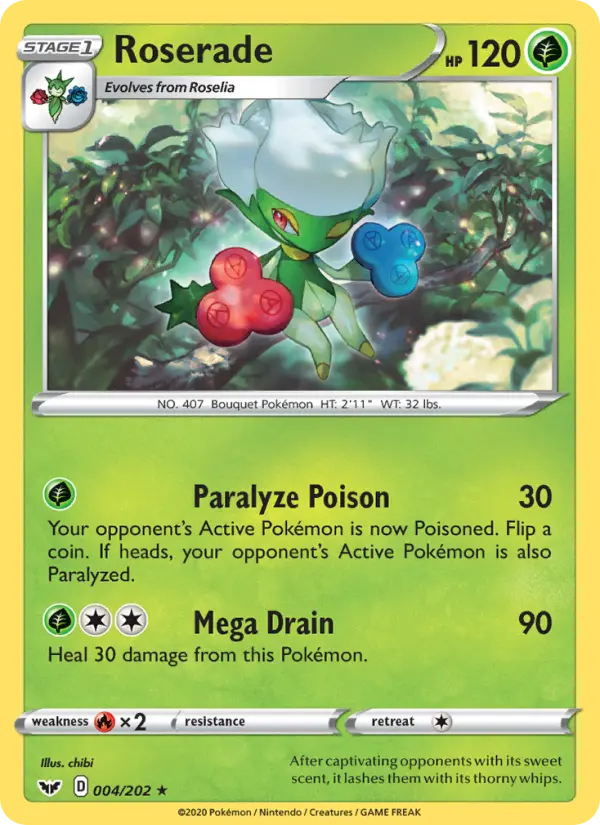
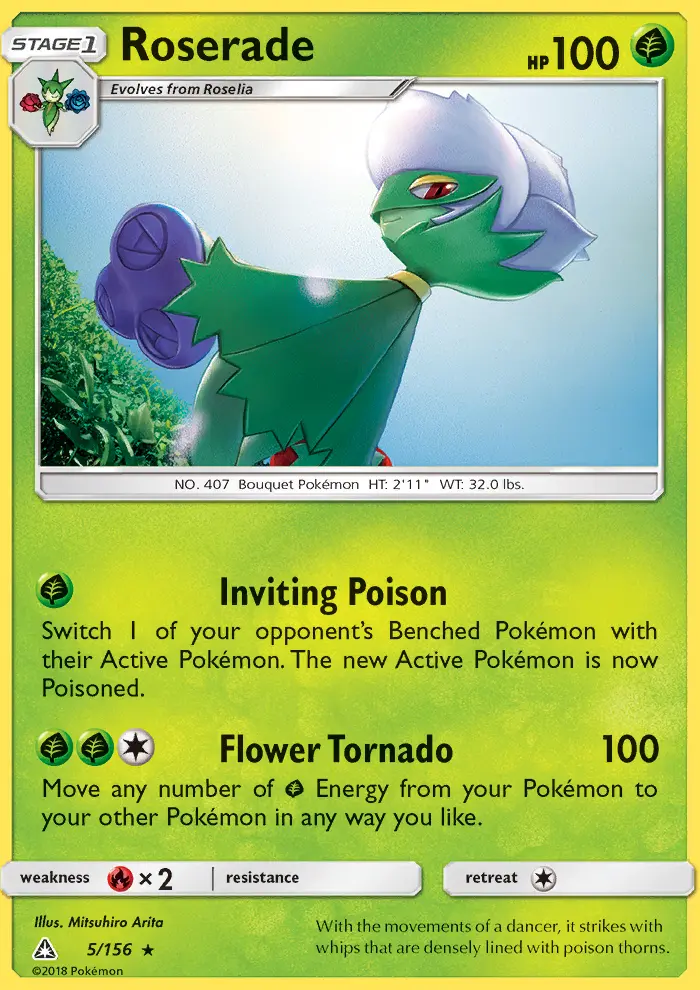
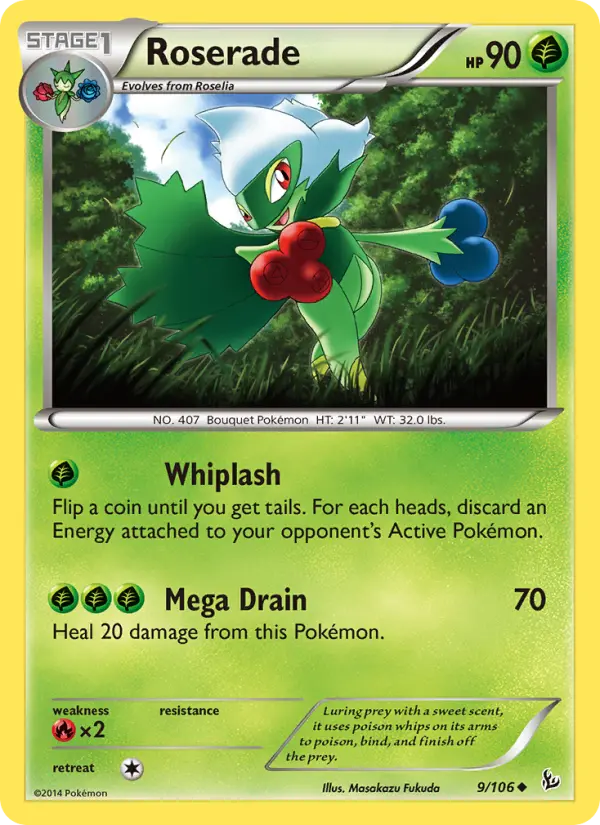
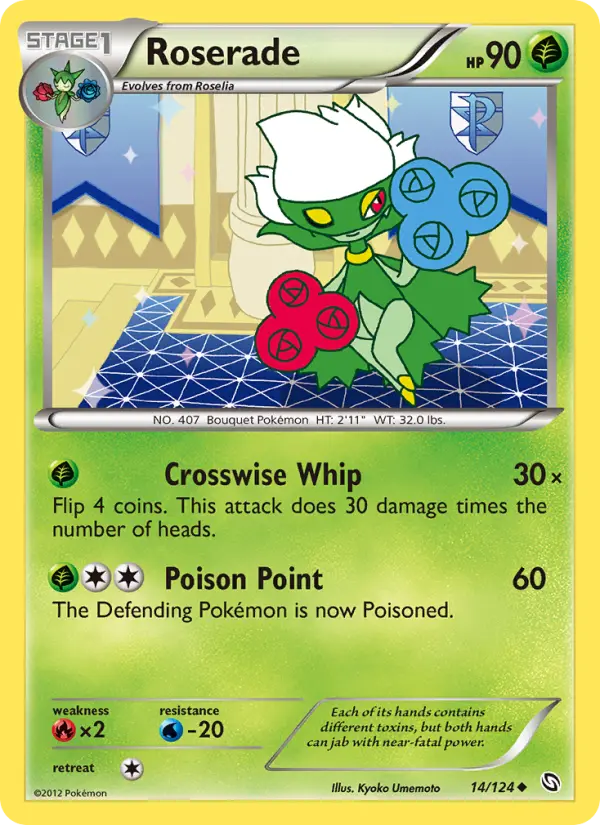
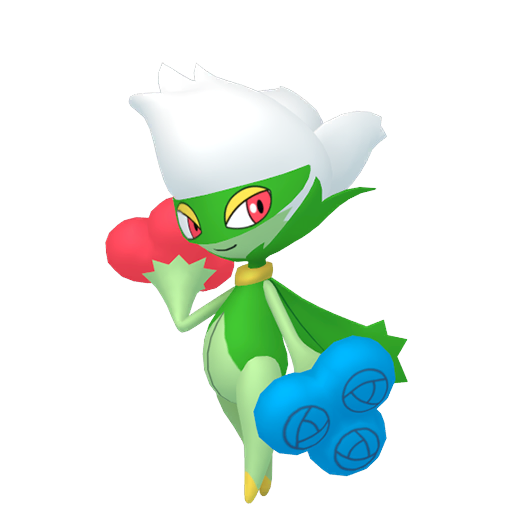
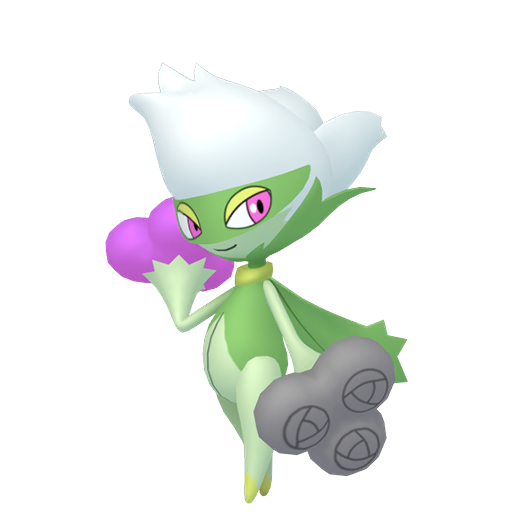
Roserade presents a striking appearance that masterfully blends rose aesthetics with masquerade elegance, creating a Pokémon of dancers' grace and deadly poison. Its most distinctive features include white rose petal-like hair arranged in an ornate coiffure, complemented by a leafy green cape with spiky, sepal-like extensions that reach toward the back of its head. The Pokémon's face is partially obscured by a dark green mask covering its red eyes with yellow eyelids, while its lower face remains light green. Most intriguingly, Roserade carries a different colored bouquet in each hand—a red bloom in its right hand and a blue one in its left—which serve as both visual ornamentation and concealment for its hidden thorny whips. Its limbs and underside are light green with yellow-tipped feet, creating a color palette that evokes both botanical beauty and toxic danger. Beneath these charming bouquets lies Roserade's true arsenal: each hand contains different toxins of near-fatal potency, with the right arm containing faster-acting poisons while the left arm houses slower-acting varieties.
Pokedex Numbers
Training
Breeding
Roserade Breeding, Gender Ratio & Egg Groups
Roserade's population splits evenly by gender, 50% each way, providing equal opportunity for trainers to breed either sex for competitive advantage or breeding chains. Sexual dimorphism is visually apparent in Roserade's design, with males displaying a noticeably shorter cape extending from their leafy green back than females, who sport more elaborate and flowing cape arrangements. This physical difference, while primarily cosmetic and not affecting gameplay mechanics, adds characterization to each individual Roserade and encourages players to breed and raise both forms. As a member of both the Fairy and Grass egg groups, Roserade offers diverse breeding compatibility options, allowing it to be part of various breeding chains and family trees. Its base happiness value of 70 makes it relatively easy to raise with high friendship, though specific care is needed for players seeking to evolve a Budew into Roselia during daytime with optimal happiness. The breeding mechanics surrounding the Budew-Roselia-Roserade line make it an excellent choice for players interested in understanding Generation IV's breeding system, as it requires both traditional friendship-based evolution and item-based evolution.
Sprites




Held Items
Poison Barb
type-enhancement
Held: Poison-Type moves from holder do 20% more damage.
Cost: 1000
Poison Barb
type-enhancement
Held: Poison-Type moves from holder do 20% more damage.
Cost: 1000
Poison Barb
type-enhancement
Held: Poison-Type moves from holder do 20% more damage.
Cost: 1000
Poison Barb
type-enhancement
Held: Poison-Type moves from holder do 20% more damage.
Cost: 1000
Poison Barb
type-enhancement
Held: Poison-Type moves from holder do 20% more damage.
Cost: 1000
Poison Barb
type-enhancement
Held: Poison-Type moves from holder do 20% more damage.
Cost: 1000
Poison Barb
type-enhancement
Held: Poison-Type moves from holder do 20% more damage.
Cost: 1000
Poison Barb
type-enhancement
Held: Poison-Type moves from holder do 20% more damage.
Cost: 1000
Poison Barb
type-enhancement
Held: Poison-Type moves from holder do 20% more damage.
Cost: 1000
Poison Barb
type-enhancement
Held: Poison-Type moves from holder do 20% more damage.
Cost: 1000
Poison Barb
type-enhancement
Held: Poison-Type moves from holder do 20% more damage.
Cost: 1000
Poison Barb
type-enhancement
Held: Poison-Type moves from holder do 20% more damage.
Cost: 1000
Poison Barb
type-enhancement
Held: Poison-Type moves from holder do 20% more damage.
Cost: 1000
Poison Barb
type-enhancement
Held: Poison-Type moves from holder do 20% more damage.
Cost: 1000
Poison Barb
type-enhancement
Held: Poison-Type moves from holder do 20% more damage.
Cost: 1000
Poison Barb
type-enhancement
Held: Poison-Type moves from holder do 20% more damage.
Cost: 1000
Poison Barb
type-enhancement
Held: Poison-Type moves from holder do 20% more damage.
Cost: 1000
Absorb Bulb
held-items
Held: Raises the holder’s Special Attack by one stage when it takes Water-type damage.
Cost: 4000
Absorb Bulb
held-items
Held: Raises the holder’s Special Attack by one stage when it takes Water-type damage.
Cost: 4000
TMs & HMs
tm03
yellow
tm03
red blue
tm03
blue japan
tm03
red green japan
tm05
lets go pikachu lets go eevee
tm06
yellow
tm06
gold silver
tm06
red blue
tm06
crystal
tm06
emerald
tm06
firered leafgreen
tm06
diamond pearl
tm06
platinum
tm06
ruby sapphire
tm06
colosseum
tm06
black 2 white 2
tm06
xd
tm06
black white
tm06
heartgold soulsilver
tm06
omega ruby alpha sapphire
+560 more TMs/HMs
Gender Differences
This Pokémon has visible differences between male and female forms.
Roserade's Evolution Chain


Roserade Evolution, Mega Evolution & Special Forms
Roserade is the final evolution in the three-stage Budew evolutionary line, evolving from Roselia through exposure to a Shiny Stone. The evolutionary path begins with Budew, a small and vulnerable Grass/Poison-type that evolves into Roselia when raised with high friendship during the daytime. Roselia itself is already a capable Pokémon, but reaches its complete form when exposed to the Shiny Stone's otherworldly energy, triggering a transformation that heightens its physical attributes and refines its capabilities. This evolution increases Roserade's special attack and speed significantly, transforming it from a promising intermediate form into a genuinely threatening competitive presence. The Shiny Stone requirement distinguishes Roserade from many other Grass-type evolutions, making the stone a valuable item for trainers seeking to complete their Pokédex or optimize their team composition. This evolution method, unique among Generation IV introductions, emphasizes Roserade's role as a polished, perfected form that emerges through deliberate effort rather than mere level progression.
Where to Find
Unova Route 12
unova
+1 more
Unova Victory Road 2
unova
+1 more
Lostlorn Forest
unova
Roserade Behaviour and Natural Habitat
Roserade employs a deceptive hunting strategy that exemplifies the dangerous beauty it embodies. It attracts prey with an irresistibly sweet aroma, paradoxically becoming sweeter and more fragrant the more toxic its poison becomes—a fascinating biological adaptation that lures unsuspecting victims within striking distance. Once prey is captivated by this sweet scent, Roserade strikes with the fluid movements of a ballet dancer, deploying its hidden whips densely lined with poison thorns from within its seemingly innocent bouquets. According to various Pokédex entries, this elegant Pokémon will lash opponents and finish them off with remarkable precision, using both poison binding and piercing attacks in rapid succession. The contradiction between its graceful demeanor and lethal capability makes Roserade a formidable predator in its natural habitat, thriving in environments where flowering plants flourish and where its sophisticated hunting techniques provide a competitive advantage. Its behavior suggests a preference for gardens, meadows, and other botanical-rich environments where its sweet aroma can effectively lure prey.
Pokedex Entries
It attracts prey with a sweet aroma, then downs it with thorny whips hidden in its arms.
With the movements of a dancer, it strikes with whips that are densely lined with poison thorns.
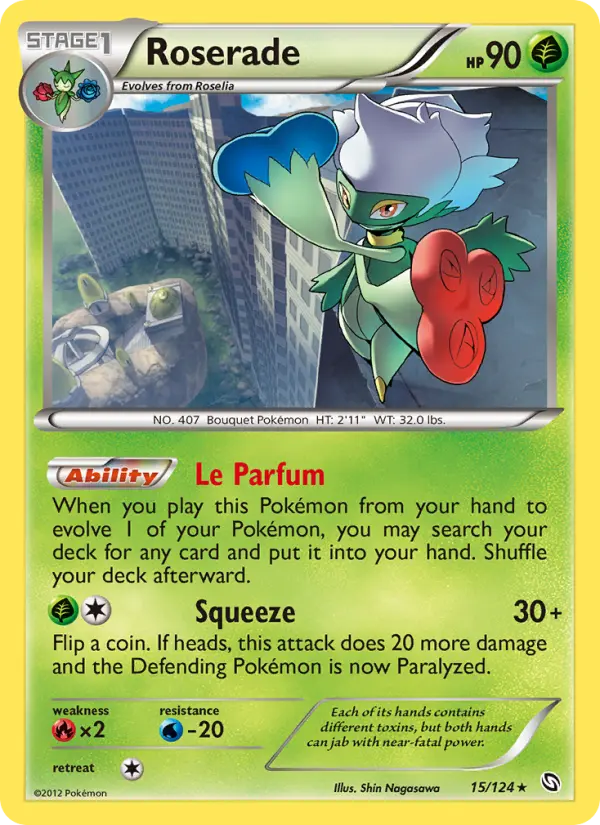
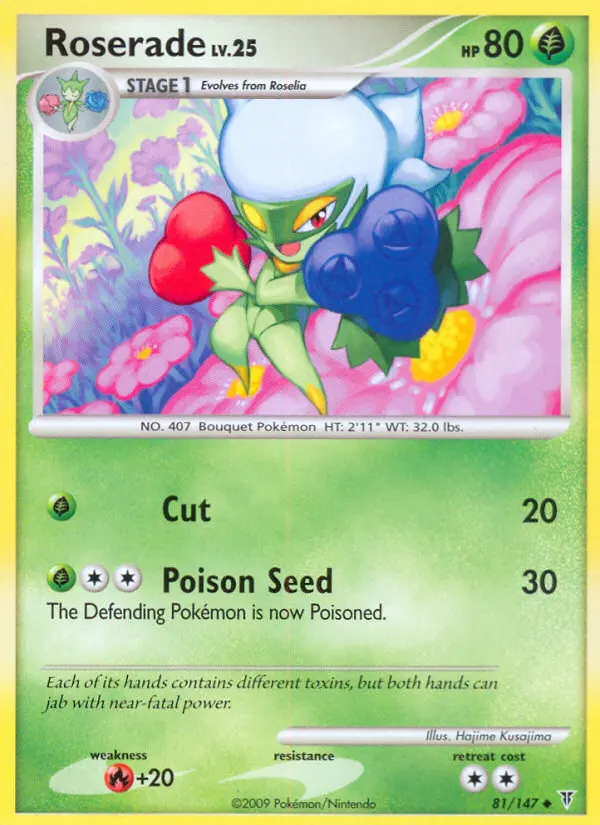
Each of its hands contains different toxins, but both hands can jab with near-fatal power.
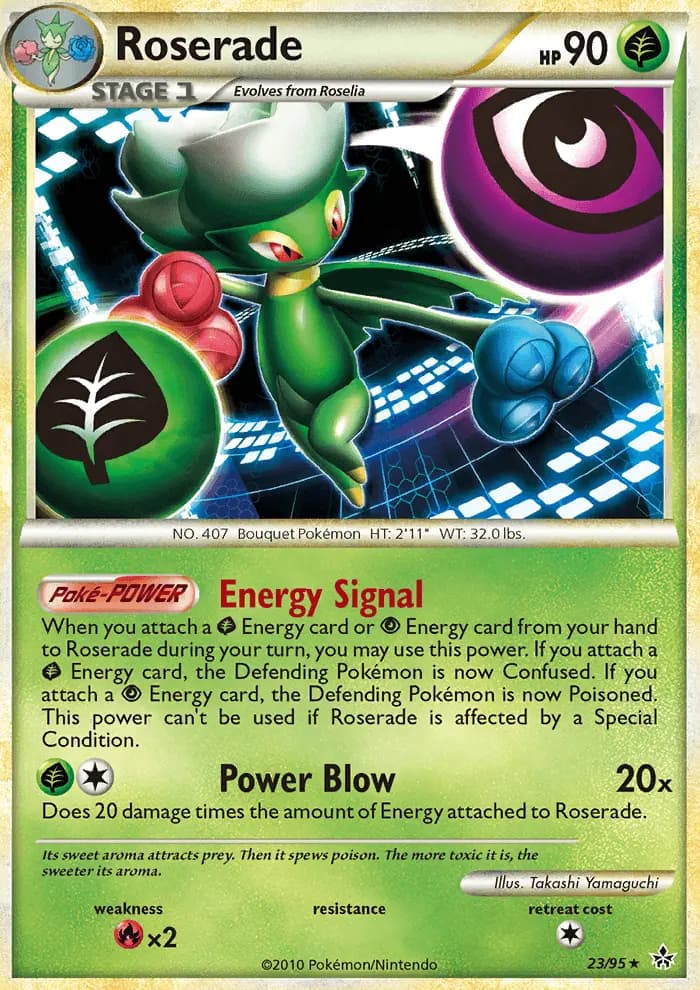
Its sweet aroma attracts prey. Then it spews poison. The more toxic it is, the sweeter its aroma.
Each of its hands contains different toxins, but both hands can jab with near-fatal power.
Luring prey with a sweet scent, it uses poison whips on its arms to poison, bind, and finish off the prey.
Luring prey with a sweet scent, it uses poison whips on its arms to poison, bind, and finish off the prey.
With the movements of a dancer, it strikes with whips that are densely lined with poison thorns.
Luring prey with a sweet scent, it uses poison whips on its arms to poison, bind, and finish off the prey.
With the movements of a dancer, it strikes with whips that are densely lined with poison thorns.
After captivating opponents with its sweet scent, it lashes them with its thorny whips.
The poison in its right hand is quick acting. The poison in its left hand is slow acting. Both are life threatening.
Hidden within the bouquet on each hand are thorned whips loaded with virulent poison. Roserade moves gracefully as it corners its prey and mercilessly lashes them with its whips.
Roserade Name Origin & Design Inspiration
Roserade's name is a straightforward portmanteau of 'rose' and 'tirade,' the latter referring to its weapon of rapid, successive attacks delivered with dancer-like precision. The Japanese name 'Roserade' maintains this same structure, emphasizing the Pokémon's botanical inspiration combined with its aggressive combat nature. Visually, Roserade draws inspiration from multiple sources: the rose flower itself provides the foundation for its color palette and petal-based hair design, while the masquerade aesthetic manifests in its distinctive mask and theatrical cape. The bouquets it carries reference the traditional gift of roses, while simultaneously serving as weapon housings for its poisonous whips—a clever design choice that embodies the duality of beauty and danger that defines the Pokémon. Its elegant posture and implied dancing ability align with performance traditions and ballroom culture, creating a Pokémon that feels both sophisticated and deadly. The color scheme—with red, blue, green, and yellow accents—reinforces this theatrical presentation, making Roserade appear as though perpetually dressed for a masquerade ball where violence is the only acceptable form of interaction.
Learnable Moves
Roserade can learn 70 moves:
Move | Type | Cat. | Power | Acc. | PP |
|---|---|---|---|---|---|
| absorb | grass | Special | 20 | 100 | 25 |
| aromatherapy | grass | Status | — | — | 5 |
| attract | normal | Status | — | 100 | 15 |
| body slam | normal | Physical | 85 | 100 | 15 |
| bullet seed | grass | Physical | 25 | 100 | 30 |
| captivate | normal | Status | — | 100 | 20 |
| confide | normal | Status | — | — | 20 |
| covet | normal | Physical | 60 | 100 | 25 |
| cut | normal | Physical | 50 | 95 | 30 |
| dazzling gleam | fairy | Special | 80 | 100 | 10 |
| double team | normal | Status | — | — | 15 |
| endure | normal | Status | — | — | 10 |
| energy ball | grass | Special | 90 | 100 | 10 |
| facade | normal | Physical | 70 | 100 | 20 |
| flash | normal | Status | — | 100 | 20 |
| frustration | normal | Physical | — | 100 | 20 |
| fury cutter | bug | Physical | 40 | 95 | 20 |
| giga drain | grass | Special | 75 | 100 | 10 |
| giga impact | normal | Physical | 150 | 90 | 5 |
| grass knot | grass | Special | — | 100 | 20 |
| grassy glide | grass | Physical | 55 | 100 | 20 |
| grassy terrain | grass | Status | — | — | 10 |
| growth | normal | Status | — | — | 20 |
| hidden power | normal | Special | 60 | 100 | 15 |
| hyper beam | normal | Special | 150 | 90 | 5 |
| ingrain | grass | Status | — | — | 20 |
| laser focus | normal | Status | — | — | 30 |
| leaf storm | grass | Special | 130 | 90 | 5 |
| leech seed | grass | Status | — | 90 | 10 |
| magical leaf | grass | Special | 60 | — | 20 |
| mega drain | grass | Special | 40 | 100 | 15 |
| mud slap | ground | Special | 20 | 100 | 10 |
| natural gift | normal | Physical | — | 100 | 15 |
| nature power | normal | Status | — | — | 20 |
| petal blizzard | grass | Physical | 90 | 100 | 15 |
| petal dance | grass | Special | 120 | 100 | 10 |
| pin missile | bug | Physical | 25 | 95 | 20 |
| poison jab | poison | Physical | 80 | 100 | 20 |
| poison powder | poison | Status | — | 75 | 35 |
| poison sting | poison | Physical | 15 | 100 | 35 |
| power whip | grass | Physical | 120 | 85 | 10 |
| protect | normal | Status | — | — | 10 |
| psych up | normal | Status | — | — | 10 |
| rain dance | water | Status | — | — | 5 |
| rest | psychic | Status | — | — | 5 |
| return | normal | Physical | — | 100 | 20 |
| round | normal | Special | 60 | 100 | 15 |
| secret power | normal | Physical | 70 | 100 | 20 |
| seed bomb | grass | Physical | 80 | 100 | 15 |
| shadow ball | ghost | Special | 80 | 100 | 15 |
| sleep talk | normal | Status | — | — | 10 |
| sludge bomb | poison | Special | 90 | 100 | 10 |
| snore | normal | Special | 50 | 100 | 15 |
| solar beam | grass | Special | 120 | 100 | 10 |
| spikes | ground | Status | — | — | 20 |
| stun spore | grass | Status | — | 75 | 30 |
| substitute | normal | Status | — | — | 10 |
| sunny day | fire | Status | — | — | 5 |
| swagger | normal | Status | — | 85 | 15 |
| sweet scent | normal | Status | — | 100 | 20 |
| swift | normal | Special | 60 | — | 20 |
| swords dance | normal | Status | — | — | 20 |
| synthesis | grass | Status | — | — | 5 |
| toxic | poison | Status | — | 90 | 10 |
| toxic spikes | poison | Status | — | — | 20 |
| uproar | normal | Special | 90 | 100 | 10 |
| venom drench | poison | Status | — | 100 | 20 |
| venoshock | poison | Special | 65 | 100 | 10 |
| weather ball | normal | Special | 50 | 100 | 10 |
| worry seed | grass | Status | — | 100 | 10 |
Roserade Competitive Battle Guide
Competitively, Roserade occupies a specialized niche as a special attacker with solid coverage and excellent offensive stats backed by respectable bulk. Its special attack base of 125 is particularly noteworthy, allowing it to deal significant damage with moves like Leaf Storm, Sludge Bomb, and Shadow Ball. The speed stat of 90 is sufficiently high to outpace many common threats without requiring speed-boosting natures, though priority moves from faster opponents can still prove problematic. Roserade's natural-cure ability provides utility in team compositions where status conditions are common, while its hidden ability technician significantly amplifies the effectiveness of lower-powered moves, turning attacks like Bullet Seed and Weather Ball into genuine threats. With a special defense base of 105 and relatively decent defense of 65, Roserade can survive unexpected physical attacks better than many special attackers. Its movepool includes access to sleep powder, toxic spikes, and synthesis through breeding and move tutors, enabling diverse supportive sets alongside its primary sweeper role. Across multiple competitive formats and generations, Roserade has consistently performed as a viable mid-tier threat that rewards skilled prediction and team support.
Commonly Asked Questions About Roserade
What type is Roserade?
Roserade is a grass and poison type Pokemon.
What does Roserade evolve from?
Roserade evolved from roselia that evolved from budew.
What are Roserade's weaknesses?
Roserade is weak to flying, fire, psychic and ice type moves.
Where can I find Roserade?
Roserade can be found in unova route 12 (unova), unova victory road 2 (unova) and lostlorn forest (unova).
Roserade Cultural Impact & Franchise History
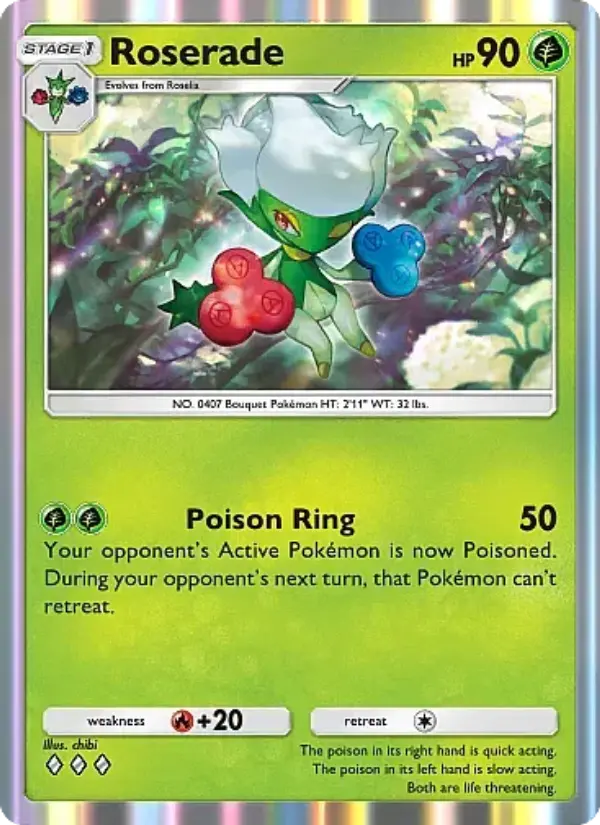
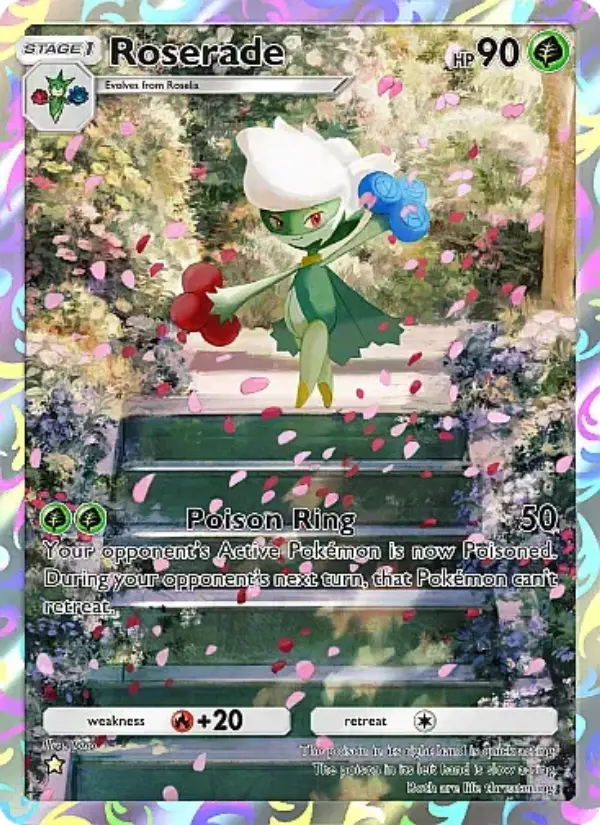
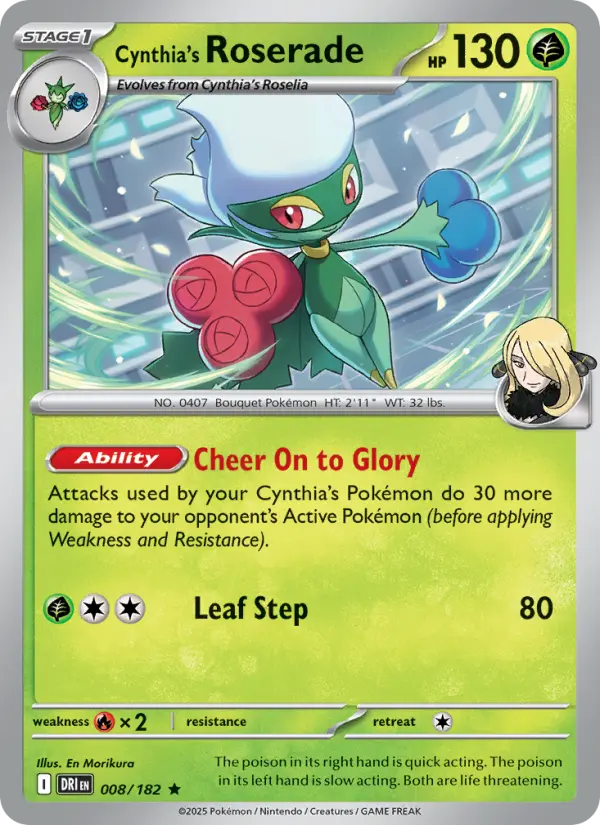
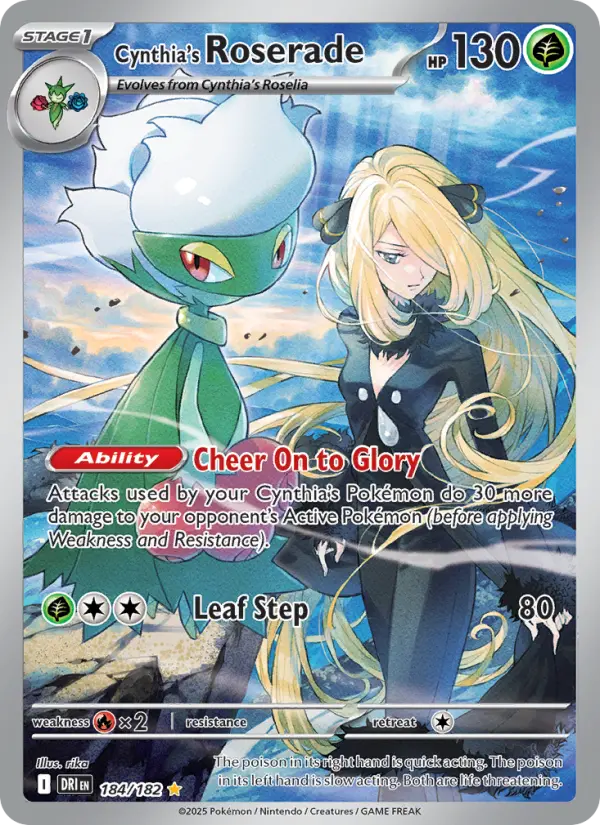
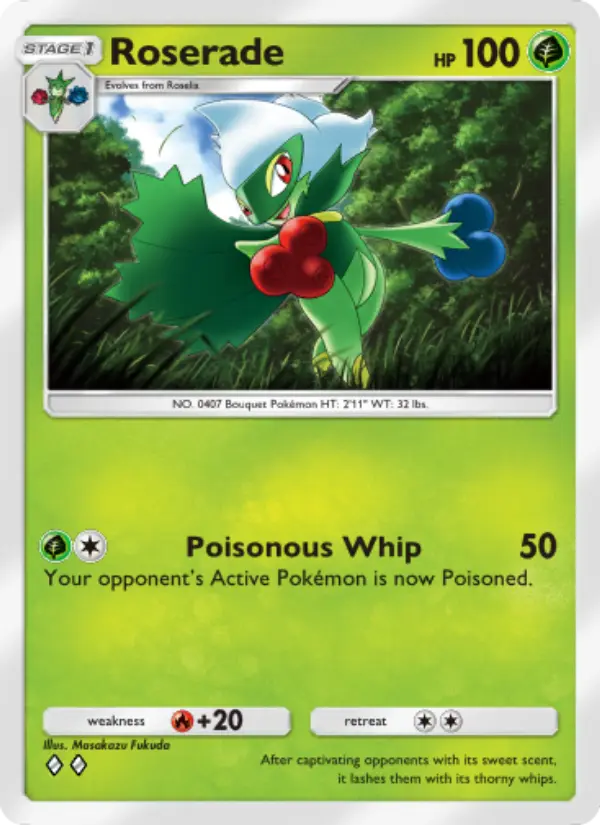
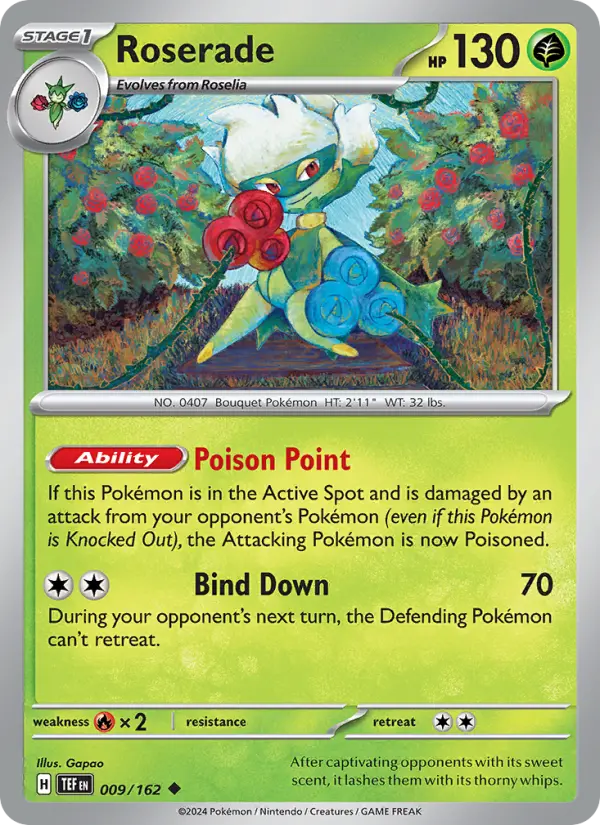
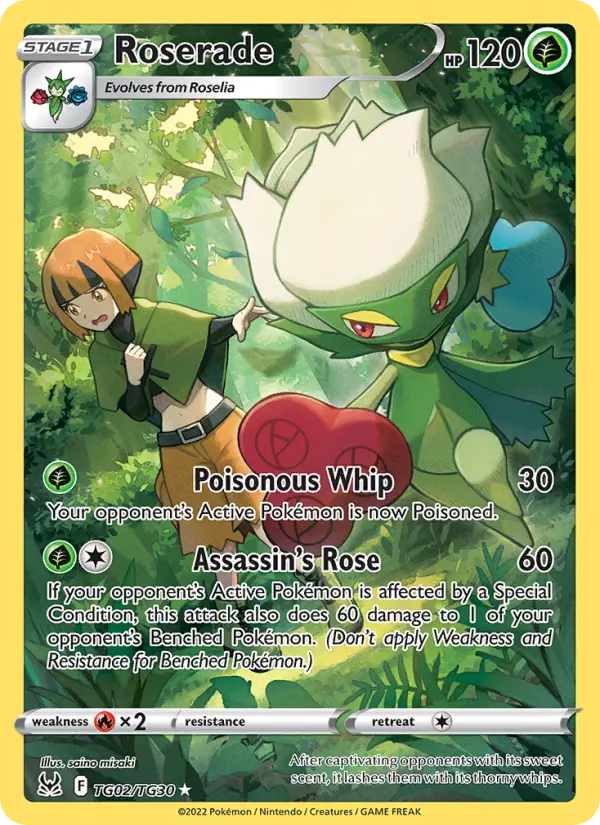
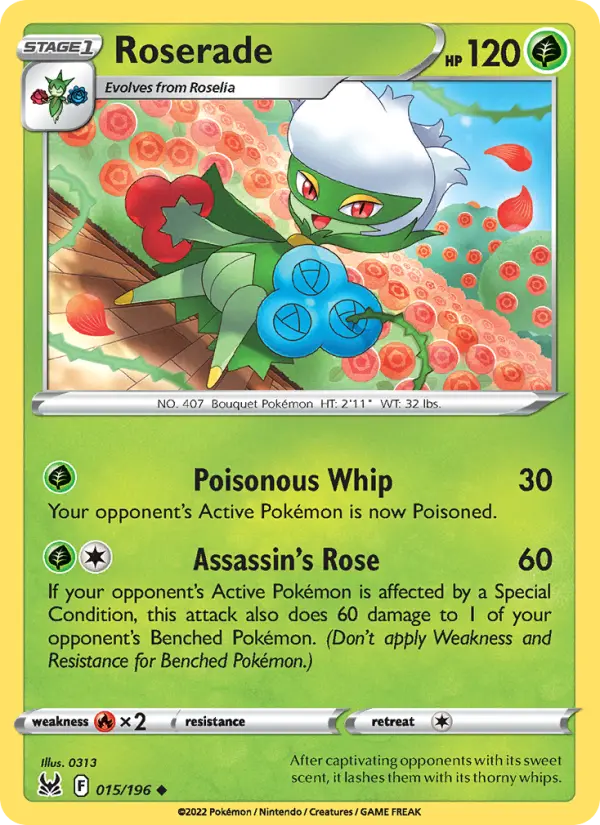
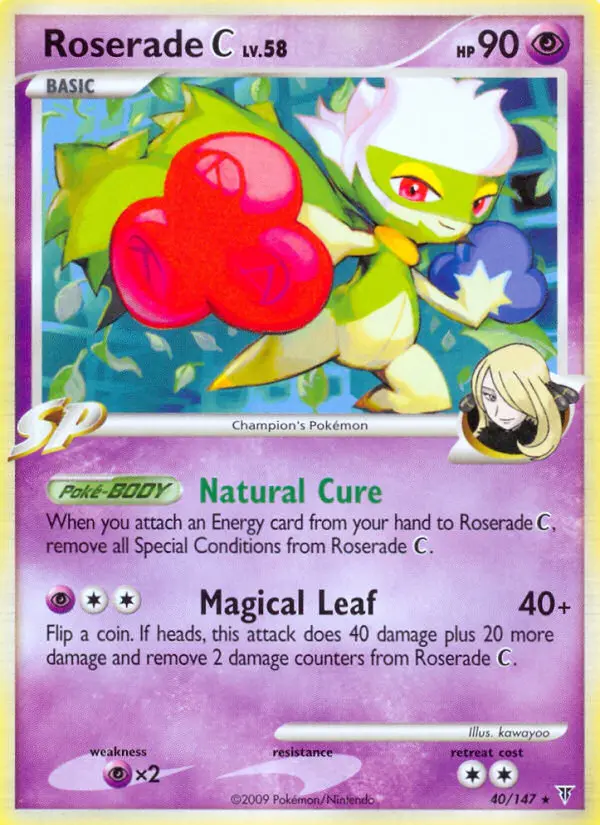
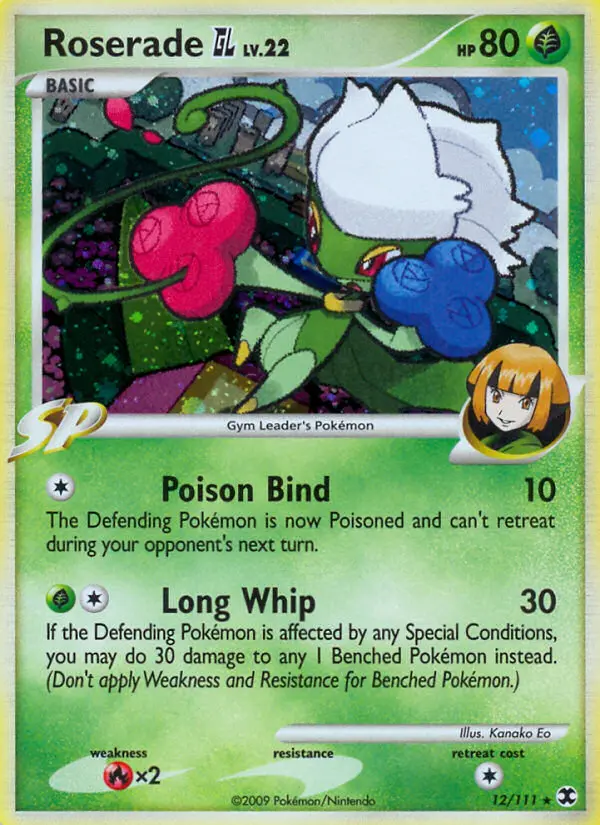
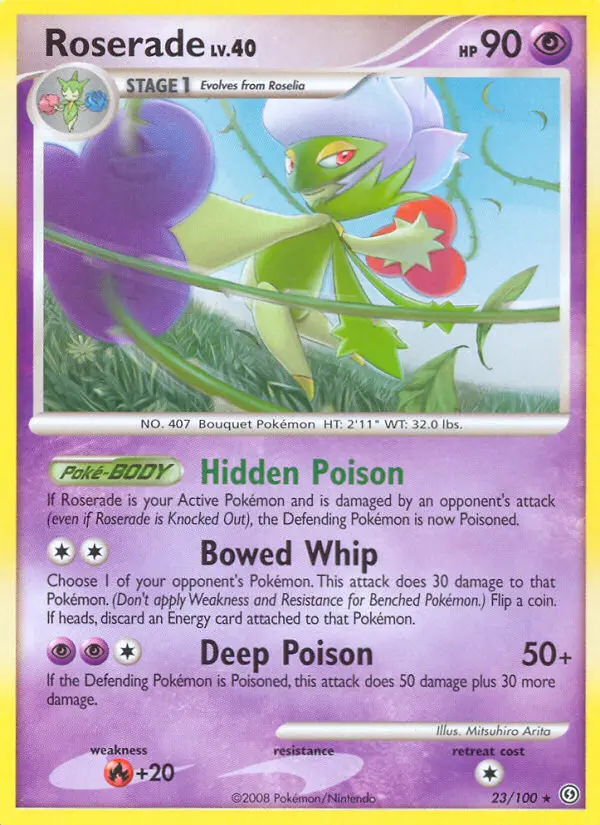
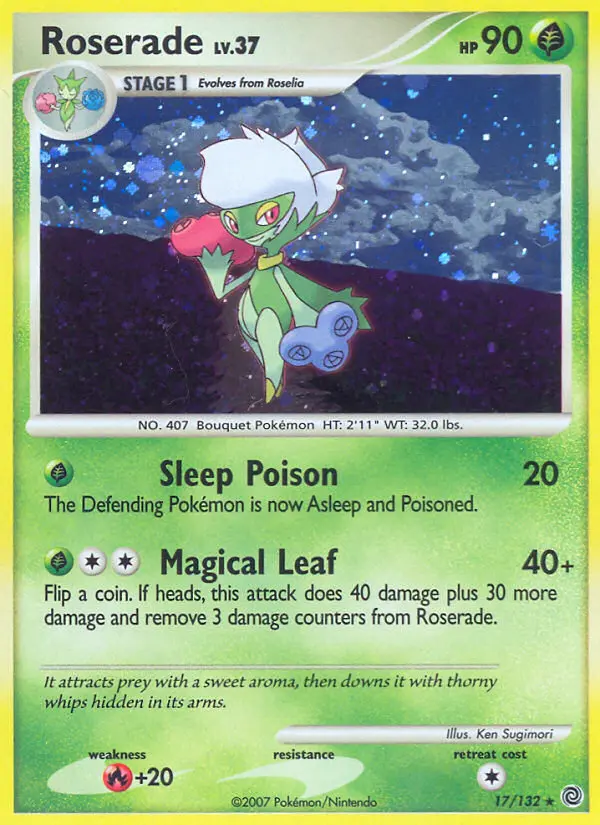
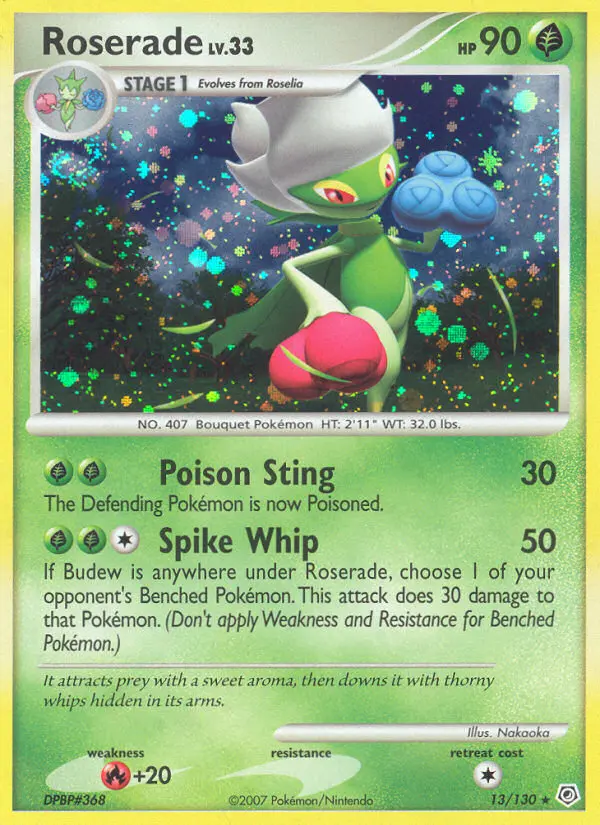
Roserade has achieved notable prominence within Pokémon media and fan culture since its introduction in Generation IV, particularly through significant anime appearances that cemented its status as a beloved character Pokémon. The character Drew, a primary rival throughout the Advanced Generation series, employs a Roserade as his signature team member and contest partner, using it to compete in Pokémon Contests with remarkable success and elegance. Another significant anime trainer, Nando, also utilized a Roserade as a core team member, emphasizing the Pokémon's grace and power in battle. These high-profile appearances introduced Roserade to a broader audience and contributed to its popularity among players who experienced the anime concurrent with Diamond and Pearl game releases. The Pokémon's design resonates with fans who appreciate the combination of elegance and danger, beauty and toxicity, making it a frequent subject of fan art and creative works. In the trading card game, Roserade has received multiple card representations across various sets and eras, from standard attack and support cards to full-art promotional versions. The Pokémon has also appeared in Pokémon Mystery Dungeon narratives and various spin-off titles, maintaining consistent visibility and fan engagement since its Gen IV introduction.
Where to Find Roserade in Every Pokémon Game
Roserade's availability throughout the Pokémon games has evolved significantly across multiple generations and regional Pokédexes. In Diamond and Pearl, where it was originally introduced, trainers could encounter and obtain Roserade as entry #27 in the Sinnoh regional Pokédex by evolving Roselia with a Shiny Stone. This species became increasingly available in subsequent generations, appearing in the Pokédexes of Black 2/White 2 (#135), X/Y (#73 in Central Kalos), Omega Ruby/Alpha Sapphire (#99), Sword/Shield (#61), and Brilliant Diamond/Shining Pearl (#27). In Let's Go Pikachu/Eevee, Roserade was not available as a catch-and-evolve species, though it has maintained presence in recent generations through Pokémon Legends: Arceus (#91) and the upcoming Pokémon Legends: Z-A (#31). Its relatively high catch rate of 75 makes capturing wild Roserade feasible when encountered, though trainers seeking one for their team may find breeding Roselia or Budew more efficient for obtaining multiple competitive individuals. The consistent inclusion of Roserade across most modern Pokémon titles ensures accessibility for players on multiple platforms, cementing its status as a widely-available Pokémon for team construction and completion.