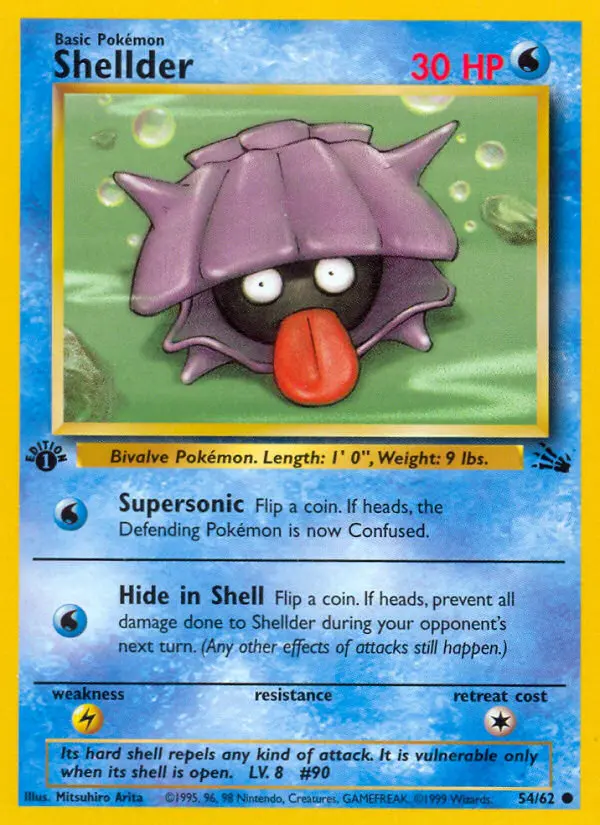
Shellder
Generation I · #0090 — Bivalve Pokémon
Shellder, known as the Bivalve Pokémon, is a Water-type species introduced in Generation I that has remained a staple of coastal ecosystems across the Pokémon world. With a National Pokédex number of #090, this small mollusk measures just 0.3 meters in height and weighs a mere 4.0 kilograms, making it one of the more diminutive Water-type Pokémon. Despite its modest size, Shellder possesses remarkable defensive capabilities, boasting a base Defense stat of 100—one of its most impressive attributes. The species is characterized by its distinctive two-piece shell, which serves as both home and fortress, and it has earned a reputation as a creature of surprising complexity despite its relatively simple appearance. Shellder's biological relationship with Slowpoke, where it can attach itself to the Slowpoke's tail and trigger a co-evolution into Slowbro, represents one of the most unique symbiotic interactions in the Pokémon world.
Editor's Take
Shellder's Skill Link taking Icicle Spear to five guaranteed hits is the whole reason the line matters, and it's applied on the evolution rather than here.
Base Stats
Height
0.3m
Weight
4.0kg
Category
Bivalve Pokémon
Gender
Male 50% / Female 50%
Color
purple
Shape
ball
Habitat
sea
Abilities
Protects against critical hits.
Extends two-to-five-hit moves and triple kick to their full length every time.
Protects against damage from weather.
Shellder Biology & Physical Characteristics
Shellder's anatomy reveals a fascinating adaptation to aquatic life, with its body encased within a hard, spiky shell colored in shades of blue and violet. The shell itself is legendary in durability, purportedly harder than diamond according to various Pokédex entries, and has historically been harvested by humans to craft protective gear such as shields. Concealed within this fortress lies a surprisingly tender and vulnerable body, along with the creature's most distinctive feature: a long, bright red tongue that protrudes from its mouth. This tongue serves multiple functions—it is used to burrow into the seafloor sand when the creature seeks rest, to lure and capture prey, and even to explore its environment. The mouth remains largely hidden within the shell's darkness, yet the tongue continues to hang out even when the shell closes completely, creating an unusual vulnerability that can be exploited by predators or used as an anchor point. Shellder can accumulate sand and other particles within its shell, which mix with its body fluids to form beautiful pearls—though the creature typically discards these pearls as mere obstructions rather than treasures.
Pokedex Numbers
Training
Breeding
Shellder Breeding, Gender Ratio & Egg Groups
Shellder exhibits a perfectly balanced gender ratio, with exactly 50% of the species being male and 50% female, making reproduction straightforward from a population dynamics perspective. The species belongs to the Water 3 egg group, which it shares with other aquatic and semi-aquatic Pokémon, allowing for diverse breeding combinations with compatible partners. With a base happiness value of 70 and a slow growth rate, Shellder requires patient training and consistent positive interaction to become optimally bonded with its trainer. The species has a relatively high catch rate of 190, making it easier to obtain in the wild compared to many other Pokémon, though this is balanced against its slow growth rate which extends the time required to raise captured specimens to their full potential. Shellder eggs require approximately 20 hatch cycles to develop, translating to roughly 4,884 to 5,140 steps of walking before a healthy baby Shellder emerges. The breeding process itself follows standard Pokémon reproductive mechanics, with Shellder being able to pass down moves and abilities to offspring through careful selective breeding strategies.
Sprites






Held Items
Pearl
loot
Sell for 700 Pokédollars, or to Ore Collector for 1400 Pokédollars.
Cost: 2000
Pearl
loot
Sell for 700 Pokédollars, or to Ore Collector for 1400 Pokédollars.
Cost: 2000
Pearl
loot
Sell for 700 Pokédollars, or to Ore Collector for 1400 Pokédollars.
Cost: 2000
Pearl
loot
Sell for 700 Pokédollars, or to Ore Collector for 1400 Pokédollars.
Cost: 2000
Pearl
loot
Sell for 700 Pokédollars, or to Ore Collector for 1400 Pokédollars.
Cost: 2000
Pearl
loot
Sell for 700 Pokédollars, or to Ore Collector for 1400 Pokédollars.
Cost: 2000
Pearl
loot
Sell for 700 Pokédollars, or to Ore Collector for 1400 Pokédollars.
Cost: 2000
Pearl
loot
Sell for 700 Pokédollars, or to Ore Collector for 1400 Pokédollars.
Cost: 2000
Pearl
loot
Sell for 700 Pokédollars, or to Ore Collector for 1400 Pokédollars.
Cost: 2000
Pearl
loot
Sell for 700 Pokédollars, or to Ore Collector for 1400 Pokédollars.
Cost: 2000
Pearl
loot
Sell for 700 Pokédollars, or to Ore Collector for 1400 Pokédollars.
Cost: 2000
Pearl
loot
Sell for 700 Pokédollars, or to Ore Collector for 1400 Pokédollars.
Cost: 2000
Pearl
loot
Sell for 700 Pokédollars, or to Ore Collector for 1400 Pokédollars.
Cost: 2000
Pearl
loot
Sell for 700 Pokédollars, or to Ore Collector for 1400 Pokédollars.
Cost: 2000
Pearl
loot
Sell for 700 Pokédollars, or to Ore Collector for 1400 Pokédollars.
Cost: 2000
Pearl
loot
Sell for 700 Pokédollars, or to Ore Collector for 1400 Pokédollars.
Cost: 2000
Pearl
loot
Sell for 700 Pokédollars, or to Ore Collector for 1400 Pokédollars.
Cost: 2000
Pearl
loot
Sell for 700 Pokédollars, or to Ore Collector for 1400 Pokédollars.
Cost: 2000
Pearl
loot
Sell for 700 Pokédollars, or to Ore Collector for 1400 Pokédollars.
Cost: 2000
Pearl
loot
Sell for 700 Pokédollars, or to Ore Collector for 1400 Pokédollars.
Cost: 2000
Pearl
loot
Sell for 700 Pokédollars, or to Ore Collector for 1400 Pokédollars.
Cost: 2000
Pearl
loot
Sell for 700 Pokédollars, or to Ore Collector for 1400 Pokédollars.
Cost: 2000
Big Pearl
loot
Sell for 3750 Pokédollars, or to Ore Collector for 7500 Pokédollars.
Cost: 8000
Big Pearl
loot
Sell for 3750 Pokédollars, or to Ore Collector for 7500 Pokédollars.
Cost: 8000
Big Pearl
loot
Sell for 3750 Pokédollars, or to Ore Collector for 7500 Pokédollars.
Cost: 8000
Big Pearl
loot
Sell for 3750 Pokédollars, or to Ore Collector for 7500 Pokédollars.
Cost: 8000
Big Pearl
loot
Sell for 3750 Pokédollars, or to Ore Collector for 7500 Pokédollars.
Cost: 8000
Big Pearl
loot
Sell for 3750 Pokédollars, or to Ore Collector for 7500 Pokédollars.
Cost: 8000
Big Pearl
loot
Sell for 3750 Pokédollars, or to Ore Collector for 7500 Pokédollars.
Cost: 8000
Big Pearl
loot
Sell for 3750 Pokédollars, or to Ore Collector for 7500 Pokédollars.
Cost: 8000
Big Pearl
loot
Sell for 3750 Pokédollars, or to Ore Collector for 7500 Pokédollars.
Cost: 8000
Big Pearl
loot
Sell for 3750 Pokédollars, or to Ore Collector for 7500 Pokédollars.
Cost: 8000
Big Pearl
loot
Sell for 3750 Pokédollars, or to Ore Collector for 7500 Pokédollars.
Cost: 8000
Big Pearl
loot
Sell for 3750 Pokédollars, or to Ore Collector for 7500 Pokédollars.
Cost: 8000
Big Pearl
loot
Sell for 3750 Pokédollars, or to Ore Collector for 7500 Pokédollars.
Cost: 8000
Big Pearl
loot
Sell for 3750 Pokédollars, or to Ore Collector for 7500 Pokédollars.
Cost: 8000
Big Pearl
loot
Sell for 3750 Pokédollars, or to Ore Collector for 7500 Pokédollars.
Cost: 8000
Big Pearl
loot
Sell for 3750 Pokédollars, or to Ore Collector for 7500 Pokédollars.
Cost: 8000
Big Pearl
loot
Sell for 3750 Pokédollars, or to Ore Collector for 7500 Pokédollars.
Cost: 8000
Big Pearl
loot
Sell for 3750 Pokédollars, or to Ore Collector for 7500 Pokédollars.
Cost: 8000
Big Pearl
loot
Sell for 3750 Pokédollars, or to Ore Collector for 7500 Pokédollars.
Cost: 8000
Big Pearl
loot
Sell for 3750 Pokédollars, or to Ore Collector for 7500 Pokédollars.
Cost: 8000
Big Pearl
loot
Sell for 3750 Pokédollars, or to Ore Collector for 7500 Pokédollars.
Cost: 8000
Big Pearl
loot
Sell for 3750 Pokédollars, or to Ore Collector for 7500 Pokédollars.
Cost: 8000
Pearl
loot
Sell for 700 Pokédollars, or to Ore Collector for 1400 Pokédollars.
Cost: 2000
Pearl
loot
Sell for 700 Pokédollars, or to Ore Collector for 1400 Pokédollars.
Cost: 2000
Pearl
loot
Sell for 700 Pokédollars, or to Ore Collector for 1400 Pokédollars.
Cost: 2000
Pearl
loot
Sell for 700 Pokédollars, or to Ore Collector for 1400 Pokédollars.
Cost: 2000
Pearl
loot
Sell for 700 Pokédollars, or to Ore Collector for 1400 Pokédollars.
Cost: 2000
Pearl
loot
Sell for 700 Pokédollars, or to Ore Collector for 1400 Pokédollars.
Cost: 2000
Pearl
loot
Sell for 700 Pokédollars, or to Ore Collector for 1400 Pokédollars.
Cost: 2000
Pearl
loot
Sell for 700 Pokédollars, or to Ore Collector for 1400 Pokédollars.
Cost: 2000
Pearl
loot
Sell for 700 Pokédollars, or to Ore Collector for 1400 Pokédollars.
Cost: 2000
Pearl
loot
Sell for 700 Pokédollars, or to Ore Collector for 1400 Pokédollars.
Cost: 2000
Pearl
loot
Sell for 700 Pokédollars, or to Ore Collector for 1400 Pokédollars.
Cost: 2000
Pearl
loot
Sell for 700 Pokédollars, or to Ore Collector for 1400 Pokédollars.
Cost: 2000
Pearl
loot
Sell for 700 Pokédollars, or to Ore Collector for 1400 Pokédollars.
Cost: 2000
Pearl
loot
Sell for 700 Pokédollars, or to Ore Collector for 1400 Pokédollars.
Cost: 2000
Pearl
loot
Sell for 700 Pokédollars, or to Ore Collector for 1400 Pokédollars.
Cost: 2000
Pearl
loot
Sell for 700 Pokédollars, or to Ore Collector for 1400 Pokédollars.
Cost: 2000
Pearl
loot
Sell for 700 Pokédollars, or to Ore Collector for 1400 Pokédollars.
Cost: 2000
Pearl
loot
Sell for 700 Pokédollars, or to Ore Collector for 1400 Pokédollars.
Cost: 2000
Pearl
loot
Sell for 700 Pokédollars, or to Ore Collector for 1400 Pokédollars.
Cost: 2000
Pearl
loot
Sell for 700 Pokédollars, or to Ore Collector for 1400 Pokédollars.
Cost: 2000
Pearl
loot
Sell for 700 Pokédollars, or to Ore Collector for 1400 Pokédollars.
Cost: 2000
Pearl
loot
Sell for 700 Pokédollars, or to Ore Collector for 1400 Pokédollars.
Cost: 2000
Big Pearl
loot
Sell for 3750 Pokédollars, or to Ore Collector for 7500 Pokédollars.
Cost: 8000
Big Pearl
loot
Sell for 3750 Pokédollars, or to Ore Collector for 7500 Pokédollars.
Cost: 8000
Big Pearl
loot
Sell for 3750 Pokédollars, or to Ore Collector for 7500 Pokédollars.
Cost: 8000
Big Pearl
loot
Sell for 3750 Pokédollars, or to Ore Collector for 7500 Pokédollars.
Cost: 8000
Big Pearl
loot
Sell for 3750 Pokédollars, or to Ore Collector for 7500 Pokédollars.
Cost: 8000
Big Pearl
loot
Sell for 3750 Pokédollars, or to Ore Collector for 7500 Pokédollars.
Cost: 8000
Big Pearl
loot
Sell for 3750 Pokédollars, or to Ore Collector for 7500 Pokédollars.
Cost: 8000
Big Pearl
loot
Sell for 3750 Pokédollars, or to Ore Collector for 7500 Pokédollars.
Cost: 8000
Big Pearl
loot
Sell for 3750 Pokédollars, or to Ore Collector for 7500 Pokédollars.
Cost: 8000
Big Pearl
loot
Sell for 3750 Pokédollars, or to Ore Collector for 7500 Pokédollars.
Cost: 8000
Big Pearl
loot
Sell for 3750 Pokédollars, or to Ore Collector for 7500 Pokédollars.
Cost: 8000
Big Pearl
loot
Sell for 3750 Pokédollars, or to Ore Collector for 7500 Pokédollars.
Cost: 8000
Big Pearl
loot
Sell for 3750 Pokédollars, or to Ore Collector for 7500 Pokédollars.
Cost: 8000
Big Pearl
loot
Sell for 3750 Pokédollars, or to Ore Collector for 7500 Pokédollars.
Cost: 8000
Big Pearl
loot
Sell for 3750 Pokédollars, or to Ore Collector for 7500 Pokédollars.
Cost: 8000
Big Pearl
loot
Sell for 3750 Pokédollars, or to Ore Collector for 7500 Pokédollars.
Cost: 8000
Big Pearl
loot
Sell for 3750 Pokédollars, or to Ore Collector for 7500 Pokédollars.
Cost: 8000
Big Pearl
loot
Sell for 3750 Pokédollars, or to Ore Collector for 7500 Pokédollars.
Cost: 8000
Big Pearl
loot
Sell for 3750 Pokédollars, or to Ore Collector for 7500 Pokédollars.
Cost: 8000
Big Pearl
loot
Sell for 3750 Pokédollars, or to Ore Collector for 7500 Pokédollars.
Cost: 8000
Big Pearl
loot
Sell for 3750 Pokédollars, or to Ore Collector for 7500 Pokédollars.
Cost: 8000
Big Pearl
loot
Sell for 3750 Pokédollars, or to Ore Collector for 7500 Pokédollars.
Cost: 8000
TMs & HMs
tm01
lets go pikachu lets go eevee
tm02
crystal
tm02
gold silver
tm03
crystal
tm03
gold silver
tm03
ruby sapphire
tm03
platinum
tm03
firered leafgreen
tm03
heartgold soulsilver
tm03
diamond pearl
tm03
emerald
tm03
xd
tm03
colosseum
tm03
lets go pikachu lets go eevee
tm04
lets go pikachu lets go eevee
tm05
lets go pikachu lets go eevee
tm06
yellow
tm06
gold silver
tm06
red blue
tm06
crystal
+529 more TMs/HMs
Shellder's Evolution Chain


Shellder Evolution, Mega Evolution & Special Forms
Shellder undergoes a single evolutionary transformation in its natural lifecycle, evolving into Cloyster when exposed to a Water Stone. This evolution represents a dramatic change in both appearance and capability—Cloyster gains the Ice typing in addition to its Water typing, becoming a Water/Ice-type Pokémon with significantly enhanced stats. The base Defense stat, already formidable at 100, increases to 180 upon evolution, making Cloyster one of the most defensively robust Pokémon in the entire franchise. Beyond the typical evolution pathway, Shellder can also participate in what might be considered an alternative or special evolution: when it attaches itself to a Slowpoke's tail, the two creatures co-evolve into Slowbro, creating a permanent fusion in which Shellder remains attached to its host. An even more peculiar variant occurs when Shellder clamps onto a Slowpoke's head instead of its tail, and the Slowpoke is holding a King's Rock; in this scenario, the two entities evolve together into Slowking, demonstrating the remarkable adaptability of this species's evolutionary pathways.
Where to Find
Cinnabar Island
kanto
+16 more
Seafoam Islands
kanto
+37 more
Kanto Sea Route 19
kanto
+5 more
Kanto Sea Route 20
kanto
+15 more
Kanto Route 6
kanto
+9 more
Kanto Route 11
kanto
+9 more
Kanto Sea Route 21
kanto
+15 more
Vermilion City
kanto
+43 more
Kanto Route 17
kanto
Kanto Route 18
kanto
Kanto Route 27
kanto
+7 more
Johto Sea Route 41
johto
+7 more
Kanto Route 26
kanto
+7 more
Pallet Town
kanto
+8 more
New Bark Town
johto
+7 more
Icefall Cave
kanto
One Island
kanto
Five Island
kanto
Ss Anne
kanto
Valley Windworks
sinnoh
+11 more locations in other games
Shellder Behaviour and Natural Habitat
Shellder exhibits nocturnal tendencies, preferring to conduct most of its activities during nighttime hours. At dusk, these Pokémon use their broad tongues to excavate burrows in the seafloor sand, creating comfortable sleeping chambers where they can rest safely. Once settled into their burrows, Shellder closes its shell protectively but characteristically leaves its tongue exposed—a seemingly illogical behavior that serves as an irresistible lure for prey. The species is an excellent swimmer, moving through water by opening and closing its two-piece shell in rapid succession, propelling itself backward with surprising speed and agility despite its defensive orientation. Shellder displays a surprisingly voracious appetite, particularly for Slowpoke's tail, which it finds irresistible. When a Shellder comes across a Slowpoke, it will clamp onto the tail attachment point, and in a remarkable process, the two creatures undergo metamorphosis together, resulting in the evolution of both participants into Slowbro. This predatory behavior toward Slowpoke is one of the few instances where Shellder actively pursues prey with such specificity, suggesting a deep biological compatibility between the two species.
Pokedex Entries
Its hard shell repels any kind of attack. It is vulnerable only when its shell is open.
The shell can withstand any attack. However, when it is open, the tender body is exposed.
It swims facing backward by open ing and closing its two-piece shell. It is surprisingly fast.
Grains of sand trapped in its shells mix with its body fluids to form beautiful pearls.
Clamping on to an opponent reveals its vulnerable parts, so it uses this move only as a last resort.
At night, this POKéMON uses its broad tongue to burrow a hole in the seafloor sand and then sleep in it. While it is sleeping, SHELLDER closes its shell, but leaves its tongue hanging out.
At night, it burrows a hole in the seafloor with its broad tongue to make a place to sleep. While asleep, it closes its shell, but leaves its tongue hanging out.
It is encased in a shell that is harder than diamond. Inside, however, it is surprisingly tender.
Its hard shell repels any kind of attack. It is vulnerable only when its shell is open.
It swims backward by opening and closing its two shells. Its large tongue is always kept hanging out.
It swims facing backward by opening and closing its two-piece shell. It is surprisingly fast.
Grains of sand trapped in its shells mix with its body fluids to form beautiful pearls.
It swims backward by opening and closing its two shells. Its large tongue is always kept hanging out.
It swims backward by opening and closing its two shells. Its large tongue is always kept hanging out.
Its hard shell repels any kind of attack. It is vulnerable only when its shell is open.
Clamping on to an opponent reveals its vulnerable parts, so it uses this move only as a last resort.
At night, this Pokémon uses its broad tongue to burrow a hole in the seafloor sand and then sleep in it. While it is sleeping, Shellder closes its shell, but leaves its tongue hanging out.
The hardness of its shell surpasses the hardness of a diamond. In days gone by, people used the shells to make shields.
The sand that accumulates inside its shell eventually becomes a pearl. But the pearl gets in the way, so it spits it out and discards it.
This Pokémon’s tongue is always hanging out. It uses its tongue with great dexterity to dig up sand from the seabed in its search for food.
Even when its shell is closed, its tongue still hangs out. If you give its tongue a good yank, the shock will cause Shellder to open its shell.
The shell can withstand any attack. However, when it is open, the tender body is exposed.
It swims facing backward by opening and closing its two-piece shell. It is surprisingly fast.
Its hard shell repels any kind of attack. It is vulnerable only when its shell is open.
Shellder Name Origin & Design Inspiration
Shellder's name is a straightforward English portmanteau combining 'shell' and 'elder,' perhaps referencing both its protective shell and its somewhat aged or wise appearance, though the 'elder' aspect may also suggest something ancient and enduring. The Japanese name シェルダー (Shellder) maintains this shell-based nomenclature across linguistic boundaries. The design itself draws inspiration from real-world bivalve mollusks, particularly clams and mussels, which are known for their powerful shells and the vulnerability of their soft bodies within. The distinctive long, red tongue visible protruding from the shell references the characteristic siphons found in actual clams, while the spiky appearance of Shellder's shell evokes the ridged or fluted patterns seen in some real bivalve species. The color palette of blue and purple hues is not particularly realistic for actual clams but serves to make Shellder visually distinctive and instantly recognizable within the Pokédex. The creature's association with pearl formation, while not exclusive to clams in reality, connects to the legendary pearl-producing abilities of oysters, though most pearls Shellder produces are discarded as burdensome.
Learnable Moves
Shellder can learn 75 moves:
Move | Type | Cat. | Power | Acc. | PP |
|---|---|---|---|---|---|
| aqua ring | water | Status | — | — | 20 |
| attract | normal | Status | — | 100 | 15 |
| aurora beam | ice | Special | 65 | 100 | 20 |
| avalanche | ice | Physical | 60 | 100 | 10 |
| barrier | psychic | Status | — | — | 20 |
| bide | normal | Physical | — | — | 10 |
| blizzard | ice | Special | 110 | 70 | 5 |
| brine | water | Special | 65 | 100 | 10 |
| bubble beam | water | Special | 65 | 100 | 20 |
| captivate | normal | Status | — | 100 | 20 |
| chilling water | water | Special | 50 | 100 | 20 |
| clamp | water | Physical | 35 | 85 | 15 |
| confide | normal | Status | — | — | 20 |
| curse | ghost | Status | — | — | 10 |
| dive | water | Physical | 80 | 100 | 10 |
| double team | normal | Status | — | — | 15 |
| double edge | normal | Physical | 120 | 100 | 15 |
| endure | normal | Status | — | — | 10 |
| explosion | normal | Physical | 250 | 100 | 5 |
| facade | normal | Physical | 70 | 100 | 20 |
| frustration | normal | Physical | — | 100 | 20 |
| hail | ice | Status | — | — | 10 |
| headbutt | normal | Physical | 70 | 100 | 15 |
| helping hand | normal | Status | — | — | 20 |
| hidden power | normal | Special | 60 | 100 | 15 |
| hydro pump | water | Special | 110 | 80 | 5 |
| ice beam | ice | Special | 90 | 100 | 10 |
| ice shard | ice | Physical | 40 | 100 | 30 |
| ice spinner | ice | Physical | 80 | 100 | 15 |
| icicle spear | ice | Physical | 25 | 100 | 30 |
| icy wind | ice | Special | 55 | 95 | 15 |
| iron defense | steel | Status | — | — | 15 |
| leer | normal | Status | — | 100 | 30 |
| life dew | water | Status | — | — | 10 |
| liquidation | water | Physical | 85 | 100 | 10 |
| mimic | normal | Status | — | — | 10 |
| mud shot | ground | Special | 55 | 95 | 15 |
| natural gift | normal | Physical | — | 100 | 15 |
| payback | dark | Physical | 50 | 100 | 10 |
| protect | normal | Status | — | — | 10 |
| rage | normal | Physical | 20 | 100 | 20 |
| rain dance | water | Status | — | — | 5 |
| rapid spin | normal | Physical | 50 | 100 | 40 |
| razor shell | water | Physical | 75 | 95 | 10 |
| reflect | psychic | Status | — | — | 20 |
| rest | psychic | Status | — | — | 5 |
| return | normal | Physical | — | 100 | 20 |
| rock blast | rock | Physical | 25 | 90 | 10 |
| round | normal | Special | 60 | 100 | 15 |
| screech | normal | Status | — | 85 | 40 |
| secret power | normal | Physical | 70 | 100 | 20 |
| self destruct | normal | Physical | 200 | 100 | 5 |
| shell smash | normal | Status | — | — | 15 |
| sleep talk | normal | Status | — | — | 10 |
| snore | normal | Special | 50 | 100 | 15 |
| snowscape | ice | Status | 0 | — | 10 |
| spikes | ground | Status | — | — | 20 |
| substitute | normal | Status | — | — | 10 |
| supersonic | normal | Status | — | 55 | 20 |
| surf | water | Special | 90 | 100 | 15 |
| swagger | normal | Status | — | 85 | 15 |
| swift | normal | Special | 60 | — | 20 |
| tackle | normal | Physical | 40 | 100 | 35 |
| take down | normal | Physical | 90 | 85 | 20 |
| teleport | psychic | Status | — | — | 20 |
| tera blast | normal | Special | 80 | 100 | 10 |
| toxic | poison | Status | — | 90 | 10 |
| toxic spikes | poison | Status | — | — | 20 |
| tri attack | normal | Special | 80 | 100 | 10 |
| twineedle | bug | Physical | 25 | 100 | 20 |
| water gun | water | Special | 40 | 100 | 25 |
| water pulse | water | Special | 60 | 100 | 20 |
| waterfall | water | Physical | 80 | 100 | 15 |
| whirlpool | water | Special | 35 | 85 | 15 |
| withdraw | water | Status | — | — | 40 |
Shellder Competitive Battle Guide
Judged by competitive standards, Shellder functions primarily as a defensive wall and support Pokémon rather than an offensive threat, with its base Defense stat of 100 serving as the foundation for its strategic role. Its ability Shell Armor, which prevents opponents from landing critical hits, pairs exceptionally well with its defensive stats to create an incredibly difficult target to overcome. The Skill Link ability, which extends multi-hit moves like Icicle Spear and Rock Blast to their maximum duration, provides Shellder with a secondary strategic option that can chip away at opponent defenses while bypassing damage variability. The hidden ability Overcoat offers protection from weather-based damage, allowing Shellder to function effectively in weather-focused team compositions without taking residual damage from sandstorm, hail, or other environmental hazards. However, Shellder's offensive capabilities remain limited, with a base Attack of only 65 and Special Attack of 45, making it unsuitable as a primary damage dealer. Strategic players typically employ Shellder as a stalling mechanism, using moves such as Toxic and Recover to outlast opponents, or alternatively leveraging its ability to set up entry hazards and other supportive moves that benefit its team. Upon evolution to Cloyster, the species gains significantly improved offensive capabilities alongside its enhanced defense, making it a more formidable threat in competitive environments.
Commonly Asked Questions About Shellder
What type is Shellder?
Shellder is a water type Pokemon.
What does Shellder evolve into?
Shellder evolves into cloyster.
What are Shellder's weaknesses?
Shellder is weak to grass and electric type moves.
Does Shellder evolve by trading?
No — Shellder evolves entirely through leveling up, with no trade required at any stage.
Where can I find Shellder?
Shellder can be found in cinnabar island (kanto), seafoam islands (kanto) and kanto sea route 19 (kanto) and 28 other locations.
Shellder Cultural Impact & Franchise History
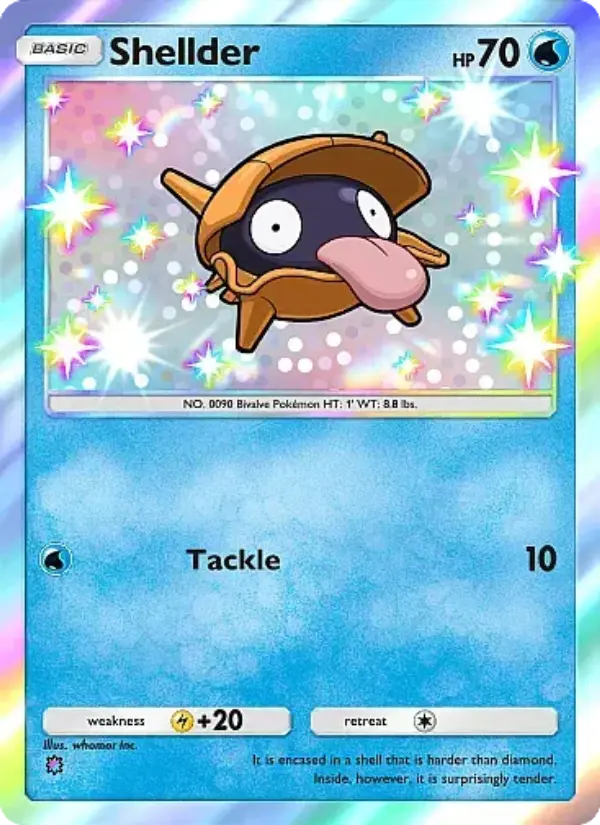
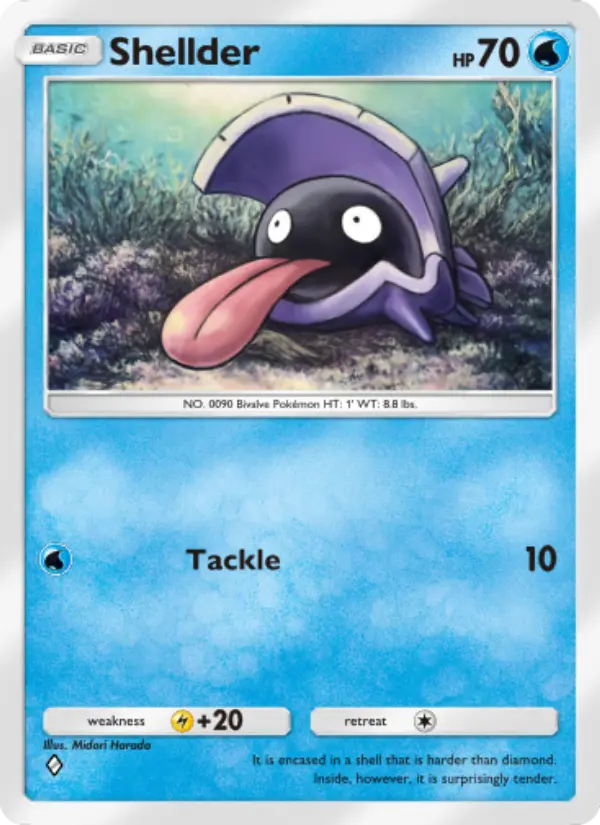
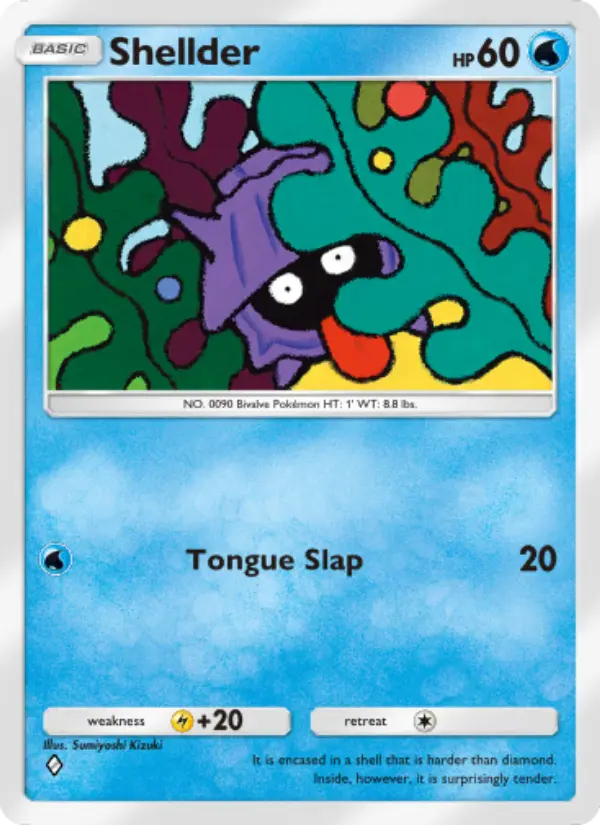
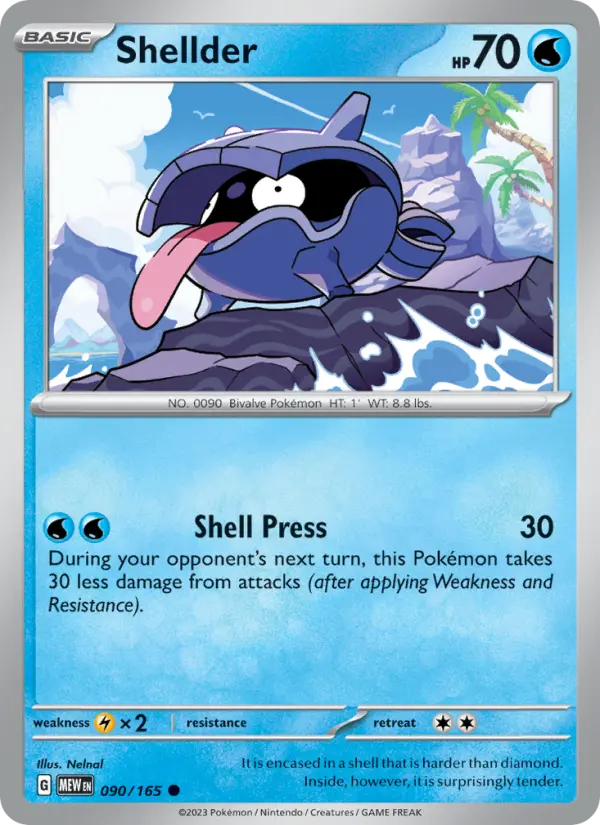
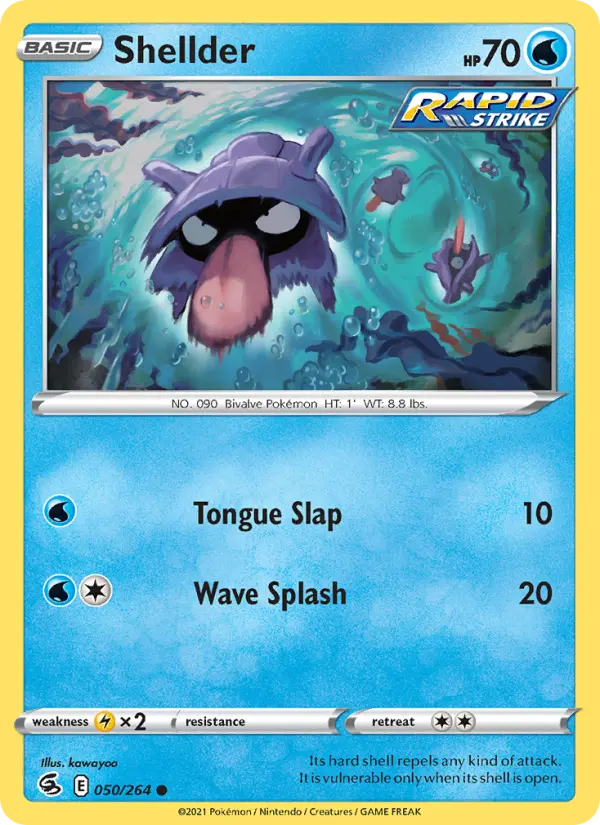
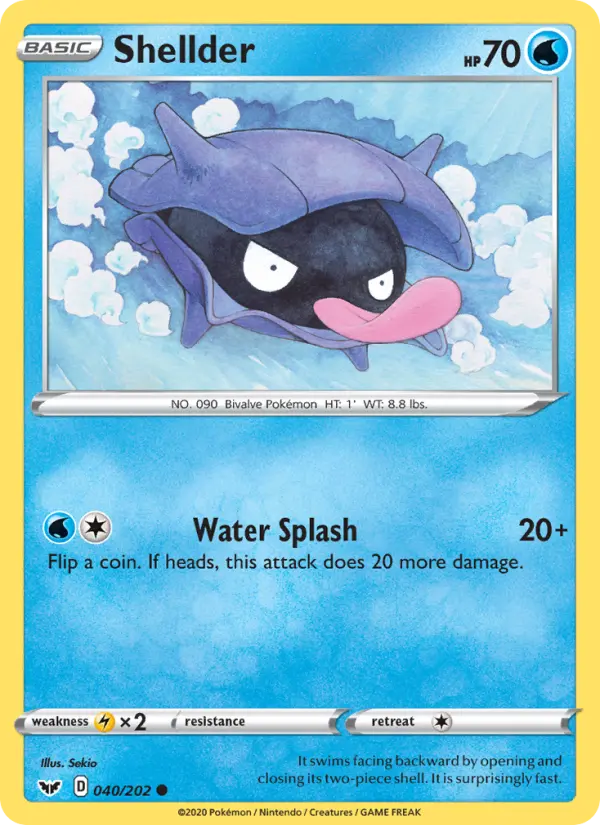
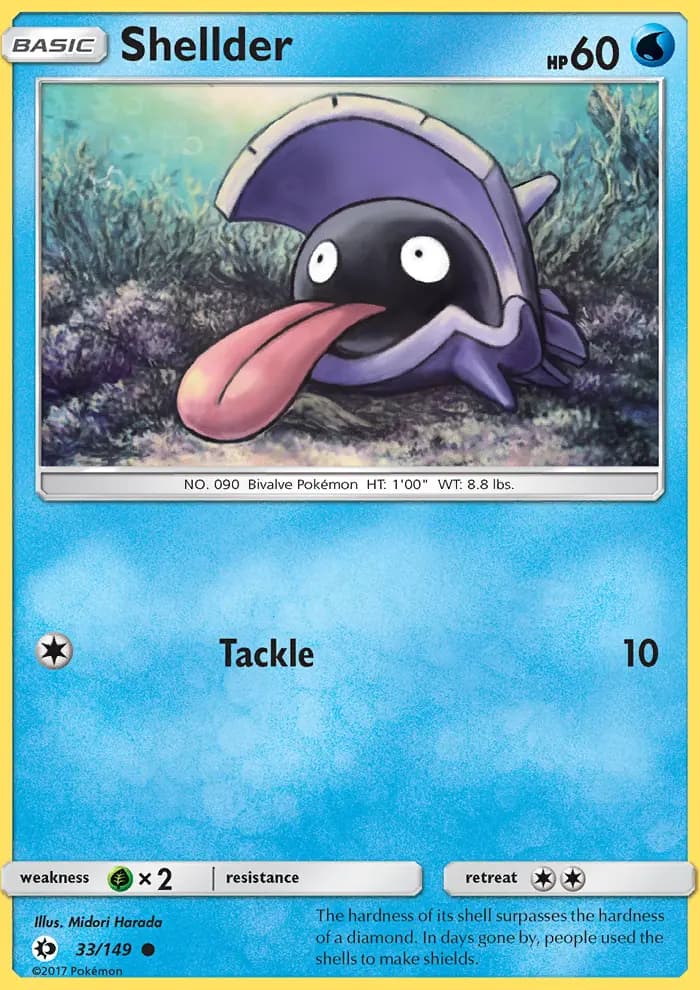
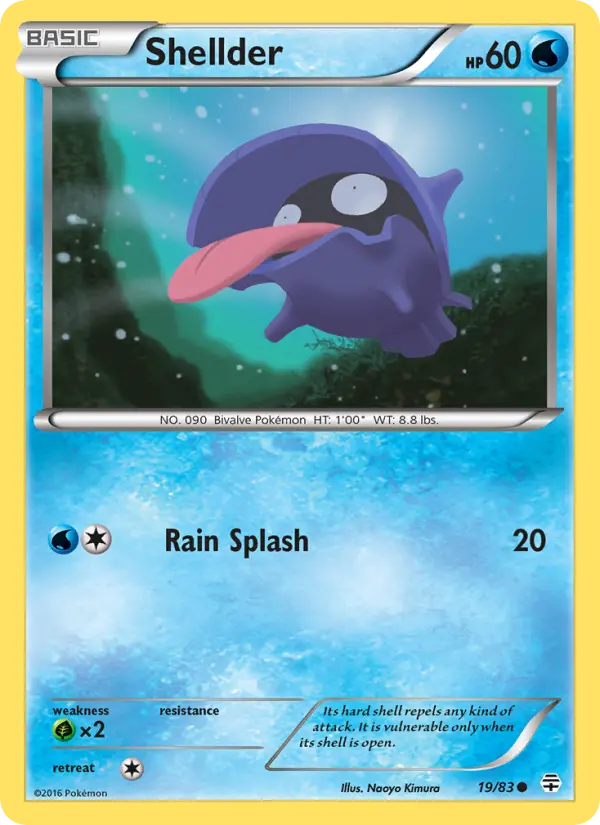
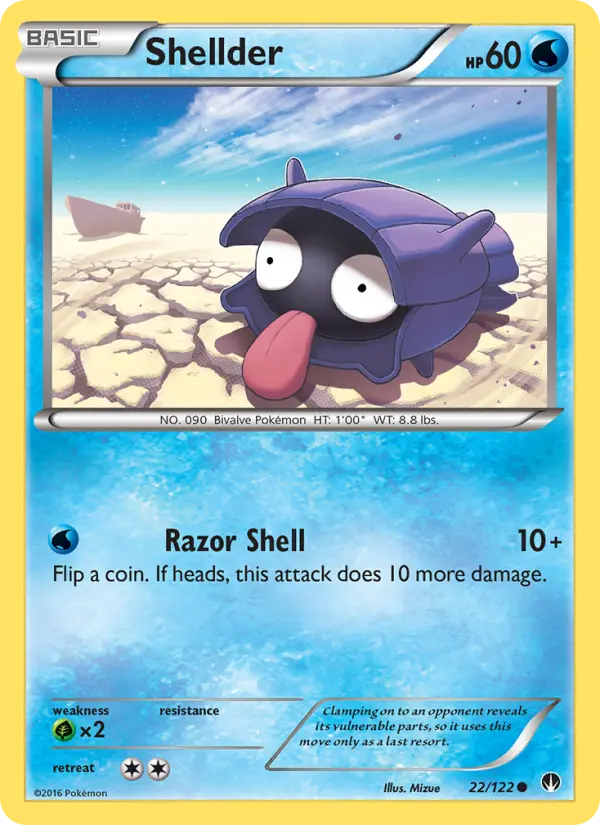
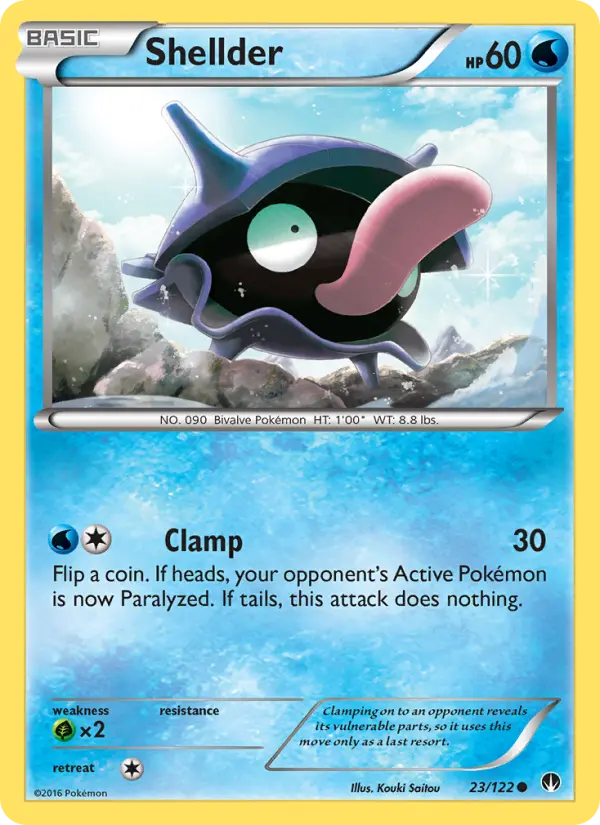
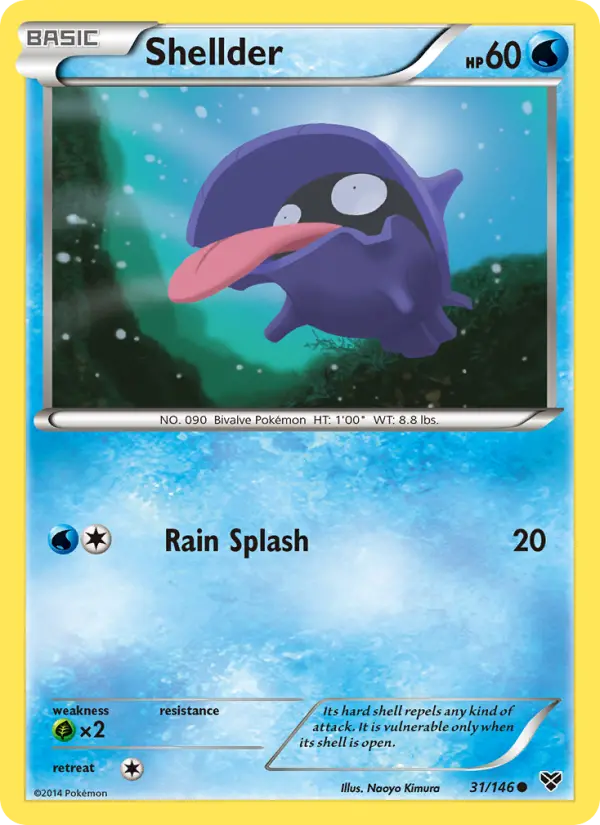
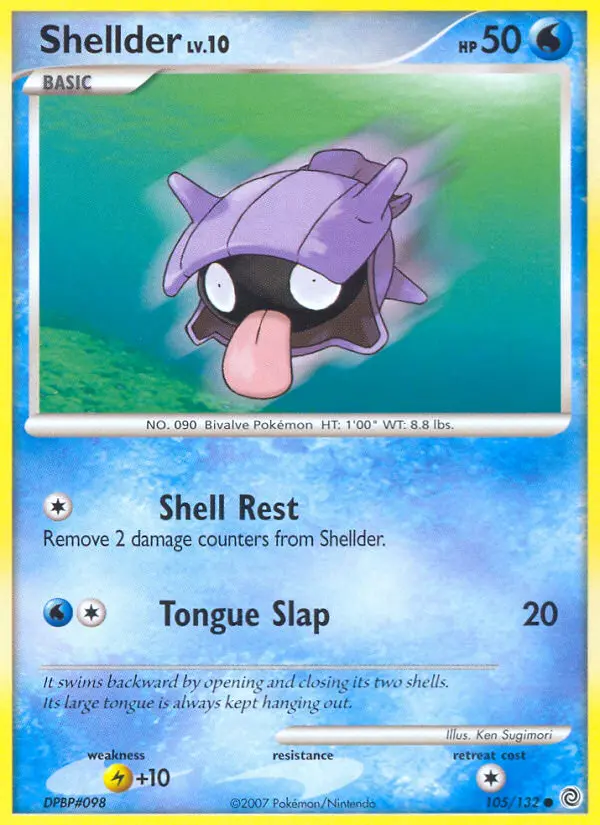
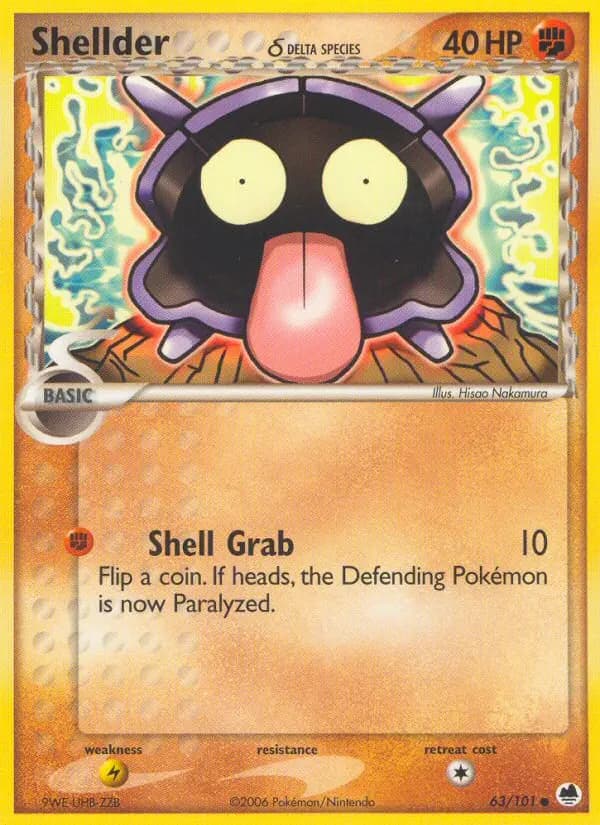
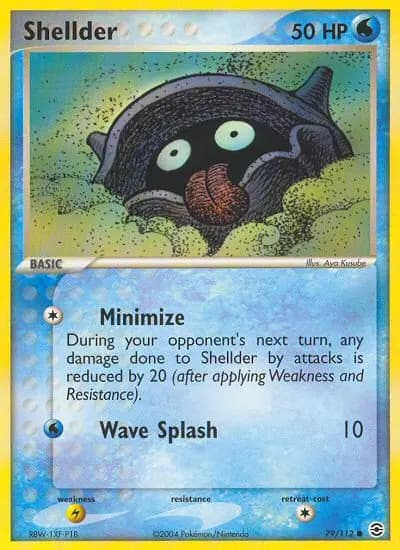
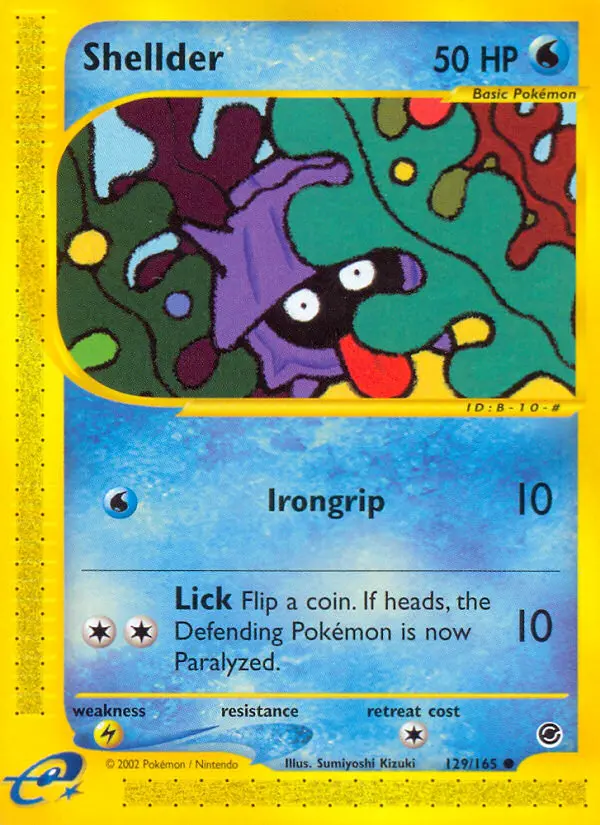
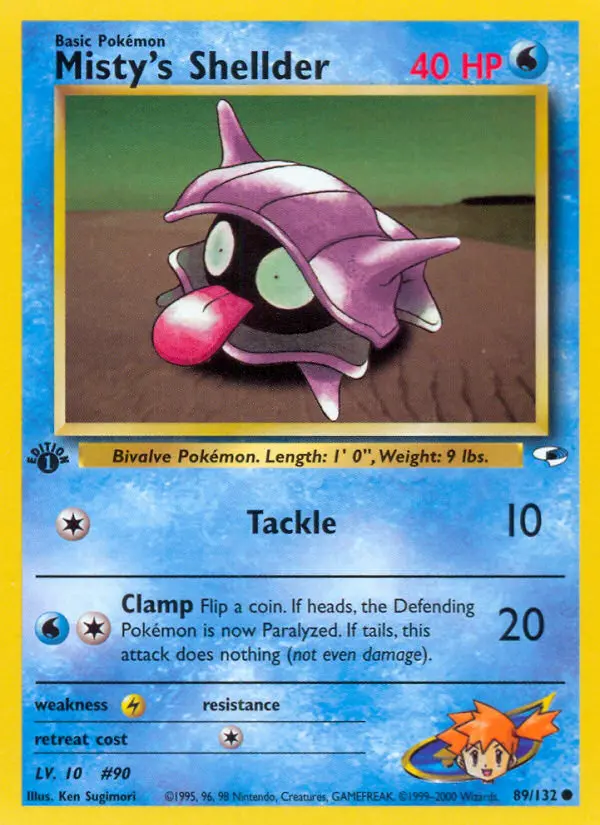
Shellder has maintained a consistent presence in Pokémon media since its introduction in Generation I, appearing throughout the animated series, trading card games, and spin-off titles. The species gained particular prominence through its biological relationship with Slowpoke, which became a focal point in various storylines and remains one of the most interesting examples of symbiotic evolution in the Pokémon universe. In the trading card game, Shellder has appeared in numerous sets with varying artwork and abilities, contributing to its status as a recognizable and collectible creature among TCG enthusiasts. The Pokémon's distinctive appearance—particularly its protruding red tongue and spiky shell—has made it instantly identifiable in merchandise, promotional materials, and fan communities. Shellder's role as a relatively common water-type Pokémon accessible to trainers early in their journey has ensured multiple generations of players have experience with the species, creating nostalgic connections and cultural familiarity. The creature's association with pearls and shells has connected it thematically to concepts of hidden beauty and protection, making it a popular subject for fan art and creative interpretations across various Pokémon fan communities worldwide.
Where to Find Shellder in Every Pokémon Game
Shellder's availability has been consistent across most Pokémon games since its original introduction in Generation I, appearing in the Kanto region where players can typically encounter it in water routes and coastal areas relatively early in their adventure. The species maintains its presence across subsequent generations with varying regional Pokédex numbers—appearing as #090 in its native Kanto region, #169 in Johto (Gold/Silver/Crystal), and #0090 again in the Kanto remakes FireRed and LeafGreen. In more recent generations, Shellder continues to appear in various regions and games, maintaining its status as a staple water-type encounter. The species appears in Pokémon GO as a regularly available Pokémon in water-themed habitats and during certain events. In Pokémon Sword and Shield, Shellder occupies Pokédex #150 in the Galar region, and it appears in Pokémon Scarlet and Violet as Pokédex #329 in the Paldea region. The species can be obtained through standard wild encounters, trading with other players, breeding in the Day Care or Pokémon Nursery, and occasionally through event distributions. Its high catch rate of 190 makes capturing wild Shellder straightforward for trainers of any experience level, ensuring accessibility for casual players while its slow growth rate provides a training challenge for those seeking a longer progression experience.