Lurantis
Generation VII · #0754 — Bloom Sickle Pokémon
At 0.9 m and 18.5 kg, Lurantis doesn't look like much on paper, but its leaf guard ability shapes how it actually plays more than its size suggests. With a aggregate stat total of 480, Lurantis emphasizes physical prowess with an Attack stat of 105, paired with solid defensive capabilities in both Defense and Special Defense at 90 each. Its signature move in Generation VII, Solar Blade, perfectly encapsulates its nature as a sun-dependent warrior that gathers light to unleash devastating attacks. The Pokémon's primary ability, Leaf Guard, provides protection from major status ailments during strong sunlight, while its hidden ability Contrary inverts stat changes, offering intriguing strategic possibilities for competitive trainers who understand its nuanced mechanics.
Editor's Take
Lurantis's Contrary turning Superpower's drawback into a boost is the same trick that makes Malamar good, and 45 base Speed is why it never got the same attention.
Base Stats
Height
0.9m
Weight
18.5kg
Category
Bloom Sickle Pokémon
Gender
Male 50% / Female 50%
Color
pink
Shape
humanoid
Abilities
Protects against major status ailments during strong sunlight.
Inverts stat changes.

Lurantis Biology & Physical Characteristics
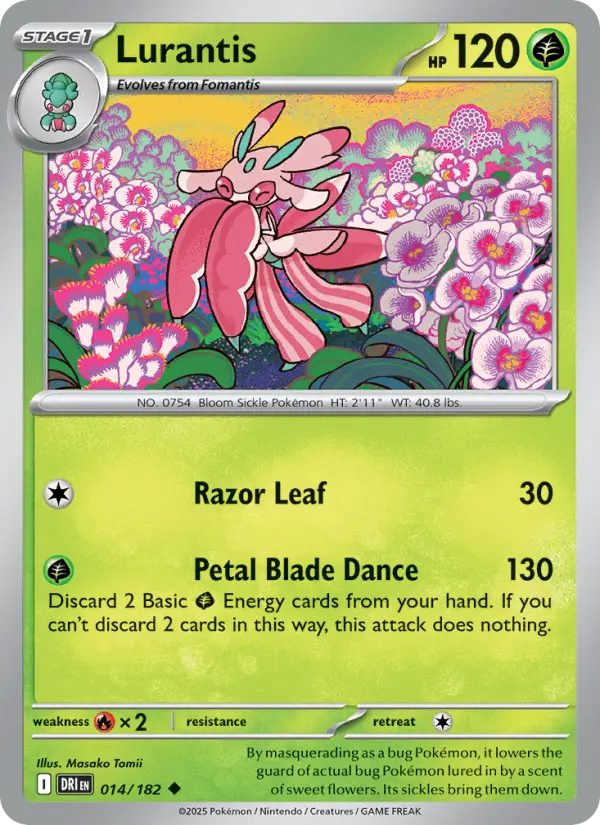
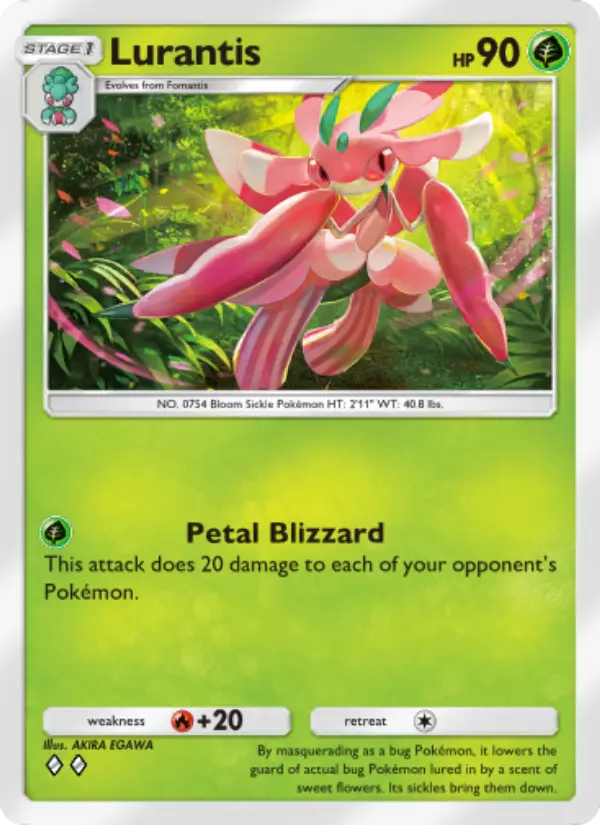
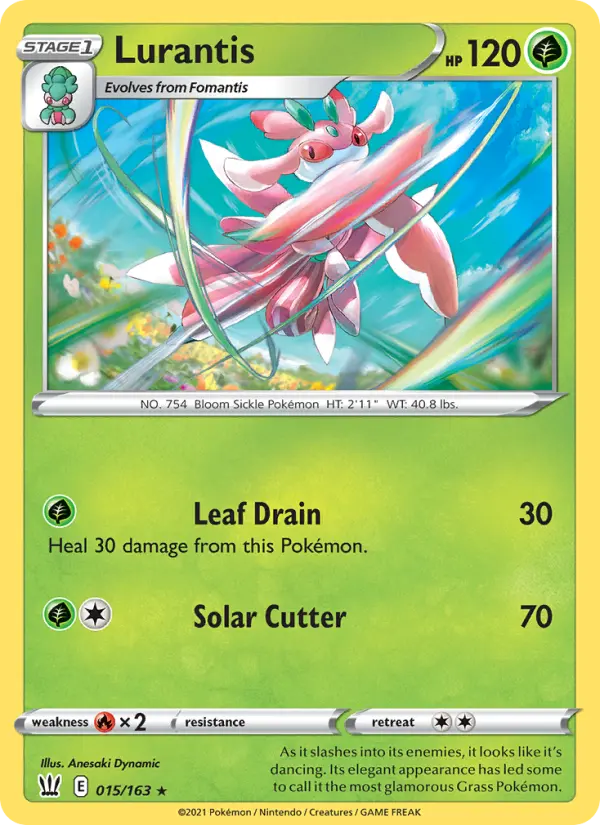
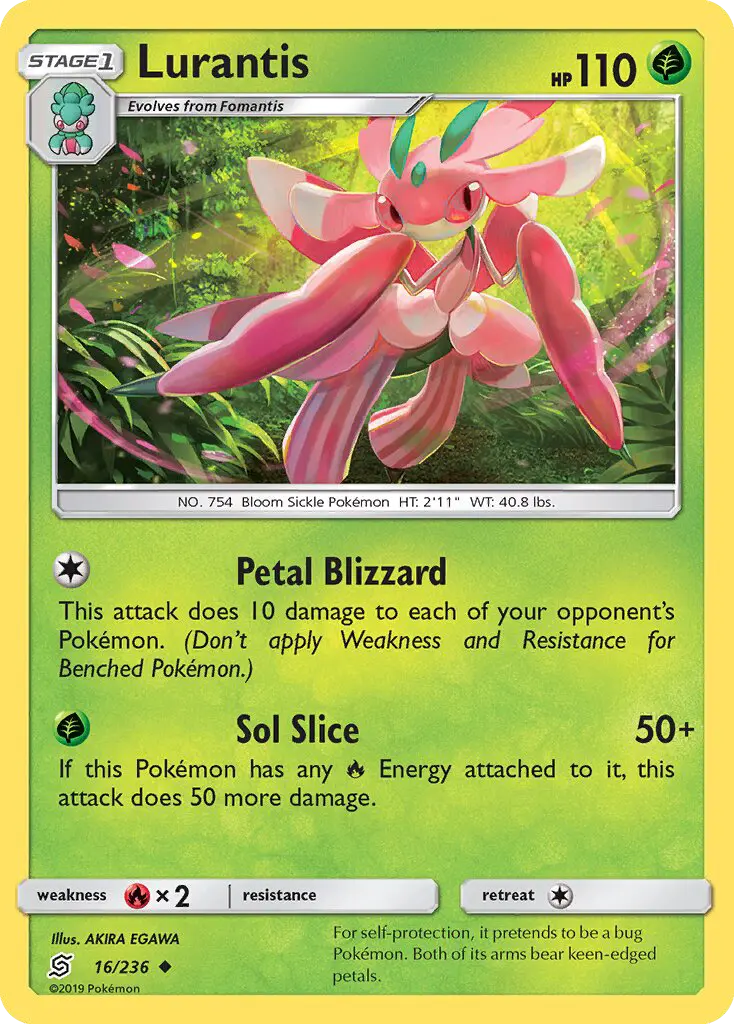
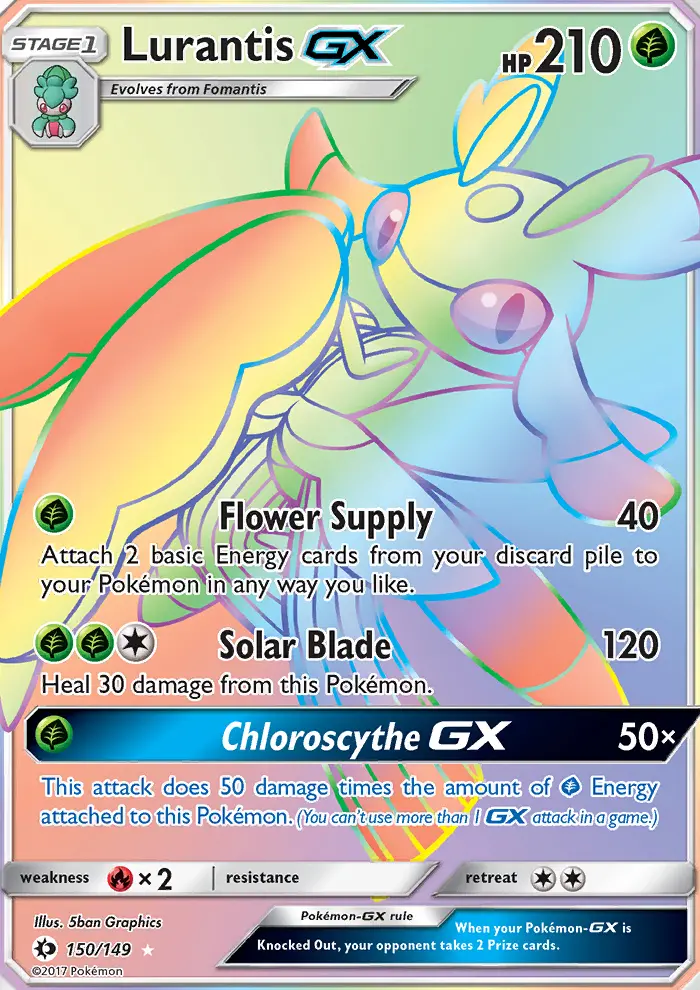
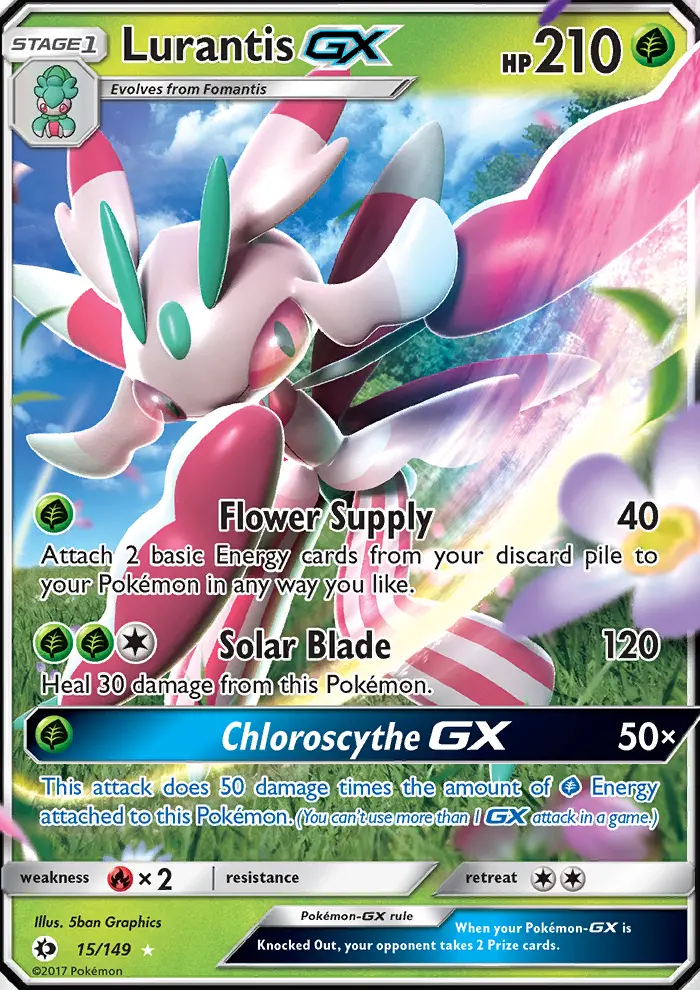
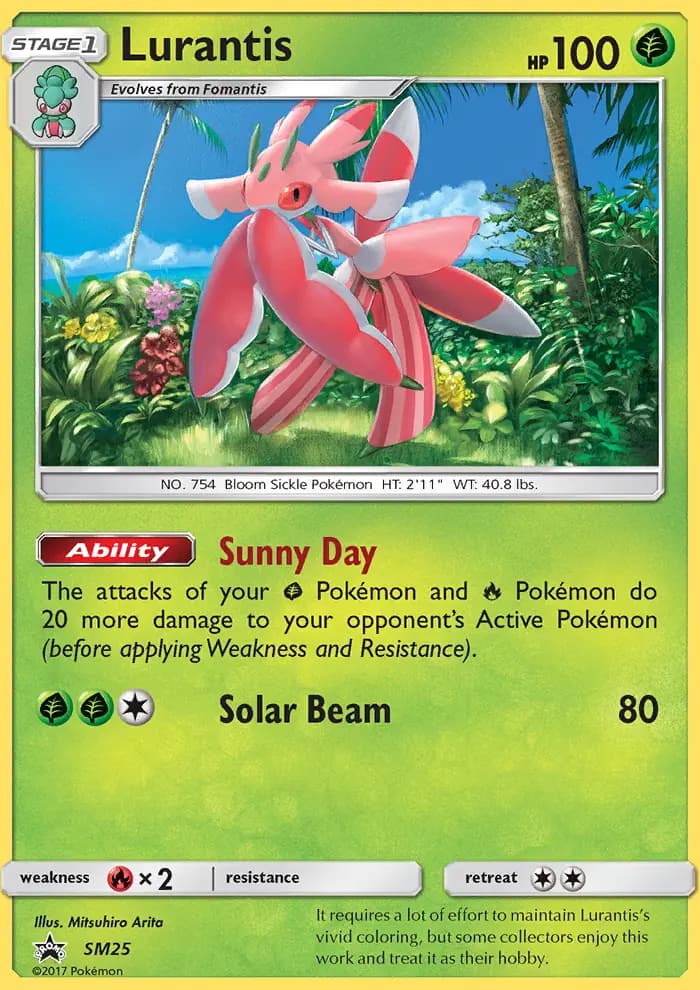
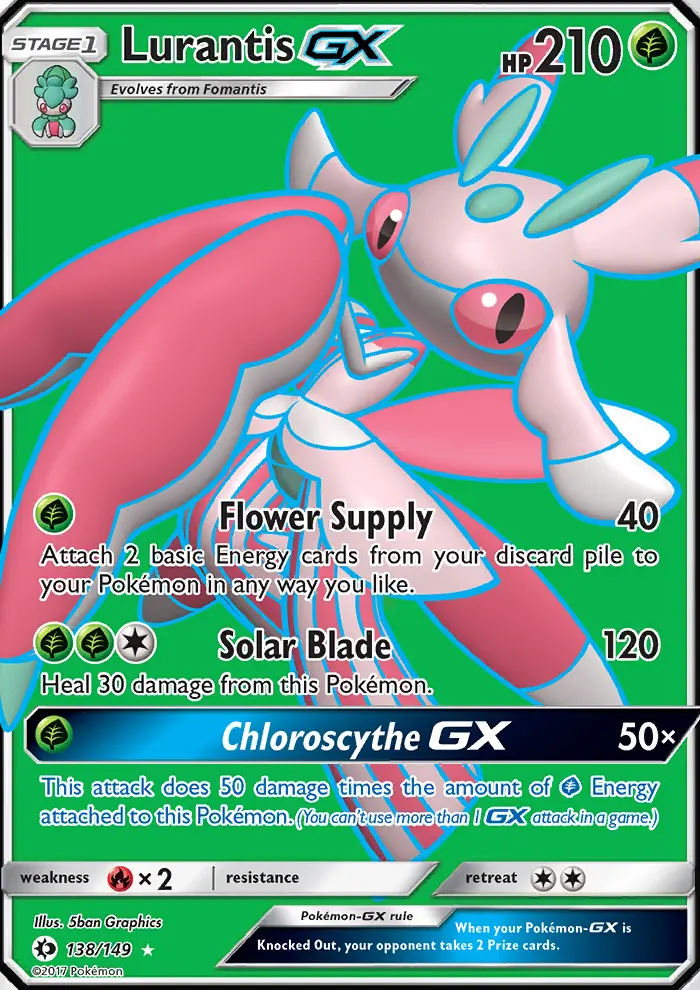
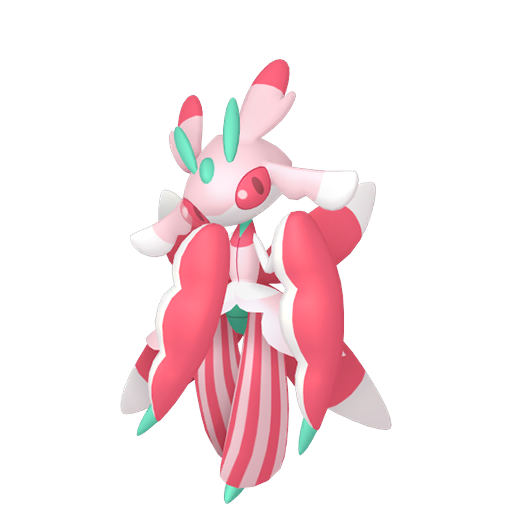
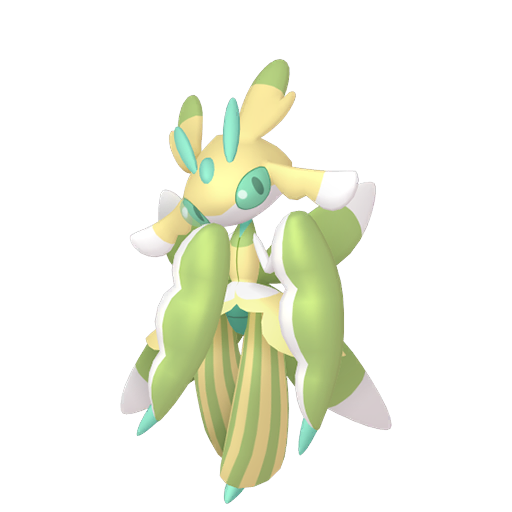
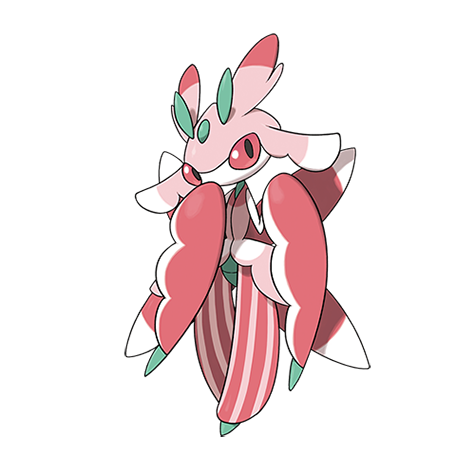
Lurantis presents a stunning visual design that blends floral and mantis-like characteristics into a unified whole. Its body features a light pink upper structure with a white lower head section, accented by light red eyes and two green antennae with a small green lump between them. The creature's most striking features are its large, red scythes that form its arms—each with a white rim along the bottom and a single green claw at the tip. These sickle-shaped appendages are described as thin and super sharp, capable of firing laser beams when Lurantis gathers sufficient light energy. Four red, wing-like appendages sprout from its back, each tipped with white, while its body is adorned with wavy, skirt-like extensions around the waist and vertical pink-and-red stripes down its legs. The overall aesthetic suggests Lurantis is wearing an elegant long-sleeved dress with matching pants, contributing to its reputation as the most beautiful Grass-type Pokémon. According to Pokédex entries, Lurantis both looks and smells like a flower, a trait it deliberately exploits to lure unsuspecting opponents into range before striking with devastating precision. The creature's most destructive capability involves firing beams from its sickle-shaped petals that are powerful enough to cleave through thick metal plates.
Pokedex Numbers
Training
Breeding
Lurantis Breeding, Gender Ratio & Egg Groups
Lurantis exhibits a perfectly balanced gender ratio, with 50% of individuals being male and 50% being female, allowing trainers equal opportunity to breed either gender. The species belongs to the Grass Egg Group, making it compatible with other Pokémon in this breeding category for potential offspring. When bred, Lurantis eggs require 20 cycles to hatch, which translates to approximately 4,884 to 5,140 steps in gameplay. The base friendship value for Lurantis in Generation VII stands at 70, indicating a reasonable starting bond between newly hatched or caught individuals and their trainers. This base friendship can be increased through positive interactions, such as battling alongside the trainer, using it regularly in combat, and providing excellent care. Trainers interested in breeding Lurantis should note that the offspring will be Fomantis rather than Lurantis, requiring the typical leveling process during daytime to evolve into their final form. The moderate hatch counter and medium growth rate make Lurantis a reasonably accessible Pokémon for breeders seeking to develop competitive or collection-focused lineages.
Sprites




Held Items
Miracle Seed
type-enhancement
Held: Grass-Type moves from holder do 20% more damage.
Cost: 1000
Miracle Seed
type-enhancement
Held: Grass-Type moves from holder do 20% more damage.
Cost: 1000
Miracle Seed
type-enhancement
Held: Grass-Type moves from holder do 20% more damage.
Cost: 1000
Miracle Seed
type-enhancement
Held: Grass-Type moves from holder do 20% more damage.
Cost: 1000
TMs & HMs
tm03
yellow
tm03
red blue
tm03
blue japan
tm03
red green japan
tm05
lets go pikachu lets go eevee
tm06
yellow
tm06
gold silver
tm06
red blue
tm06
crystal
tm06
emerald
tm06
firered leafgreen
tm06
diamond pearl
tm06
platinum
tm06
ruby sapphire
tm06
colosseum
tm06
black 2 white 2
tm06
xd
tm06
black white
tm06
heartgold soulsilver
tm06
omega ruby alpha sapphire
+545 more TMs/HMs


Lurantis Evolution, Mega Evolution & Special Forms
Lurantis evolves from Fomantis when the latter is leveled up to level 34 or higher during daytime conditions. This evolution marks a significant transformation from Fomantis's smaller, more vulnerable form into a powerful combatant that can hold its own against challenging opponents. The evolution occurs only during the day, emphasizing Lurantis's connection to sunlight and its dependence on solar energy for optimal performance. This day-time evolution requirement reflects the Pokémon's biology and its signature move Solar Blade, which requires the Pokémon to gather light before unleashing its devastating attack. Trainers seeking to evolve Fomantis into Lurantis must plan their evolution carefully, ensuring they are actively playing during daytime hours when the evolution can occur. Once evolved, Lurantis gains access to a broader movepool and the ability to utilize its full potential, particularly in sunny weather conditions where its Leaf Guard ability prevents major status ailments. The evolution is permanent and cannot be reversed, making it a significant milestone in a trainer's journey through the Alola region and beyond.
Where to Find
Heahea Beach
alola
Lurantis Behaviour and Natural Habitat
Lurantis is a cunning hunter that deliberately uses its flower-like appearance and sweet fragrance to attract prey, setting up ambushes for unsuspecting opponents. The Pokémon's elegance extends beyond mere appearance into its combat style, as Pokédex entries note that "as it slashes into its enemies, it looks like it's dancing." This grace in battle, combined with its brilliant coloration, has earned it recognition as the most glamorous Grass-type Pokémon. Interestingly, Lurantis employs deception for self-protection by pretending to be a Bug-type Pokémon, which allows it to lower the guard of actual Bug-type Pokémon that are lured in by its flower scent before striking them down with its lethal sickles. Maintaining Lurantis's vivid coloring and appearance requires significant effort and detailed grooming, making it a Pokémon that forms stronger bonds with trainers who invest time in its care. A properly raised Lurantis displays gorgeous, brilliant colors and will trust a dedicated trainer far more readily than a lazy one. Some collectors have even made maintaining Lurantis's appearance their hobby, suggesting the species has become popular among those who appreciate both aesthetic beauty and strategic capability.
Pokedex Entries
It requires a lot of effort to maintain Lurantis’s vivid coloring, but some collectors enjoy this work and treat it as their hobby.
For self-protection, it pretends to be a bug Pokémon. Both of its arms bear keen-edged petals.
It fires beams from its sickle-shaped petals. These beams are powerful enough to cleave through thick metal plates.
As it slashes into its enemies, it looks like it’s dancing. Its elegant appearance has led some to call it the most glamorous Grass Pokémon.
This Pokémon resembles a beautiful flower. A properly raised Lurantis will have gorgeous, brilliant colors.
The petals on this Pokémon’s arms are thin and super sharp, and they can fire laser beams if Lurantis gathers light first.
Lurantis Name Origin & Design Inspiration
The name Lurantis combines "lure" with "mantis," perfectly capturing the Pokémon's dual nature as both an attractive flower-like creature and a deadly predatory insect. The Japanese name Lalantes similarly suggests a blend of "lantern" or "brilliant light" with "mantis," emphasizing the luminous quality of its petals and its predatory nature. The genus designation "Bloom Sickle Pokémon" references both the flower-like appearance of its body and the scythe-like blades that serve as its arms, creating a poetic description of this remarkable creature. Design-wise, Lurantis draws inspiration from the praying mantis, one of nature's most efficient hunters, while layering floral and botanical elements that make it uniquely suited to its Grass-type classification. The creature's color palette of pink, white, red, and green creates a striking visual that resembles ornamental flowers and flowering plants, while its body structure and movement suggest the predatory grace of a mantis. This juxtaposition of beauty and danger, flower and predator, represents a central theme in Lurantis's identity and appeal. The design philosophy extends to its clothing-like appearance, with elements that suggest it wears an elegant dress, reinforcing its position as the most fashionable and glamorous of all Grass-type Pokémon.
Learnable Moves
Lurantis can learn 71 moves:
Move | Type | Cat. | Power | Acc. | PP |
|---|---|---|---|---|---|
| aerial ace | flying | Physical | 60 | — | 20 |
| attract | normal | Status | — | 100 | 15 |
| brick break | fighting | Physical | 75 | 100 | 15 |
| bug bite | bug | Physical | 60 | 100 | 20 |
| bullet seed | grass | Physical | 25 | 100 | 30 |
| confide | normal | Status | — | — | 20 |
| cross poison | poison | Physical | 70 | 100 | 20 |
| defog | flying | Status | — | — | 15 |
| double team | normal | Status | — | — | 15 |
| dual chop | dragon | Physical | 40 | 90 | 15 |
| endure | normal | Status | — | — | 10 |
| energy ball | grass | Special | 90 | 100 | 10 |
| facade | normal | Physical | 70 | 100 | 20 |
| false swipe | normal | Physical | 40 | 100 | 40 |
| fling | dark | Physical | — | 100 | 10 |
| frustration | normal | Physical | — | 100 | 20 |
| fury cutter | bug | Physical | 40 | 95 | 20 |
| giga drain | grass | Special | 75 | 100 | 10 |
| giga impact | normal | Physical | 150 | 90 | 5 |
| grass knot | grass | Special | — | 100 | 20 |
| grassy glide | grass | Physical | 55 | 100 | 20 |
| grassy terrain | grass | Status | — | — | 10 |
| growth | normal | Status | — | — | 20 |
| hidden power | normal | Special | 60 | 100 | 15 |
| hyper beam | normal | Special | 150 | 90 | 5 |
| ingrain | grass | Status | — | — | 20 |
| knock off | dark | Physical | 65 | 100 | 20 |
| laser focus | normal | Status | — | — | 30 |
| leaf blade | grass | Physical | 90 | 100 | 15 |
| leaf storm | grass | Special | 130 | 90 | 5 |
| leafage | grass | Physical | 40 | 100 | 40 |
| leech life | bug | Physical | 80 | 100 | 10 |
| low sweep | fighting | Physical | 65 | 100 | 20 |
| magical leaf | grass | Special | 60 | — | 20 |
| nature power | normal | Status | — | — | 20 |
| night slash | dark | Physical | 70 | 100 | 15 |
| payback | dark | Physical | 50 | 100 | 10 |
| petal blizzard | grass | Physical | 90 | 100 | 15 |
| poison jab | poison | Physical | 80 | 100 | 20 |
| pollen puff | bug | Special | 90 | 100 | 15 |
| protect | normal | Status | — | — | 10 |
| psycho cut | psychic | Physical | 70 | 100 | 20 |
| rain dance | water | Status | — | — | 5 |
| razor leaf | grass | Physical | 55 | 95 | 25 |
| rest | psychic | Status | — | — | 5 |
| return | normal | Physical | — | 100 | 20 |
| round | normal | Special | 60 | 100 | 15 |
| safeguard | normal | Status | — | — | 25 |
| scary face | normal | Status | — | 100 | 10 |
| seed bomb | grass | Physical | 80 | 100 | 15 |
| signal beam | bug | Special | 75 | 100 | 15 |
| skitter smack | bug | Physical | 70 | 90 | 10 |
| slash | normal | Physical | 70 | 100 | 20 |
| sleep talk | normal | Status | — | — | 10 |
| snore | normal | Special | 50 | 100 | 15 |
| solar beam | grass | Special | 120 | 100 | 10 |
| solar blade | grass | Physical | 125 | 100 | 10 |
| substitute | normal | Status | — | — | 10 |
| sunny day | fire | Status | — | — | 5 |
| superpower | fighting | Physical | 120 | 100 | 5 |
| swagger | normal | Status | — | 85 | 15 |
| sweet scent | normal | Status | — | 100 | 20 |
| swords dance | normal | Status | — | — | 20 |
| synthesis | grass | Status | — | — | 5 |
| take down | normal | Physical | 90 | 85 | 20 |
| tera blast | normal | Special | 80 | 100 | 10 |
| toxic | poison | Status | — | 90 | 10 |
| trailblaze | grass | Physical | 50 | 100 | 20 |
| weather ball | normal | Special | 50 | 100 | 10 |
| worry seed | grass | Status | — | 100 | 10 |
| x scissor | bug | Physical | 80 | 100 | 15 |
Lurantis Competitive Battle Guide
Lurantis occupies a specialized niche in competitive Pokémon battling, leveraging its respectable Attack stat of 105 as its primary offensive tool while maintaining solid defensive statistics of 90 in both Defense and Special Defense. Its relatively low Speed stat of 45 makes it a naturally slow Pokémon, requiring careful team building and strategic support to maximize effectiveness. The Leaf Guard ability provides significant utility in sunny weather teams, preventing major status ailments that would otherwise compromise Lurantis's performance in extended battles. In competitive formats, Lurantis benefits tremendously from weather support, particularly from teammates that can establish Sunny Day conditions, allowing it to utilize Solar Blade more effectively while maximizing Leaf Guard's protection. The hidden ability Contrary presents an intriguing alternative strategy, inverting stat changes to transform apparent disadvantages into unexpected advantages, though this requires more sophisticated team construction and prediction. Lurantis's movepool includes access to powerful Grass-type moves, coverage moves like X-Scissor for Bug-type matchups, and utility moves that can provide team support. While Lurantis may not be a top-tier competitive threat in the most competitive environments, it remains a viable choice for dedicated players who understand its mechanics and build appropriate support structures around its strengths.
Commonly Asked Questions About Lurantis
What type is Lurantis?
Lurantis is a grass type Pokemon.
What does Lurantis evolve from?
Lurantis evolved from fomantis.
What are Lurantis's weaknesses?
Lurantis is weak to flying, poison, bug, fire and ice type moves.
Where can I find Lurantis?
Lurantis can be found in heahea beach (alola).
Lurantis Cultural Impact & Franchise History
Lurantis has become a beloved Pokémon within the fan community due to its striking aesthetic appeal and the unique backstory of its care requirements. The concept of a Pokémon whose appearance must be actively maintained has resonated with trainers who appreciate the bond-building aspects of Pokémon ownership, transforming Lurantis into a symbol of dedication and care. In the Alola region, Lurantis holds particular significance as the Totem Pokémon for Mallow, a major character in the Generation VII games, giving it prominent narrative placement within the story. The Pokémon's characterization as the most glamorous Grass-type has made it appealing to players who value aesthetic qualities alongside competitive viability. Fan communities have celebrated Lurantis through extensive artwork, with renderings appearing across major Pokémon art databases and fan sites. The creature's elegant design has inspired numerous discussion threads about Grass-type Pokémon rankings and aesthetic appeal, frequently positioning Lurantis among the top contenders for most beautiful design. Its representation in competitive circuits, though modest, has cultivated a dedicated following of players who appreciate unconventional strategies and creative team building around this unique Pokémon.
Where to Find Lurantis in Every Pokémon Game
Lurantis was first introduced in Generation VII and is native to the Alola region, where it occupies Pokédex entries 144 (Sun/Moon) and 177 (Ultra Sun/Ultra Moon). The species has maintained availability across subsequent generations, appearing in the National Pokédex at position 754. In later games, Lurantis received local Pokédex entries in various regions, including entry 248 in Pokémon Scarlet/Violet, entry 18 in The Isle of Armor DLC, and entry 32 in The Teal Mask DLC. Trainers can obtain Lurantis by catching Fomantis during daytime and evolving it to level 34, or potentially by encountering Lurantis directly in certain locations throughout these games. The species maintains a reasonable capture rate of 75, meaning trainers with standard Poké Balls have a reasonable chance of successfully catching encountered individuals. The base happiness of 70 (increased to 70 in later generations) indicates that newly caught Lurantis will develop decent rapport with trainers relatively quickly. Various trading platforms, breeding efforts, and game transfers allow players across different generations and versions to obtain Lurantis, making it accessible to dedicated collectors and competitive players despite its specialized daytime evolution requirement.