
Indigo Minior
Generation VII · #10141 — Meteor Pokémon
Minior, the Meteor Pokémon, is a unique Rock/Flying-type from Generation VII that defies conventional evolution mechanics through its signature Shields Down ability. The indigo form represents one of seven possible core colorations this remarkable species can display, each equally viable and non-interchangeable. With a total base stat of 500, Minior exists as two distinct battle forms: the heavy Meteor Form and the exposed Indigo Core Form that activates when its HP drops below 50%. This transformation mechanic creates a dynamic strategic element, as the Indigo Core form boasts significantly enhanced offensive and speed statistics compared to its protected exterior. Originally discovered in the Alola region, Minior has become a fascinating subject of study due to its extraterrestrial origins and unusual composition derived from mutated nanoparticles in the stratosphere.
Editor's Take
Core Form Minior's 100 base Speed is exactly the threshold where Shell Smash becomes lethal, which suggests the numbers were chosen deliberately.
Base Stats
Height
0.3m
Weight
0.3kg
Category
Meteor Pokémon
Gender
Genderless
Color
brown
Shape
ball
Abilities
Transforms this Minior between Core Form and Meteor Form. Prevents major status ailments and drowsiness while in Meteor Form.
Indigo Minior Biology & Physical Characteristics
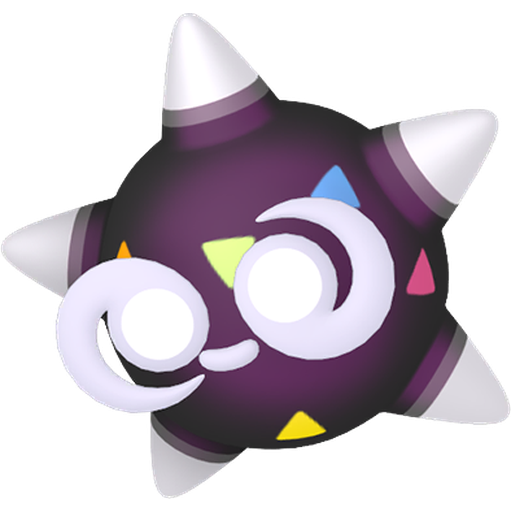
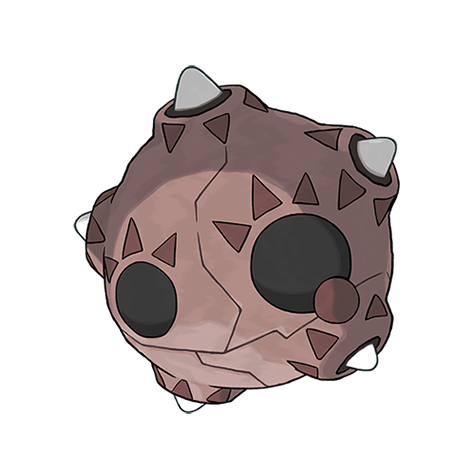
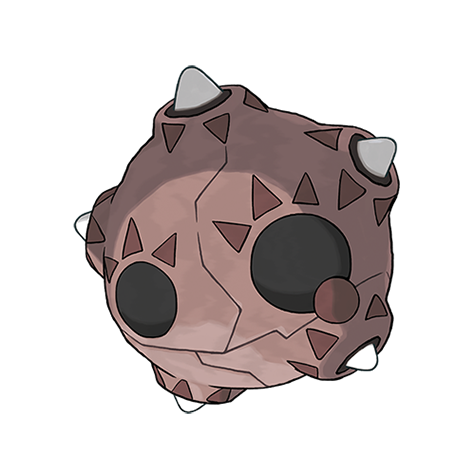
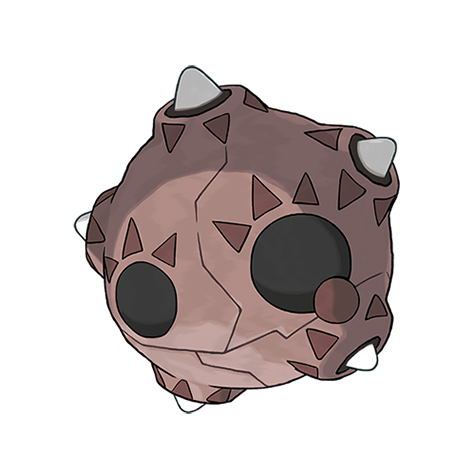
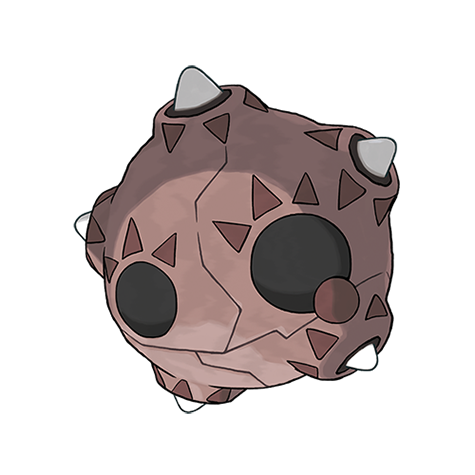
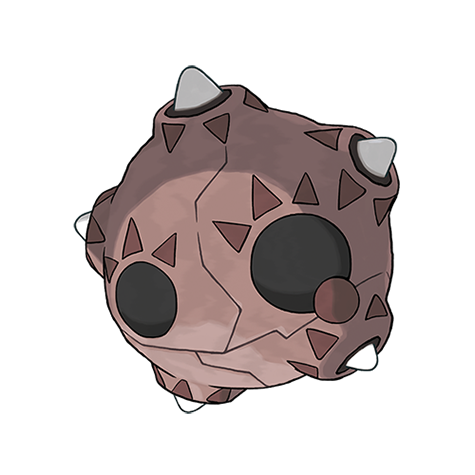
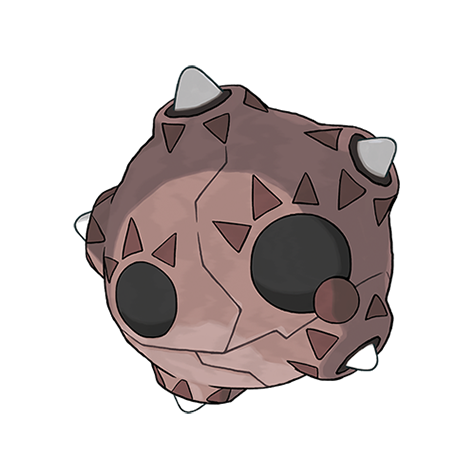
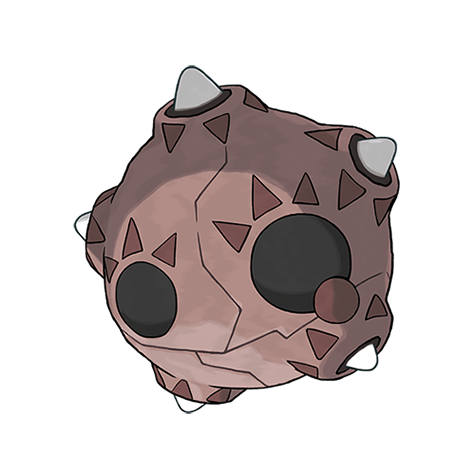
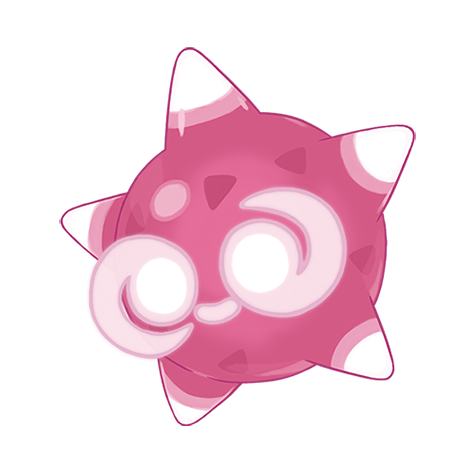
Minior is born in the ozone layer as an aggregation of mutated nanoparticles, a process that gives it its fundamentally unique cellular structure compared to other Pokémon. Throughout its development, the young Minior absorbs particulate matter and dust from the atmosphere, gradually constructing its durable rocky outer shell while simultaneously developing its colorful core beneath. In its Meteor Form, Minior appears as a modest-sized rock approximately 0.3 meters in height, weighing 40 kilograms, with four large rocky plates separated by distinctive cracks and five white spikes that create a star-like appearance. The indigo core form, exposed when its shell shatters from impact or damage, is dramatically lighter at only 0.3 kilograms and stands as one of the lightest Rock and Flying-type Pokémon ever documented. The core itself exhibits a striking indigo coloration distinct from the six other possible color variants (red, orange, yellow, green, blue, and violet), with the specific color determined at birth and remaining non-interchangeable throughout the individual Pokémon's lifetime.
Pokedex Numbers
Training
Breeding
Indigo Minior Breeding, Gender Ratio & Egg Groups
Minior is classified as a genderless Pokémon, incapable of reproduction through traditional breeding methods and therefore absent from standard breeding mechanics in the Pokémon games. This genderless classification reflects its extraterrestrial origin as an aggregation of mutated nanoparticles rather than a biologically conventional life form. The Mineral egg group classification, while assigned to Minior for game mechanics purposes, is largely symbolic given its inability to breed, though this grouping does appear in the Pokédex for informational consistency. The genderless designation aligns thematically with Minior's non-biological genesis and its fundamentally alien nature compared to terrestrial Pokémon species that reproduce sexually. Despite its inability to participate in breeding, Minior maintains a base happiness value of 70, indicating a naturally friendly disposition toward trainers and a moderate ease of bonding despite its otherworldly origins. The genderless nature contributes to Minior's mystique as a scientifically anomalous Pokémon, distinguishing it from most other Rock and Flying-type species that exhibit gender dimorphism.
Sprites





TMs & HMs
tm04
gold silver
tm04
emerald
tm04
firered leafgreen
tm04
ruby sapphire
tm04
diamond pearl
tm04
crystal
tm04
xd
tm04
heartgold soulsilver
tm04
black white
tm04
colosseum
tm04
platinum
tm04
sun moon
tm04
ultra sun ultra moon
tm04
x y
tm04
omega ruby alpha sapphire
tm04
black 2 white 2
tm05
lets go pikachu lets go eevee
tm06
yellow
tm06
gold silver
tm06
red blue
+609 more TMs/HMs
Regional & Special Forms
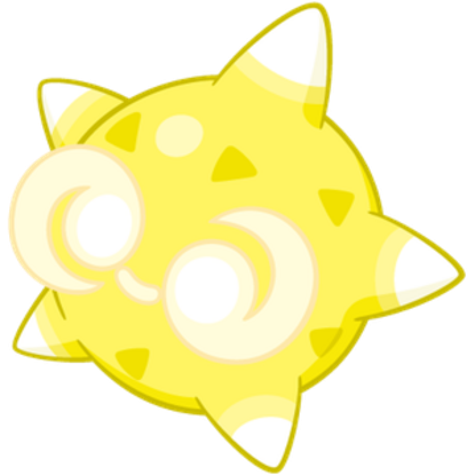
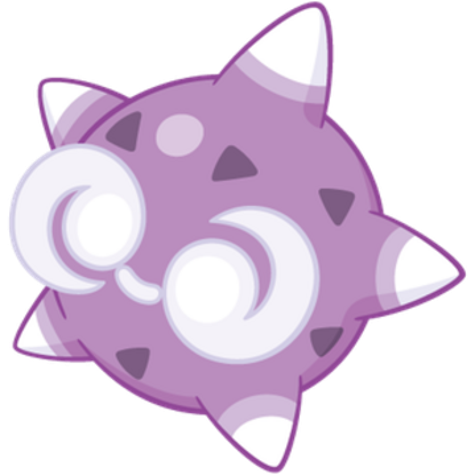
Indigo Minior also has 13 related forms: Red Meteor Minior, Orange Meteor Minior, Yellow Meteor Minior, Green Meteor Minior, Blue Meteor Minior, Indigo Meteor Minior, Violet Meteor Minior, Red Minior, Orange Minior, Yellow Minior, Green Minior, Blue Minior and Violet Minior.



Indigo Minior Evolution, Mega Evolution & Special Forms
Minior does not evolve into or from any other Pokémon species, standing as a complete and independent evolutionary line. However, what makes Minior exceptional is its form-change mechanic through the Shields Down ability, which functions similarly to form changes seen in other Generation VII Pokémon. The transformation between Meteor Form and Indigo Core Form occurs based on HP thresholds rather than traditional evolution methods: when Minior's health drops below 50% of its maximum HP, its protective rocky shell shatters and its colorful indigo core becomes exposed, triggering the transformation to Core Form. This form change reverses when Minior's HP is restored above 50%, causing the rocky exterior to regenerate and return to Meteor Form. This dual-form system was revolutionary for its time, as it created a dynamic battle mechanic where the same Pokémon could shift between two entirely different stat distributions and strategic roles mid-combat. The transformation fundamentally alters how trainers must approach battles with Minior, as the defense-oriented Meteor Form shifts into an offense and speed-focused Core Form, creating unpredictable gameplay scenarios and tactical depth.
Where to Find
Location data not available for this Pokémon in the database.
Indigo Minior Behaviour and Natural Habitat
Minior's natural habitat is the ozone layer of Alola, where it sustains itself by consuming dust and particulate matter from the upper atmosphere. As documented in the Pokédex, these Pokémon originally made their home in the stratosphere, drifting along air currents until the accumulated weight of their rocky shells becomes too burdensome for their forms to maintain elevation. When this occurs, they hurtles toward the ground in a dramatic descent, and places where they successfully land are remarkably few, with Alola being one of the documented regions where these meteoritic falls occur. While inhabiting the ozone layer, Minior serves as a food source for stronger Pokémon, making them vulnerable despite their protective shells. The Indigo Core Form exhibits dramatically different behavior patterns compared to the Meteor Form, becoming far more aggressive and mobile thanks to its significantly enhanced Attack (100), Special Attack (100), and Speed (120) statistics. Its Shields Down ability prevents major status ailments and drowsiness while in Meteor Form, protecting it from paralysis, poison, and sleep-inducing effects that might prove fatal during its aerial existence.
Pokedex Entries
Originally making its home in the ozone layer, it hurtles to the ground when the shell enclosing its body grows too heavy.
It lives in the ozone layer, where it becomes food for stronger Pokémon. When it tries to run away, it falls to the ground.
Strong impacts can knock it out of its shell. This Pokémon was born from mutated nanoparticles.
Although its outer shell is uncommonly durable, the shock of falling to the ground smashes the shell to smithereens.
Indigo Minior Name Origin & Design Inspiration
Minior's name derives from the combination of 'minor' and 'meteor,' reflecting both its small size relative to actual meteorites and its celestial origin as a falling space rock. The Japanese name Meteno similarly emphasizes the meteor aspect, combining 'meteor' with a suffix suggesting its otherworldly nature. The indigo core form specifically references the deep blue-violet coloration on the color spectrum, distinguishing it visually and poetically from the six other possible core colors. The design philosophy behind Minior incorporates minimalist geometric aesthetics: the Meteor Form features a spherical rocky body with four prominent plate-like segments separated by clean cracks, creating a visually balanced appearance that suggests a protective shell composition. The five white spikes extending from the surface evoke the appearance of a classic cartoon or stylized representation of a star or explosion, emphasizing the impact-based origin of these Pokémon. The contrast between the heavy, earthen tones of the Meteor Form and the vibrant indigo hue of the exposed core creates a striking visual dichotomy that serves both aesthetic and functional purposes in game design, making form transformations immediately visually apparent during battles.
Learnable Moves
Indigo Minior can learn 64 moves:
Move | Type | Cat. | Power | Acc. | PP |
|---|---|---|---|---|---|
| acrobatics | flying | Physical | 55 | 100 | 15 |
| ancient power | rock | Special | 60 | 100 | 5 |
| attract | normal | Status | — | 100 | 15 |
| autotomize | steel | Status | — | — | 15 |
| bulldoze | ground | Physical | 60 | 100 | 20 |
| calm mind | psychic | Status | — | — | 20 |
| charge beam | electric | Special | 50 | 90 | 10 |
| confide | normal | Status | — | — | 20 |
| confuse ray | ghost | Status | — | 100 | 10 |
| cosmic power | psychic | Status | — | — | 20 |
| dazzling gleam | fairy | Special | 80 | 100 | 10 |
| defense curl | normal | Status | — | — | 40 |
| double team | normal | Status | — | — | 15 |
| double edge | normal | Physical | 120 | 100 | 15 |
| earth power | ground | Special | 90 | 100 | 10 |
| earthquake | ground | Physical | 100 | 100 | 10 |
| endeavor | normal | Physical | — | 100 | 5 |
| endure | normal | Status | — | — | 10 |
| explosion | normal | Physical | 250 | 100 | 5 |
| facade | normal | Physical | 70 | 100 | 20 |
| frustration | normal | Physical | — | 100 | 20 |
| giga impact | normal | Physical | 150 | 90 | 5 |
| gravity | psychic | Status | — | — | 5 |
| gyro ball | steel | Physical | — | 100 | 5 |
| hidden power | normal | Special | 60 | 100 | 15 |
| hyper beam | normal | Special | 150 | 90 | 5 |
| iron head | steel | Physical | 80 | 100 | 15 |
| last resort | normal | Physical | 140 | 100 | 5 |
| light screen | psychic | Status | — | — | 30 |
| magnet rise | electric | Status | — | — | 10 |
| meteor beam | rock | Special | 120 | 90 | 10 |
| power gem | rock | Special | 80 | 100 | 20 |
| protect | normal | Status | — | — | 10 |
| psych up | normal | Status | — | — | 10 |
| psychic | psychic | Special | 90 | 100 | 10 |
| reflect | psychic | Status | — | — | 20 |
| rest | psychic | Status | — | — | 5 |
| return | normal | Physical | — | 100 | 20 |
| rock blast | rock | Physical | 25 | 90 | 10 |
| rock polish | rock | Status | — | — | 20 |
| rock slide | rock | Physical | 75 | 90 | 10 |
| rock tomb | rock | Physical | 60 | 95 | 15 |
| rollout | rock | Physical | 30 | 90 | 20 |
| round | normal | Special | 60 | 100 | 15 |
| safeguard | normal | Status | — | — | 25 |
| sandstorm | rock | Status | — | — | 10 |
| scorching sands | ground | Special | 70 | 100 | 10 |
| self destruct | normal | Physical | 200 | 100 | 5 |
| shell smash | normal | Status | — | — | 15 |
| sleep talk | normal | Status | — | — | 10 |
| snore | normal | Special | 50 | 100 | 15 |
| solar beam | grass | Special | 120 | 100 | 10 |
| stealth rock | rock | Status | — | — | 20 |
| stone edge | rock | Physical | 100 | 80 | 5 |
| substitute | normal | Status | — | — | 10 |
| swagger | normal | Status | — | 85 | 15 |
| swift | normal | Special | 60 | — | 20 |
| tackle | normal | Physical | 40 | 100 | 35 |
| take down | normal | Physical | 90 | 85 | 20 |
| telekinesis | psychic | Status | — | — | 15 |
| tera blast | normal | Special | 80 | 100 | 10 |
| toxic | poison | Status | — | 90 | 10 |
| u turn | bug | Physical | 70 | 100 | 20 |
| zen headbutt | psychic | Physical | 80 | 90 | 15 |
Indigo Minior Competitive Battle Guide
In competitive battling, Minior's Indigo Core Form occupies a specialized niche as a swift offensive threat with exceptional Speed (120 base) and well-balanced offensive capabilities through its 100 base Attack and 100 base Special Attack statistics. The Speed stat proves particularly valuable, allowing the Indigo Core Form to outpace numerous competitive threats and threaten critical KOs before opponents can respond. The form's relatively low defensive capabilities (60 base Defense and Special Defense) make it vulnerable once exposed, requiring careful HP management and strategic use of its protective Meteor Form prior to engagement. The Shields Down ability is crucial for competitive viability, as it provides complete immunity to status conditions while in Meteor Form, allowing Minior to safely switch into predicted status moves or weather-based threats. Trainers often employ Minior in fast-paced, hit-and-run strategies where the goal is rapid damage output rather than prolonged survival, leveraging the Indigo Core's superior offensive stats. The indigo coloration itself carries no mechanical advantage or disadvantage compared to other Minior cores, making core color selection purely a matter of aesthetic preference for competitive players. movepool depth and coverage options determine Minior's true competitive potential, though its access to reliable Rock and Flying-type STAB moves provides solid neutral coverage against many common threats.
Commonly Asked Questions About Indigo Minior
What type is Indigo Minior?
Indigo Minior is a rock and flying type Pokemon.
What does Indigo Minior evolve into?
Indigo Minior does not evolve.
What are Indigo Minior's weaknesses?
Indigo Minior is weak to ground, rock, steel, water, electric and ice type moves.
Indigo Minior Cultural Impact & Franchise History
Minior has become an iconic representation of Generation VII's innovative approach to Pokémon design, particularly through its groundbreaking form-change mechanic that inspired subsequent games to explore conditional transformations beyond traditional mega evolution and Z-moves. The species has captivated trainers and collectors worldwide due to its seven visually distinct core forms, creating a collectibility aspect where enthusiasts seek complete sets of all color variations. In the competitive Pokémon community, Minior has sparked discussions about balance design and how to create meaningful strategic depth through form mechanics rather than pure statistical advantage. The anime adaptation featuring Minior has increased its visibility and cultural relevance, introducing the species to broader audiences beyond core gaming communities. Merchandise featuring Minior's various forms, particularly the indigo core, has proven commercially successful, with plush toys and collectibles celebrating the striking color variations. The species has also become a subject of scientific interest within Pokémon lore, with trainers and researchers fascinated by its origin story involving mutated nanoparticles and atmospheric composition. Social media communities have embraced Minior as a beloved design example of how unconventional origin stories and mechanics can create memorable Pokémon that resonate across multiple demographic groups.
Where to Find Indigo Minior in Every Pokémon Game
Minior was first introduced in Generation VII games Pokémon Sun and Moon, where it could be encountered in the Alola region as part of the updated regional Pokédex. In the Alola dex, Minior was assigned the number 0213, with slight numbering adjustments in Ultra Sun and Ultra Moon (0277). The species has maintained consistent availability throughout subsequent generations, including appearances in Pokémon Sword and Shield, where it was included as part of DLC content. In Pokémon Scarlet and Violet's The Indigo Disk DLC, Minior received the Alola dex number 0106, confirming its continued presence in modern competitive and casual play. The indigo core form specifically was available from the initial Generation VII release, with core color determined upon encounter or capture rather than through choice or special methods. Trainers seeking the indigo form could encounter wild Minior specimens in Alola's mountainous and sky-based terrain, with the specific core color appearing randomly among captures. The species has appeared in various Pokémon distributions, mystery gifts, and special events across multiple regions and game versions, making it consistently accessible to dedicated trainers. Additionally, Minior's inclusion in Pokémon HOME and subsequent cloud-based storage systems has ensured its portability across Nintendo platforms, maintaining its availability to modern players seeking to build teams featuring this distinctive Meteor Pokémon and its remarkable form-change mechanics.